Interaction between auditory and reward brain circuits underpins musical pleasure.
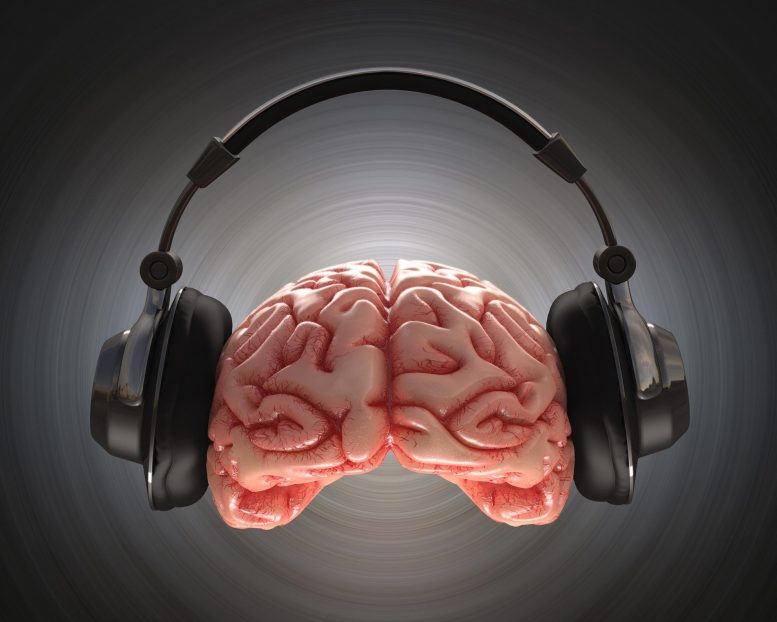
Communication between the brain’s auditory and reward circuits is the reason why humans find music rewarding, according to new research published in JNeurosci.
Despite no obvious biological benefits, humans love music. Neuroimaging studies highlight similarities between how the brain’s reward circuits process music and other rewards like food, money, and alcohol. Yet neuroimaging studies are correlational by nature. In a new study, Mas-Herrero et al. sought to nail down the causal role of this circuitry by using non-invasive brain stimulation.
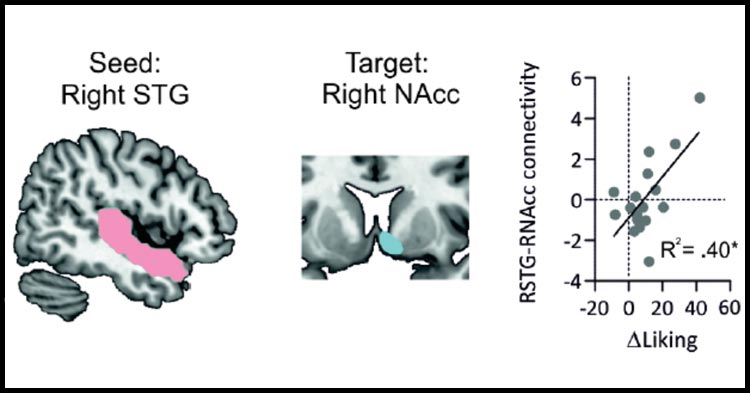
Greater induced pleasure differences was associated with increased synchronized activity between auditory and reward regions. Credit: Mas-Herrero et al., JNeurosci 2021
A group of pop music fans listened to a set of pop songs while the research team measured their brain activity with fMRI. Before the scan, the team indirectly excited or inhibited the brain’s reward circuit with transcranial magnetic stimulation.
Exciting the reward circuit prior to hearing music increased the pleasure participants felt when listening to the songs, while inhibiting it decreased pleasure. These induced pleasure changes were linked to changes in activity in the nucleus accumbens, a key region of the reward circuit. The participants with the greatest difference in pleasure also showed the greatest difference in synchronized activity between auditory and reward regions.
These results indicate interactions between auditory and reward regions drive the pleasure we feel when listening to music.
Reference: “Unraveling the Temporal Dynamics of Reward Signals in Music-Induced Pleasure with TMS” 29 March 2021, Journal of Neuroscience. DOI: 10.1523/JNEUROSCI.0727-20.2020
Funding: Canadian Institutes of Health Research, the Natural Sciences and Engineering Research Council of Canada, the Canadian Institute for Advanced Research, the Canada Fund for Innovation, and the CIBC Fellowship in Brain Imaging
GlyNAC improves multiple defects in aging to boost strength and cognition in older humans
Date:March 29, 2021Source:Baylor College of MedicineSummary:GlyNAC – a combination precursors of the natural antioxidant glutathione – improved many age-associated defects in older humans boosting muscle strength and cognition.Share: FULL STORY
A pilot human clinical trial conducted by researchers at Baylor College of Medicine reveals that supplementation with GlyNAC — a combination of glycine and N-acetylcysteine as precursors of the natural antioxidant glutathione — could improve many age-associated defects in older humans to improve muscle strength and cognition, and promote healthy aging.
Published in the journal Clinical and Translational Medicine, the results of this study show that older humans taking GlyNAC for 24 weeks saw improvements in many characteristic defects of aging, including glutathione deficiency, oxidative stress, mitochondrial dysfunction, inflammation, insulin resistance, endothelial dysfunction, body fat, genomic toxicity, muscle strength, gait speed, exercise capacity and cognitive function. The benefits declined after stopping supplementation for 12 weeks. GlyNAC supplementation was well tolerated during the study period.
“There is limited understanding as to why these defects occur in older humans, and effective interventions to reverse these defects are currently limited or lacking,” said corresponding author endocrinologist Dr. Rajagopal Sekhar, associate professor of medicine in the Section of Endocrinology, Diabetes and Metabolism at Baylor.
For the last 20 years, Sekhar and his team have been studying natural aging in older humans and aged mice. Their work brings mitochondria, known as the batteries of the cell, as well as free radicals and glutathione to the table in discussions about why we age.
Mitochondrial dysfunction and aging
Mitochondria generate energy needed for supporting cellular functions by burning fat and sugar from foods, therefore mitochondrial health is critically important for life. Sekhar believes that improving the health of malfunctioning mitochondria in aging is the key.
As mitochondria generate energy, they produce waste products such as free radicals. These highly reactive molecules can damage cells, membranes, lipids, proteins and DNA. Cells depend on antioxidants, such as glutathione, the most abundant antioxidant in our cells, to neutralize these toxic free radicals. Failing to neutralize free radicals leads to harmful and damaging oxidative stress that can affect mitochondrial function.
Interestingly, glutathione levels in older people are much lower than those in younger people, and the levels of oxidative stress are much higher.
Animal studies conducted in the Sekhar lab have shown that restoring glutathione levels by providing GlyNAC reverses glutathione deficiency, reduces oxidative stress and fully restores mitochondrial function in aged mice.
“In previous work we showed that supplementing HIV patients with GlyNAC improved multiple deficits associated with premature aging observed in those patients,” Sekhar said. “In this study, we wanted to understand the effects of GlyNAC supplementation on many age-associated defects in older adults.”
GlyNAC improves several hallmark defects in aging
The world population of older humans is rapidly increasing and with it comes an increase in many age-related illnesses. To understand what causes unhealthy aging, scientific research has identified nine hallmark defects which are believed to contribute to the aging process.
“It is believed that correcting these aging hallmarks could improve or reverse many age-related disorders and help people age in a healthier way,” Sekhar said. “However, we do not fully understand why these hallmark defects happen, and there are currently no solutions to fix even a single hallmark defect in aging.”
This is where Sekhar’s trial results become encouraging, because GlyNAC supplementation for 24 weeks appears to improve four of the nine aging hallmark defects.
To further understand whether GlyNAC holds the keys to mitochondrial recovery and more, Sekhar and his team conducted this pilot clinical trial.
“We worked with eight older adults 70 to 80 years of age, comparing them with gender-matched younger adults between 21 and 30 years old,” Sekhar said. “We measured glutathione in red-blood cells, mitochondrial fuel-oxidation, plasma biomarkers of oxidative stress and oxidant damage, inflammation, endothelial function, glucose and insulin, gait-speed, muscle strength, exercise capacity, cognitive tests, gene-damage, glucose-production and muscle-protein breakdown rates and body composition. Before taking GlyNAC, all these measurements were abnormal in older adults when compared with those in younger people.”
The older participants took GlyNAC for 24 weeks, and then stopped it for 12 weeks. Sekhar and his colleagues repeated the above measurements at the halfway point at 12 weeks, after 24 weeks of taking GlyNAC, and again after stopping GlyNAC for 12 weeks.
“We are very excited by the results,” Sekhar said. “After taking GlyNAC for 24 weeks, all these defects in older adults improved and some reversed to the levels found in young adults.” The researchers also determined that older adults tolerated GlyNAC well for 24 weeks. The benefits, however, declined after stopping GlyNAC supplementation for 12 weeks.
“I am particularly encouraged by the improvements in cognition and muscle strength,” Sekhar said. “Alzheimer’s disease and mild cognitive impairment (MCI) are serious medical conditions affecting memory in older people and leading to dementia, and there are no effective solutions for these disorders. We are exploring the possibility that GlyNAC could help with these conditions by conducting two pilot randomized clinical trials to test whether GlyNAC supplementation could improve defects linked to cognitive decline in Alzheimer’s disease and in MCI, and possibly improve cognitive function.”
“The overall findings of the current study are highly encouraging,” Sekhar said. “They suggest that GlyNAC supplementation could be a simple and viable method to promote and improve healthy aging in older adults. We call this the ‘Power of 3’ because we believe that it takes the combined benefits of glycine, NAC and glutathione to reach this far reaching and widespread improvement. We also have completed a randomized clinical trial on supplementing GlyNAC vs. placebo in older adults and those results will be forthcoming soon.”
Baylor College of Medicine. “GlyNAC improves multiple defects in aging to boost strength and cognition in older humans.” ScienceDaily. ScienceDaily, 29 March 2021. <www.sciencedaily.com/releases/2021/03/210329122746.htm>.
Image by Good Vibrations Images / StocksyMarch 29, 2021 — 11:05 AMShare on:
When someone brings up melatonin, it’s usually within the context of a good night’s rest. This makes sense: Melatonin is the sleepy-time hormone, after all, signaling to your body that it’s time to wind down. So on the topic of melatonin-rich foods, most of the time we’re focusing on bedtime snacks to help prep your brain and body for quality sleep.
However! Cardiologist and New York Times bestselling author Steven Gundry, M.D., says melatonin has another, equally important, role to play. And it has nothing to do with catching Zzz’s: “It turns out, melatonin may be the most important antioxidant for mitochondria [health],” he says on the mindbodygreen podcast.
How melatonin benefits mitochondrial health.
A quick primer: Mitochondria are the powerhouses of the cells, meaning they help power up the energy that allows all the cells in your body to function optimally. But like most good things, mitochondria deplete with age—that’s why many experts recommend optimizing its function as you grow older, through nutrient-dense foods, fasting, exercise, and supplements. (Check out our full explainer on mitochondrial health here.)
As for where melatonin comes in, “Mitochondria will actually manufacture melatonin,” Gundry says, and research shows melatonin also has a protective effect, able to help maintain mitochondrial function. “Melatonin reduces mitochondrial fission and increases their fusion, thereby preserving their normal function,” the report reads. Needless to say, melatonin’s benefits extend way beyond a good night’s rest. ADVERTISEMENT
Gundry’s go-to food sources.
Below, find his favorites:
1. Pistachios
Pistachios happen to be Gundry’s all-time favorite nut, just because of their high melatonin content. In fact, one analysis conducted by researchers at Louisiana State University and American Pistachio Growers found that pistachios contain about 660 nanograms of melatonin per gram—a remarkably higher number than other fruits, vegetables, nuts, and seeds.
2. Olive oil
Olive oil is beloved for its healthy monounsaturated fats and vitamin profile, but Gundry says don’t sleep on its melatonin content. “A lot of the things that we’ve attributed to the Mediterranean diet as being healthy, like olive oil, these are remarkable sources of melatonin,” he explains. In fact, research shows that among the phytochemicals and polyphenols rife within the Mediterranean diet menu, melatonin might add another layer of protective effects.
3. Red wine
Another Mediterranean diet staple, Gundry also mentions that red wine doesn’t just boast resveratrol—it also features melatonin. Research backs this up, with a study showing significant amounts of melatonin in grape skins used to make red wine, which may contribute to its antioxidant activity.
While melatonin is largely associated with sleep, it has significant benefits for your mitochondrial health—which, in case you didn’t know, powers literally every cell in your body. That said, it’s vital for pretty much every function, and while you do produce melatonin naturally, it doesn’t hurt to reap the benefits of a few rich food sources.
Jamie Schneidermbg Associate EditorJamie Schneider is the Associate Editor at mindbodygreen, covering beauty and health. She has a B.A. in Organizational Studies and English from the University of Michigan
Dubai: When you get an instant reply to a message, it’s likely the response came from a “chatbot”, instead of a real person. Perhaps you’ve dealt with one, without even noticing it. And that’s the whole point: They’re not supposed to be noticed. Just help or serve you; become a “natural” extension of humans.
If you deal with a bank, utility, telecom services there’s a good chance an automated response system is working on your online query.
Welcome to the world of chatbots
Now, there are robots dispensing psychotherapy advice, too, known as virtual conversational assistants (or VCAs), and they’re taking the world by storm.
To be sure, chatbots have changed our experience for good. For one simple reason: convenience. Responses come quick and easy. People are generally happy with that. It’s still not perfect, but it works.An oft-cited example AI use is of Canadian firm BlueDot’s early-warning system, which alerted the company’s customers about Covid-19 at the end of December even before the WHO. The system uses AI, including natural-language processing and machine learning, to track over 100 infectious diseases by analysing about 100,000 articles in 65 languages every day.Image Credit: Seyyed dela Llata │ Gulf NewsVIEW GALLERY AS LIST1/8
The result: the likes of WhatsApp and FB Messenger have become key drivers behind chatbots’ rise, and vice versa. Now, more and more are embracing it across the world, which demonstrates AI’s flexibility, cutting through language barriers.
Chatbots — chat robots — are personal virtual assistants. They execute instructions in seconds. Consumers like you and me have certain expectations: We don’t want to wait. This is where AI comes in.
“One of the most significant AI developments in the last century is the bots and virtual conversations,” Gaurav Singh, founder and CEO of Verloop.io, told Gulf News. “Today, chatbots engage with users in an entirely different way from ELIZA (the first chatbot, which first came out in the 1960s),” he added.
What are they used for?
Chatbots are considered as the “frontliners” of the digital era. They help and are present where human agents cannot be available 24/7. It’s a boon for industries — from banking, law-enforcement, back office, logistics, public services — any entity that deals with people (which is to say, almost all).
They are also in travel services, education, utilities, gaming, hotels and even psychotherapy (cognitive behavioural therapy, app which acts like an always-on standby coach suggesting things you must do, from clinically-validated menu of answers). “Increasingly, they also understand voice commands”, said Singh, whose AI chat platform is based in India.
Custom functionality can be built with the AI engine. With superfast computer processing, the system can do things in a flash — answer questions, personalise communication, carry out tasks for the user.
How big are chatbots?
Consider the numbers: One AI-driven chatbot platform (Pandorabot) claims over a quarter million developers and 60 billion messages sent. In 2018, there were 300,000 chatbots on Facebook, according to Venture Beat, business and customers combined sent around 8 billion messages per day in 2020.
Amidst the pandemic, chatbot usage increased by 80% (2020), according to Tidio, a chatbot software company. Chatbots are pretty flexible, too: They can support any language.
Can I use a chatbot for free?
Yes. If you’re a start-up, some chatbots allow you to start for free with up to 1,000 messages per month. Some developer platforms charge $0.0025 cents per message with up to 10 bots and 100,000 messages per month.
How does it work?
A chatbot using a natural language processing (NLP) system usually keeps a database of common questions asked that can be referenced, based on key words. So if you have a website and social media presence, a chatbot can boost interactivity: Visitors can get answers to questions about your services or products — immediately — without requiring a human manning a “live chat” to reply.WHAT IS NATURAL LANGUAGE PROCESSING?NLP is language used by humans in everyday conversations. With AI, it also comes with self-learning capabilities that can provide sustained conversational experiences. It does this by gathering huge volumes of customer data, and “learning” from it, in a sort of self-driving vehicle software.
Over time, as the AI engine learns using artificial neural networks (ANN) or recurrent neural network (RNN) that can be “trained”, chatbots can increase accuracy of response. This can then increase the effectiveness of organisations. By building a responsive set of answers to frequently-asked questions (this may be done without coding knowledge or the expense of hiring a coder/developer), this innovation is a booster for interactivity.
The so-called “Turing Test” theory was first devised in the 1950s. The first chatbot to be launched was ELIZA, in the 1960s. And if you’ve used Siri or Alexa and their other siblings, you’ve actually become part of the chatbot ecosystem.
The Turing Test is a method of inquiry in artificial intelligence (AI) for determining whether or not a computer is capable of thinking like a human being. The test is named after Alan Turing, the founder of the Turing Test and an English computer scientist, cryptanalyst, mathematician and theoretical biologist.WHAT ARE THE EXAMPLES OF CHATBOT USAGE IN THE UAE?〣 In 2016, both Mashreq Bank and Emirates NBD introduced their chatbots, UAE’s first ever banking chatbots in the Gulf.
〣 Companies like du and etisalat adopted the technology in its earlier years.
〣 The Dubai Roads and Transport Authority uses chatbot to deliver smart Salik services (road-toll system)
WhatsApp’s chatbot is among the top chatbots used for business, according to Sprout Social. Many companies, from travel to event organisers, have implemented this chatbot to improve customer support. Already, more than 80% of small businesses in India and Brazil say WhatsApp helps them improve customer service and grow business.
In the UAE, integration of chatbots with WhatsApp has seen more and more adherents. Travel agents use it to send ticket confirmations as WhatsApp messages — by default. Bookmyshow, an Indian online booking app, does the same. Their users who book tickets are notified via WhatsApp along with the confirmation text or an M-ticket (mobile ticket) QR Code. This allows businesses to revive their approach, boost branding and customer service.
In general, consumers do like chatbots, according to surveys. Up to 27% of adults — that’s almost 1 out of 3 grown-ups — has used chatbots (specifically for shopping) at least once in their life.
Chatbots help improve customer support, save time and resources by automating services and information. And they free human agents to focus on solving more complex problems.
Latest data show that 46% of users would still prefer to communicate with a live person. But more and more consumers are buying basic goods, like food or clothes, via chatbots.
Latest data show that 46% of users would still prefer to communicate with a live person. But more and more consumers are buying basic goods, like food or clothes, via chatbots.
300,000
Number of chatbots already on Facebook alone, in 2018. WhatsApp’s chatbot is among the top used specifically for business purposes.
Do consumers really like chatbots?
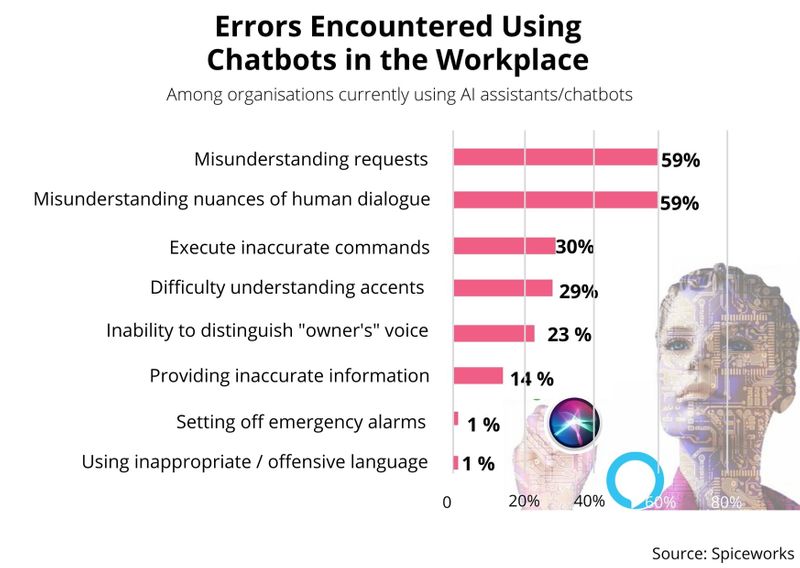
Around 67% of customers used chatbots in 2018, and by the end of 2019 more than a quarter of the population was estimated to be using some kind of chatbot support. Already, around 37% of customers use chatbots to get quick answers in case of an emergency, according to Chatbots Magazine.
Image Credit: Gulf News
How easy or difficult is it to implement a chatbot system?
For first-timers, there are many questions one needs to answer before and during the implementation process. Some of the challenges faced:
Figuring out what use cases the chatbot will fulfil
Building a bot that brings value to the end-user
Designing a bot personality that caters to your audience and matches your brand identity
Integrating the chatbot with tech, CRMs and digital channels to provide a seamless and secure experience
Knowing at what stage a human needs to be involved.
Q: How do you humanise bots?
Siri (Apple) and Alexa (Amazon) are two examples of chatbots getting “humanised”. Creating characters that represent a brand is not only a PR stunt. It’s based on an understanding of how the mind works: we’re wired to identify with each other.
Brands (or complex computer codes like chatbots) that put a face to a name makes people feel comfortable buying and talking. But there are heaps of ways to use chatbots — every brand from Pizza Hut to ride-hailing company Lyft and music app Spotify have plunged into the chatbots ecosystem.
“By giving your chatbot a character and personality,” explains Singh, “you eliminate the ‘cold connection’ users typically experience where each response feels computerised and robotic.”CONVERSATIONAL COMMERCE• A term coined by Uber’s Chris Messina in a 2015 piece published on “Medium”.
• It refers to the intersection of messaging apps and shopping. Meaning, the trend toward interacting with businesses through messaging and chat apps like Facebook Messenger, WhatsApp, Talk, and WeChat is more preferred as it encourages buyers to shop online with chatbots.
How do you train an AI chatbot (so awkward or irrelevant answers are avoided)?
The AI chatbot can be “trained” to understand the many ways people can shoot (or even misspell) their questions, explained Singh. “Few ways include defining the use case where each intent contains many utterances — and so on.”
Artificial intelligence is seen as one of man’s weapons against COVID-19. AI is transforming the way health care is delivered globally from the utilisation of big data and genetic information for providing precision medicine — which is a new line of treatment customised specifically to each individual- to including intelligent robotics in surgeries and rehabilitation.
Another is by “deep-learning”, for example through the use of Keras, a popular library for neural networks used in building chatbots. One way to start is by creating a yes/no-answering bot. As complexity increases, a programming language like Python may be used to implement a “recurrent neural network” (RNN) structure. “Training” a chatbot can use both supervised and unsupervised machine learning.WHAT IS MACHINE LEARNING?Machine learning, a branch of artificial intelligence, is the study of computer algorithms that improve automatically through “experience” and by the use of data. Self-driving technology is one example of machine learning, as continuous application of data helps improves accuracy over time without being programmed to do so.
What languages are supported by chatbots?
Chatbots are pretty flexible, able to support any language. The AI mechanisms behind most chatbots work well with almost every language. Verloop;says they offer support for 18+ languages — English, Hindi, Arabic, Bahasa, Konkani, Tamil, Telugu, Kannada, Hinglish, etc.). They also claim to have a multiple-dialect AI chatbot.
This capability is seen in the spike in demand. Verloop.io reported a three-fold growth in revenue since February 2020. The company has 5,000 brands globally — including Decathlon, Nykaa, Cleartrip, Dar Al Arkan, Fetchr, DSP Mutual Fund, Rentomojo, Scripbox, and others. Amidst the pandemic, chatbot usage increased by 80% (2020), according to Tidio, a chatbot software company.
The AI mechanisms behind most chatbots work well with almost every language.
–
“Our team size has grown three times. The team is now 100+, from 30 members as of February 2020,” said Singh, who expects the company to exit 2021 with five-fold revenue growth. This 2021, the company has new locations launched in Abu Dhabi, Singapore and in the US. Part of its growth plan this year is to hire and relocating tech people to different locations for an Indian global product.SOME UAE-BASED CHATBOT DEVELOPERS:• TECHVED Consulting
• Skcript
• Verloop
• Dexlock Henote Technologies
• TechnoGroupOriginator
• Coders.Dev
• Q3 Technologies
• NeuralRays AI Solutions
Is there a FOMO (fear of missing out) syndrome with chatbots?
Singh explains: “It is vital to be familiar with critical new technologies to ensure that you don’t get left behind is also an economic argument. Ultimately, the reasons for using a chatbot are economic, either in the short term or long term. Even the sense of being perceived as a ‘customer’s brand’ for using advanced technology is an attempt to improve the brand — which should lead to more growth.” In many cases, the ROI for chatbots is “exceptionally high”, he said.
What are the industries touched by chatbots?
The real estate industry is the most profitable sector, with more than 28% of real estate business now using chatbots, according to Chatbots Magazine. The travel industry reaps huge benefits from chatbots too. Chatbots, for example, are useful in filtering and speeding up the process of booking rooms or flights.
It’s also present in transport/logistics, education, medicine.
In education, chatbots are increasingly used too. For one, they help provide students with personalised feedback that helps improve the overall learning experience.
–
In education, chatbots are increasingly used too. For one, they help provide students with personalised feedback that helps improve the overall learning experience. Moreover, chatbots can recommend relevant online learning content by analysing their learning skills.
Chatbot apps also help teachers in reducing the burden of daily tasks such as checking assignments, evaluating performance, etc. More importantly, chatbots help boost engagement among students, all of whom had been hemmed into online modes of education.
$5b
money expected to be invested in chatbots this 2021, according to Chatbots Magazine
This is how chatbots have increasingly become part of our lives, like the internet itself. At least $5 billion will be invested in chatbots this year, according to the magazine.
And thanks to chatbots, the cost reduction of customers across the retail, banking, and healthcare sectors is estimated to amount to $11 billion annually by 2023. More and more people have used channels like Alexa or Google Home chatbot for shopping.
Will chatbots replace mobile apps?
A Gartner report states many companies are prioritising chatbot projects over mobile apps. The reason is that chatbots have become more reliable and effective due to advances in tech and AI. Though this doesn’t mean chatbots will obligerate mobile apps, it simply means when getting quick service, people will look to chatbots first.
In the future, chatbots will be more conversational, i.e. using natural human language. This is the Holy Grail of AI-driven conversation. When close to perfection, with multiple language/accent support, it will enable chatbots to move from simple user-based queries to more advanced predictive analytics based on real-time, human-like conversations, say experts.
Conversational chatbots are already used extensively in many industries and are increasing in popularity. By the end of 2021, almost a quarter of the global population will be using some kind of chatbot support on a daily basis. A Gartner report says that for businesses, AI will be a “mainstream customer experience” in the next couple of years. It further predicts that 47% of organisations will use chatbots for customer care and 40% will deploy virtual assistants.
So what now?
Gartner predicts that 85% of customer interactions will be managed without humans this 2021. Is this good news? If you consider the upsides – consumers get answers instantly, companies reduce costs, human agents can spend their time solving more important issues –there’s no doubt chatbots have become one of the most useful tools of our time.
More and more chatbots are appearing. Forbes reported that while millennials use social media apps more than any other generation – they are also chatbot natives. However, it’s the baby boomers (those born between 1946 and 1964) who are likely to expect benefits from chatbots than millennials, say experts. This is because it’s actually the baby boomers who use chatbots to resolve problems more than the younger generations.
Chatbots have an inherent utility. No matter whether or not we prefer talking to agents, in the future people will be forced to rely on chatbot support, just like we rely on apps now. Chatbots will change the world, one chat at a time. This is almost a certainty.
CHATBOTS TIMELINE:
1950: The Turing Test
Alan Turing theorised that virtually intelligent machine would be indistinguishable from human during a text-only conversation. This idea essentially laid the foundations for the chatbot revolution.
1966: Eliza
Eliza was created at the Massachusetts Institute of Technology (MIT) AI lab to simulate human conversation by matching questions with the scripted responses. It gave an illusion of understanding but had not been in framework for contextualising events.
1972: Parry
While Eliza was a tongue-in-cheek simulation of a therapist, Parry simulated a person with paranoid schizophrenia. It used a conversational strategy and was much more serious than Eliza.
1984: Racter
Racter is an artificial intelligence computer application that generates English language prose at random. It was published in 1984 by Mindscape.
1988: Jabberwacky
Developed in the 1980s and released online in 1997, Jabberwacky chatbot was designed to simulate natural human chat in an “interesting and entertaining and humorous manner.”
1992: Dr Sbaitso
An AI speech synthesis program created for MS DOS based PCs. Dr Sbaitso assumed the role of a psychologist when interacting with others and was designed to showcase a digitised voice.
1995: Alice
The artificial linguistic Internet computer entity was a “natural language processing bot”. She could apparently follow matching rules based on input in order to have a conversation, but was still unable to pass the Turing test.
2001: Smarterchild
An intelligent bot widely distributed across SMS networks and friend lists among AOL and MSN messenger users. It offered a personalised conversation and was considered a precursor to Apple’s Siri and Samsung’s Voice.
2006: Watson
Watson was originally designed to compete on the TV show “Jeopardy” in which he beat two of the show’s former champions. Watson has since gone on to bigger and better things using natural language processing (NLP) in machine learning to reveal insights from large amount of data.
2010: Siri
Siri is an intelligent personal assistant. It is part of Apple’s IOS and uses a natural language user interface to answer questions and perform various requests. Siri did the groundwork for all later AI bots and personal assistants.
2012: Google Now
Developed by Google for a Google search mobile app, it employs a natural language user interface to answer questions, make recommendations, and perform actions by passing on requests to a set of Web services.
2014: Slack Bot
Slackbot is a built-in personal assistant on Slack (a channel-based messaging platform launched in 2013). Slackbots are handy assistants: they wait for commands, then find or create the thing you need. You can also add some character to your conversations by producing custom responses for Slackbot.
2015: Alexa, Cortana
Alexa is an intelligent personal assistant that inhabits the Amazon ecosystem. It is capable of voice interaction, using natural language processing algorithms to receive, recognise, and respond to voice commands.
Cortana is Microsoft’s version of the Intelligent Assistant that can set reminders and answer questions using the Bing search engine. It recognises natural voice commands, in a number of languages.
2016: Bots for Messenger, Tay
In April 2016, Facebook launched a messenger platform which allows developers to create bots that can interact with Facebook users. At the end of that year, 34,000 bots were available covering a wide range of use cases.
Tay was the chat bot created by Microsoft to mimic the speech and habits of a teenage girl. It caused controversy when it began to post offensive tweets and became increasingly paranoid. It eventually had to be shut down 16 hours after launch.
2017: Woebot
It is an AI-powered Cognitive Behavioral Therapy (CBT) chatbot that delivers a suite of clinically-validated therapy programs to address mental health challenges. Woebot functions as a coach who chats with you and offers insights and skills to help you grow into your best self. You can chat with Woebot as much or as little as you like — it’s always available when you need it.
One of the biggest trends in machine learning right now is text generation. AI systems learn by absorbing billions of words scraped from the internet and generate text in response to a variety of prompts. It sounds simple, but these machines can be put to a wide array of tasks — from creating fiction, to writing bad code, to letting you chat with historical figures.
The best-known AI text-generator is OpenAI’s GPT-3, which the company recently announced is now being used in more than 300 different apps, by “tens of thousands” of developers, and producing 4.5 billion words per day. That’s a lot of robot verbiage. This may be an arbitrary milestone for OpenAI to celebrate, but it’s also a useful indicator of the growing scale, impact, and commercial potential of AI text generation.
OpenAI started life as a nonprofit, but for the last few years, it has been trying to make money with GPT-3 as its first salable product. The company has an exclusivity deal with Microsoft which gives the tech giant unique access to the program’s underlying code, but any firm can apply for access to GPT-3’s general API and build services on top of it.NO COMPANY STANDS TO BENEFIT MORE FROM GPT-3’S RISE THAN OPENAI ITSELF
As OpenAI is keen to advertise, hundreds of companies are now doing exactly this. One startup named Viable is using GPT-3 to analyze customer feedback, identifying “themes, emotions, and sentiment from surveys, help desk tickets, live chat logs, reviews, and more”; Fable Studio is using the program to create dialogue for VR experiences; and Algolia is using it to improve its web search products which it, in turn, sells on to other customers.
All this is good news for OpenAI (and Microsoft, whose Azure cloud computing platform powers OpenAI’s tech), but not everyone in startup-land is keen. Manyanalysts have noted the folly of building a company on technology you don’t actually own. Using GPT-3 to create a startup is ludicrously simple, but it’ll be ludicrously simple for your competitors, too. And though there are ways to differentiate your GPT startup through branding and UI, no firm stands to gain as much as from the use of the technology as OpenAI itself.
Another worry about the rise of text-generating systems relates to issues of output quality. Like many algorithms, text generators have the capacity to absorb and amplify harmful biases. They’re also often astoundingly dumb. In tests of a medical chatbot built using GPT-3, the model responded to a “suicidal” patient by encouraging them to kill themselves. These problems aren’t insurmountable, but they’re certainly worth flagging in a world where algorithms are already creating mistaken arrests, unfair school grades, and biased medical bills.
As OpenAI’s latest milestone suggest, though, GPT-3 is only going to keep on talking, and we need to be ready for a world filled with robot-generated chatter.
Now uncocooned from its protective carbon-fiber shield, the helicopter is being readied for its next steps.
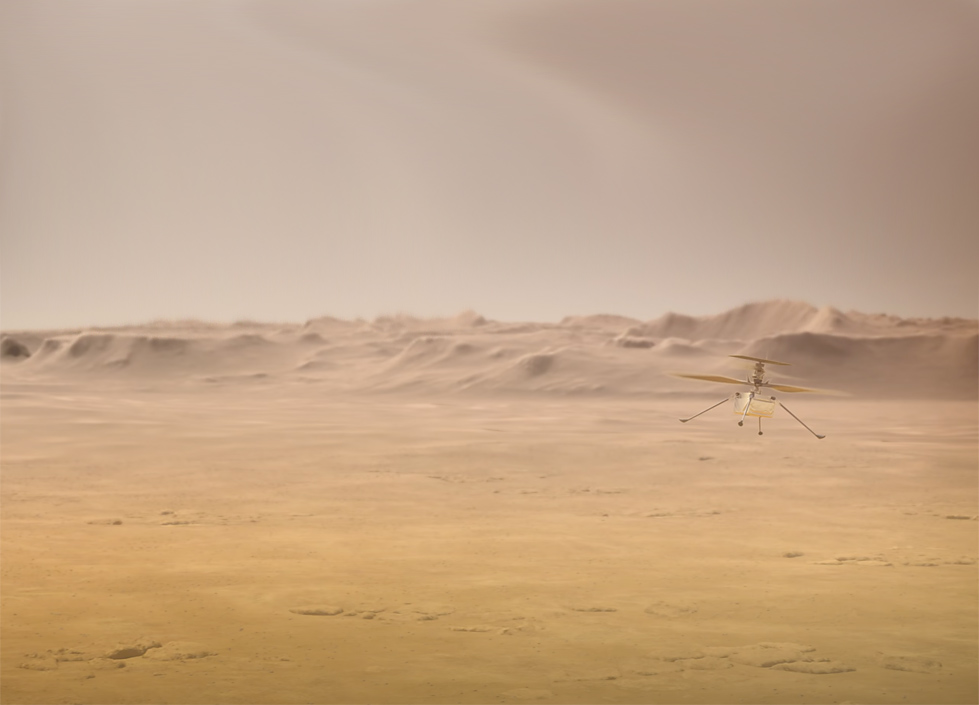
NASA is targeting no earlier than April 8 for the Ingenuity Mars Helicopter to make the first attempt at powered, controlled flight of an aircraft on another planet. Before the 4-pound (1.8-kilogram) rotorcraft can attempt its first flight, however, both it and its team must meet a series of daunting milestones.
Ingenuity remains attached to the belly of NASA’s Perseverance rover, which touched down on Mars Feb. 18. On March 21, the rover deployed the guitar case-shaped graphite composite debris shield that protected Ingenuity during landing. The rover currently is in transit to the “airfield” where Ingenuity will attempt to fly. Once deployed, Ingenuity will have 30 Martian days, or sols, (31 Earth days) to conduct its test flight campaign.
“When NASA’s Sojourner rover landed on Mars in 1997, it proved that roving the Red Planet was possible and completely redefined our approach to how we explore Mars. Similarly, we want to learn about the potential Ingenuity has for the future of science research,” said Lori Glaze, director of the Planetary Science Division at NASA Headquarters. “Aptly named, Ingenuity is a technology demonstration that aims to be the first powered flight on another world and, if successful, could further expand our horizons and broaden the scope of what is possible with Mars exploration.”
Flying in a controlled manner on Mars is far more difficult than flying on Earth. The Red Planet has significant gravity (about one-third that of Earth’s), but its atmosphere is just 1% as dense as Earth’s at the surface. During Martian daytime, the planet’s surface receives only about half the amount of solar energy that reaches Earth during its daytime, and nighttime temperatures can drop as low as minus 130 degrees Fahrenheit (minus 90 degrees Celsius), which can freeze and crack unprotected electrical components.
To fit within the available accommodations provided by the Perseverance rover, the Ingenuity helicopter must be small. To fly in the Mars environment, it must be lightweight. To survive the frigid Martian nights, it must have enough energy to power internal heaters. The system – from the performance of its rotors in rarified air to its solar panels, electrical heaters, and other components – has been tested and retested in the vacuum chambers and test labs of NASA’s Jet Propulsion Laboratory in Southern California.
“Every step we have taken since this journey began six years ago has been uncharted territory in the history of aircraft,” said Bob Balaram, Mars Helicopter chief engineer at JPL. “And while getting deployed to the surface will be a big challenge, surviving that first night on Mars alone, without the rover protecting it and keeping it powered, will be an even bigger one.”
Deploying the Helicopter
Before Ingenuity takes its first flight on Mars, it must be squarely in the middle of its airfield – a 33-by-33-foot (10-by-10-meter) patch of Martian real estate chosen for its flatness and lack of obstructions. Once the helicopter and rover teams confirm that Perseverance is situated exactly where they want it to be inside the airfield, the elaborate process to deploy the helicopter on the surface of Mars begins.
“As with everything with the helicopter, this type of deployment has never been done before,” said Farah Alibay, Mars Helicopter integration lead for the Perseverance rover. “Once we start the deployment there is no turning back. All activities are closely coordinated, irreversible, and dependent on each other. If there is even a hint that something isn’t going as expected, we may decide to hold off for a sol or more until we have a better idea what is going on.”
The helicopter deployment process will take about six sols (six days, four hours on Earth). On the first sol, the team on Earth will activate a bolt-breaking device, releasing a locking mechanism that helped hold the helicopter firmly against the rover’s belly during launch and Mars landing. The following sol, they will fire a cable-cutting pyrotechnic device, enabling the mechanized arm that holds Ingenuity to begin rotating the helicopter out of its horizontal position. This is also when the rotorcraft will extend two of its four landing legs.
During the third sol of the deployment sequence, a small electric motor will finish rotating Ingenuity until it latches, bringing the helicopter completely vertical. During the fourth sol, the final two landing legs will snap into position. On each of those four sols, the Wide Angle Topographic Sensor for Operations and eNgineering (WATSON) imager will take confirmation shots of Ingenuity as it incrementally unfolds into its flight configuration. In its final position, the helicopter will hang suspended at about 5 inches (13 centimeters) over the Martian surface. At that point, only a single bolt and a couple dozen tiny electrical contacts will connect the helicopter to Perseverance. On the fifth sol of deployment, the team will use the final opportunity to utilize Perseverance as a power source and charge Ingenuity’s six battery cells.
“Once we cut the cord with Perseverance and drop those final 5 inches to the surface, we want to have our big friend drive away as quickly as possible so we can get the Sun’s rays on our solar panel and begin recharging our batteries,” said Balaram.
On the sixth and final scheduled sol of this deployment phase, the team will need to confirm three things: that Ingenuity’s four legs are firmly on the surface of Jezero Crater, that the rover did, indeed, drive about 16 feet (about 5 meters) away, and that both helicopter and rover are communicating via their onboard radios. This milestone also initiates the 30-sol clock during which time all preflight checks and flight tests must take place.
“Ingenuity is an experimental engineering flight test – we want to see if we can fly at Mars,” said MiMi Aung, project manager for Ingenuity Mars Helicopter at JPL. “There are no science instruments onboard and no goals to obtain scientific information. We are confident that all the engineering data we want to obtain both on the surface of Mars and aloft can be done within this 30-sol window.”
As with deployment, the helicopter and rover teams will approach the upcoming flight test methodically. If the team misses or has questions about an important preflight milestone, they may take one or more sols to better understand the issue. If the helicopter survives the first night of the sequence period on the surface of Mars, however, the team will spend the next several sols doing everything possible to ensure a successful flight, including wiggling the rotor blades and verifying the performance of the inertial measurement unit, as well as testing the entire rotor system during a spin-up to 2,537 rpm (while Ingenuity’s landing gear remain firmly on the surface).
The First Flight Test on Mars
Once the team is ready to attempt the first flight, Perseverance will receive and relay to Ingenuity the final flight instructions from JPL mission controllers. Several factors will determine the precise time for the flight, including modeling of local wind patterns plus measurements taken by the Mars Environmental Dynamics Analyzer (MEDA) aboard Perseverance. Ingenuity will run its rotors to 2,537 rpm and, if all final self-checks look good, lift off. After climbing at a rate of about 3 feet per second (1 meter per second), the helicopter will hover at 10 feet (3 meters) above the surface for up to 30 seconds. Then, the Mars Helicopter will descend and touch back down on the Martian surface.
Several hours after the first flight has occurred, Perseverance will downlink Ingenuity’s first set of engineering data and, possibly, images and video from the rover’s Navigation Cameras and Mastcam-Z. From the data downlinked that first evening after the flight, the Mars Helicopter team expects to be able to determine if their first attempt to fly at Mars was a success.
On the following sol, all the remaining engineering data collected during the flight, as well as some low-resolution black-and-white imagery from the helicopter’s own Navigation Camera, could be downlinked to JPL. The third sol of this phase, the two images taken by the helicopter’s high-resolution color camera should arrive. The Mars Helicopter team will use all information available to determine when and how to move forward with their next test.
“Mars is hard,” said Aung. “Our plan is to work whatever the Red Planet throws at us the very same way we handled every challenge we’ve faced over the past six years – together, with tenacity and a lot of hard work, and a little Ingenuity.”
A Piece of History
While Ingenuity will attempt the first powered, controlled flight on another planet, the first powered, controlled flight on Earth took place Dec. 17, 1903, on the windswept dunes of Kill Devil Hill, near Kitty Hawk, North Carolina. Orville and Wright covered 120 feet in 12 seconds during the first flight. The Wright brothers made four flights that day, each longer than the previous.
A small amount of the material that covered one of the wings of the Wright brothers’ aircraft, known as the Flyer, during the first flight is now aboard Ingenuity. An insulative tape was used to wrap the small swatch of fabric around a cable located underneath the helicopter’s solar panel. The Wrights used the same type of material – an unbleached muslin called “Pride of the West” – to cover their glider and aircraft wings beginning in 1901. The Apollo 11 crew flew a different piece of the material, along with a small splinter of wood from the Wright Flyer, to the Moon and back during their iconic mission in July 1969.
More About Ingenuity
The Ingenuity Mars Helicopter was built by JPL, which also manages the technology demonstration for NASA Headquarters. It is supported by NASA’s Science Mission Directorate, the NASA Aeronautics Research Mission Directorate, and the NASA Space Technology Mission Directorate. NASA’s Ames Research Center and Langley Research Center provided significant flight performance analysis and technical assistance.
At NASA Headquarters, Dave Lavery is the program executive for the Ingenuity Mars Helicopter. At JPL, MiMi Aung is the project manager and J. (Bob) Balaram is chief engineer.
Bring the excitement of Ingenuity into classrooms and homes through NASA’s Office of STEM Engagement toolkit. Educators, students, and families can follow along the mission by building a paper helicopter or coding an Ingenuity video game.
A key objective for Perseverance’s mission on Mars is astrobiology, including the search for signs of ancient microbial life. The rover will characterize the planet’s geology and past climate, pave the way for human exploration of the Red Planet, and be the first mission to collect and cache Martian rock and regolith (broken rock and dust).
Subsequent NASA missions, in cooperation with ESA (European Space Agency), would send spacecraft to Mars to collect these sealed samples from the surface and return them to Earth for in-depth analysis.
JPL, which is managed for NASA by Caltech in Pasadena, California, built and manages operations of the Perseverance rover.
Anyone who’s tried to buy a graphics card lately knows how tough it can be to find something in stock, let alone for a reasonable price. The European Union, however, thinks this is a grand time to slap 20,000 GPUs into a supercomputer with the aim of studying climate change with a simulated twin of our planet. The plan to create a digital twin of Earth might end up delayed due to the relative lack of available GPUs, but this isn’t going to be an overnight project.
The EU calls the upcoming computer Destination Earth, or DestinE for short. This massive raft of GPUs will allegedly be able to create a highly accurate copy of Earth down to kilometer-scale that simulates how climate change will affect us. Users will be able to vary conditions and project the effects on food security, ocean levels, global temperature, and so on.
This level of detail will allow researchers to predict the future, at least in some small way. Peter Bauer is deputy director of the European Centre for Medium-Range Weather Forecasts and lead author on the new study detailing DestinE. Bauer uses The Netherlands as an example of what a digital Earth clone could do. “If you are planning a two-metre high dike in The Netherlands, for example, I can run through the data in my digital twin and check whether the dike will in all likelihood still protect against expected extreme events in 2050,” says Bauer. DestinE could guide decisions large and small as Europe seeks to reduce emissions and plan for the impacts of climate change.
The team planning DestinE have ballparked 20,000 GPUs based on the Cray Piz Daint supercomputer in Zurich (above). That device runs on more than 5,000 Pascal-based Nvidia Tesla GPUs, and scientists believe it will take about four times the computing power to create a digital twin of Earth. That’s how the scientists arrived at the 20,000 number. We will take their word for it that this isn’t some crazy scheme to build a secret crypto mega-mining rig.
DestinE is part of the EU’s $1 trillion initiative to reach carbon neutrality by 2050. That would just about cover 20,000 GPUs if the EU were buying everything right now, but thankfully, it’s not working to assemble DestinE just yet. Researchers hope to have the supercomputer up and running within the next seven to ten years. That many GPUs are sure to draw a ton of power, even if they’re more efficient cards from a few generations in the future. Hopefully, the EU’s climate change computer doesn’t contribute to climate change itself.
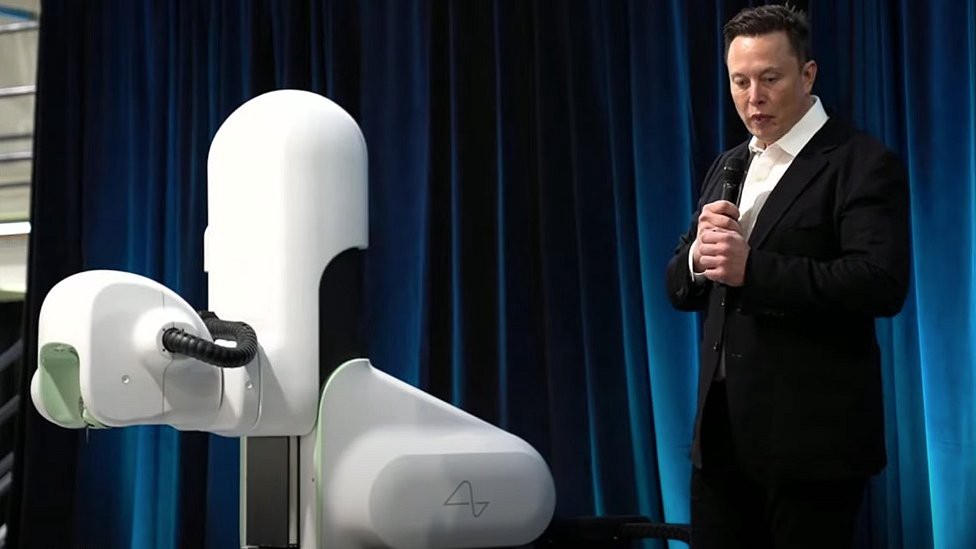
Neuralink, a neurotechnological company based out of San Francisco founded by Elon Musk is developing technology whose ultimate goal is to help cure neurological conditions like Alzheimer’s, dementia, and spinal cord injuries.
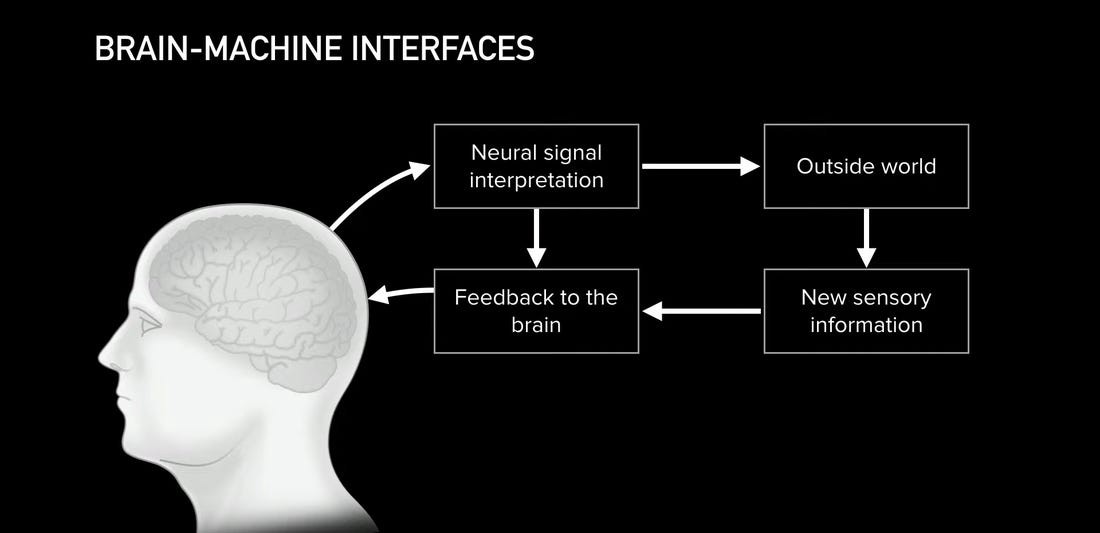
The company develops ultra-high bandwidth brain-machine interfaces that connect the human brain to computers. Essentially, it’s a network of tiny electrodes linked to your brain that Neuralink envisions, which will allow us to communicate wirelessly with everything and everyone.
Our thoughts, feelings, hopes, and even behaviors can be expressed without saying a word. In addition, it can allow us to communicate with animals.
As a matter of fact, Neuralink has started testing their brain-machine device with pigs.
Yes, you read that right. Pigs.
They tested it with pigs by putting a computer chip inside their brains.
Again, yes you read that right. Inside their brains.
Neuralink does something that can be considered morally unethical, but when understood the science behind it, it will start to make sense and it will just be like any other scientific innovations we’ve had in our lifetime.
Of course, that doesn’t negate the fact that putting a chip into animals’ brains and in the future, human brains, is incredibly risky, which is why the company takes careful decisions for every step they make.
Dangerous and risky, but innovative and rewarding, when it works.
A whole-brain interface would give your brain the ability to communicate wirelessly with the cloud, with computers, and with the brains of anyone who has a similar interface in their head.
That means that anything you type with your hands on your iPhone right now can be entirely done just by thinking about it.
This flow of information between your brain and the outside world would be so easy it would feel the same as your thoughts do right now. It would be second nature to you, if not first.
Basically, a Neuralink brain chip interface is a communication system. It’s like having earpieces, but you don’t respond to the other line by speaking, but by thinking. The signals that go off your neurons are read by an interface that translates into data.
As you can see by now, there are limitless applications for such technology and one could only imagine what it cannot do.
Where Is Neuralink In The Process?
Neuralink has started testing its technology on pigs mid 2020, which resulted in success. Early 2021, the company also tested on monkeys, by having the monkey itself play videogames.
And more recent development, it has been discussed that a possible test on humans could be conducted in mid to late 2021.
Neuralink may fundamentally alter how we conceive of what it means to be human.
Why?
Because of how we communicate and interact with our fellow humans and animals. Neuralink could be the next technological revolution that could disrupt some industries, if not all.
Smartphone and computer for starters.
How could it disrupt the smartphone industry?
Image: Neuralink
Depending on who you ask, the human story generally goes like this. First, we discovered fire, then we developed oral language. We then turned oral language into writing language, and eventually, found a way to turn it into mechanized printing.
A few centuries later, electricity happened, which gave rise to telephones, radios, TVs, and eventually personal computers, and our beloved handheld smartphones.
Then, phones started losing their cords, computers became mini and we figured out ways to make them exponentially more powerful and portable enough to fit in pockets.
Eventually, we created virtual realities and melded our sensate reality with an augmented one. We made everything smaller, portable, and cordless.
Neuralink’s technology is the next wave of disruption much like what personal computers and smartphones did. This time, it will be a massive disruption.
People use their smartphones primarily to communicate and if the people of the future will be presented with a better way to communicate, they will change their minds. Yes, there will be resistance at first, but as how every technological disruption progressed, you cannot stop innovation.
And as the old saying goes, “Resistance is futile.”
Apple Watch or AirPods, devices primarily made for communications, but both of these facilitate how we communicate with one another.
They’re wireless, portable, lightweight, and handy. Everything seems so seamless with them.
Now, only God can put a description on that brain chip.
A disruption always takeover an existing industry by scale so when this happens, brain-machine interfaces could not only change the way we communicate but also how we think.
Smartphones and computers will be the new Television. Neuralink’s technology will be the new iPhones.
Because Neuralink is essentially a communications system there will be a big matter of regulation and control. And because it can also take over industries like smartphones and computers, policies will be created, deals will be made.
There’s also the issue of security, exploits, and hacks. Just like how our smart ecosystem of smart devices is exploitable and hackable, a brain chip interface device will be as well.
Well, it is Silicon Valley after all. If you’re not creating problems, you’re not innovating enough.
Hibernation is in the DNA of dwarf lemurs, but it’s difficult to achieve in zoos and sanctuaries. It is also what’s set them apart from other primates: these lemurs are our closest hibernating relative, and the only primates known to hibernate for longer periods of time.
This new lemur study adds to our ever-growing knowledge of animal hibernation. But its family tree proximity to people also raises two important questions about how animal hibernation can help humans.
How can hibernation help us better understand human longevity?
Could humans ever hibernate?
A lemur being studied at the Duke Lemur Center. Photo by David Haring, Duke Lemur Center
Pin ItPhoto: Getty Images / Roy JAMES ShakespeareShare on facebookShare on twitterShare on pinterestShare on emailThe impact of alcohol on your body changes as you age. While some differences are immediately recognizable (a terrible hangovers after one drink the night before, for example), others are a bit more subtle. “The effects of alcohol on the brain are dependent on age and daily consumption habits,” says Dr. Willeumier. “With aging, specific structural and functional changes happen in the brain, including thinning of the cerebral cortex, neuronal shrinkage, decreased spine density, decreased white-matter connectivity, and diminished neurotransmitter production.” Alcohol consumption only exacerbates symptoms of brain aging.
“The prefrontal cortex and hippocampus are vulnerable to the aging process, and a decline in brain volume in these regions can contribute significantly to memory impairments,” says Dr. Willeumier. “Alcohol consumption has an added impact on the aging brain, particularly in these regions essential to cognitive function.”
“Moderate-to-heavy alcohol consumption, four or more drinks per day, is detrimental to brain function,” she says. “Ethanol can have a neurotoxic effect on the brain, leading to structural and functional brain damage. Heavy drinking can impact vascular function due to the inflammatory response and oxidative stress, increasing the risk of hypertension, coronary heart disease, stroke, and peripheral artery disease, which can adversely affect cognitive health.”
Heavy alcohol use is associated with an increased risk of dementia. A June 2018 study, published in The Lancet Public Health, “found in a cohort of 1,109,343 dementia cases that there was an association of alcohol use disorders with all types of dementia,” says Dr. Whilleumier. “The authors note that the burden of dementia is much larger than previously thought, with alcohol use disorders linked to a threefold increase risk of all types of dementia. Therefore, early detection and intervention in heavy alcohol users are essential in the prevention of dementia.”
While short-term impacts of alcohol like decreased attention, mood, and memory changes can be undone by abstaining from alcohol consumption, be mindful that long-term impacts are often irreversible.

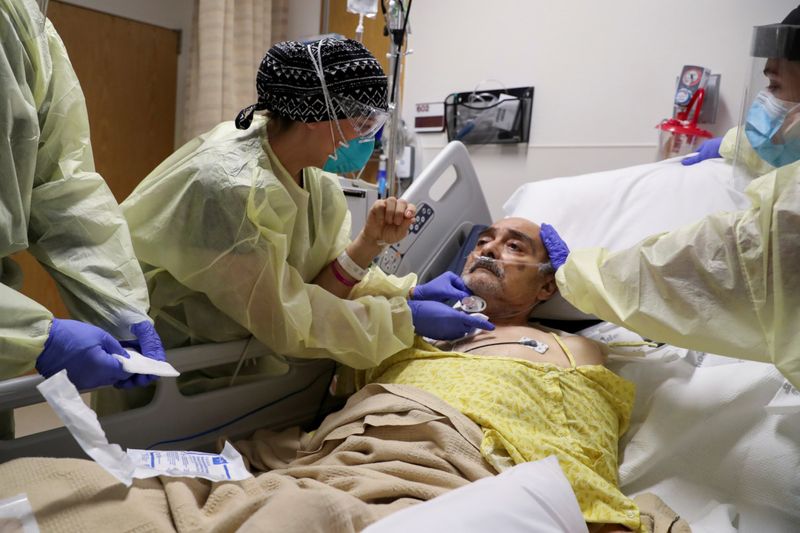
 An oft-cited example AI use is of Canadian firm BlueDot’s early-warning system, which alerted the company’s customers about Covid-19 at the end of December even before the WHO. The system uses AI, including natural-language processing and machine learning, to track over 100 infectious diseases by analysing about 100,000 articles in 65 languages every day.Image Credit: Seyyed dela Llata │ Gulf News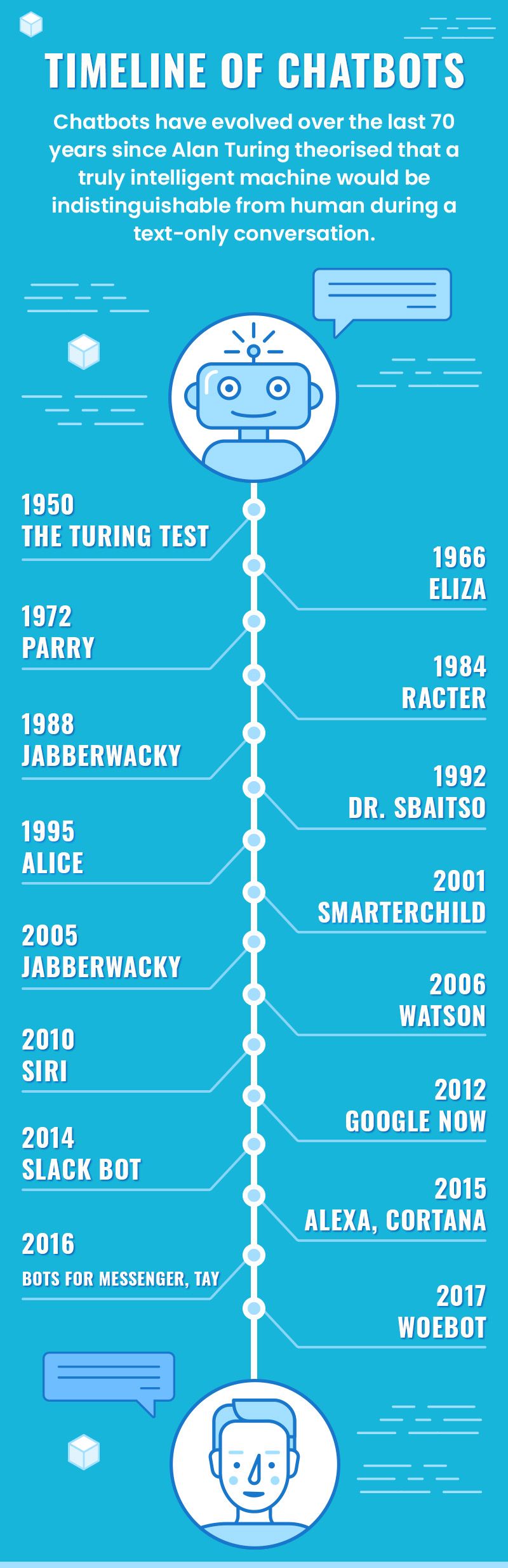
/cdn.vox-cdn.com/uploads/chorus_image/image/69041641/acastro_200730_1777_ai_0001.0.jpg)








 Bruce's Blog