It’s probably cliché to say the last year has prompted more than its fair share of sleepless nights. But that doesn’t mean it isn’t true. Considering all that tossing and turning that’s been happening the past 12 months, you’re probably more aware of your bedsheets than ever before. And if you’re now finding your current sets are definitely lacking, we might have an option for turning your uncomfortable evenings around.
First and foremost for any set of bed sheets are how good they feel — and this set is like sleeping on a cloud. Created with 1,800 thread count fabric, these organic bamboo sheets blended with high-quality microfiber are ridiculously cozy and soft. While silk or Egyptian cotton sheets usually capture attention for their comfort, bamboo shouldn’t be overlooked. In fact, bamboo sheets are softer than Egyptian cotton and have the same softness as silk without the inherent slipperiness.
While also holding its dye coloring through multiple washings better than other types of sheets, breathable bamboo sheets are also 40 percent more absorbent than the best cotton sheets, drawing moisture away during the course of the night so you’re always dry and comfortable, even once those warm summer nights roll around.
These sheets not only feel and look great, but they smell great too, thanks to their calming lavender aroma. Using a patented encapsulated technology, the aromatherapy lavender is actually infused right into the fabric as it’s naturally released overnight, promoting calm and wellness.
In addition to their soothing scent, these eco-friendly sets are also antimicrobial to keep bacteria and other contaminants away, and hypoallergenic so it’s never abrasive for those even with highly sensitive skin.
This Bamboo 4-piece sheet set is available in all four of the most popular bedding sizes ranging from twin and full up to queen and king sizes as well as a variety of colors, including aqua, silver, white, grey, sage, ivory, or taupe. Depending on the size of your bed, sets range from $39.99 to only $29.99.
Our brains can’t thoroughly analyze everything. Here’s how they think through it all anyway.
ShutterstockTYLER DANIEL ANDERSON-SIEG3.27.2021 7:30 AM
A ROARING SOUND FILLS THE AIR and a small object zips through the sky. People in a crowd look up, and three voices shout, “Look! Up in the sky! It’s a bird!” “It’s a plane!” “It’s Superman!”
The answer to this question lies in how our brains are hardwired to think. We experience and interpret the world around us based on what we already know, even though sometimes what we know is flawed.
THE THINKING PROBLEM
The world is a confusing and busy place. Our brains must make sense of it by processing a never-ending stream of information. Ideally – because it would be most accurate – our brains would analyze everything thoroughly. However, they cannot, because it is too impractical.
Other primates are often quite intelligent, including macaques. Shutterstock
Thinking takes time, and our decisions must often be fast. You must immediately know to cross a road quickly – even run – when you hear a car rapidly approaching.
Thinking also uses energy – or brainpower – and our brains have only a limited supply. Analyzing everything would quickly deplete our energy stores.
These limitations represent a thinking problem: Our brains simply do not have enough resources to understand the world without taking some mental shortcuts.
OUR SMART, LAZY BRAINS
Our brains find shortcuts to overcome the thinking problem by relying on thoughts already stored in our minds, called schemas. Schemas do the processing for the brain, like auto-fill, but for thinking.
Using schemas is more efficient than analyzing every aspect of every moment. They allow our brains to process more information with less effort, saving brain power for other important thinking and problem-solving.
If you walked outside one night and saw this, what would you think? It might depend on what you already know.Shutterstock
Schemas are the building blocks of our knowledge about the world. Our brains rely on different types of schemas to understand different types of situations.
Schemas are like books in your mind telling you what different objects are and what they do. A bird schema, for example, might say that birds are “small animals,” “have wings” and “can fly.” Together, all the objects you know form a collection of books that fill the shelves of a library in your mind.
Whether our judgments are accurate depends on the schemas or books available in our mental libraries.
When our brains try to understand unfamiliar objects, they must rely on a schema for a different but similar object because the correct schema is unavailable. If the object and chosen schema closely match, our brains effortlessly – but inaccurately – assume the two objects are the same.
A person who has never seen a bat might assume a bat is a bird because the features of the bat and their schema for a bird are similar: Both are small animals with wings and can fly. Our brains accept occasional inaccuracies.
There is no mistaking a guinea pig. But would you agree if you had never seen one before?Shutterstock
For the two people who thought Superman was a bird or a plane, neither had seen Superman before, so neither had a Superman schema available to rely on. Their brains effortlessly chose schemas for a bird and plane instead because those schemas were the closest match to the object in the sky.
Their brains made quick assumptions based on imperfect knowledge. The human brain “thought” it saw one thing but, in the interest of thinking quickly and efficiently, it made a mistake. There is no harm in thinking Superman is a bird or a plane, even though he is not. It only takes one encounter with Superman to create a new schema and change your thinking forever.
From TikTok to Instagram, how’s your creative working for you?
In digital marketing, there’s no one-size-fits-all. Learn how data can make or break the performance of creative across all platforms.Register Now
Join Transform 2021 for the most important themes in enterprise AI & Data. Learn more.
Reinforcement learning (RL) is a powerful type of artificial intelligence technology that can be used to learn strategies to optimally control large, complex systems such as manufacturing plants, traffic control systems (road/train/aircraft), financial portfolios, robots, etc. It is currently transitioning from research labs to highly impactful, real world applications. For example, self-driving car companies like Wayve and Waymo are using reinforcement learning to develop the control systems for their cars.
Say we are using AI to help operate a manufacturing plant. Pattern recognition may be used for quality assurance, where the AI system uses images and scans of the finished product to detect any imperfections or flaws. An RL system, on the other hand, would compute and execute the strategy for controlling the manufacturing process itself (by, for example, deciding which lines to run, controlling machines/robots, deciding which product to manufacture, and so on). The RL system will also try to ensure that the strategy is optimal in that it maximizes some metric of interest — such as the output volume — while maintaining a certain level of product quality. The problem of computing the optimal control strategy, which RL solves, is very difficult for some subtle reasons (often much more difficult than pattern recognition).
In computing the optimal strategy, or policy in RL parlance, the main challenge an RL learning algorithm faces is the so-called “temporal credit assignment” problem. That is, the impact of an action (e.g. “run line 1 on Wednesday”) in a given system state (e.g. “current output level of machines, how busy each line is,” etc.) on the overall performance (e.g. “total output volume”) is not known until after (potentially) a long time. To make matters worse, the overall performance also depends on all the actions that are taken subsequent to the action being evaluated. Together, this implies that, when a candidate policy is executed for evaluation, it is difficult to know which actions were the good ones and which were the bad ones — in other words, it is very difficult to assign credit to the different actions appropriately. The large number of potential system states in these complex problems further exacerbates the situation via the dreaded “curse of dimensionality.” A good way to get an intuition for how an RL system solves all these problems at the same time is by looking at the recent spectacular successes they have had in the lab.
Many of the recent, prominent demonstrations of the power of RL come from applying them to board games and video games. The first RL system to impress the global AI community was able to learn to outplay humans in different Atari games when only given as input the images on screen and the scores received by playing the game. This was created in 2013 by London-based AI research lab Deepmind (now part of Alphabet Inc.). The same lab later created a series of RL systems (or agents), starting with the AlphaGo agent, which were able to defeat the top players in the world in the board game Go. These impressive feats, which occurred between 2015 and 2017, took the world by storm because Go is a very complex game, with millions of fans and players around the world, that requires intricate, long-term strategic thinking involving both the local and global board configurations.
Subsequently, Deepmind and the AI research lab OpenAI have released systems for playing the video games Starcraft and DOTA 2 that can defeat the top human players around the world. These games are challenging because they require strategic thinking, resource management, and control and coordination of multiple entities within the game.
All the agents mentioned above were trained by letting the RL algorithm play the games many many times (e.g. millions or more) and learning which policies work and which do not against different kinds of opponents and players. The large number of trials were possible because these were all games running on a computer. In determining the usefulness of various policies, the RL algorithm often employed a complex mix of ideas. These include hill climbing in policy space, playing against itself, running leagues internally amongst candidate policies or using policies used by humans as a starting point and properly balancing exploration of the policy space vs. exploiting the good policies found so far. Roughly speaking, the large number of trials enabled exploring many different game states that could plausibly be reached, while the complex evaluation methods enabled the AI system to determine which actions are useful in the long term, under plausible plays of the games, in these different states.
A key blocker in using these algorithms in the real world is that it is not possible to run millions of trials. Fortunately, a workaround immediately suggests itself: First, create a computer simulation of the application (a manufacturing plant simulation, or market simulation etc.), then learn the optimal policy in the simulation using RL algorithms, and finally adapt the learned optimal policy to the real world by running it a few times and tweaking some parameters. Famously, in a very compelling 2019 demo, OpenAI showed the effectiveness of this approach by training a robot arm to solve the Rubik’s cube puzzle one-handed.
For this approach to work, your simulation has to represent the underlying problem with a high degree of accuracy. The problem you’re trying to solve also has to be “closed” in a certain sense — there cannot be arbitrary or unseen external effects that may impact the performance of the system. For example, the OpenAI solution would not work if the simulated robot arm was too different from the real robot arm or if there were attempts to knock the Rubik’s cube out of the real robot arm (though it may naturally be — or be explicitly trained to be — robust to certain kinds of obstructions and interferences).
These limitations will sound acceptable to most people. However, in real applications it is tricky to properly circumscribe the competence of an RL system, and this can lead to unpleasant surprises. In our earlier manufacturing plant example, if a machine is replaced with one that is a lot faster or slower, it may change the plant dynamics enough that it becomes necessary to retrain the RL system. Again, this is not unreasonable for any automated controller, but stakeholders may have far loftier expectations from a system that is artificially intelligent, and such expectations will need to be managed.
Regardless, at this point in time, the future of reinforcement learning in the real world does seem very bright. There are many startups offering reinforcement learning products for controlling manufacturing robots (Covariant, Osaro, Luffy), managing production schedules (Instadeep), enterprise decision making (Secondmind), logistics (Dorabot), circuit design (Instadeep), controlling autonomous cars (Wayve, Waymo, Five AI), controlling drones (Amazon), running hedge funds (Piit.ai), and many other applications that are beyond the reach of pattern recognition based AI systems.
Each of the Big Tech companies has made heavy investments in RL research — e.g. Google acquiring Deepmind for a reported £400 million (approx $525 million) in 2015. So it is reasonable to assume that RL is either already in use internally at these companies or is in the pipeline; but they’re keeping the details pretty quiet for competitive advantage reasons.
We should expect to see some hiccups as promising applications for RL falter, but it will likely claim its place as a technology to reckon with in the near future.
M M Hassan Mahmud is a Senior AI and Machine Learning Technologist at Digital Catapult, with a background in machine learning within academia and industry.
Apple has been increasingly promoting the Apple Watch’s health monitoring credentials. There’s even talk of the Apple Watch 7 non-invasively monitoring blood glucose levels, which would complement the wearable’s ability to detect falls and watch for atrial fibrillation.
Now researchers from the University of Stanford have found that even the older Apple Watch 3 can be of benefit to doctors monitoring cardiovascular patients awaiting treatment.
As first spotted by MyHealthyApple, the trial examined 110 patients scheduled for vascular or cardiac procedures conditions to see whether remote tests for frailty could match the results of tests administered in person.
Patients are defined as frail if they travel less than 300 meters during a 6-minute walk test (6MWT), and a version of this was built into a custom-made VascTrac app so that researchers could see how it compared to the same test administered in clinical conditions. To aid this, patients were given an Apple Watch 3 and iPhone 7, which would both provide the 6MWT itself as well as passively collecting activity data for analysis.RECOMMENDED VIDEOS FOR YOU…CLOSEhttps://imasdk.googleapis.com/js/core/bridge3.447.1_en.html#goog_125818761400:00 of 03:55Volume 0% PLAY SOUND
In a clinical setting, the study found the Apple Watch could assess frailty with a sensitivity of 90% and a specificity of 85%, compared to the standard 6MWT test. This dropped to 83% sensitivity and 60% specificity when done remotely — a decline believed to be related to patients’ inclination to stick to a regime when not actively monitored — but it’s still impressive, and could really help patients living with cardiovascular conditions.
“In this longitudinal observational study, passive activity data acquired by an iPhone and Apple Watch were an accurate predictor of in-clinic 6MWT performance,” the paper concludes. “This finding suggests that frailty and functional capacity could be monitored and evaluated remotely in patients with cardiovascular disease, enabling safer and higher resolution monitoring of patients.”
Perhaps more importantly, despite observing the limited “tech literacy” of the patients assessed (it describes 23% as “smartphone naive”), the study found that 84% of participants were able to complete the full study without issue. Encouragingly, while the study notes that the dedicated 6MWT results relied on a high level of contact from administrators, who would nudge participants who had not completed their at-home tests, “passive activity data were almost as clinically informative as the home-based 6MWT.”
The authors do note a couple of drawbacks, though. Not only is 110 patients a small number for a study, but 99% of the participants were men on account of the research taking place at a veterans’ hospital. All the same, at a time when in-person contact is limited, it’s good to know that useful data can still be collected remotely. As the paper concludes, “while the benefits of telemedicine and remote monitoring—convenience, low cost, improved data quality—have been postulated for some time, the COVID-19 pandemic has made accelerated implementation a safety imperative.”
Interestingly, while the study was administered using the custom-built VascTrac app, as of watchOS 7, the 6MWT has been available to Apple Watch wearers without an additional app. It’s entirely possible that preliminary data from this very study is what prompted Apple to add this and other mobility health stats to its wearable.
The surprising habit that can reverse aging — and other science-backed strategies
Published Sun, Mar 28 202111:00 AM EDTUpdated Sun, Mar 28 202111:25 AM EDTCory Stieg@CORYSTIEGSHAREShare Article via FacebookShare Article via TwitterShare Article via LinkedInShare Article via Email
When you’re young, “biology can seem so distant,” says Andrew Steele, scientist and author of “Ageless: The New Science of Getting Older Without Getting Old.” “It’s quite easy to avoid all of that stuff….”
But when you are younger is exactly the time to start thinking about how to optimize your lifestyle to age well.
“There are huge strides being made in aging biology” that point to ways that we can potentially slow the aging process, says Steele, 35, whose research focuses on the ways that the body ages at a cellular level.ADVERTISING
“We have loads and loads of different ways in the lab to slow down and reverse this process.”
Tweaks to your lifestyle can go a long way: A 2018 study from Harvard found that people who followed five habits — eating a healthy diet, exercising regularly, keeping a healthy body weight, not drinking excessive amounts of alcohol and not smoking — increased life expectancy by up to 10 years.
Here are three simple habits Steele says you can add to your routine today to push back on the aging process:
Take care of your teeth
It may sound surprising, but there is a connection between your oral health and aging.
It all comes back to inflammation, which is a normal part of the body’s defense to injury or infection, according to the National Institutes of Health.
Poor oral hygiene can lead to an excess of bacteria in your mouth that causes tooth decay and gum disease. “Basically, that is chronic inflammation constantly buzzing around in your mouth,” Steele says.
Chronic low-level inflammation causes your immune system to become less effective at dealing with actual threats, such as age-related disease, Steele says.
In other words, chronic inflammation fuels aging, but “by brushing your teeth, you can potentially slow down that process,” Steele says.
Wondering if you’re brushing enough? A Scottish study found that people who brushed their teeth twice a day had a lower heart attack risk than those who only brushed once a day.
And the American Dental Association recommends brushing two times a day for two minutes using a toothpaste with fluoride, and flossing daily.
Stay active
From reducing inflammation to boosting the production of collagen cells, exercise benefits several aspects of your biology on a cellular level, which in turn affect how you age, Steele says.
Research has shown that people who have consistently high levels of activity have longer telomeres, which are caps at the end of chromosomes that shorten as you age. Adults with high physical activity levels (defined as 30 minutes of exercise five days a week) had telomeres that were nine years “younger” than those who are sedentary, a 2017 study found.
And cardio exercise appears to have a more robust effect on aging than resistance. A 2018 study found that high-intensity interval (aka HIIT) and endurance training lengthens telomeres better than resistance training.
Exercised muscles also have more mitochondria, which is often referred to as the “powerhouse” of the cell that generates most of its energy, Steele says. This is key to aging, because research shows that as you age, your mitochondrial quality and activity declines, which is leads to the development of a wide range of age-related diseases.
It doesn’t take much exercise to drive change: A 2013 study out of Harvard found that as little as 15 minutes of exercise every day increased life expectancy by three years.
Get good sleep
Sleep is like “spring cleaning” for your brain, according to Steele. During sleep, your brain essentially flushes out toxins, including some that are associated with Alzheimer’s disease.
But not sleeping too much is also important (just as important as getting enough sleep, in fact): Systemic reviews of research on sleep and mortality have shown that getting less than seven or eight hours of sleep is associated with an increased chance of death, but sleeping more than 11 hours a night is associated with an even larger increase.
Prioritize sleep hygiene, or habits that help you sleep better, such as having a consistent bedtime, avoiding caffeine and alcohol before bed and removing electronics from your bedroom.
COPY LINK FOR CRISPR FIXES RARE MUTATION FOR THE FIRST TIME IN A LIVE ANIMAL
For the first time in a live animal, researchers have successfully reversed a gene mutation, called a “duplication mutation,” by gene editing.
They did this by giving a live mouse the exact mutation of a patient with Duchenne muscular dystrophy (DMD). Then they cured the mouse by correcting the mutation using gene editing.
“If you would have told me there will be one day that technology just is going to fix the genetic mutation, I would have told you, ‘no, I don’t think so.'”RONALD COHN
“I want (…) everybody to take a step back and think how unbelievably fascinating it is that we can even begin to think about how to fix the genetic mutation,” Ronald Cohn, principal investigator of the study and president and CEO of SickKids Hospital in Toronto, told CTVNews.ca
“Because I can tell you, ten years ago, if you would have told me there will be one day that technology just is going to fix the genetic mutation, I would have told you, ‘no, I don’t think so.’ So we are in a completely new, exciting, different world.”
The effort began when Cohn met a family whose 19-year-old son had been diagnosed with the rare disease when he was four and a half years old. DMD is a fatal — and currently incurable — genetic condition that causes the body’s muscles to deteriorate over time.
Subscribe to Freethink for more content like this.
Email
The disease is always caused by errors in the gene for a muscle protein, called dystrophin. But for 10-15% of patients, including the 19-year-old, the problem is caused by a duplication mutation, where part of the gene appears twice.
After Cohn and the family became friends, the boy donated a genetic sample for research. Cohn was able to replicate the boy’s duplication mutation in a lab mouse.
Cohn’s team injected the mouse with a CRISPR molecule, designed to eliminate the mutation and (hopefully) restore the normal function of the gene.
The results were incredible.
Before and after pictures show a dramatic difference between the mouse’s muscle strength and condition. After the CRISPR treatment, signs of weakened muscles disappeared.
Not long ago, gene therapy became a promising treatment for Duchenne muscular dystrophy. But traditional gene therapy is a different process than gene editing. A gene therapy treatment works by injecting harmless, gene-carrying virus into the body to deliver a new, functional copy of a faulty gene. For DMD, that faulty gene is the dystrophin gene.
The results were incredible. After the CRISPR treatment, signs of weakened muscles disappeared.
But in gene editing, scientists use CRISPR, a kind of genetic scissor, to directly change existing DNA, rather than just inserting a new gene alongside the old.
In the case of DMD caused by a duplication mutation, CRISPR can simply snip away the harmful duplicate gene, which is much simpler than delivering a new gene or replacing the old.
This is a positive step toward treating several rare genetic diseases because the same technique can be applied to other genetic conditions.
“If you look across the spectrum of our genetic disorders, about 10 percent are caused by what we call the duplication mutation,” Cohn said. “The concept and the methodology behind (our technology) is really applicable to, theoretically, any duplication mutation.”
However, DMD can also be caused by other mutations that affect the dystrophin gene — the longest gene in the human genome. The most common cause of DMD is actually a deletion mutation, where a portion of the gene is missing. (Gene therapies for this kind of DMD still have to try to insert a whole working copy of the gene, which is harder to do consistently than deleting a duplicate.)
This study, published in the scientific journal EMBO Molecular Medicine, is the first step to showing that researchers could safely use CRISPR to correct a duplication mutation. Although success in a mouse study doesn’t always translate to success in human subjects, Cohn says his next steps are developing this technology as a drug and then aiming for clinical trials.
“I really do believe (…) that in general, this technology, the genome editing technology, is going to change the way we would practice medicine in 10, 15 years. Before I retire, I hope,” he said.
How to help your kids get to sleep and stay asleep: Take ‘a hard look at the bedtime routine’
Beth Greenfield·Senior EditorFri, March 26, 2021, 12:12 PM·9 min read
Want to see your kid like this every night? A year into the disrupting pandemic, it’s time to get serious about a bedtime routine, say pediatric sleep experts. (Photo: Getty Images)
Topping the list of things messed up by the pandemic, particularly for families with kids? Sleep, of course. And while we’re not quite at the fraught place we found ourselves in, say, this time last year, bedtime is still a pain point, whether you’re parenting toddlers or teens.
“It’s definitely pretty common, and especially [was] in the beginning, when the complaints were all over the place,” Dr. Craig Canapari, a pediatric sleep expert at Yale-New Haven Children’s Hospital and director of the Yale Pediatric Sleep Center, tells Yahoo Life. “I saw a lot of people having struggles around bedtime, getting younger kids to settle, having a disruption to their routine, increased nighttime awakenings. Teens had different issues… A lot had gone totally nocturnal, and it was incredibly common to see them staying up until 3 or 4 in the morning, then sleeping till noon.” For kids, it’s exhausting and disruptive. For parents, he adds, “that’s kind of a stressor.”
Luckily, he adds, for many, “Things are now sort of moving back towards normalcy.”
Still, that doesn’t mean we’re there yet. If you and your family are still struggling, Canapari, along with Lynelle Schneeberg, a Yale School of Medicine psychologist specializing in behavioral sleep medicine for children and adults, have an array of explanations and solutions. Because, as Canapari points out, “Most kids with sleep problems aren’t really sleep deprived — but their parents are.”
The problem: Hybrid school schedules creating a lack of consistency, combined with parents not enforcing bedtime routines
“Some kids are still doing online school… which seems to be associated with a lot more disrupted sleep because of spending so much time online, not getting as much exercise, meal times being less rigid and routines more poorly structured,” Canapari says. He likens it to what’s known as the “structured days hypothesis” in obesity research, which has found that kids who struggle tend to gain more weight in the summertime and on vacation, “when schedules are more relaxed… many get [less] physical exertion [than] at school,” not to mention more screen time. He sees a similar problem when it comes to kids losing sleep during the pandemic.
Some teens went “totally nocturnal” during the routine-disrupting early days of the pandemic. (Photo: Getty Images)
“The first thing I’ve noticed is that flexing schedules have made it very hard for people — school does not always start at 8:25 anymore,” Schneeberg adds. “So, when do we start the bedtime routine? Do we start it to fit with not logging on until 9:30?”
The solutions: Keep it consistent, both experts say.
Schneeberg suggests the following trifecta: Try to keep your child’s wakeup time no more than two hours later than it was in pre-COVID times or will be on return-to-school days (to help keep that body clock set); work out a daily family routine that’s not necessarily strict to the hour, but which has blocks of time set aside for eating, schoolwork, and other activities; stick to a consistent nightly routine.
“Start by taking a hard look at the bedtime routine,” Canapari echoes. “Especially early in the pandemic, everyone’s routines were more relaxed, and the result was that bedtime went a bit off the rails. The process took longer, and there was more conflict. Now parents should take a look at when their child is actually falling asleep.” It’s hard to generalize exactly when that should be, but it’s important to factor in when they get up, he says, noting that certain ages need pretty fixed amounts of sleep: “Kids [younger than] 10 need at least 10 hours, while toddlers need 11 to 12 hours. In pre-puberty you don’t see a lot of variability, so you’re going to want to look at sleep requirements by age.” If you have to wake up your young child kid in the morning, he points out, “they’re probably not getting enough sleep.”
A bedtime routine “should take no longer than 30 to 40 minutes… If you’re spending 90 minutes trying to get your kid to bed, it’s probably pretty stressful.” Part of what may add to the drawn-out drama, he explains, is that a child of any age — as well as an adult — will get a burst of energy at the end of the day. “A lot of parents are struggling because they’re trying to put them to bed in that burst of energy… If your child is getting really riled up, you probably need to try moving bedtime either 30 minutes either before or after that.”
To help with the riling up, Canapari suggests thinking of the wind-down as a “bedtime funnel,” with high-energy activities like running around outside at the top, or furthest from bedtime, and then ratcheting it down from there, to a quiet storytime before lights out.
The problem: “Sleep crutches“
“This comes back to a learned association where, if mom is nearby, I can fell asleep, and if not, I have a harder time,” says Schneeberg. “In the time of COVID, it’s been so anxiety-provoking that many parents have been staying a little bit closer because kids will report some of their worries around bedtime and we want this information. But the bed in the bedroom is not the best place to download this stuff.”
The solutions: Set aside an earlier “worry time“
Instead, Schneeberg suggests turning to a technique called “worry time,” setting aside 30 minutes or so earlier in the day, spending time going through any concerns when they won’t interfere with bedtime. If new ones come up when they should be going to sleep, she says, put them in a “worry jar” to be dealt with the next day. “This gives you a place to put it… and you’re not associating the bed with worry.”
If co-sleeping works for you, great, says an expert. But if it’s making you sleep deprived and resentful, it may be time to take a hard look at your kid’s bedtime routine. (Photo: Getty Images)
She says there’s been a lot more co-sleeping with kids of all ages in general during COVID. “Is that bad? Not if it doesn’t bother you,” she says. “If it does bother you, and your child was an independent sleeper before COVID, then I’ve worked with a lot of parents to get that back on track.” One way is for mom or dad to not be in the bed, but maybe “in the doorway, in a chair, doing their own thing…”
“We as parents have been reaching for comfort this whole time, and maybe you were cool with them coming to your bed because it gave you comfort,” adds Canapari. “If they really need you to fall asleep and that’s new [since the start of the pandemic], think of ways of gradually withdrawing your presence.” He suggests you “leave for a minute, come back in and praise them for staying in bed, then keep increasing that interval by a minute and doing it again. Then they can build that muscle of being alone.”
Schneeberg also suggests, for kids up to tweens, a “bedtime basket,” filled with items they can amuse themselves with, from a book or word find to a drawing pad or electronic doodle tablet until they are sleepy. “Then, when they say they aren’t tired, say, ‘Use your basket until you’re sleepy,'” she says.
And in case you’re wondering, no, there is no phone in the basket. Phones should be kept out of the bedroom at night and blue light should be blocked on every device (with a nighttime setting) as of post-dinnertime — then shut down completely about an hour, or at least half an hour, before bed.
The problem: Anxiety is prominent — and expressed at bedtime
“Anxiety tends to emerge in periods when there’s not a lot else going on,” explains Canapari. “That’s why it’s so common at bedtime.” Adds Schneeberg, “[Kids are] not getting their social outlets, their physical outlets — all those things that kept your anxiety lower, many of them were either instantly gone or far fewer.”
The solution: Minimize triggers during waking hours.
In addition to trying Schneeberg’s “worry jar,” Canapari suggests parents be mindful of a child’s anxiety in general — and notes that when a kid suffers from it, it will usually be easy to see at times other than bedtime.
“I think that parents of anxious kids already have a feel for what generates anxiety — [and it could be parents] talking about finances, watching the news in front of them… Think, do you really need to watch CNN with your kid right there?”
The problem: Nighttime waking, in turn waking up parent
This means that your child is truly falling asleep without relying on a parent’s presence and then waking up an hour or two or more later.
The solution: Look for underlying issues, strike deals ahead of time
Canapari suggests investigating whether or not there’s a medical problem, such as sleep apnea or allergies. But most important is being consistent about having them fall asleep without you in the room — and not leading them back to their bed instead of occasionally letting them into yours.
“If you let them stay with you two or three nights a week, it’s almost more of a reinforcing condition than letting them come in all the time,” since they’ll always be holding out hope, he says. “Be really consistent about adhering to your wishes.” If your child wanders in and wakes you, he says, proceed with “the silent return,” leading them back to their bed without talking. Alternately, you could set up a system in which they are allowed to come into your room and get into a sleeping bag next to your bed, provided that “you don’t wake us.”
But wait — what about just giving kids melatonin?
In the short-term, it’s pretty safe, but it is a hormone. “A small dose of 1 to 3 mg is fine for rare bouts of insomnia, but if you’re using it more than once or twice, talk to a pediatrician… I don’t recommend people medicate their way out of sleep issues,” Canapari says.
A useful approach might be to use it sparingly in conjunction with a behavior plan, like “We are going to use for a week or two, but also get our bedtime routine very structured, with the idea that we will stop.” Canapari adds that his worry is parents giving to their kids “in a vacuum, upping the dose… because higher doses will just have higher side effects,” — such as morning drowsiness, bedwetting, headache, dizziness or nausea — “with no benefits.”
From analyzing the terrain on Mars to enhancing communications between satellites and ground communications, artificial intelligence (AI) is playing an increasing important role in space operations and exploration. It is a capability with numerous applications and vast promise for the data-rich and complex environment of space.
For example, many organizations with space operations are recognizing AI’s power to perform complex tasks quickly and accurately and enhance decision-making. Adoption of AI throughout the space domain can help improve mission effectiveness and resiliency.
Furthermore, today’s space environment is congested, complex, and contested—a warfighting domain that is no longer a sanctuary for US or allied space assets. AI has the potential to significantly improve domain awareness and command and control decision-making and increase the resilience of satellite and the networks that connect them.
For these potential advancements to reach their full potential, however, we must strengthen the security of, and trust in, AI technology. Consider the AI-generated analyses that aid human decision-making. Can commanders and operators trust that the algorithms behind these analyses were objectively formulated, with appropriate data and without bias? Can they be confident that the data being used hasn’t been corrupted or manipulated by adversaries? These are important questions to answer to ensure when lives and mission-critical assets are at risk.
Examples follow of ways to use AI to strengthen critical space missions and what’s needed for users to trust this technology.
Leveraging AI to improve space domain awareness
Space is getting more and more crowded. Orbiting the Earth today are over 2,600 active satellites, more than 34,000 objects of 10 centimeters or more, and over 900,000 pieces of space debris between 1 and 10 centimeters. All are moving in different orbits, across different planes, and at different speeds. Having a clear picture of this complex environment is an important first step for operating safely in space and protecting space assets.
Is an object space debris or a maneuvering satellite? What is its predicted path, and what are its capabilities?” AI operates on many levels to help operators answer questions like these and respond appropriately.
First, organizations can use available data and an AI system to generate a comprehensive catalog of known and observed Earth-orbiting objects. This same AI system could continuously monitor and assess the probability of collisions, alerting satellite and spacecraft operators in the event of heightened risk.
Here’s how such a scenario might play out. Once operators have identified a satellite at risk with the aid of their “space catalog,” AI can help them decide the best course of action for protecting that satellite. Such an AI/machine learning system would combine traditional modeling and simulation with a deep-learning network and collision avoidance algorithms to rapidly produce a list of potential maneuvers for avoiding the space object.
In space as on earth, each potential avoidance maneuver comes with a variety of pros, cons, and interrelated impacts. For example, one course of action may reduce fuel expenditures along with operational impact. Another may help operators “look ahead” to minimize downstream interference or collisions.
Organizations can program an AI/machine learning system to present the most appropriate avoidance maneuvers based on the most relevant criteria to the mission at hand. Users—the “humans in the loop”—can then use their judgment and mission knowledge to choose among the options and execute the most appropriate maneuver to keep valuable space assets out of harm’s way.
In time-sensitive situations, such an AI/machine learning system would deliver recommended solutions in minutes, versus the hours or days required with more traditional methods. This is the power of AI to accelerate domain awareness—and reduce costly collisions—in today’s increasingly crowded space environment.
Harnessing AI to accelerate command-and-control decision-making
Another area where AI offers great potential is in command-and-control decision-making, particularly when assets come under threat with very little time to react.
Consider a scenario in which an operator must protect space assets against a direct ascent anti-satellite (ASAT) attack. In such a situation, the operator may have only minutes to decide what to do. AI and data analytics put a previously near-impossible task within reach: helping decision-makers efficiently analyze vast amounts of data and swiftly arrive at a set of potential actions.
The AI system absorbs ASAT trajectory data to identify possible targets. It then rapidly develops multiple courses of action, which could include maneuvering, countermeasures, or engaging in offensive or defensive activities. Using machine learning, the system sifts through many possible courses of action, taking into account interrelated consequences and downstream implications. Operators and commanders then receive a timely menu of optimized choices, which accelerates command-and-control decision-making and strengthens space defense in mission-critical situations.
Strengthening resilience through machine learning and automation
In response to commercial demands for global communication and data transport, satellite constellations and the networks that connect them are becoming larger and more complex. These networks are also becoming increasingly vulnerable to increasingly sophisticated kinetic and non-kinetic threats.
By adopting AI into space systems, operators can mitigate these threats and make space networks and constellations more resilient. Organizations can use AI to quickly scan through data to recognize network vulnerabilities. They can then apply AI algorithms to “heal” or self-adapt in response, to ensure all nodes within the network are reconnected. Organizations can also embed self-learning algorithms into the satellites themselves, to make them more self-sufficient and more resilient if up-link and down-link communications with ground operations are lost.
Furthermore, AI can automate the monitoring of a satellite’s “health status,” the resolution of anomalies, and the execution of defensive actions against threats. Automating such tasks on satellites themselves can accelerate these actions and free operators to concentrate on more complex, mission-critical work.
Building trust through algorithm development and operator training
As with any application of a new technology, in space or elsewhere, security and trust are paramount to adoption and effectiveness. AI security begins with the development of the AI algorithms. Organizations must ensure the pedigree of the data used to train the algorithms, ensure that algorithms are developed with as little bias as possible, and maintain security throughout the software development process and data storage.
Additionally, organizations with space assets and systems will need to train operators in AI and machine learning, which includes an understanding of how AI systems are built and designed. Operators must also have a complete understanding of the capabilities and limitations of their AI-powered solutions. Only through comprehensive training and education, as well as implementing secure processes, will operators and decision-makers trust AI systems enough to use them to enhance their missions.
In conclusion
As the space environment rapidly evolves and proliferates with new users, new capabilities, and increasingly sophisticated threats, deterring and defending our space assets has become both an imperative for national security and a far more complicated task. Through improving space domain awareness, accelerating command-and-control decisions, making satellites and their networks more resilient, and more, AI solutions offer a transformative opportunity for protecting, improving, and enhancing space missions and helping the United States maintain space dominance. To realize AI’s great promise, however, we must also make sure that AI systems are securely developed and maintained and that commanders and operators have the training and understanding required to trust this transformative technology.
It’sIt’s still fair to call audio sunglasses a niche category, but with Bose offering several models, Amazon in the game, and counting recent announcements from Razer and JLab, it’s certainly a growing one. There are people out there who just aren’t particularly fond of earbuds — often because they dislike the feeling of silicone tips plugging up their ears. Open-style products like the standard AirPods and Galaxy Buds Live are one alternative, but then you still face the possibility of losing them. If you’re running on a trail or out for an intense bike ride, it’s not an insignificant risk.
For those people, I can absolutely see the appeal of the Bose Frames Tempo, which have speakers built right into their frame and will stay planted on their face no matter how strenuous outdoor activity gets. The Tempo glasses are the sportiest model of Bose’s Frames family, clearly geared at hikers, runners, cyclists, and anyone else who spends a good chunk of their time outside. Bose says they’ve also got the best sound performance of the bunch.
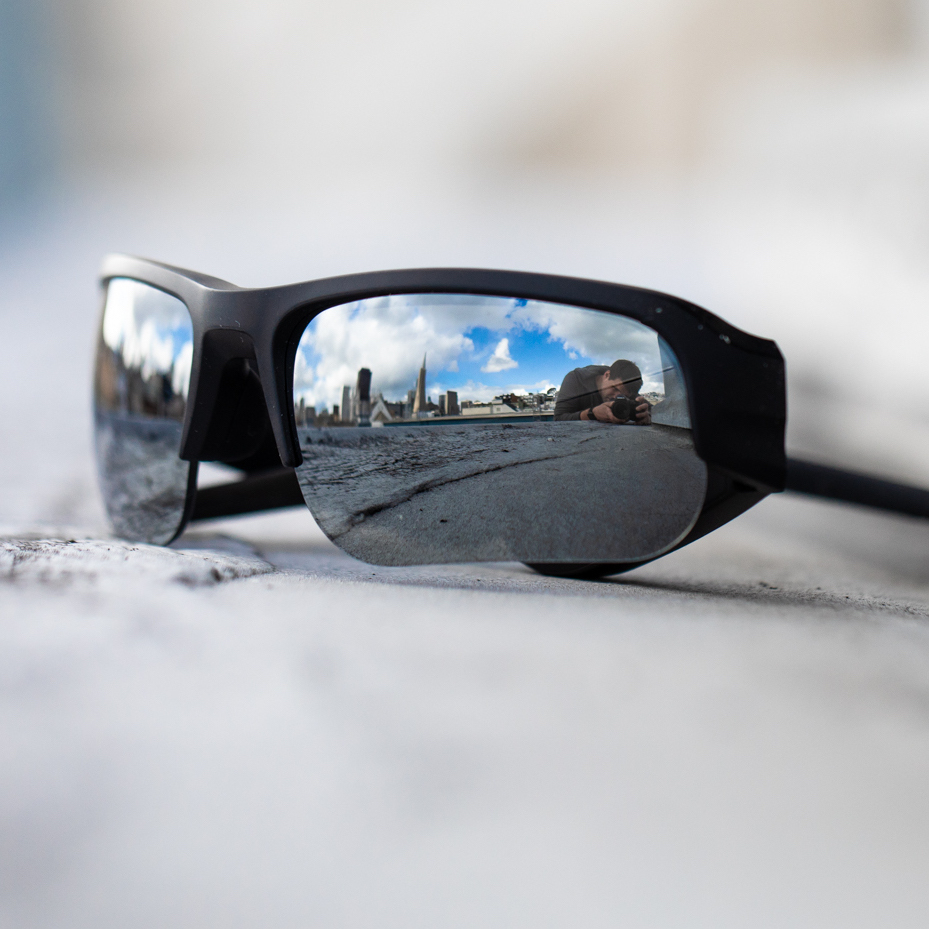
From the front, they look like your typical pair of Oakley, Nike, or Under Armour sunglasses. Bose is clearly going after that same market with the $250 Tempos. If you’re more fashion-forward or looking for a pair of audio sunglasses that don’t give the impression you’re in the middle of a triathlon, you’ll want to stick with the Tenor or Soprano styles of Frames. These come with black mirrored lenses in the box, but Bose also sells a couple of other pairs of $40 lenses that you can swap in to let different amounts of light pass through. The oversized temples are where it becomes more obvious that these are audio sunglasses.
But there’s a benefit to that chunky design: unlike the Tenor and Soprano Frames, which use a proprietary charger, the Tempo model has a regular USB-C connector on the left temple. Bose says the frame is made from “TR-90 nylon.” There’s not much give, but they feel rugged to me, and they’ve got an IPX4 water and sweat resistance rating, so if you get caught running or biking in the rain, they’ll survive.
The large temples are the obvious tell that these are audio sunglasses.The Frames Tempo have simple controls that let you stay focused on your activity.Three sizes of nose pads come included.
For the first couple of days wearing the Tempos, I felt a slight squeeze at the sides of my head that got uncomfortable. Now, I’ve got an extremely large dome — they used to have to bring out a special-sized helmet in Little League, friends — but thankfully, the fit loosened up a bit because this pressure went away by the end of the first week. The sunglasses didn’t get loose enough to where they started bobbing on my head or anything; they still felt nice and secure. (My friend Theresa, who has a normal-sized head, never mentioned any headache-inducing tightness.) Bose includes three sizes of nose tips in the box, and I found the large to be the right match. Even if my face was covered in sweat from a long run, the nose tips helped ensure the sunglasses didn’t slide around.
The frames have an IPX4 rating for water and sweat resistance.
The controls that Bose came up with are wonderfully foolproof, which is crucial when you’re trying to stay focused on other things. You swipe across the right temple to raise or lower the volume, and on the underside of that temple is a small circular button that you can press to play / pause, double-tap to skip tracks, or triple-tap to go back. In no time at all, these controls felt so natural and easy. Powering off the Frames Tempo just takes holding down the button for a few seconds. Or you can flip them over and lay them down with the top of the frame on a surface. After two seconds in that orientation, they shut off. (You can disable this in settings, but I found it really convenient and, again, natural.) Battery life is listed as eight hours, and that’s lined up with my experience so far. The sunglasses take roughly an hour to charge back to 100 percent. Bose’s mobile app lets you update the sunglasses’ firmware, but there aren’t any EQ controls or other options that adjust their performance.
The sunglasses stay firmly in place through all sorts of outdoor activities.
Describing the sound quality of audio sunglasses can be tricky. They’re nothing like headphones or earbuds since these are essentially down-firing speakers pointed at your ears. But Bose stepped up its game compared to the first-generation Frames, which I’ve tried on occasion. These have more life to them across the whole EQ range.
AGREE TO CONTINUE: BOSE FRAMES TEMPO
Every smart device now requires you to agree to a series of terms and conditions before you can use it — contracts that no one actually reads. It’s impossible for us to read and analyze every single one of these agreements. But we started counting exactly how many times you have to hit “agree” to use devices when we review them since these are agreements most people don’t read and definitely can’t negotiate.
The Bose Music app (Android / iOS) can be used to set up the sunglasses, but it requires you to create an account to use it, which continues to strike me as a little pushy on Bose’s part. The app handles firmware updates and lets you disable some of the Frames Tempo settings and controls.
The final tally is no mandatory agreements and two optional ones.
There’s a surprising amount of separation between vocals and instrumentation, and the Frames Tempo have a nice clarity and even-handed balance. There’s more bass than before, but this is where I think it’s most important to set reasonable expectations: the low end you get from any decent pair of in-ear buds will blow these out of the water. No contest. That said, Bose has at least reached a place where the bass no longer sounds anemic or flat, which is a legitimate improvement over the first-gen Frames. It’s there and perceptible.
Sound bleed is easily canceled out by everyday street noise, but if you’re inside with the volume turned up, people nearby will be able to tell that you’re listening to music. These are sunglasses, after all, so I imagine those situations will be few and far between. The Bluetooth connection has held stable throughout the vast majority of my time with the Frames Tempo so far. No complaints there.
Voice calls while wearing the Tempos have also been a joy. Callers say I sound nearly as good as when speaking directly into my phone, and something about taking calls with your ears totally open just feels very cool.
Bose sells additional $40 pairs of lenses that let in different amounts of light.
Even after a relatively short time using the Frames Tempo, I get this audio glasses thing. I really get it. It’s like Dieter recently wrote: “Not having to put in or take out headphones changes your relationship to audio — it’s just always available, always there when you want it.” Do I wish I could pop clear lenses into them and wear them everywhere? In theory, you bet. But this style wouldn’t really work for that, nor is it what the Tempos are meant to be at the end of the day. So I can’t knock Bose for the disappointment I feel when switching back to my normal glasses, which now seem so very primitive.
The Bose Frames Tempo let you hear the world around you with no obstructions — with a soundtrack playing over everything, while at the same time giving your ears a bit of a break compared to normal earbuds. At $250, they will be a tough sell for some. But I’ve come to realize that audio sunglasses are the exact sort of thing you won’t ever realize you needed. Until you put ‘em on — and all of a sudden, you do







 Image Credit: gremlin/Getty Images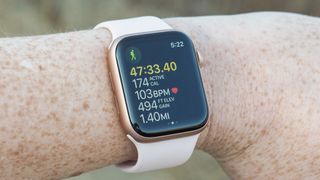
:no_upscale()/cdn.vox-cdn.com/uploads/chorus_asset/file/22297692/cwelch_200927_4359_0001.jpg)
:no_upscale()/cdn.vox-cdn.com/uploads/chorus_asset/file/22297697/cwelch_200927_4359_0006.jpg)
:no_upscale()/cdn.vox-cdn.com/uploads/chorus_asset/file/22297700/cwelch_200927_4359_0009.jpg)
:no_upscale()/cdn.vox-cdn.com/uploads/chorus_asset/file/22297695/cwelch_200927_4359_0004.jpg)
:no_upscale()/cdn.vox-cdn.com/uploads/chorus_asset/file/22297702/cwelch_200927_4359_0011.jpg)
:no_upscale()/cdn.vox-cdn.com/uploads/chorus_asset/file/22399542/cwelch_200927_4359_0003.jpg)
 Bruce's Blog