https://www.livescience.com/darpa-holy-grail-encryption.html

DARPA takes step toward ‘holy grail of encryption’

By Edd Gent – Live Science Contributor 8 hours ago

An abstract image showing multiple dimensions.

(Image credit: Andriy Onufriyenko via Getty Images)

The U.S. defense department is searching for what could be considered the “holy grail of data encryption,” which would seal up a loophole that allows hackers to access sensitive information while it’s being processed.

In modern encryption, a well-defined set of calculations, known as an algorithm, scrambles data so that it’s no longer readable. Those allowed access to the data are given a string of numbers called a key, which is the code that lets you unscramble that data again.

If someone wanted to use the encrypted data to do anything useful, they first would have to decrypt it back into so-called “plain text,” which makes it susceptible to snooping again. To help protect that now decrypted information, those working with the plain text typically only do soon trusted computers. But, as is apparent from regular headlines about data breaches at major organizations, it’s becoming difficult to tell which devices are secure.

“Given all of the news about these hacks, these malware attacks, we can’t trust fully all of our hardware or software systems,” Tom Rondeau, a program manager at the Defense Advanced Research Projects Agency (DARPA), told Live Science.

Related: Flying saucers to mind control: 22 declassified military secrets

That’s why DARPA is trying to spur breakthroughs in something called fully homomorphic encryption (FHE). The technique makes it possible to analyze compute data while it’s still in encrypted form. That could allow financial crimes investigators to scour sensitive bank records without exposing customer details, for instance, or let health researchers analyze private health data while preserving patients’ privacy, Rondeau said. The technique could also help the military keep their battlefield data more secure and make it easier to let allies work with classified intelligence data. CLOSEhttps://imasdk.googleapis.com/js/core/bridge3.447.1_en.html#goog_1017279440Volume 0% PLAY SOUND

The key to the approach is in its name, which is derived from the Latin words “homos,” meaning “same,” and “morphe,” meaning “shape.” It refers to the fact that certain mathematical operations can map data from one form to another without altering the underlying structure of the data. That means changes made to the data while in one form will be preserved when that data is converted back to the other. This principle can be applied to encryption, because computers represent all data, including text, as numbers.

Here’s a highly simplified example of how this might work: Imagine an encryption scheme that scrambles data by multiplying it by 3, so if you encrypt the number 8 you get 24. If you multiply your encrypted data by 2, you get 48. When you decrypt it again by dividing it by 3, you get 16, which is the same result you’d get if you just multiplied your unencrypted data by 2.

In this example, the encryption method is pretty easy to work out from the result, so it’s not secure. But FHE relies on something far more complicated called lattice cryptography, which encodes data as coordinates on a lattice. Lattices can be thought of as grids of regularly spaced dots, but, unlike the 2D grids we’re used to, the FHE lattices are multidimensional.

Related: The 11 most beautiful mathematical equations

So rather than describing each data point’s position with simple X, Y coordinates, the number of axes can be huge, with each unique piece of data being described by thousands of coordinates. Data points can also be positioned between dots, so each coordinate can have many decimal places to denote their precise location. This makes the encryption essentially impossible to crack, even by quantum computers. That’s a promising feature, Rondeau said, because today’s leading encryption methods are not quantum-proof.FHE relies on a multidimensional lattice. (Image credit: ROBERT BROOK/SCIENCE PHOTO LIBRARY via Getty Images)

The big problem is that processing this data is very slow on current computers — roughly a million times slower than processing times for unencrypted data. That’s why DARPA has launched a research program called Data Protection in Virtual Environments (DPRIVE), which Rondeau is managing, to speed things up. The program recently awarded contracts to an encryption start-up Duality Technologies, software company Galois, nonprofit SRI International and a division of Intel, called Intel Federal to design new processors and software to boost speeds to just 10 times slower than normal, which is 100,000 times faster than current processing for fully homomorphic encryption.

FHE is so slow because of the way computations are carried out.To complicate matters more, those data points don’t remain static. Researchers discovered you can carry out mathematical operations such as multiplication or addition by moving data points around inside the lattice. By combining lots of these operations, researchers can carry out all kinds of computations without decrypting the data. When you decode the answer, there’s a chance that someone could spy on it; but that answer still wouldn’t reveal anything about the data used to compute it. 

Related: The 9 most massive numbers in existence

The overall problem with this process is that moving precisely-placed data points around in a high-dimensional space is far more complicated than doing calculations on simple binary data — the typical 1s and 0s of today’s computers.Advertisementhttps://972ed8884159d9b278e4d0d253f0489f.safeframe.googlesyndication.com/safeframe/1-0-38/html/container.htmlRELATED CONTENT

Photos: Large numbers that define the universe
9 numbers that are cooler Than Pi
8 ways you can see Einstein’s theory of relativity in real life

“It’s this data explosion,” Rondeau told Live Science. “Now, every computation isn’t just manipulating one bit. It’s manipulating all of this information, all these representations of the dimensions.”

There are two main approaches the DARPA-funded companies can use to simplify things, Rondeau said. One tactic is to improve the computer’s ability to deal with high-precision numbers, by changing the way numbers are represented in binary code and altering chips circuits to process them more efficiently. The other is to translate the data into a lower dimensional space where the calculations are simpler, which also requires new hardware and software approaches.

Each of the teams involved in the program is taking a slightly different approach, but Rondeau says he’s confident they will be able to hit the targeted 100,000-fold improvement in processing speeds.

Originally published on Live Science.
https://phys.org/news/2021-03-gearing-nanoscale-machines.html


Gearing up nanoscale machines

by Nara Institute of Science and Technology

Gearing up nanoscale machines
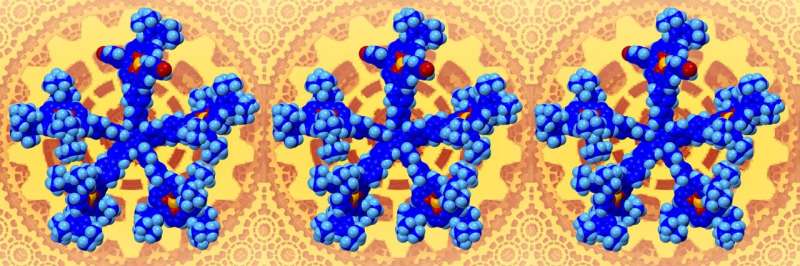
A train of molecular gears composed of star-shape molecules. Credit: Gwénaël Rapenne (NAIST and UPS)

Gear trains have been used for centuries to translate changes in gear rotational speed into changes in rotational force. Cars, drills, and basically anything that has spinning parts use them. Molecular-scale gears are a much more recent invention that could use light or a chemical stimulus to initiate gear rotation. Researchers at Nara Institute of Science and Technology (NAIST), Japan, in partnership with research teams at University Paul Sabatier, France, report in a new study published in Chemical Science a means to visualize snapshots of an ultrasmall gear train—an interconnected chain of gears—at work.

NAIST project leader Professor Gwénaël Rapenne has devoted his career to fabricating molecular-scale mechanical devices, such as wheels and motors. Researchers recently designed a cogwheel for a molecular gear train but currently have no means to visualize the gears in action.

“The most straightforward way to monitor the motion of molecular gears is through static scanning tunneling microscopy images. For these purposes, one of the teeth of the cogwheels must be either sterically or electrochemically distinct from the other teeth,” explains Rapenne.

The researchers first created a molecular cogwheel comprising five paddles, where one paddle is a few carbon atoms longer than the other four paddles. However, as they showed last year, differences in paddle length disrupt the coordinated motion along the gear train. Thus, differences in paddle electrochemistry are a more promising design approach but synthetically more challenging.

“We used computational studies to predict whether electron-withdrawing units or metal chemistry could tailor the electronic properties of a paddle, without changing paddle size,” says Rapenne. Such tailored properties are important because one can observe them as differences in contrast by using scanning tunneling microscopy, and thereby facilitate static imaging.

Gearing up nanoscale machines
A 5 nm-large pentaporphyrinic molecular gear. Credit: Gwénaël Rapenne (NAIST and UPS)

“Our pentaporphyrinic cogwheel prototypes contained one paddle with either a cyanophenyl substituent or a zinc—rather than nickel—metal center,” explains Rapenne. “Various spectroscopy techniques confirmed the architectures of our syntheses.”

How can researchers use these cogwheels? Imagine shining a highly focused beam of light, or applying a chemical stimulus, to one of the gears to initiate a rotation. By so doing, one could rotate a series of cogwheels in a coordinated manner as in a conventional gear train, but on a molecular scale which consists in the ultimate miniaturizatio of devices. “We now have the means to visualize such rotations,” notes Rapenne.

By using this development to carry out single-molecule mechanics studies, Rapenne is optimistic that the broad research community will have a powerful new design for integrated nanoscale machines. “We’re not there yet, but are working collaboratively to make it happen as soon as possible,” he says.


Explore furtherTeam develops robust molecular propeller for unidirectional rotations


More information: Seifallah Abid et al, Desymmetrised pentaporphyrinic gears mounted on metallo-organic anchors, Chemical Science (2021). DOI: 10.1039/d0sc06379gJournal information:Chemical ScienceProvided by Nara Institute of Science and Technology

https://www.nih.gov/news-events/news-releases/dna-damage-hot-spots-discovered-within-neurons

DNA damage “hot spots” discovered within neurons

Microscopic image of neurons in the DNA repair processNeurons (labeled in purple) show signs of an active DNA repair process (labeled in yellow). The cells’ DNA itself is labeled in cyan (in this image, overlap between cyan and yellow appears green). NINDS
What

Researchers at the National Institutes of Health (NIH) have discovered specific regions within the DNA of neurons that accumulate a certain type of damage (called single-strand breaks or SSBs). This accumulation of SSBs appears to be unique to neurons, and it challenges what is generally understood about the cause of DNA damage and its potential implications in neurodegenerative diseases.

Because neurons require considerable amounts of oxygen to function properly, they are exposed to high levels of free radicals—toxic compounds that can damage DNA within cells. Normally, this damage occurs randomly. However, in this study, damage within neurons was often found within specific regions of DNA called “enhancers” that control the activity of nearby genes.

Fully mature cells like neurons do not need all of their genes to be active at any one time. One way that cells can control gene activity involves the presence or absence of a chemical tag called a methyl group on a specific building block of DNA. Closer inspection of the neurons revealed that a significant number of SSBs occurred when methyl groups were removed, which typically makes that gene available to be activated.

An explanation proposed by the researchers is that the removal of the methyl group from DNA itself creates an SSB, and neurons have multiple repair mechanisms at the ready to repair that damage as soon as it occurs. This challenges the common wisdom that DNA damage is inherently a process to be prevented. Instead, at least in neurons, it is part of the normal process of switching genes on and off. Furthermore, it implies that defects in the repair process, not the DNA damage itself, can potentially lead to developmental or neurodegenerative diseases.

This study was made possible through the collaboration between two labs at the NIH: one run by Michael E. Ward, M.D., Ph.D. at the National Institute of Neurological Disorders and Stroke (NINDS) and the other by Andre Nussenzweig, Ph.D. at the National Cancer Institute (NCI). Dr. Nussenzweig developed a method for mapping DNA errors within the genome. This highly sensitive technique requires a considerable number of cells in order to work effectively, and Dr. Ward’s lab provided the expertise in generating a large population of neurons using induced pluripotent stem cells (iPSCs) derived from one human donor. Keith Caldecott, Ph.D. at the University of Sussex also provided his expertise in single strand break repair pathways.

The two labs are now looking more closely at the repair mechanisms involved in reversing neuronal SSBs and the potential connection to neuronal dysfunction and degeneration.

Who

Michael E. Ward, M.D., Ph.D., investigator, NINDS
Andre Nussenzweig, Ph.D., chief, Laboratory of Genomic Integrity, NCI

Article

Wu W. et al. Neuronal enhancers are hot spots for DNA single-strand break repair. March 25, 2021. Nature. DOI: 10.1038/s41586-021-03468-5 (link is external) 

This study was supported by the NIH/NINDS/NCI Intramural Research Programs, an NIH Intramural FLEX Award, U.S. Department of Defense, Chan Zuckerberg Initiative, Packard ALS Center, Alex’s Lemonade Stand Foundation, UK Medical Research Council, Cancer Research-UK, ERC Advanced Investigator Award, Royal Society Wolfson Research Merit Award, and an Ellison Medical Foundation Senior Scholar in Aging Award.

This media availability describes a basic research finding. Basic research increases our understanding of human behavior and biology, which is foundational to advancing new and better ways to prevent, diagnose, and treat disease. Science is an unpredictable and incremental process — each research advance builds on past discoveries, often in unexpected ways. Most clinical advances would not be possible without the knowledge of fundamental basic research.

NINDS is the nation’s leading funder of research on the brain and nervous system. The mission of NINDS is to seek fundamental knowledge about the brain and nervous system and to use that knowledge to reduce the burden of neurological disease.

About the National Institutes of Health (NIH): NIH, the nation’s medical research agency, includes 27 Institutes and Centers and is a component of the U.S. Department of Health and Human Services. NIH is the primary federal agency conducting and supporting basic, clinical, and translational medical research, and is investigating the causes, treatments, and cures for both common and rare diseases. For more information about NIH and its programs, visit www.nih.gov.

https://medicalxpress.com/news/2021-03-discoveries-deep-brain-simulation-par.html


New discoveries of deep brain simulation put it on par with therapeutics

by Laurie Fickman, University of Houston

New discoveries of deep brain simulation put it on par with therapeutics
In deep brain stimulation, electrodes are surgically implanted in the deep brain and electrical pulses are delivered at certain rates to control tremors and other disabling motor signs associated with Parkinson’s disease. Credit: University of Houston

Despite having remarkable utility in treating movement disorders such as Parkinson’s disease, deep brain stimulation (DBS) has confounded researchers, with a general lack of understanding of why it works at some frequencies and does not at others. Now a University of Houston biomedical engineer is presenting evidence in Nature Communications Biology that electrical stimulation of the brain at higher frequencies (>100Hz) induces resonating waveforms which can successfully recalibrate dysfunctional circuits causing movement symptoms.

“We investigated the modulations in local field potentials induced by electrical stimulation of the subthalamic nucleus (STN) at therapeutic and non-therapeutic frequencies in Parkinson’s disease patients undergoing DBS surgery. We find that therapeutic high-frequency stimulation (130-180 Hz) induces high-frequency oscillations (~300 Hz, HFO) similar to those observed with pharmacological treatment,” reports Nuri Ince, associate professor of biomedical engineering.

For the past couple of decades, deep brain stimulation (DBS) has been the most important therapeutic advancement in the treatment of Parkinson’s disease, a progressive nervous system disorder that affects movement in 10 million people worldwide. In DBS, electrodes are surgically implanted in the deep brain and electrical pulses are delivered at certain rates to control tremors and other disabling motor signs associated with the disease.

Until now, the process to find the correct frequency has been time consuming, with it taking sometimes months to implant devices and test their abilities in patients, in a largely back and forth process. Ince’s method may speed the time to almost immediate for the programming of devices at correct frequencies.

“For the first time, we stimulated the brain and while doing that we recorded the response of the brain waves at the same time, and this has been a limitation over the past years. When you stimulate with electrical pulses, they generate large amplitude artifacts, masking the neural response. With our signal processing methods, we were able to get rid of the noise and clean it up,” said Ince. “If you know why certain frequencies are working, then you can adjust the stimulation frequencies on a subject-specific basis, making therapy more personalized.”


Explore furtherSmart brain stimulators: Next-gen parkinson’s disease therapy


More information: Musa Ozturk et al. Electroceutically induced subthalamic high-frequency oscillations and evoked compound activity may explain the mechanism of therapeutic stimulation in Parkinson’s disease, Communications Biology (2021). DOI: 10.1038/s42003-021-01915-7Journal information:Communications BiologyProvided by University of Houston

https://news.abs-cbn.com/business/03/25/21/pandemic-tech-lg-launches-electronic-wearable-air-purifier-in-ph


Pandemic tech: LG launches electronic wearable air purifier in PH

ABS-CBN News

Posted at Mar 25 2021 02:55 PM

LG’s wearable air purifier. Handout photo


MANILA – LG finally launched its portable air purifier in the Philippines on Thursday months after officially unveiling it in the international market in August last year.

The PuriCare Wearable Air Purifier is worn like a mask and uses a pair of replaceable filters similar to those in LG’s range of air purifiers for the home. 

“It offers thorough purification with its HEPA filter,” said Jave Enriquez, LG product manager. 

LG said the device’s two H13 hepa-grade filters are also used in hospitals and can filter up 99 percent of harmful particles, including bacteria and viruses. 

Enriquez said the device is backed by Korean institute of Public Safety for removing viruses and bacteria, and certified by the Korean Asthma and Allergy Foundation for the effective removal of allergens. 

Unlike standard masks, the PuriCare device features battery-powered fans to help users breathe. LG said it also has sensors to detect when the user is breathing in or out, and adjusts the fans’ speeds accordingly.

While doctors have warned against the use of masks with holes or valves, LG said PuriCare is safe to use amid the pandemic despite using valves. 

LG said exhaled air first passes through the inner cover before it is released through the valves at the chin part.

PuriCare’s inner cover shares the same material with disposable masks, therefore – it can prevent around 93 percent of droplets with a particle size of 1~3 micrometers (μm), LG said. The normal size of droplets is about 5μm. 

The device is charged by a USB-C port, with a 2-hour full charge enough for up to 8 hours of use, LG said. 

LG said the device will retail for P8,699, but will initially have a promo price of P7,829. 

https://www.menshealth.com.au/a-ranking-of-the-best-health-and-fitness-wearables-for-2021

A Ranking Of The Best Health And Fitness Wearables for 2021

According to some of Australia’s top fitness experts. – by Nikolina Ilic

  • 25 MAR2021

Shutterstock

Wearable health and fitness trackers have become a must-have part of your gym kit in 2021 – they’re socially acceptable to wear, and they provide great feedback and metrics about your health. But with so many options out there, what will work best for your goals?

It all depends on what you’re willing to spend and what features you deem necessary to have on your wrist. Whether you want simple heart rate measurements, or a comprehensive overview of your sleeping patters, there’s a tracker for you.

And to make the choice that little bit easier, the Australian Institute of Fitness (AIF) have released its top 10 health and fitness wearables for everyday consumers, according to a recent survey of its leading industry experts and professionals.

The team compared everything from functionality, user-friendliness, tracking and data capabilities to comfort, form, versatility and overall performance.

The survey saw the Apple Watch top the list in the Overall Performance category, with 24.2% of votes, followed closely by the Garmin Watch with 22.5% of the vote. The Fitbit Watch came in at #3, with the Samsung Galaxy Watch (#4) and Whoop Strap (#5) rounding out the Top 5.

Other contenders included Motorola Moto, Huawei, Fossil Sport, Chest Strap and smart clothing.

Across key capability categories, the Apple Watch was voted the best wearable for Weight Loss, User- friendliness and Form and Comfort, while the Garmin Watch topped the categories for Improving Overall Fitness, and Learning to Run/Improving Running Performance. In terms of Sleep Monitoring, the Whoop Strap was ranked #1.

Surprisingly, 87.5% of AIF’s survey respondents believed that most Australian consumers don’t understand and/or utilise the depth of the capabilities of their wearable health and fitness devices. The survey’s overwhelming consensus was that wearable users could unlock so much more potential to help them optimise their health, fitness and performance, if they were better informed on how to utilise their device.

Check out the lists below:

TOP 5 BEST OVERALL PERFORMANCE

1. Apple Watch (24.20%)Space Grey Aluminium Case with Sport BandSHOP NOW

2. Garmin Watch (22.50%)Garmin Forerunner 945 (Black)SHOP NOW

3. Fitbit Watch (14.50%)Fitbit Versa 3 – Versa AluminumSHOP NOW

4. Samsung Galaxy Watch (9.60%)Samsung Galaxy watchSHOP NOW

5. Whoop Strap (11.20%)Whoop StrapSHOP NOW

BEST WEARABLE ACROSS KEY CAPABILITY CATEGORIES

• Weight Loss – Apple Watch
• Improving Overall Fitness – Garmin Watch
• Learning to Run/Improving Running Performance – Garmin Watch
• Sleep Monitoring – Whoop Strap
• User Friendliness – Apple Watch
• Form and Comfort – Apple Watch
• Accuracy of Tracking Data – Garmin Watch

TOP 3 MOST VALUED FEATURES IN A HEALTH & FITNESS WEARABLE

1. Long battery life
2. User friendly display
3. Heart rate monitoring capability

Looking forward to the future

Looking to the future, AIF’s experts predicted that in-ear fitness trackers with biosensors; hologram personal trainers; implantables; and contact lenses with built-in virtual assistants, would all be potential innovations in the global health and fitness wearable market.

Reflecting on the survey’s results, Australian Institute of Fitness CEO, Steve Pettit, said: “Health and fitness wearables represent the largest growing sector in the fitness industry. The amount and depth of data that can be obtained from them is incredible, and information that was once only accessible to the most elite athletes is quickly becoming easily available and digestible to the everyday Australian.

“Wearable data is empowering people of all ages and fitness levels to improve their health, fitness and general well-being like never before. They are also giving us much more oversight and insight into what is going on with our bodies day-to-day, so it will be interesting to see if this results in any improvements in broader health categories – for example, in obesity and chronic disease rates.

“In future, the key to maximising the potential value of health and fitness wearables will lie largely in consumers and fitness professionals educating themselves about the full range of capabilities their wearables possess. Most Aussies have only scratched the surface – so we certainly have some exciting times ahead!”

Features that users could understand and utilise better

Head of Training at the Australian Institute of Fitness, Kate Kraschnefski, said some of the most commonly misunderstood capabilities of health and fitness wearables include how to effectively utilise HR (Heart Rate) Training Zones and Heart Rate Variability (HRV).

“Many users don’t fully understand how HR training zones – which are a staple of many health and fitness wearables – can provide real-time feedback regarding the intensity and energy systems targeted within their session,” Kraschnefski explained. “For endurance enthusiasts, utilising this function properly is like having a Personal Trainer running right beside you telling you exactly how hard you’re working and whether you need to put the pedal to the metal, or pull the gas off a little.

“Many users also misunderstand the role of HR in strength training. While HR will respond during strength training (as per any exercise), it is typically not used to gauge the intensity. Average HR will typically be a lot lower during resistance training sessions compared to cardiovascular training. HR data can therefore unnecessarily turn users off strength training because they think it is less effective than cardio training. Instead, measures such as Rate of Perceived Exertion (RPE) and Percentage of Max should be used to determine how hard a strength session was.”

“Devices such as Whoop, Oura Rings, Fitbit and more all have Heart Rate Variability (HRV) capability built into their software. HRV is a measure of recovery whereby the time between each heartbeat is measured in milliseconds. Essentially, the higher the HRV number, the more recovered you are from the previous day’s activity – and the harder you can train today. You can basically use HRV as your own personal assistant to tell you to either go hard or pull back for a recovery day. Additionally, HRV is a great indicator of general fitness levels, as fitter individuals typically have a lower resting heart rate and thus a higher HRV.”

Nikolina IlicNikolina is the new web-obsessed Digital Editor at Men’s and Women’s Health, responsible for all things social media and .com. A lover of boxing, she has a mean punch inside and out of the ring. She was previously a Digital Editor at GQ and Vogue magazine.

https://www.diyphotography.net/this-diy-thermal-camera-is-built-around-a-raspberry-pi-and-a-60-camera-module/

THIS DIY THERMAL CAMERA IS BUILT AROUND A RASPBERRY PI AND A $60 CAMERA MODULE

March 25, 2021 by John Aldred 2 Comments

The Raspberry Pi is a wonderful thing, and we’ve seen many cool photography and video projects based around it. But thanks to the MLX90640 thermal camera module, you can turn the Pi into a fully-fledged thermal camera of your own with software you can customise to your own needs. And that’s exactly what Tom Shaffner did.

He built a thermal camera using this module and a Raspberry Pi and even wrote his own software for it. Fortunately, Tom made the software completely open-source and posted the code up to GitHub so you can have a go at making your own and even tailor the software to your own needs.

With a total price of a little over $100, it might seem a little much compared to some DIY projects, but it’s still vastly less expensive than going out and buying a commercial thermal camera – which range from several hundred to several thousand dollars. The resolution of this module isn’t extremely high, coming in at only 24 x 32 pixels, but the resolution of thermal cameras is rarely very high, often overlaying the image on top of a visible light shot to indicate the detail. But with some interpolation, you see all the detail you typically need to.

Hot and cold running water in a sink on Tom’s thermal camera

The camera module itself costs around $60 (when it’s in stock), and with something like a Pi 3B+, a small microSD card and a power source, that brings you right around $100 (or a hair more). And if you’ve already got an old Pi lying around doing nothing, now you can give it a purpose in life! You can also splurge and go with a Raspberry Pi 4 if you wish, offering more processing power and RAM to speed things up and offer your system more capability over the Pi 3B+ but Tom says it should run fine on even a Pi 3 with a little adjustment (of course, no 5Ghz WiFi on the Pi 3).

A very cool project. Makes me wish I had a real need for a thermal imaging camera!

All of the documentation for building your own, installing the software and getting it all running is on Tom’s Github (code here). He also has a bunch of pictures and animations there showing the kinds of results you can get with it.

https://mobilesyrup.com/2021/03/25/google-assistant-memory-notes-reminders/

Google Assistant ‘Memory’ is the company’s latest shot at a notes app How many times are we going to go down this road? By Brad Bennett@thebradfadMAR 25, 2021 12:52 PM EDT0 COMMENTS A new Google Assistant feature has been uncovered called ‘Memory.’ Details are scarce, but it looks like a new way to keep all your notes, pictures, links and reminders organized using Google Assistant. Google’s description of the feature says Memory is an “easy, quick way to save and find everything in one place,” according to 9to5Google. The report says you can save on-screen info like links, real-world info like photos of handwritten notes and signs, thoughts, and more, all in one place. Pretty much everything you could imagine can be saved in this new memory bank. The feature isn’t available yet, but it appears that it’s going to live in the Assistant app similar to the ‘Snapshot’ agenda-like feature that came out last year.  You can use voice commands to save a Memory or set up a home screen shortcut to make it more accessible like a traditional app. The leaked screenshots make it seem like Google saves some of this information as cards in the Snapshot view and others in notes-type set up under the ‘Memory’ header. In the Memory section, there’s a new search bar at the top of the screen that should make sorting through this mess a little easier. It also seems like you can sort these items by tagging them. Google has been looking for a way to usurp Pinterest for a while. It launched a feature called ‘Collections’ inside Google Assistant a while ago, and while it’s a useful tool, I still don’t believe that users are going to a single app like Assistant to do all of these things at once. Hopefully, as Google adds more and more features to the app/platform, it will become a more appealing organizational tool for users. I like the idea of bridging your phone and smart speakers so that they’re all tied to one platform (Google Assistant), but the main hurdle for Google to overcome is to try and consolidate Android to be more focused on that goal. Right now, if you opened a brand new Samsung or OnePlus phone, you’re greeted with more than one notes app. So right from the start, it’s confusing for users. The smartphones feature several duplicate apps, and beyond that, users are unlikely to go into an app simply named ‘Google’ to write down their notes since Google is just a way to navigate the web for most people. To take this even further, Google already integrates Google Assistant with other notes/reminders apps like Google Keep and Any.do. This makes it a confusing nightmare to set up the perfect notes/reminder/memory bank situation on Android right now. Memory is still a cool feature, and hopefully, Google Assistant and its app can do almost everything we need one day. However, at least for now, I’m betting that Google fumbles the launch of Memory, and that regular people will never find out about it.

https://finance.yahoo.com/news/vuzix-receives-initial-smart-glasses-123000581.html?guccounter=1&guce_referrer=aHR0cHM6Ly9uZXdzLmdvb2dsZS5jb20v&guce_referrer_sig=AQAAAAg_PqKlfgW7VDyhQa_zjEXZovZ4V68QsTfn_plHZ411anCkpCeopV_NX6KHP52qe1qK1cGlgJgkf5fkzhq6-pXFxmxzCJTCgb_9CGS2IHoUbZQKMsLlIF3PQRYF5zubYmeariveygxc_ZReFcpfBn3r96_K5FG9u6zwTwrBC5kB

Vuzix Receives Initial Smart Glasses Deployment Order from Healthcare and Surgical Training Provider

  • More content below

Thu, March 25, 2021, 5:30 AM·4 min read

  • More content below

– More customers moving from “proof of concept” to full deployments.

ROCHESTER, N.Y., March 25, 2021 /PRNewswire/ — Vuzix® Corporation (NASDAQ: VUZI), (“Vuzix” or, the “Company”), a leading supplier of Smart Glasses and Augmented Reality (AR) technology and products, today announced that the Company has received an initial deployment order totaling approximately $250,000 for Vuzix M400 Smart Glasses from a healthcare and surgical training solutions provider. This initial deployment order is for immediate delivery with the potential for subsequent deployment orders in the future as this customer expands its use of Vuzix M400 Smart Glasses, which will be used in operating rooms to enable medtech experts, assisting surgeons, medical students, and other healthcare professionals to see and communicate with surgeons in real-time.

Vuzix M400 (PRNewsfoto/Vuzix Corporation)

The healthcare industry continues to be an early adopter of smart glasses to deliver a variety of benefits in and outside of the operating room. Over the last year, hundreds of surgeries were performed using Vuzix Smart Glasses and thousands of remote calls made to provide a virtual presence within hospitals and senior care facilities that were video broadcast securely via Vuzix M400 and M4000 Smart Glasses to provide virtual training, health care for patients in the ICU and the operating room, and to perform virtual patient rounds.

“We continue to see an increasing number of end customers moving from proof of concept to full deployments with Vuzix industry leading M400 Smart Glasses. In this case they are deploying within the healthcare market vertical to support surgical training, patient care, virtual rounds and the likes,” said Paul Travers, President and CEO of Vuzix.

About Vuzix Corporation

Vuzix is a leading supplier of Smart-Glasses and Augmented Reality (AR) technologies and products for the consumer and enterprise markets. The Company’s products include personal display and wearable computing devices that offer users a portable high-quality viewing experience, provide solutions for mobility, wearable displays and augmented reality. Vuzix holds 184 patents and patents pending and numerous IP licenses in the Video Eyewear field. The Company has won Consumer Electronics Show (or CES) awards for innovation for the years 2005 to 2021 and several wireless technology innovation awards among others. Founded in 1997, Vuzix is a public company (NASDAQ: VUZI) with offices in Rochester, NY, Oxford, UK, and Tokyo, Japan. For more information, visit Vuzix websiteTwitter and Facebook pages.

Forward-Looking Statements Disclaimer

Certain statements contained in this news release are “forward-looking statements” within the meaning of the Securities Litigation Reform Act of 1995 and applicable Canadian securities laws. Forward looking statements contained in this release relate to Vuzix’ existing and potential business growth opportunities with this healthcare solutions provider, ongoing and continued deployments, the ultimate success of the M400 in this sector, and among other things the Company’s leadership in the Smart Glasses and AR display industry. They are generally identified by words such as “believes,” “may,” “expects,” “anticipates,” “should” and similar expressions. Readers should not place undue reliance on such forward-looking statements, which are based upon the Company’s beliefs and assumptions as of the date of this release. The Company’s actual results could differ materially due to risk factors and other items described in more detail in the “Risk Factors” section of the Company’s Annual Reports and MD&A filed with the United States Securities and Exchange Commission and applicable Canadian securities regulators (copies of which may be obtained at www.sedar.com or www.sec.gov). Subsequent events and developments may cause these forward-looking statements to change. The Company specifically disclaims any obligation or intention to update or revise these forward-looking statements as a result of changed events or circumstances that occur after the date of this release, except as required by applicable law.

Media and Investor Relations Contact:

Ed McGregor, Director of Investor Relations
Vuzix Corporation
ed_mcgregor@vuzix.com
Tel: (585) 359-5985

Vuzix Corporation, 25 Hendrix Road, Suite A, West Henrietta, NY 14586 USA,
Investor Information – IR@vuzix.com www.vuzix.com

https://www.livescience.com/octopus-sleep-cycle.html

Do octopuses dream of 8-armed sheep? New study hints at human-like sleep cycle in cephalopods

By Nicoletta Lanese – Staff Writer 6 hours ago

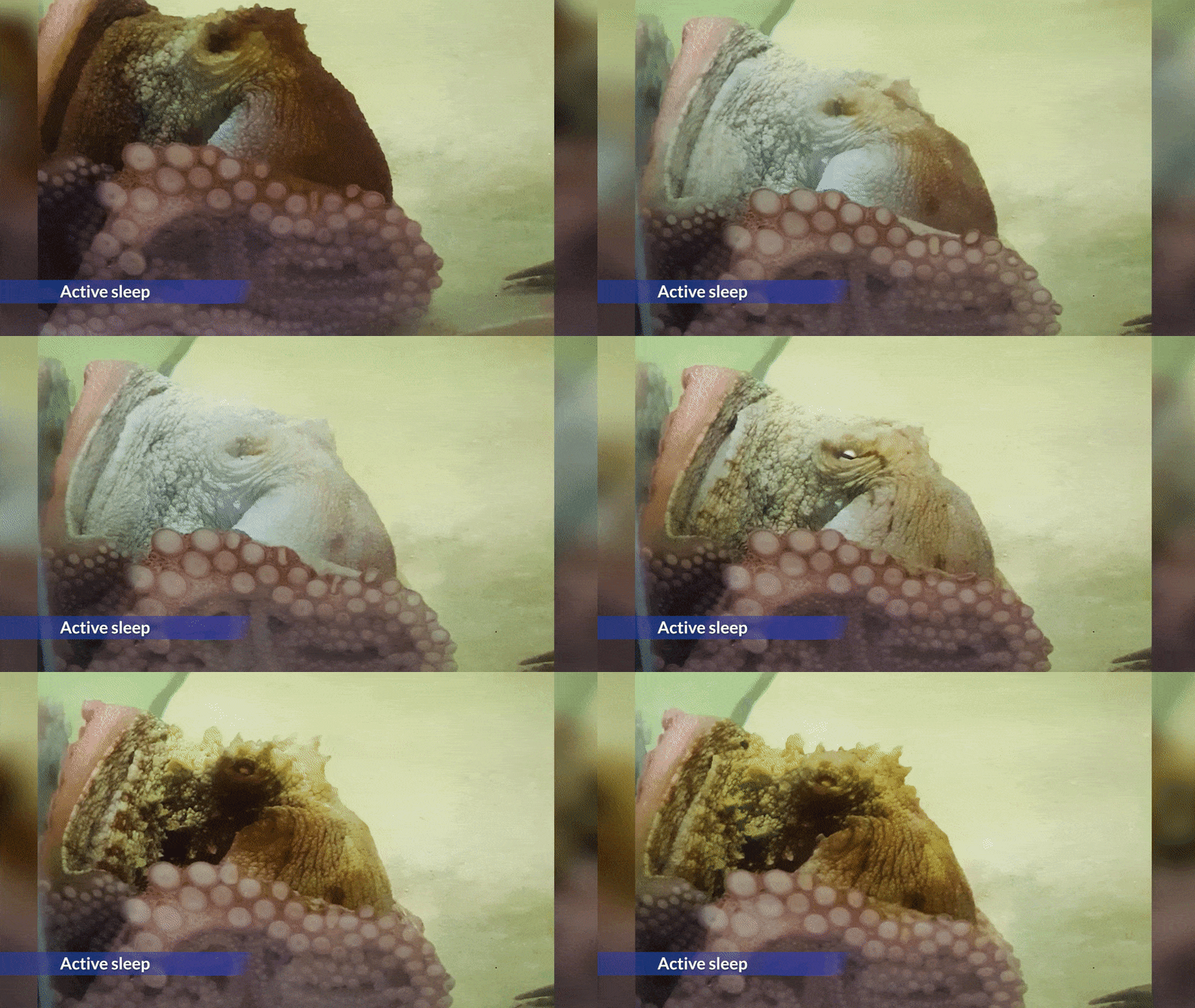
A short video clip of an octopus changing colors during active sleep

This clips shows an octopus twitching and changing colors during active sleep. (Image credit: Sylvia S L Madeiros)

When octopuses snooze on the seafloor, their skin sometimes pulses with an array of colors, and at other times, they become pale and plain. These alternating patterns mark two distinct stages of the octopus sleep cycle, a small study suggests.

During “active sleep,” when an octopus’s skin ripples with dazzling colors, the cephalopod may experience something similar to our rapid-eye movement (REM) sleep, the authors wrote in the study, published March 25 in the journal iScience. Humans do most of their dreaming during REM sleep, but for now, we don’t know if cephalopods also drift off to dreamland — or what they’d dream about, if they did.

“This whole speculation about dreaming, we must take it with caution,” said senior author Sidarta Ribeiro, a neuroscientist at the Brain Institute of the Federal University of Rio Grande do Norte, Brazil. He noted that the octopus’s episodes of active sleep occur in brief bursts, lasting from a few dozen seconds to just over a minute. 

Related: 8 crazy facts about octopuses CLOSEhttps://imasdk.googleapis.com/js/core/bridge3.447.1_en.html#goog_492073119Watch for more information_TITLE_ IN 5 SECONDSMore Twin Births Globally Than Ever BeforeAgainst the Arapaima, the Piranha Scores but Doesn’t WinVolume 0% PLAY SOUND

“In mammals … the active sleep, what we call REM sleep is much longer. It lasts minutes, dozens of minutes,” Ribeiro told Live Science. So, “even if there is … some sort of inner narrative going on in the octopus’s mind as it’s going through active sleep, it’s very unlikely that it’s a whole story,” he said. More likely, an octopus might dream in short scenes, like video clips pulled from a longer movie, he said. 

But even if octopuses don’t dream during these fleeting moments of active sleep, the sleep state may still play an important role in the creatures’ learning and memory, similar to how human memories become reinforced during REM, Ribeiro said. The authors plan to study the influence of different sleep states on octopus learning in the future.

Psst, are you asleep? 

Octopuses change color using chromatophores, or specialized pigment organs that expand and contract under the skin, altering the colors and patterns on its surface, Live Science previously reported. While awake, octopuses can change color to blend in with their surrounding environment, but it’s unknown why the animals continue to shift color while at rest, and few studies of octopus sleep have explored the phenomenon.

In past studies of the common octopus (Octopus vulgaris), scientists have only described so-called “quiet sleep,” when the animal sits very still and its skin turns a ghostly white color, first author Sylvia Medeiros, a doctoral student at the Brain Institute, told Live Science. The vibrant, “active” sleep state has been described more thoroughly in the common cuttlefish (Sepia officinalis), a related cephalopod, but these studies didn’t check whether the cuttlefish were truly asleep or just in a “state of quiet alertness,” Medeiros noted in the iScience report.

To confirm that an animal is truly asleep, scientists test its “arousal threshold,” meaning the amount of time it takes the creature to react to a stimulus. For example, while awake, an octopus will quickly react to physical vibrations of its tank or to videos of scuttling crabs played just outside the glass. A sleeping octopus will take far longer to react, or may not respond at all, since it must first be roused from slumber.

Related: Why do people ‘twitch’ when falling asleep?

The team conducted these arousal experiments with four tropical octopuses of the species Octopus insularis, which Medeiros collected 6 miles (9.7 kilometers) from their lab in Brazil. The authors captured video recordings of the octopuses to assess their behavior while alert and at rest. Noting patterns in the cephalopods’ behavior, they then tested the animals’ arousal thresholds in different behavioral states; for instance, they tested the animals both when they were alert and exploring their tanks and when they became still and appeared to rest.

The researchers found that the octopuses are not only genuinely sleeping during active sleep, but the animals also switch between quiet and active sleep in a predictable pattern.

“The relationship between quiet and active sleep that they identified is particularly exciting,” said Sara Stevens, an aquarist with Butterfly Pavilion in Westminster, Colorado, who was not involved in the study. “It verifies patterns we’ve anecdotally witnessed across the octopuses we’ve had in our care over the years,” Stevens told Live Science in an email. However, since the new work only included four octopuses of the same species, larger studies will be needed to confirm the results, she noted.

A distinct sleep pattern 

The team observed that colors disappear from the octopuses’ skin during “quiet sleep,” and their pupils contract into thin slits. In this state, the animals become quite still except for the occasional soft, slow movements of their suckers and arm tips. Periods of quiet sleep can last from a few minutes to about half an hour.

“Quiet sleep pretty much always precedes the active sleep,” Ribeiro said. “It’s usually the long quiet sleep episodes,” lasting more than six minutes, “that lead to an active sleep episode,” he added.    

A dramatic visual change marks the shift between quiet and active sleep. The chromatophores on the octopus’s head and mantle — the bulbous structure that houses the animal’s organs — display “sudden simultaneous darkening.” The animal then begins twitching, contracting its suckers, moving its eyes and increasing its ventilation rate. The octopus also expands and contracts its pupils, while vibrant colors wash over its whole body.  

Though its pupils sometimes dilate, the octopus doesn’t react to visual stimuli in this state — similar to how a person can sleep with their eyes open. These sudden bouts of movement and color occur periodically, at roughly 30- to 40-minute intervals.

“It really resembles what you see in reptiles and birds: Long, quiet sleep followed by short, brief episodes of active sleep,” Ribeiro said. Mammalian sleep follows a similar pattern but the active sleep, namely REM, typically lasts longer than in other animals, he said.

Related: 7 mind-bending facts about dreams

In mammals, the shift into REM sleep is accompanied by physiological changes that help convert short-term memories into long-term memories in the brain, Ribeiro noted. It’s still unclear whether active sleep serves a similar purpose in birds or reptiles, and in the case of octopuses, we have no clue, he said. 

The authors plan to study whether changes in an octopus’s sleep cycle affect its ability to learn new tasks; for instance, they may study how well sleep-deprived octopuses can learn and remember how to free food from closed containers. In addition to behavioral tests, the team plans to study whether octopuses express specific genes or build particular proteins during active sleep, as mammals do during REM.Advertisementhttps://86b51ec9cf00ea70d136990d6d0a28a2.safeframe.googlesyndication.com/safeframe/1-0-38/html/container.htmlRELATED CONTENT

Octlantis: See Photos of Tight-Knit Gloomy Octopus Communities

In Photos: Amazing ‘Octomom’ Protects Eggs for 4.5 Years

Photos: Ghostly Dumbo Octopus Dances In the Deep Sea

At some point, they also hope to record the electrical activity of octopus neurons during sleep, but that presents an incredible challenge, the authors said. For starters, the squishy, boneless creatures lack solid body parts that scientists could easily attach electrodes to, Ribeiro said. What’s more, the curious animals tug and pull at anything placed on their bodies, Medeiros said. 

“Adding water into the equation takes it to a completely different level of difficult,” Stevens added. 

Among these many challenges, a huge question still remains: Do octopuses dream or not? 

“My hunch is yes, but we are open to everything,” Ribeiro said. 

Until the team can collect neural recordings from octopuses, it may be possible to study their theoretical dreams by taking detailed recordings of the colors and patterns on their skin, he noted. If an octopus dons a certain color scheme during sleep that corresponds to a behavior in its waking life, such as courtship, that could potentially provide a window into what the animal is dreaming about. The scenario is similar to observing a dog growl and twitch in its sleep, as if dreaming of chasing rabbits. 

But again, using pigment patterns to read octopus dreams may be a reach at this point, as more research is needed to understand octopus sleep states at a fundamental level, Ribeiro said. 

Originally published on Live Science.