https://newatlas.com/motorcycles/wmc-2wd-electric-motorcycle-v-air/


“World’s fastest electric motorcycle” uses radical big hole technology

By Loz BlainJune 24, 2021

WMC is preparing to take on the world land speed record for electric motorcycles, armed with a motorcycle built around a giant hole

WMC is preparing to take on the world land speed record for electric motorcycles, armed with a motorcycle built around a giant holeWhite Motorcycle ConceptsVIEW 19 IMAGES

There’s no motorcycle on the planet like this one. British company White Motorcycle Concepts (WMC) has put land speed record holders on notice with a 2WD, hydraulically hub-steered electric motorcycle, designed around a giant hole. The company says the WMC250EV should be capable of more than 250 mph (402 km/h) thanks to a massive 69 percent reduction in drag.

Rob White has paid his dues in the racing world, working on numerous Formula One, Le Mans Prototype, V8 supercar and World Endurance Championship race teams over the last 25-odd years. And his approach to motorcycle design is clearly influenced by the world of high-end cars.


MORE STORIES

Electra's hybrid-electric super-short takeoff and landing aircraft shown here has a wingspan of 48 feet and carries up to seven passengers plus a pilot

AIRCRAFTUS Air Force partners with Electra on ultra-short takeoff aircraft

Magonis' debut craft is a small, sleek electric boat with a customizable personality

MARINESlick, small Wave e-550 electric boat surges onto open water


Going super fast ends up being much more about aerodynamics than horsepower; the air becomes a ferocious adversary as you move past two or three times highway speed. Motorcycles are aerodynamically ugly without big, streamlined fairings, chiefly because of the big, funny-shaped human on the back.

There's a man in leathers on the bike in this photo
There’s a man in leathers on the bike in this photo

Not this one. The WMC250EV has been specifically designed around its rider, none other than Rob White himself. The team laser-scanned White’s leather-and-helmet-clad body in an extreme racing crouch, and designed the bike’s bodywork such that it matches his personal contours almost to the millimeter.

It’s also got a big freakin’ hole in it. We’ve seen plenty of Venturi tunnels on high-end hypercars, but this is the first time we’ve seen something so extreme attempted on a motorcycle. The entire bike is designed around a cavernous carbon tunnel that punches a huge hole in the bike’s frontal aerodynamic profile right where a headlight would normally sit.

WMC has tested this bike, Rob included, at the Horiba MIRA facility near Hinckley, and says the concept reduces drag by an enormous 69 percent compared against “the world leading motorcycle,” with a drag coefficient of just 0.118. That’s absolutely nuts. Even the mighty SSC Tuatara, currently the world’s fastest production car at 282.9 mph (455.3 km/h), can only manage a drag coefficient of 0.279.https://ffa1da170cda2aaefc7557ee417edaed.safeframe.googlesyndication.com/safeframe/1-0-38/html/container.html

Left: Guy Martin's 300 mph motorcycle, the fastest in Europe. Right: the WMC250EV
Left: Guy Martin’s 300 mph motorcycle, the fastest in Europe. Right: the WMC250EV

In order to run that big hole through the middle, WMC has had to jam all the guts of the bike into the space under the tunnel. That’s not just the electric drivetrain and battery packs, either; the tunnel cuts right through where your steering head and forks would normally be.

So the design uses a double-swingarm suspension system. The rear wheel is chain-driven by a pair of 30 kW electric motors integrated into the swingarm, according to Top Gear.

The front wheel is hub-steered using a hydraulic system that completely replaces the mechanical linkages you’ll normally find between the handlebars and front axle on a hub-steered bike. That’s one hose you definitely don’t want to get air in.
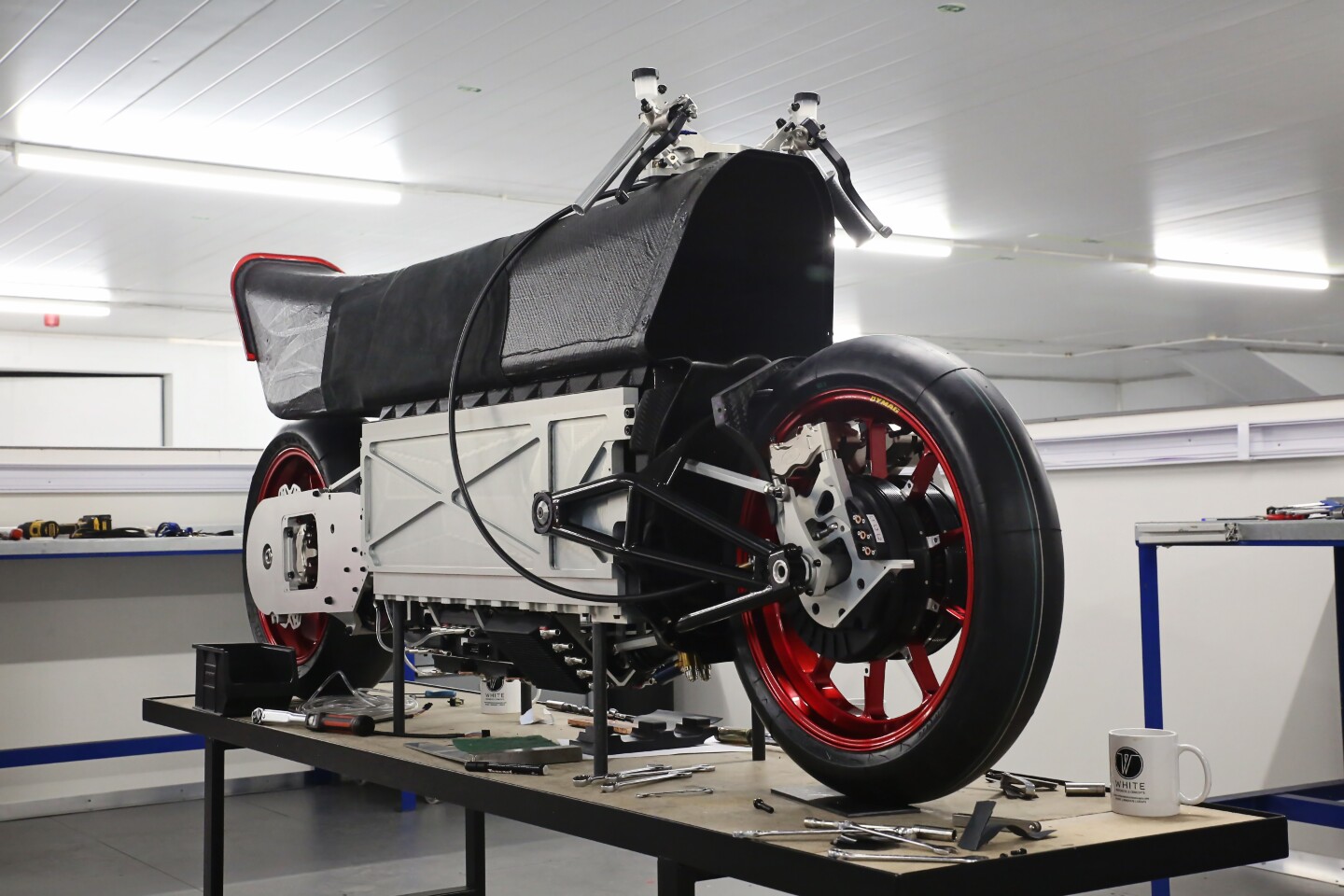
The guts of the bike fit entirely below the huge Venturi tunnel

Where most hub-steered front wheels are pretty complex units because they need to fit both steering and braking into the picture, this one takes things up a level by adding an extra 20 kW electric motor on each side. So this bike is not only two-wheel-drive, it’s also got two-wheel regenerative braking. Between that and the wild aerodynamic efficiency of the design, White claims it could double a regular bike’s range out of a given battery size.

The battery on this bike will be a reasonably humble 15 kWh pack. Total peak power is 100 kW (134 horsepower), and while that’s a long way down on the 270 kW (362-horsepower) Voxan Wattman on which former MotoGP star Max Biaggi broke 11 records last November, White is confident that the next-level aerodynamics of the WMC250EV will more than compensate.

“We’ve produced the most aerodynamically efficient motorcycle in the world,” says White. “If it’s going to be proven, then the best way to do it is to go as fast as possible. We will be taking a world land speed record.” The target is 250 mph (402 km/h), for the electric semi-streamlined motorcycle record. The location will be the Bolivian salt flats in 2022, after blowing the cobwebs out with an attempt at the British equivalent record later in 2021.

OK, it doesn't look much good for touring
OK, it doesn’t look much good for touring

White’s plan is to prove the technology with an electric land speed record, and then roll it out into the electric streetbike market. To that end, he’s patented the “V-Air” big-hole technology internationally, and hopes he can bring something similar – albeit nowhere near as extreme or personally tailored – to the street.

Maybe it makes sense, too; today’s electric bikes are profoundly depressing to ride on the highway, where air resistance saps battery power so fast you can almost watch the digits ticking away. It’s no accident that guys like “Electric” Terry Hershner set their electric distance records riding bikes retrofitted with slippery fairings, and it’s a little odd that there’s not much on the market right now that puts aerodynamic efficiency front and centre.

The WMC250EV is a seriously weird-looking bike, built from the ground up with a radically different design philosophy to anything we’ve seen. We’re fascinated to see how it performs.

Check out a few videos below.https://www.youtube.com/embed/EuscGZyMojk?enablejsapi=1Part 1 – The World’s Fastest Electric Motorcycle Revealed – WMC250EVhttps://www.youtube.com/embed/PkHCc_6RUaM?enablejsapi=1Part 2 – The Technology and Innovation of the World’s Fastest Electric Motorcycle – WMC250EVhttps://www.youtube.com/embed/zJhUqUTINHQ?enablejsapi=1Part 3 – The Future of the World’s Fastest Electric Motorcycle – WMC250EV

Source: White Motorcycle Concepts

We recommend

  1. E- Health Records Fail to Detect Many Medication ErrorsCardiology Advisor, 2020
  2. Commercial Nanopore Sequencer Remains ‘Top Goal’ for Electronic BioSciences after Nanopatch LaunchGenomeWeb, 2014
  3. Shareable 2-Wheeled Vehicles—A New Public Health Problem?Frederick P. Rivara, JAMA Network Open, 2019
  1. E-learning about PrAimovig® that’s designed to be accessible and fit your schedule..
  2. Maternal Heart Health Shown to Predict CVD Onset in OffspringCardiology Advisor, 2020
  3. Is Genetic Testing Regulation Coming? DTC Genetics Companies May Have Hastened ItGenomeWeb, 2006

https://petapixel.com/2021/06/24/wristcam-launches-video-chat-capability-from-the-apple-watch/

Wristcam Launches Video Chat Capability from the Apple Watch

 JUN 24, 2021  JARON SCHNEIDERhttps://www.facebook.com/v2.10/plugins/share_button.php?app_id=207578995971836&channel=https%3A%2F%2Fstaticxx.facebook.com%2Fx%2Fconnect%2Fxd_arbiter%2F%3Fversion%3D46%23cb%3Df10f14275470188%26domain%3Dpetapixel.com%26origin%3Dhttps%253A%252F%252Fpetapixel.com%252Ff3977a3d93c158%26relation%3Dparent.parent&container_width=61&href=https%3A%2F%2Fpetapixel.com%2F2021%2F06%2F24%2Fwristcam-launches-video-chat-capability-from-the-apple-watch%2F&layout=button_count&locale=en_GB&mobile_iframe=true&sdk=joey&size=largehttps://platform.twitter.com/widgets/tweet_button.06c6ee58c3810956b7509218508c7b56.en.html#dnt=false&id=twitter-widget-0&lang=en&original_referer=https%3A%2F%2Fpetapixel.com%2F2021%2F06%2F24%2Fwristcam-launches-video-chat-capability-from-the-apple-watch%2F&size=l&text=Wristcam%20Launches%20Video%20Chat%20Capability%20from%20the%20Apple%20Watch%20%7C%20PetaPixel&time=1624825927043&type=share&url=https%3A%2F%2Fpetapixel.com%2F2021%2F06%2F24%2Fwristcam-launches-video-chat-capability-from-the-apple-watch%2F

1 COMMENT

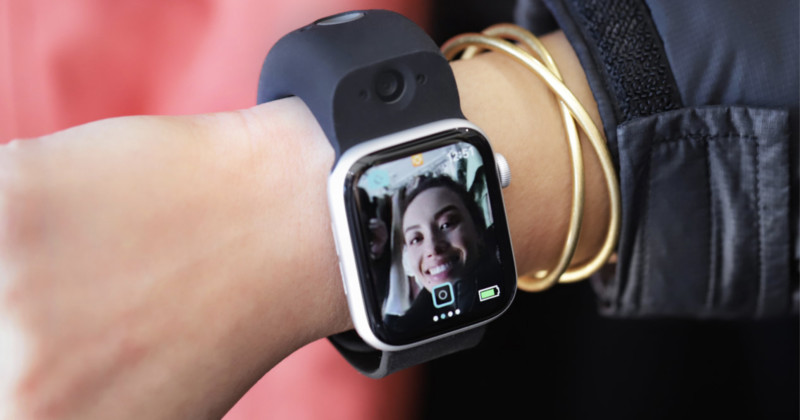
Wristcam, an accessory strap with two built-in cameras, has announced expanded functionality through its new Wristcam Messenger app. Users can now send and receive live video with anyone with an iPhone, even if they don’t have a Wristcam or an Apple Watch.

The launch of the Messenger app makes it what the company calls “the first and only Apple Watch experience to offer live video communication.” In addition to the new app, Wristcam is also introducing a computer vision SDK for Apple Watch app developers.

Last year, Wristcam unveiled the $300 accessory and touted it as an easier way to more seamlessly take photos while on the go. While bulkier than a typical Apple Watch strap, it packs two Sony cameras: one is an 8-megapixel “world-facing” camera designed to take photos and videos of surroundings, and the other is a 2-megapixel self-facing camera made for taking video calls.Top ArticlesS**t Leica Photographers Say…The Fragmentation of PhotojournalismGoecha La: The Himalayan Trek in India to the Third Highest PeakPhoto App Turns Users Into Unwitting Spies for US MilitaryREAD MOREHow Good Is The DJI Air 2S For Drone Landscape Photography?READ MOREPhotographer Combines Protest and Social Media to Spur Social ActionHow Good Is The DJI Air 2S For DroneLandscape Photography?https://imasdk.googleapis.com/js/core/bridge3.469.0_en.html#goog_880217590https://imasdk.googleapis.com/js/core/bridge3.469.0_en.html#goog_558395765https://imasdk.googleapis.com/js/core/bridge3.469.0_en.html#goog_262130131Photo App Turns Users Into Unwitting Spies for US Militaryhttps://www.youtube.com/embed/p-zJfua4gis

Below are a few 4K screen captures taken with the Wristcam and provided by the company:

https://www.biopharmadive.com/news/intellia-crispr-gene-editing-study-ttr-amyloidosis/602292/

llia, with first results, delivers a ‘landmark’ for CRISPR gene editing

Study results offer the first clinical evidence that CRISPR gene editing inside the body can be safe and effective.Published June 26, 2021Ben FidlerSenior Editor

del Aguila III, Ernesto. (2018). “CRISPR Cas9” [Illustration]. Retrieved from Flickr.

An infusion of an experimental CRISPR gene editing medicine has shown early promise as a treatment for a rare inherited condition, an encouraging finding that marks the latest, significant step forward for a technology awarded a Nobel prize last year.

Treatment with the medicine, which was developed by Intellia Therapeutics and Regeneron Pharmaceuticals, dramatically lowered levels of a misshapen protein that causes the disease transthyretin amyloidosis. Side effects in the six patients enrolled in Intellia’s study were few and mild.

SPONSORED BY KINAXISTop 5 supply chain planning myths debunked

What’s true for companies in the new era of supply chain planning? Discover the new governance model to defeat disruption.Learn More

The results, which were published Saturday in The New England Journal of Medicine, are the first clinical evidence that CRISPR gene editing can be used successfully inside a person’s body to treat disease.

“This is a landmark event in modern medicine,” said Kiran Musunuru, a professor of medicine at the University of Pennsylvania who specializes in CRISPR gene editing and wasn’t associated with the study. “I think it’s going to open the door to a whole new class of therapies.”

While encouraging and powerful proof of concept, the initial data from Intellia’s study don’t yet answer many of the most pressing questions facing CRISPR. It’s unclear how long the effects researchers observed will last, or whether they’ll vary as more patients are treated. The long-term safety consequences of gene editing are also unknown.

Additionally, multiple drugs are available in the U.S. to treat transthyretin amyloidosis, potentially complicating Intellia’s path forward with regulators, doctors and patients.

“We have effective tools that suppress [the protein] at this point,” said John Berk, a physician who treats amyloidosis at Boston Medical Center and associate professor of medicine at Boston University School of Medicine. “And we have the luxury of regulating them.”

Improving prospects

Transthyretin amyloidosis, or ATTR for short, can either be inherited or acquired. The less common hereditary form is estimated to affect some 50,000 people worldwide. Its telltale sign is the buildup of misfolded clumps of TTR, a protein the body normally uses to ferry vitamin A.

ATTR impacts each patient differently but is consistently progressive, worsening over time. Some have nerve damage that begins with toe numbness and creeps upwards, causing health problems like a loss of bowel control or compromised mobility. For others, the disease corrodes the heart, leading to heart failure and death within a few years. Many have elements of both.

For many years, the only treatments were liver transplants or a generic drug called diflunisal that could stabilize the transthyretin protein and slow nerve damage.

Since 2018, however, three new medicines have won approval in the U.S. Alnylam Pharmaceuticals, a pioneer of a gene silencing method known as RNA interference, secured Food and Drug Administration clearance of an infused medicine called Onpattro that can improve nerve function. Akcea Therapeutics followed with Tegsedi and Pfizer’s Vyndamax, which is similar to diflunisal, was OK’d for ATTR patients with heart problems.

“When these drugs were approved it was like, ‘Oh finally, at least there’s something we can do,'” said Mary O’Donnell, the president of the nonprofit Amyloidosis Foundation.

But the drugs have limitations. O’Donnell says patients often have trouble accessing or covering the costs of Vyndamax. Onpattro requires a multi-hour infusion every three weeks so its effects won’t wane, along with steroids to prep patients for each treatment. Tegsedi can have a negative impact on kidney function and blood-clotting platelets. All three must be taken for life.

Those drugmakers, and others, are working on longer-lasting and more convenient options. But none offer the potential of gene editing, which is meant to permanently halt, or even reverse, the disease’s downward course.

“When we think about what gene editing can bring, it’s not just convenience,” said Intellia CEO John Leonard. “This is about improving prospects.”

An Intellia Therapeutics scientist in the labCourtesy of Intellia Therapeutics 

The first look

The clinical success of Onpattro and Tegsedi proved suppression of the TTR gene could change the trajectory of the disease.

In some ways, Intellia is building on what Alnylam has already done. Alnylam spent years figuring out how to safely and effectively deliver RNA drugs into cells. The biotech finally succeeded by focusing on the liver, a large organ that filters blood, and using tiny fat bubbles known as lipid nanoparticles to get them there.

“I think what Intellia has done is sort of take the playbook from Alnylam,” said Berk, of BU. Berk has been an investigator in the trials of multiple approved ATTR drugs and advised Intellia in the past.

Like Alnylam, Intellia uses lipid nanoparticles to shuttle its medicine into the liver. Inside each, however, are the genetic instructions for CRISPR editing tools. Once absorbed into liver cells, those instructions are deployed to precisely cut the segment of DNA that encodes for TTR, thereby breaking it and halting production of the harmful protein at its genetic source.

Intellia is co-developing its treatment with Regeneron, which partnered with the smaller biotech in a wide-ranging alliance signed in 2016

Get biopharma news like this in your inbox daily. Subscribe to BioPharma Dive:Email:email icon Sign up

As with other drugs just beginning testing in humans, Intellia’s trial was primarily designed to find the optimal dose to move into further testing — one that strikes the right balance between safety and efficacy. Intellia is enrolling adults between 18 to 80 years old with inherited ATTR and symptoms of nerve damage. Some, not all, have heart damage. They’ll be tracked for two years.

The results published in NEJM, which are also being presented at a medical conference on Saturday, are from three patients who received a low dose and three given a higher one.

After four weeks, results from the first three on the lower dose showed TTR protein levels fell by an average of 52%. For the three given a higher dose, the reduction was much greater — on average 87%, with a range of 80% to 96%.

Those latter numbers surpass the 80% reduction reported in testing of Onpattro, an important bar for efficacy.

“It’s not just that it worked, it’s that it worked so well,” said Musunuru, of UPenn. For TTR levels to fall by up to 96%, he added, essentially all of the liver’s cells must be edited.

“That’s essentially saturation editing,” he said. “That’s a home run.”

Reported side effects, which included headaches, nausea and an infusion-related reaction, were minor. Abnormalities on lab tests for blood clots or elevated liver enzymes — a key concern given the stress the treatment could put on the liver — were “barely detectable,” Intellia’s Leonard said.

Saturday’s results are the first glimpse at how well Intellia’s treatment might work. They do not yet prove CRISPR gene editing can benefit patients any more than existing drugs. While Onpattro and Tegsedi require chronic dosing, they’ve already been shown to keep transthyretin levels down for multiple years, with their effects leading to better health outcomes for patients with polyneuropathy. It’s unclear whether greater TTR suppression would offer an improvement.

“Kudos to Intellia for crafting a CRISPR/cas9 that worked,” said BU’s Berk. “The novelty is employing new biology to suppress TTR — but the concept of TTR suppression in this disease is well established.”

https://www.byrdie.com/hot-and-cold-body-temperature-swings-5188514

Why Do I Swing Between Chills and Sweating All Night Long?

written by BETH KRIETSCH UPDATED JUN 25, 2021

  • FACEBOOK
  • PINTEREST
  • EMAILSHARE
Woman in bed with covers
STOCKSY

Sweating at night to the point where you’re soaking through your clothes and sheets is pretty uncomfortable. It can be a bit concerning, too, and leaves many embarking on a Google search to determine the potential cause.https://4ff438565bfddf9ce13705addff8ce60.safeframe.googlesyndication.com/safeframe/1-0-38/html/container.html

One thing to know is that night sweats—and the chills that sometimes accompany them—are pretty common. They can arise from something simple like using a comforter that’s too heavy or being stressed about work. But night sweats can also be a clear sign that something more complicated or serious is going on in your body, such as an infection, hormonal issues, or even cancer.https://4ff438565bfddf9ce13705addff8ce60.safeframe.googlesyndication.com/safeframe/1-0-38/html/container.html

Our bodies have an internal thermostat of sorts that helps us regulate body temperature, Puja Uppal, MD, explains. Night sweats and shivering often indicate that the body is having a hard time modulating its natural ability to regulate body temperature.

If we’re too hot, we may sweat in an attempt to decrease body temperature. And if our temperature becomes too cold, we may automatically shiver an an attempt to increase body temperature.

Keep reading to find out everything you need to know about night sweats.

MEET THE EXPERT

  • Puja Uppal, MD, is a board-certified family medicine physician and chief medical officer of Think Healthy.
  • Casey Kelly is a board-certified family medicine physician and medical director at Case Integrative Health.
  • Tara Scott is a board-certified ob-gyn and chief medical officer at Revitalize Medical Group.

What Exactly Are Night Sweats?

Night sweats are a severe or excessive form of sweating that leaves your clothing and sheets drenched. Often, night sweats occur repeatedly (rather than an isolated incident) and disturb sleep.https://4ff438565bfddf9ce13705addff8ce60.safeframe.googlesyndication.com/safeframe/1-0-38/html/container.html

According to the Cleveland Clinic, night sweats may occur when our blood vessels expand and increase blood flow before then contracting again. This process can lead to a wave of heat that spreads throughout the body, which is often followed by sweating and other symptoms like skin reddening and an increased heart rate. Cold chills might come next.

Causes of Sweating at Night

Night sweats often arise from a few benign causes, Casey Kelley, MD, explains. “This can include hormone fluctuations (such as menopause), medication side effects, or even an overindulgence in alcohol,” she says. “They can also result from various infections, such as the cold or flu, or various tick-borne infections.” Less commonly, night sweats might occur due to something more serious, such as cancer.https://4ff438565bfddf9ce13705addff8ce60.safeframe.googlesyndication.com/safeframe/1-0-38/html/container.html

Night sweats are particularly common among women who are going through menopause. According to the Mayo Clinic, menopause is the likely cause for night sweats if you are somewhere around age 50, are experiencing irregular menstrual periods (or no menstruation at all), and have no additional symptoms like pain or a fever.https://4ff438565bfddf9ce13705addff8ce60.safeframe.googlesyndication.com/safeframe/1-0-38/html/container.html

Here’s a more comprehensive list of potential causes of night sweats, according to our experts:

  • Your room is too warm.
  • You’re experiencing nightmares.
  • Your body is experiencing some hormonal changes.
  • You’re fighting an infection—including flu, COVID-19, urinary tract infections, bacterial infections, mononucleosis, pneumonia, HIV, cellulitis, or tuberculosis.
  • You’re going through menopause.
  • You have diabetes.
  • You’re experiencing hyperthyroidism.
  • You’re experiencing hypoglycemia (this can be tied to diabetes as well).
  • You’re experiencing cortisol issues and stress.
  • You have undiagnosed cancer (such as lymphoma or leukemia).
  • You have sleep apnea.
  • You’re experiencing medication side effects. These side effects can occur while taking medications like antidepressants, diabetes medications, and hormone therapies.
  • You have an anxiety disorder.
  • You have an autoimmune condition.

Causes of Shivering at Night

Chills and shivering at night can be just as uncomfortable as sweating, and often occur for many of the same reasons. Here are some common reasons for nighttime shivering, according to our experts:

  • Room temperature (your room may be too warm).
  • Hormonal changes or fluctuations.
  • Infection.
  • Medication side effects.
  • Cancer.
  • Drug withdrawal from opioids or other pain medications.

How to Reduce Temperature Swings at Night

Your first stop on the road to addressing night sweats, chills, or a fluctuation between the two is to see a doctor.

“The most important thing you can do to reduce temperature fluctuations at night is to take note of when your night sweats occur, and then speak to your physician,” Kelley says. “Temperature fluctuations are a symptom, so the best thing you and your medical team can do is to find the underlying cause.”

If your symptoms are mild (meaning they’re not interfering with your ability to get a solid night of sleep or with your day-to-day life) and are not accompanied by a fever, weight loss, or other concerning symptoms, you can also try these lifestyle modifications, recommended by our experts:

  • Limit alcohol intake.
  • Regulate the temperature of your room.
  • If you’re sweating a lot, try lowering the temperature—the ideal room temperature is around 66 degrees.
  • Try automating your home’s thermostat to regulate temperature in a way that’s more comfortable. 
  • Use a fan at night.
  • Dress in layers (and remove layers as necessary throughout the night).
  • Keep a glass of ice water by your bedside.
  • Keep a gel ice pack nearby—this is often helpful for women who are experiencing hot flashes during menopause.

When to See a Doctor

Night sweats may not seem like that big of a deal. But this symptom can sometimes offer important insight into your overall health and shouldn’t be ignored.

“While night sweats are usually the result of a more benign cause, it is imperative that you contact your physician if your symptoms persist or worsen,” Kelley says. “This also applies if you develop a fever over 103 degrees or one that lasts longer than three nights.”

It’s also important to see a doctor if the night sweats and chills are constant, disruptive to your sleep, or are accompanied by weight loss, shortness of breath, pain, mood swings, chest pain, a rash, diarrhea, or headaches.

“Evolving data shows that good sleep correlates to improved cardio-metabolic health and mental health,” Uppal says, so this is one area of health and well-being that you do not want to ignore.

The Takeaway

Night sweats are common and are not always a cause for concern. But in some cases, night sweats can indicate that something serious is going on in your body, like an infection or an undiagnosed underlying condition. If you’re experiencing night sweats, schedule an appointment with your doctor to talk about what’s going on and give them a chance to rule out anything serious.

https://www.techspot.com/news/90190-tcl-showcases-nxtwear-g-smart-glasses-featuring-dual.html

TCL showcases Nxtwear G smart glasses featuring dual-OLED screens and a stylish design

Multi-Screen Collaboration feature allows screen sharing between multiple devices

By Joao Silva 8 commentshttps://www.youtube.com/embed/bF_yc0eLSfU?rel=0&showinfo=0&modestbranding=1&vq=hd720&autohide=1&autoplay=1

In brief: At MWC 2021, TCL announced the release of its Nxtwear G smart glasses coming in July. The wearable will initially be available in Australia for $899 (about $680 US), but other regions will follow soon. During the event, the company also announced Multi-Screen Collaboration, which allows users to share screens seamlessly between multiple devices.

There are plenty of companies developing smart glasses, including Razer and Amazon, but none have yet created a killer product. Now TCL expects to do just that with the upcoming Nxtwear G smart glasses.

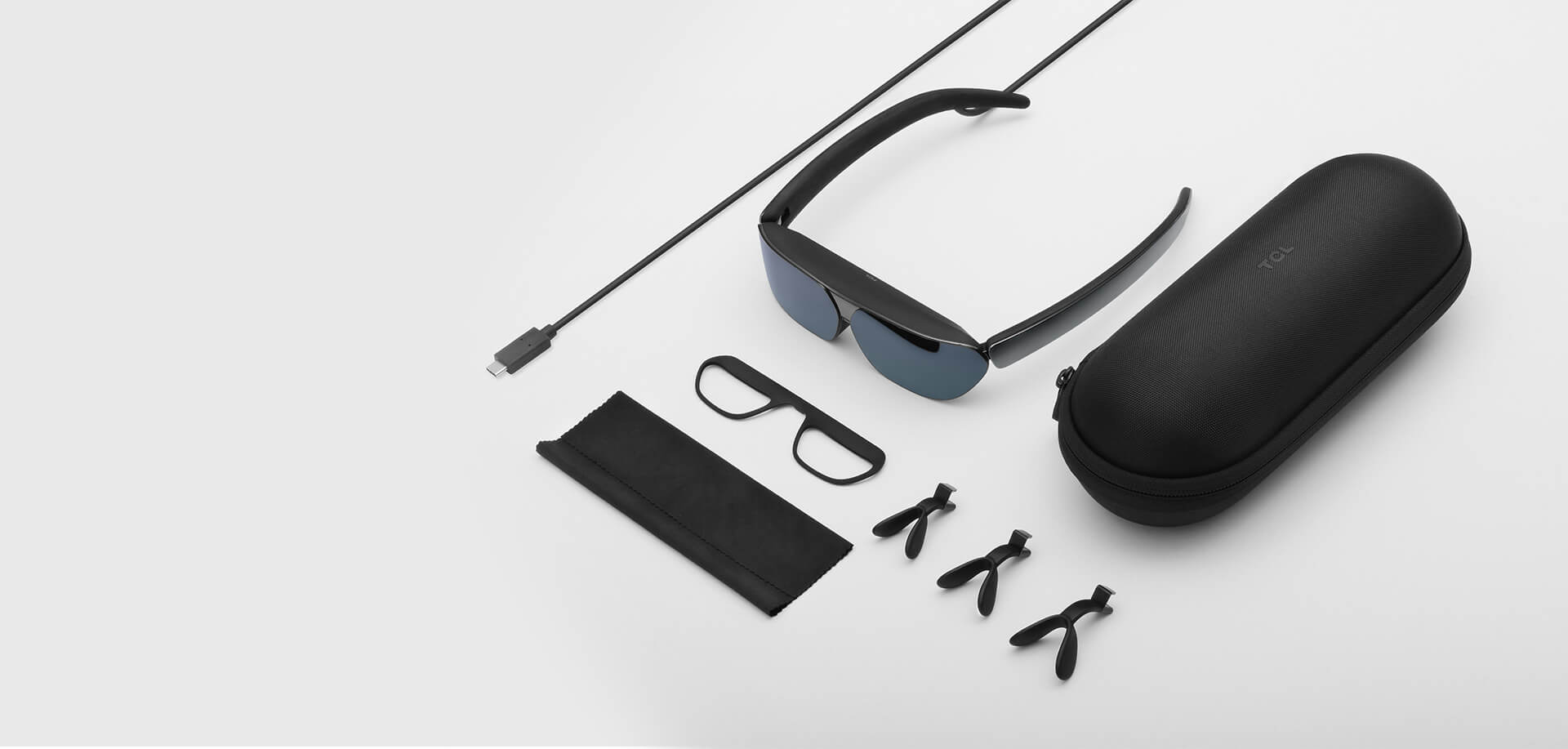
Whether you want to watch a movie, play a game, or work, the TCL Nxtwear G glasses allow you to do so in a small private space right in front of your eyes. Featuring dual-Micro OLED Sony panels with an FHD resolution and supporting 3D 4K content, these glasses simulate a 140-inch widescreen display with a 47 pixels-per-degree resolution.

Nxtwear G smart glasses also pack built-in speakers for added immersion. However, using earbuds or a headset might be a better option.

Using the USB-C DP cable attached to the glasses, TCL’s smart glasses can be connected to any phone, tablet, or laptop with the appropriate interface thanks to its plug-and-play functionality. Moreover, there’s a capsule case included to transport the glasses in your bag or backpack and protect them from a fall, scratches, or any other physical damage.

Despite all the technology used inside the glasses’ compact and portable design, they weigh just over 130g, with the USB-C cable weighing 30g alone.

TCL also showed a screen sharing feature that promises to deliver quick and easy cross-device broadcasting. With Multi-Screen Collaboration, TCL phone owners may also share files, music, videos, apps, photos, and messages with a compatible Windows 10 laptop or PC, tablet, or TV.

For now, the TCL 20 Pro 5G is the only device listed to support Multi-Screen Collaboration, but TCL promised the feature would come to other devices. In addition, the glasses will include support for this feature in an over-the-air software update that’s coming at a later date.

Nxtwear G glasses will debut in Australia sometime in July, with a more global release later this year. Based on exchange rates, it looks like US customer could expect a price tag of about $680.

https://www.yourtango.com/health-wellness/natural-sleep-remedy-sea-salt-honey-under-tongue

Place Two Things Under Your Tongue Before Bed To Sleep Way Better

Photo: Dean Drobot / ShutterstockPlace This Under Your Tongue Before Bed And Sleep BetterHigher PerspectiveContributorHealth And Wellness06/24/2021

No matter how old they are, I hear people almost everyday with the common complaint, “I’m so tired!” Instead of getting the recommended eight hours of sleep every night, most people have been averaging six or seven hours per night; sometimes, it’s even less.

While one or two hours less may not sound like a huge difference, it can actually have a major effect on your body. And not in a good way. Those one or two extra hours are a lot more important than you may realize. 

Getting a good night’s sleep can make a huge impact on your health, and can even improve things like your productivity level and your diet.

RELATED: What Your Body’s Trying To Tell You When You Wake Up In The Middle Of The Night

However, poor sleep has been linked to many serious health concerns, such as heart disease and diabetes. Your body needs a sufficient amount of sleep, at least eight hours, in order to really recharge.

Many people think that caffeine can make up for the lost sleep, but it definitely can’t. It may amp you up for a short period of time, but after that, you can expect a crash. There is really nothing that can replace a good night’s rest. 

Turning off the TV and stepping away from the computer an hour before going to bed can be a huge help as well. Screens can keep our brains functioning at a high level, and we need time to calm down before passing out.

While it may seem natural to want to give the web a quick browse or catch up on a few episodes of your favorite show right before bed, the bright light that comes off of a screen can keep you up and, therefore, works against your goal of getting those eight hours in. https://9c13da26f46a0d8178ac15862ec75745.safeframe.googlesyndication.com/safeframe/1-0-38/html/container.html

So, you’re probably wondering: how can I achieve a restful night’s sleep? 

Thankfully, there is a natural remedy to sleep deprivation that many people already have in their kitchen.

What’s the secret ingredient of this remedy, you ask?

It’s Himalayan sea salt!

RELATED: 10 Ways To Stop Anxiety From Infiltrating Your Dreams & Ruining A Good Night’s Sleep

The video below explains the amazing health benefits of Himalayan sea salt. It can help with everything from aiding our adrenal glands to fighting off disease and can even assist with weight loss.

Surprisingly enough, it can even help with depression by regulating serotonin levels in the brain. It also helps regulate melatonin, which is essential for sleep.

Subscribe to our newsletter.

Join now for YourTango’s trending articles, top expert advice and personal horoscopes delivered straight to your inbox each morning.Sign up now!

All you have to do is combine five teaspoons of raw, organic honey with one teaspoon of pink Himalayan sea salt in a jar. Then, place a small amount of this mixture under your tongue right before you head off to bed.

https://www.core77.com/posts/109272/Deep-Optics-LCD-Sunglasses-Offer-Magnification-on-Demand

Deep Optics’ LCD Sunglasses Offer Magnification on Demand

“Unlimited prescriptions with one pair of glasses”

By Rain Noe – June 25

An Israeli company called Deep Optics has developed sunglasses with liquid crystal lenses that can instantly be changed to reading glasses. These “adaptive focus sunglasses,” as the company calls them, “allow the wearer to see at any focal point” and essentially offer “unlimited prescriptions with one pair of glasses.” Check out this demo of the prototype:

https://e221cbc98ccc9c4a1ae170b6f126e3e1.safeframe.googlesyndication.com/safeframe/1-0-38/html/container.html

(Full demo here.)

As for how it works: The lower part of the lenses contain a liquid crystal layer that can change its optical power. During initial set-up, the user sets their desired magnification level—i.e. whatever their prescription for reading glasses would be—via a smartphone app. With that set, the user then only needs to swipe along the stems to trigger the magnification function. They’re essentially electronic bi-focals.

The company claims that the embedded chip, battery, charging contact, Bluetooth transmitter and swipe sensors add “almost no extra weight or bulk” to the glasses. They estimate that a full charge is good for a single day’s use, and point out that when the glasses aren’t magnifying, they’re not drawing any juice.https://e221cbc98ccc9c4a1ae170b6f126e3e1.safeframe.googlesyndication.com/safeframe/1-0-38/html/container.html

They’re calling the sunglasses 32°N, and they’re currently up on Kickstarter, starting at $229 (projected retail price: $449). At press time they had $138,389 in pledges on a $25,000 goal, with 20 days left to pledge.

https://www.irishtimes.com/life-and-style/health-family/tips-to-improve-your-sleep-and-help-beat-coronasomnia-1.4594005

Tips to improve your sleep and help beat ‘coronasomnia’

Quality of collective sleep continues to deteriorate more than a year into pandemic

Fri, Jun 25, 2021, 06:00Anahad O’Connor 1Chronically bad sleep is more than just a nuisance. Photograph: iStock

Chronically bad sleep is more than just a nuisance. Photograph: iStock 

This summer, The Irish Times will offer tips, advice and information for parents on how to help their children thrive during the holiday months. Read all about it at  irishtimes.com/summeroffamily

Is your sleep not what it used to be? Does your mind race when your head hits the pillow? Do you wake up at 4am and struggle to fall back asleep? Are you feeling drowsy and sleep-deprived no matter how many hours you spend in bed?

For many people, sleeping poorly was the norm before the pandemic. Then the stress, anxiety and disruptions made our nightly slumber worse, giving rise to terms such as “coronasomnia” to describe the surge in sleep disturbances last year. But recently, sleep experts noticed something that astonished them: More than a year into the pandemic, our collective sleep only continued to deteriorate.

In a survey of thousands of adults last summer, the American Academy of Sleep Medicine found that 20 per cent of Americans said they had trouble sleeping because of the pandemic. But when the academy repeated its survey 10 months later, in March, those numbers rose drastically.

Good sleep starts long before bedtime. Photograph: iStock

Roughly 60 per cent of people said they struggled with pandemic-related insomnia, and nearly half reported that the quality of their sleep had diminished – even though, like in Ireland and many other places, infection rates have fallen and the country is opening back up.

“A lot of people thought that our sleep should be getting better because we can see the light at the end of the tunnel – but it’s worse now than it was last year,” said Dr Fariha Abbasi-Feinberg, a sleep medicine specialist and spokesperson for the American Academy of Sleep Medicine. “People are still really struggling.”

Chronically bad sleep is more than just a nuisance. It weakens the immune system, reduces memory and attention span, and increases the likelihood of chronic conditions such as depression, Type 2 diabetes and heart disease. The shorter your sleep, studies suggest, the shorter your life span. And for people over 50, sleeping less than six hours a night may even heighten the risk of dementia.

“Over the past year, we’ve had the perfect storm of every possible bad thing that you can do for your sleep,” said Dr Sabra Abbott, an assistant professor of neurology in sleep medicine at Northwestern University Feinberg School of Medicine in Chicago.

If you stay in bed awake for long periods of time, your brain thinks: ‘Every time I get into bed, this is the place where I should be awake’

Studies show that in the pandemic, people tended to keep irregular sleep schedules, going to bed far later and sleeping in longer than usual, which can disrupt our circadian rhythms. We slashed our physical-activity levels and spent more time indoors; gained weight and drank more alcohol; and erased the lines that separate work and school from our homes and our bedrooms – all of which are damaging to sleep.

Most striking of all, our stress and anxiety levels skyrocketed, which are two of the root causes of insomnia.

Not everyone, of course, is suffering from disrupted sleep. A team of international researchers who studied three million people in New York, London, Los AngelesSeoul and Stockholm found that on average, people gained an extra 25 minutes of sleep each night during the pandemic compared with a year earlier.

Those who benefited the most were people who naturally tend to go to bed late but no longer had to set an early alarm to commute to work or get their children ready for school, said Matthew Walker, a professor of neuroscience and psychology at the University of California, Berkeley, and author of the bestselling book, Why We Sleep.

“If there is a success story, it is revenge of the night owls when it comes to Covid and sleep,” Walker said. “The night owls are finally starting to sleep a little more in synchrony with their biology.”

But for millions of others who suffer from insomnia, the extra time in bed can paradoxically make matters worse. When people struggle to fall or stay asleep, their brains associate their beds with stressful experiences. “Your brain learns that your bed is the place where you don’t fall asleep,” Abbott said. “The more time you spend in bed, the more you reinforce that idea.”

One of the standard treatments for insomnia is a strategy called sleep restriction, which makes people better and more efficient sleepers by teaching them to spend less time in bed, not more.

So what more can we do to get our disrupted sleep back on track?

How many times have you been glued to your phone long past your bedtime? Photograph: iStock

Beating insomnia

It’s normal to have trouble sleeping during big changes in your life. But when the sleep disruptions last longer than three months, it can qualify as chronic insomnia, which can have long-term health consequences. One of the most effective treatments is cognitive behavioural therapy, or CBT.

This approach helps you address the underlying thoughts, feelings and behaviours that are ruining your sleep. Here are some CBT-inspired ways to combat insomnia.

Follow the 25-minute rule
If you get into bed and can’t fall asleep after 25 minutes, or you wake up at night and can’t get back to sleep after 25 minutes, then don’t stay in bed. Get up and do a quiet activity that calms your mind and makes you drowsy. “Just get up, don’t fret,” Prof Walker said. “If you stay in bed awake for long periods of time, your brain thinks: ‘Every time I get into bed, this is the place where I should be awake.’ And you need to break that association.”

Do any activity that relaxes you. Get up and stretch. Sit on your couch and meditate or read a magazine. Read a book in dim light. Do deep-breathing exercises. Listen to a soothing podcast. You could sit in a chair and draw or knit. Then, when you start to feel drowsy again, get back into bed and try to go to sleep. Just don’t get into bed unless you are tired. “You would never sit at the dinner table waiting to get hungry,” Walker said. “So why would you lie in bed waiting to get sleepy?”

Throw away your worries
Sit down with a blank piece of paper one to two hours before bed each night. Then write down all of your thoughts, especially anything that is bothering you. It could be what you’re going to do at work tomorrow, the phone calls you have to make or the bills you have to pay.

“If most of what you’ve written down is stuff that you’re worried about, then crumple up the paper and throw it in the trash – that’s called discharging your thoughts,” said Dr Ilene M Rosen, a sleep medicine doctor and associate professor of medicine at the Perelman School of Medicine at the University of Pennsylvania. The act of dumping your thoughts on a piece of paper and throwing it away is a symbolic gesture that empowers you and calms your mind, Rosen said. “You had those thoughts and now they’re gone,” she said.

Screens in the bedroom
One reason sleep has suffered this past year is that people are sacrificing their slumber to catch up on all the fun things that they missed out on during the day, such as scrolling through Instagram and watching YouTube videos. This phenomenon, known as revenge bedtime procrastination, is made worse by our attachment to our phones and screens, which often follow us into our beds. (How many times have you been glued to your phone long past your bedtime?)

We all know that we shouldn’t look at bright screens late at night because the blue light they emit tells your brain that it’s time to be awake. But many of us do it anyway. So follow this guideline: If you are going to use your phone or device after your bedtime, then use it only while standing. When you feel like sitting or lying down, you have to put the device away. “You’ll find after about 10 minutes of standing up at your normal bedtime that you’re going to say, ‘I need to lie down’ – and that’s your body telling you that you need to put the phone away and get to sleep,” Walker said.

‘Why would you lie in bed waiting to get sleepy?’ Photograph: iStock

Daily habits for better sleep

Good sleep starts long before bedtime. Many of the things you do during the day will impact the quality of your slumber. So try these sleep-promoting habits.

Wake up at the same time
Our bodies follow a daily circadian rhythm, and waking up at different times throws it out of whack. It is best to keep your wake-up time consistent. Don’t sleep in, even on weekends. “When the alarm goes off, get out of bed and start your day regardless of how much you’ve slept,” Rosen said. “You may not feel great for a few days, but you’re reinforcing that when you’re in bed, you sleep.” The same goes for your bedtime: Keep it consistent. The less you deviate from your normal bed and wake-up times, the better you’ll sleep.

Get sunlight every morning
If you don’t commute to work, it can be easy to spend your entire mornings inside. But exposure to sunlight serves an important purpose: It shuts down the release of melatonin, a hormone that promotes sleep.

“Most brain fog in the morning is caused by continued melatonin production,” said Michael Breus, a clinical psychologist and author of, The Power of When. “When sunlight hits your eye, it sends a signal to your brain to tell the melatonin faucet to turn off.” Aim to get at least 15 minutes of sunlight first thing every morning.

Make your bed a haven
Working from home – sometimes from our beds – has erased a lot of the boundaries between work and sleep. But turning your mattress into an office can condition your brain to view your bed as a place that makes you stressed and alert, which can lead to insomnia. That’s why sleep experts say you have to reserve your bed for two activities only.

“The bed is for sleeping or sex,” Rosen said. “If you’re not doing either of those things, then get out of bed. If you have the luxury of going to a different room, then that’s even better. You have to break the association of being awake in bed.”

Exercise for better sleep
The pandemic led people to cut back on physical activity. But exercise is the easiest way to improve sleep, Breus said. “Sleep is recovery,” he added. “If you don’t have anything to recover from, your sleep isn’t going to be that great.”

Many studies have found that daily exercise, regardless of the type or intensity, helps people fall asleep faster and stay asleep longer, especially among people who are middle-aged or older. One caveat: End your exercise at least four hours before bedtime; otherwise, it could interfere with your sleep by raising your core body temperature, Breus said.

Cut off caffeine at 2pm
Caffeine has a half-life of six to eight hours and a quarter-life of about 12 hours. That means that if you drink coffee at 4pm, “you’ll still have a quarter of the caffeine floating around in your brain at 4am,” Breus said. Avoiding caffeine in the evening is a no-brainer. But, ideally, you should steer clear of caffeine after 2pm so your body has enough time to metabolize and clear most of it from your system.

Follow the two-drink rule
If you drink alcohol, limit yourself to two drinks in the evening and stop at least three hours before bed. Alternate each drink with a glass of water. Because alcohol is a sedative, some people drink a nightcap to help them fall asleep faster.

But alcohol suppresses REM sleep and causes sleep disruptions, which will worsen the overall quality of your sleep. “The closer you drink to your bedtime, the worse your sleep is going to be,” Breus said. – New York Times

https://phys.org/news/2021-06-scientists-crisprcas9-based-gene.html


Scientists develop the first CRISPR/Cas9-based gene drive in plants

by Mario Aguilera, University of California – San Diego

With a goal of breeding resilient crops that are better able to withstand drought and disease, University of California San Diego scientists have developed the first CRISPR-Cas9-based gene drive in plants.

While gene drive technology has been developed in insects to help stop the spread of vector-borne diseases such as malaria, researchers in Professor Yunde Zhao’s lab, along with colleagues at the Salk Institute for Biological Studies, demonstrated the successful design of a CRISPR-Cas9-based gene drive that cuts and copies genetic elements in Arabidopsis plants.

Breaking from the traditional inheritance rules that dictate that offspring acquire genetic materials equally from each parent (Mendelian genetics), the new research uses CRISPR-Cas9 editing to transmit specific, targeted traits from a single parent in subsequent generations. Such genetic engineering could be used in agriculture to help plants defend against diseases to grow more productive crops. The technology also could help fortify plants against the impacts of climate change such as increased drought conditions in a warming world.

The research, led by postdoctoral scholar Tao Zhang and graduate student Michael Mudgett in Zhao’s lab, is published in the journal Nature Communications.

“This work defies the genetic constraints of sexual reproduction that an offspring inherits 50% of their genetic materials from each parent,” said Zhao, a member of the Division of Biological Sciences’ Section of Cell and Developmental Biology. “This work enables inheritance of both copies of the desired genes from only a single parent. The findings can greatly reduce the generations needed for plant breeding.”

The study is the latest development by researchers in the Tata Institute for Genetics and Society (TIGS) at UC San Diego, which was built upon the foundation of a new technology called ‘active genetics’ with potential to influence population inheritance in a variety of applications.

Developing superior crops through traditional genetic inheritance can be expensive and time consuming as genes are passed through multiple generations. Using the new active genetics technology based on CRISPR-Cas9, such genetic bias can be achieved much more quickly, the researchers say.

“I am delighted that this gene drive success, now achieved by scientists affiliated with TIGS in plants, extends the generality of this work previously demonstrated at UC San Diego, to be applicable in insects and mammals,” said TIGS Global Director Suresh Subramani. “This advance will revolutionize plant and crop breeding and help address the global food security problem.”


Explore furtherNew ‘split-drive’ system puts scientists in the (gene) driver seat


More information: Tao Zhang et al, Selective inheritance of target genes from only one parent of sexually reproduced F1 progeny in Arabidopsis, Nature Communications (2021). DOI: 10.1038/s41467-021-24195-5Journal information:Nature CommunicationsProvided by University of California – San Diego