https://phys.org/news/2021-06-mxenes-future-nanotechnology.html


Are MXenes the future of nanotechnology?
by Linköping University

MXenes – the future of nanotechnology
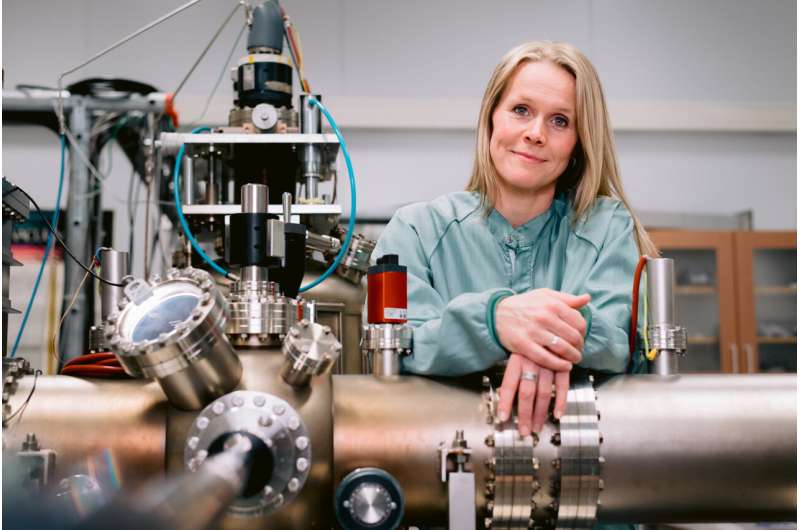
Johanna Rosén, professor at the Department of Physics, Chemistry and Biology at Linköping University. Credit: Anna Nilsen

Artificial kidneys, powerful batteries and efficient water purification are some of the future applications of a group of ultrathin materials known as MXenes. This opinion is expressed in an article in the journal Science, whose authors include one from Linköping University.

Materials that have a cross-section as thin as one or a few layers of atoms possess unusual properties due to their thickness. These properties may be high electrical conductivityhigh strength or an ability to withstand heat, giving ultrathin materials a great potential for use in future technology. The most well-known material is graphene, and the hunt for other ultrathin materials, also known as two-dimensional materials, has increased in intensity since its discovery.

Graphene and many other two-dimensional materials are either semiconductors, semimetals or polarized insulators. The lack of an ultrathin metal conductor is an obstacle in the development of components based exclusively on two-dimensional materials.

In 2011 a new group of ultrathin materials was discovered, and given the name MXenes. They consist of a metal in combination with either carbon or nitrogen atoms. MXenes supplement other ultrathin materials in that they are metallic conductors, and open the door to completely new applications on the nanometre scale.

Johanna Rosén, professor in the Department of Physics, Chemistry and Biology at Linköping University, together with colleagues from Drexel University in the US, has written an article in Science discussing the future of MXenes and the influence they are expected to have.

“There are many conceivable applications. The two that are closest to realization are efficient energy storage, in the form of batteries and supercapacitors, and electromagnet interference shielding. But in the long term, we will be able to manufacture filters for air and water purification, antennas for the next generation of communication, and many other applications that we haven’t thought of yet,” says Johanna Rosén.

Furthermore, many MXenes are biocompatible (compatible with living tissue), non-toxic and eco-friendly, which means that they are being studied for possible applications in biomedicine. One such application is the formation of artificial kidneys, which would make dialysis treatment (or other treatments where dialysis machines are not available) unnecessary.

The first MXene to be discovered was titanium carbide, Ti3C2. Now, ten years later, approximately 50 different MXenes have been developed, many of them at Linköping University. However, the methods used to produce them mean that the combinations available are almost infinite. This means that there may in the long term be thousands of MXenes with different tailored properties.

“MXenes were discovered only ten years ago, and the research field to study them has grown extremely rapidly. Approximately 6,600 scientific articles are now published each year. But there are still many properties and applications that remain to be discovered, and that can solve many contemporary challenges within both technology and medicine,” says Johanna Rosén.


Explore furtherNew insight into the surface properties of two-dimensional MXenes materials


More information: Armin VahidMohammadi et al, The world of two-dimensional carbides and nitrides (MXenes), Science (2021). DOI: 10.1126/science.abf1581Journal information:ScienceProvided by Linköping University

https://www.theregister.com/2021/06/23/linux_foundation_machine_learning_voice/

The Linux Foundation dives into machine learning with Open Voice Network, dataset licence launches

Looks to improve the simplicity with which such things are shared

Gareth HalfacreeWed 23 Jun 2021 // 18:01 UTC


1 

The Linux Foundation has announced two projects with which it aims to help settle the choppy waters of machine learning: the Open Voice Network (OVN), and the CDLA-Permissive-2.0 licence for machine learning datasets.

“Voice is expected to be a primary interface to the digital world, connecting users to billions of sites, smart environments and AI bots,” said Mike Dolan, senior veep and general manager of projects at the Linux Foundation. “It is already increasingly being used beyond smart speakers to include applications in automobiles, smartphones and home electronics devices of all types.

“Key to enabling enterprise adoption of these capabilities and consumer comfort and familiarity is the implementation of open standards. The potential impact of voice on industries including commerce, transportation, healthcare and entertainment is staggering and we’re excited to bring it under the open governance model of the Linux Foundation to grow the community and pave a way forward.”

That open governance model is behind the launch of the Open Voice Network, a Linux Foundation project which focuses on the development of open standards designed to promote user choice and trust in voice systems, the identification and sharing of best practices for conversational AI, and advocacy in work with existing industry associations – including a look at regulatory and legislative issues surrounding data privacy.https://c96010acd75554ee8b025d3058d01602.safeframe.googlesyndication.com/safeframe/1-0-38/html/container.htmlhttps://c96010acd75554ee8b025d3058d01602.safeframe.googlesyndication.com/safeframe/1-0-38/html/container.html

The OVN includes among its founding members Deutsche Telekom, Microsoft, Schwarz Gruppe, Target, Veritone, and Wegmans Food Markets, each of which has pledged “a commitment of resources in support of the its research, awareness and advocacy activities and active participation in the its symposia and workshops.”

At the same time, the Linux Foundation also launched a new licence: the Community Data Licence Agreement Permissive 2.0, or CLDA-Permissive-2.0, specifically targeting the creation, distribution, and use of machine learning datasets – whether relating to voice or otherwise.

Designed as a successor to the original CDLA, which was released back in October 2017, the new variant combines work from the CDLA with Microsoft’s Open Use of Data Agreement (O-UDA) following the company’s decision to grant stewardship of the latter to the CDLA project.

The new agreement is shorter, under a page in length, and aims at simplicity with a permissive model that doesn’t require mandatory attribution when a dataset is used – whether that’s for a commercial purpose or otherwise.

“Data is an essential component of how companies build their operations today, particularly around Open Data sets that are available for public use,” Amanda Brock, chief executive of OpenUK, opined of the new licence.

“We welcome the CDLA-Permissive-2.0 license as a tool to make Open Data more available and more manageable over time, which will be key to addressing the challenges that organisations have coming up. This new approach will make it easier to collaborate around Open Data and we hope to use it in our upcoming work in this space.”

The licence is already in use: IBM has confirmed it will be relicensing its public datasets under CDLA-Permissive-2.0, beginning with large-scale source code dataset Project CodeNet, while Microsoft has announced the release of the Hippocorpus short-story, Public Perception of Artificial Intelligence, Xbox Avatars Descriptions, Dual Word Embeddings, and GPS Trajectory datasets under the licence.

More information on the Open Voice Network is available on the official website, and the same goes for the CDLA-Permissive-2.0 licence.

https://neurosciencenews.com/chocolate-benefit-morning-18795/

Starting the Day off With Chocolate Could Have Unexpected Benefits

FeaturedNeuroscienceOpen Neuroscience Articles·June 24, 2021

Summary: For postmenopausal women, eating 100g of chocolate within an hour of waking in the morning helped burn body fat and decrease blood sugar levels.

Source: Brigham and Women’s Hospital

Eating milk chocolate every day may sound like a recipe for weight gain, but a new study of postmenopausal women has found that eating a concentrated amount of chocolate during a narrow window of time in the morning may help the body burn fat and decrease blood sugar levels.

To find out about the effects of eating milk chocolate at different times of day, researchers from the Brigham collaborated with investigators at the University of Murcia in Spain.

Together, they conducted a randomized, controlled, cross-over trial of 19 postmenopausal women who consumed either 100g of chocolate in the morning (within one hour after waking time) or at night (within one hour before bedtime). They compared weight gain and many other measures to no chocolate intake.

Researchers report that among the women studied:

  • Morning or nighttime chocolate intake did not lead to weight gain;
  • Eating chocolate in the morning or in the evening can influence hunger and appetite, microbiota composition, sleep and more;
  • A high intake of chocolate during the morning hours could help to burn fat and reduce blood glucose levels.
  • Evening/night chocolate altered next-morning resting and exercise metabolism.

“Our findings highlight that not only ‘what’ but also ‘when’ we eat can impact physiological mechanisms involved in the regulation of body weight,” said Scheer.

This shows a woman eating chocolate
“Our findings highlight that not only ‘what’ but also ‘when’ we eat can impact physiological mechanisms involved in the regulation of body weight,” said Scheer. Image is in the public domain

“Our volunteers did not gain weight despite increasing caloric intake. Our results show that chocolate reduced ad libitum energy intake, consistent with the observed reduction in hunger, appetite and the desire for sweets shown in previous studies,” said Garaulet.

About this diet and metabolism research news

Source: Brigham and Women’s Hospital
Contact: Elaine St Peter – Brigham and Women’s Hospital
Image: The image is in the public domainhttps://dd9b128006ac99c433fd3ca999278a80.safeframe.googlesyndication.com/safeframe/1-0-38/html/container.html

Original Research: Open access.
Timing of chocolate intake affects hunger, substrate oxidation, and microbiota: A randomized controlled trial” by Frank A. J. L. Scheer, et al. FASEB Journal

https://www.marktechpost.com/2021/06/23/facebook-ai-releases-hubert-a-new-approach-for-learning-self-supervised-speech-representations/

Facebook AI Releases ‘HuBERT’: A New Approach For Learning Self-Supervised Speech Representations

By Shilpi Anand -June 23, 202101543https://www.facebook.com/plugins/like.php?href=https://www.marktechpost.com/2021/06/23/facebook-ai-releases-hubert-a-new-approach-for-learning-self-supervised-speech-representations/&layout=button_count&show_faces=false&width=105&action=like&colorscheme=light&height=21 Share Facebook Twitter Linkedin ReddIt

Source: https://ai.facebook.com/blog/hubert-self-supervised-representation-learning-for-speech-recognition-generation-and-compression

Advertisementhttps://googleads.g.doubleclick.net/pagead/ads?us_privacy=1—&client=ca-pub-2880993549390304&output=html&h=60&slotname=6276643207&adk=172976333&adf=626557687&pi=t.ma~as.6276643207&w=468&lmt=1624581457&tp=site_kit&psa=1&format=468×60&url=https%3A%2F%2Fwww.marktechpost.com%2F2021%2F06%2F23%2Ffacebook-ai-releases-hubert-a-new-approach-for-learning-self-supervised-speech-representations%2F&flash=0&wgl=1&uach=WyJtYWNPUyIsIjEwXzExXzYiLCJ4ODYiLCIiLCI5MS4wLjQ0NzIuMTE0IixbXSxudWxsLG51bGwsbnVsbF0.&dt=1624581452878&bpp=11&bdt=2089&idt=4156&shv=r20210621&cbv=%2Fr20190131&ptt=9&saldr=aa&abxe=1&cookie=ID%3D70fccb508f1d02d9-2220a606b9c8000a%3AT%3D1624581441%3ART%3D1624581441%3AS%3DALNI_MZ-ea_S_voO1rFs2Fk6c9kC0d5yZg&prev_fmts=0x0%2C728x90&nras=1&correlator=5539542575583&frm=20&pv=1&ga_vid=424277208.1624581441&ga_sid=1624581455&ga_hid=1448078931&ga_fc=0&u_tz=-420&u_his=1&u_java=0&u_h=1050&u_w=1680&u_ah=980&u_aw=1680&u_cd=24&u_nplug=3&u_nmime=4&adx=420&ady=1389&biw=1680&bih=900&scr_x=0&scr_y=488&eid=42530671%2C21065724%2C31061382&oid=3&pvsid=2572308079840511&pem=952&ref=https%3A%2F%2Fwww.marktechpost.com%2F2021%2F06%2F23%2Ffacebook-ai-releases-hubert-a-new-approach-for-learning-self-supervised-speech-representations%2F&eae=0&fc=1920&brdim=0%2C23%2C0%2C23%2C1680%2C23%2C1680%2C980%2C1680%2C900&vis=1&rsz=%7C%7CoeEbr%7C&abl=CS&pfx=0&fu=0&bc=31&ifi=3&uci=a!3&btvi=1&fsb=1&xpc=hWypSJKPIt&p=https%3A//www.marktechpost.com&dtd=4757

Many AI research projects have been striving to improve their ability to detect and interpret speech merely by listening and engaging with others, much like babies learn their first language. This needs not just assessing what someone says but also a variety of other clues from how those words are delivered, such as speaker identification, emotion, hesitation, and interruptions. Furthermore, the AI system must recognize and interpret noises that overlap with the speech signal, such as laughter, coughing, background vehicles, or bird tweeting, to fully comprehend a situation as a person would do.

Facebook AI is thus releasing HuBERT, a new approach for learning self-supervised speech representations, to help to model these types of rich lexical and non-lexical information in audio. HuBERT for speech representation learning matches or outperforms SOTA techniques for speech recognition, generation, and compression.

This model learns the structure of spoken input by predicting the proper cluster for masked audio segments using an offline k-means clustering step. By alternating between clustering and prediction processes, HuBERT improves its learned discrete representations over time. It’s simple and stable. HuBERT’s learned presentations are also of good quality, making them easy to integrate into various downstream speech applications.Advertisement

Working of HuBERT

HuBERT is inspired by Facebook AI’s DeepCluster method for self-supervised visual learning. To capture the sequential structure of speech, it uses masked prediction loss over sequences, such as Google’s BERT (Bidirectional Encoder Representations from Transformers). It uses an offline clustering step to produce noisy labels for Masked Language Model pretraining. HuBERT, in particular, uses masked continuous speech characteristics to forecast specified cluster allocations. Only the masked regions are subjected to the predictive loss, forcing the model to learn adequate high-level representations of unmasked inputs in order to infer the targets of masked ones.

HuBERT uses continuous inputs to train both acoustic and linguistic models. The model must first encode unmasked audio inputs into meaningful continuous latent representations. These representations map to the traditional acoustic modeling problem. Second, the model requires the long-term temporal relationships between learned representations to reduce prediction error.

One important motivation behind this work is the importance of consistency of the k-means mapping from audio inputs into discrete targets, not just their correctness, which helps the model focus on modeling the sequential structure of input data. 

HuBERT is pretrained on standard datasets like the LibriSpeech 960 hours and the Libri-Light 60,000 hours. It either meets or improves upon the state-of-the-art wav2vec 2.0 performance on all fine-tuning subsets of 10mins, 1h, 10h, 100h, and 960h.

Speech representation learning’s significant accomplishment allows for direct language modeling of speech signals without the use of lexical resources (i.e., no supervised labels, text corpus, or lexicons). This allows non-lexical information, such as a dramatic pause, an urgent interruption, or background noises to be modeled.

Facebook AI has taken the first steps toward synthesizing speech using learned speech representations from CPC, Wav2Vec2.0, and HuBERT in the Generative Spoken Language Modeling (GSLM).

HuBERT can assist AI researchers in developing NLP systems that are exclusively trained on audio rather than text samples. This will allow us to add the full expressiveness of spontaneous oral language to existing NLP systems, allowing an AI voice assistant to speak with the nuances and affect of a real person. Thus, learning speech representation efficiently without depending upon large labeled data is essential and helpful for the AI community to build more inclusive applications that span dialects and languages that are only spoken.

https://ai.facebook.com/blog/hubert-self-supervised-representation-learning-for-speech-recognition-generation-and-compression

Paper: https://arxiv.org/pdf/2106.07447.pdf

Github: https://github.com/pytorch/fairseq/tree/master/examples/hubert

Source: https://ai.facebook.com/blog/hubert-self-supervised-representation-learning-for-speech-recognition-generation-and-compression

https://elle.in/article/10-melatonin-supplements-you-need-for-your-beauty-sleep/

10 Melatonin Supplements You Need For Your Beauty Sleep

Let the frustrating sleep struggles take a backseat

By Ria Bhatia June 23rd, 2021

There’s nothing like a good night’s sleep. You wake up feeling good, looking good, and in general, there’s a sense of composure. However, there’s one problem—getting eight hours of peaceful sleep isn’t quite as easy as it sounds. To add to it, the pandemic and excessive exposure to blue light have messed up sleep cycles for many of us. It’s not a surprise why melatonin supplements are having a moment right now.

What Is Melatonin?

Melatonin is a hormone naturally secreted by the brain’s pineal gland in response to the cycles of darkness and light. It helps regulate your sleep cycle and is a safer option with little to no side effects. So whether you’re suffering from sleepless nights or fighting jet lag, melatonin supplements will help you gently transport you to la-la land.

1. OLLY Sleephttps://www.instagram.com/p/COG-6OGj8zy/embed/?cr=1&v=13&wp=540&rd=https%3A%2F%2Felle.in&rp=%2Farticle%2F10-melatonin-supplements-you-need-for-your-beauty-sleep%2F#%7B%22ci%22%3A0%2C%22os%22%3A22962.39999999106%7D

These delicious blackberry flavoured chewy gummies calm your senses and instruct your mind to turn on sleep mode.

2. Healthyments Sleep Revital Gummies

These gummies boost the melatonin levels in your body that eases the process of falling asleep to keep headaches and stress at bay.

3. Nyumi Beauty Sleep Gummieshttps://www.instagram.com/p/CP7ZBsoID98/embed/?cr=1&v=13&wp=540&rd=https%3A%2F%2Felle.in&rp=%2Farticle%2F10-melatonin-supplements-you-need-for-your-beauty-sleep%2F#%7B%22ci%22%3A1%2C%22os%22%3A23139.09999999404%7D

Delicious gummies that improve sleep quality and promote healthy skin? We’re in for it! Plus points for skin-friendly ingredients like pomegranate extract and vitamin E.

4.Carbamide Forte Melatonin Gummies

You will snuggle and sleep in no time with these yummy gummies that also uplift your mood.

5. Welly Restful Sleephttps://www.instagram.com/p/CNSLBi0p4pr/embed/?cr=1&v=13&wp=540&rd=https%3A%2F%2Felle.in&rp=%2Farticle%2F10-melatonin-supplements-you-need-for-your-beauty-sleep%2F#%7B%22ci%22%3A2%2C%22os%22%3A23142.29999999702%7D

Pop this gummy about 20-30 minutes before hitting the sack and let chamomile and melatonin do their job.

6.Setu Melatonin Strips

Don’t like chewing? No problem. This quick-dissolving strip melts in the mouth with a refreshing mint flavour for a goodnight’s sleep.

7. Evitamins Melatonin Gummieshttps://www.instagram.com/p/B8xaD3YAxg-/embed/?cr=1&v=13&wp=540&rd=https%3A%2F%2Felle.in&rp=%2Farticle%2F10-melatonin-supplements-you-need-for-your-beauty-sleep%2F#%7B%22ci%22%3A3%2C%22os%22%3A31290.59999999404%7D

Great to taste and effective to induce sleep, these strawberry flavoured gummies are your perfect bedtime partner.

8.SheNeed Sleep Tight

These easy-to-consume capsules alleviate your stress allowing your mind to fall asleep peacefully and calmly.

9. Sugarbear Sleep Vitaminshttps://www.instagram.com/p/B0Jod50hvuk/embed/?cr=1&v=13&wp=540&rd=https%3A%2F%2Felle.in&rp=%2Farticle%2F10-melatonin-supplements-you-need-for-your-beauty-sleep%2F#%7B%22ci%22%3A4%2C%22os%22%3A33112.09999999404%7D

Apart from looking adorable, these gummy bears have a solid formulation that will solve all your sleeping issues.

10. Boldcare Snooze

The powerful duo of melatonin and chamomile efficiently ensures you feel relaxed and experience a sound sleep. Pop a pill after dinner for best results.

Note: Please consult your doctor if taking any other medication or in case of allergies. These supplements ease sleep but don’t claim to treat insomnia.

https://www.engadget.com/tcl-nxtwear-g-wearable-display-launch-140021028.html

TCL’s OLED wearable display will finally launch next month

But only in Australia.

Sponsored Links

Relevant ads infoOver-55s in Port Coquitlam Eligible For Invisible Hearing AidsConnect HearingKnee Surgeons Losing It Over These Knee SleevesCirca KneeU.S. Surgeon Drops 70 lbs: “I Quit 3 Foods”Gundry MD

Our Community

AdChoicesSponsored

3,642Comments posted on Engadget this monthComment

Saqib Shah

S. Shah@eightiethmntJune 24th, 2021In this article: 5g routernewsgeartclnxtwear galcatelsmartphonesmartwatchwearable displaymwc

TCL Nxtwear G
TCL/Coben Chow

Chinese electronics manufacturer TCL is launching its long in-the-works wearable display next month in Australia with more regions to follow. The announcement precedes the company’s Mobile World Congress showcase, where it will also reveal a new multi-screen software for the TCL 20 Pro 5G phone, an upcoming smartwatch, an outdoor 5G router for operators and a bunch of affordable smartphones. 

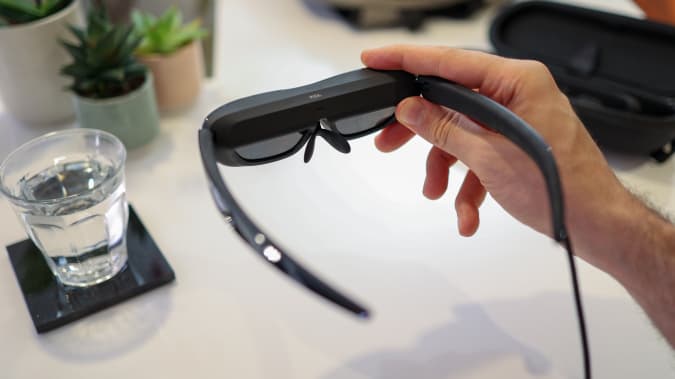
TCL has been teasing its wearable display since 2019, so its public launch is naturally the highlight here. Once known as Project Archery, the company has now settled on Nxtwear G as the official title. The device features dual-1080p micro-OLED displays that together offer a 140-inch screen experience with a 16:9 aspect ratio. According to TCL, the wearable also supports “3D 4K content” and features integrated stereo speakers.

TCL Nxtwear G

Don’t expect any extra bells and whistles, though. TCL is leaving mixed reality and VR to the likes of Microsoft and Facebook and instead offering a straight-up display for big screen movies, gaming or mobile working. With no battery inside, the Nxtwear G is powered by phones, tablets and laptops using a USB-C connection. Yes, it needs to be plugged in to function. 

TCL says the wearable works with over a hundred compatible devices including Android phones and tablets from Samsung, Huawei and OnePlus, Windows and Chromebook laptops, MacBooks and the iPad Pro. As an incentive, the company’s own devices, including the TCL 20 Pro 5G phone, offer a PC mode. This essentially gives you a desktop-style view through the glasses and turns the phone into a trackpad for navigation.

The wearable display weighs 100g on its own and 130g when tethered. TCL has also crammed several sensors inside including an accelerometer, gyro and compass. The company previously said the frames can be adjusted to be worn over glasses. Out of the box, you’ll get a carrying case, three nose pads in different sizes and a lens adapter. There’s still no word on pricing, but that should be clarified closer to launch.

Outside of its new heads-up display, the company also revealed a multi-screen feature for the TCL 20 Pro 5G that lets you wirelessly view and share media and files across a TV, Windows PC or a TCL 10 TabMax tablet. You can connect the smartphone to a PC or laptop using a QR code or Bluetooth to share files or clipboard content, view your notifications or web pages, and even type with the phone’s keyboard. On TVs, the software lets you cast media files including photos, videos and music; mirror your phone screen; and use a desktop mode with the phone serving as a trackpad.

TCL MoveTime Family Watch 2

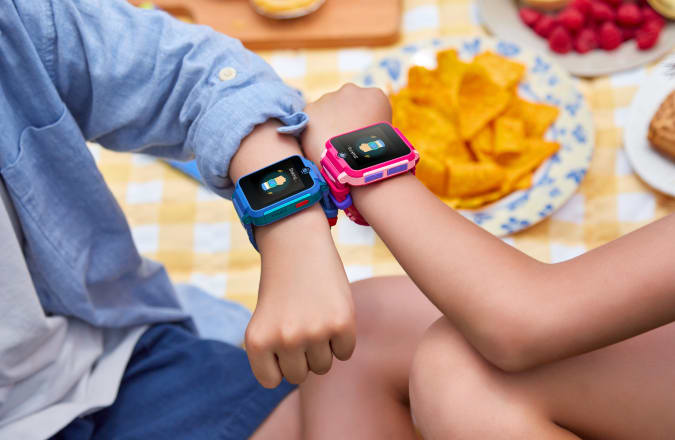
The company’s remaining announcements are a lot more familiar. There are more affordable phones on the way, including two new Alcatel branded 4G handsets, along with a TCL 5G phone teased as its cheapest yet. Plus, it’s releasing a new smartwatch for children called the MoveTime Family Watch 2, which features a 1.4-inch display, WiFi radio and an 850mAh battery, all wrapped within a plastic body. The new watch will launch in Europe in mid-August for €149 ($178). Finally, TCL is also releasing the Linkhub 5G outdoor CPE, a IP67-rated router that can be wall- or pole-mounted to boost mobile connectivity in areas with fewer base stations.

https://medicalxpress.com/news/2021-06-fast-food-screen-physical.html

Better sleep: Less fast food and screen time, more physical activity

by Brian McNeill, Virginia Commonwealth University

sleep
Credit: CC0 Public Domain

Getting a good night’s rest is essential to our physical and mental health. But what behaviors lead to healthy sleep? And do those lifestyle factors change as we get older?https://a0818f7716d31633be439ba258220ff6.safeframe.googlesyndication.com/safeframe/1-0-38/html/container.html

A new study by researchers at Virginia Commonwealth University has investigated the sleep, lifestyle and health of 3,284 adults. It found that behaviors directly under our control—such as diet, how physically active or sedentary we are, and how much time we spend watching TV, reading, on the internet, and on social media—are associated with sleep health across the lifespan.

“For decades, sleep medicine has focused exclusively on disordered sleep to the exclusion of healthy sleep. Sleep health is a newer concept that incorporates factors thought to be associated with the positive experience of sleep,” said lead author Joseph Dzierzewski, Ph.D., an associate professor in the Department of Psychology in the College of Humanities and Sciences. “Understanding factors associated with good sleep, as opposed to corrective actions for poor sleep, could have important implications for the general population.”

The study, “Lifestyle Factors and Sleep Health across the Lifespan,” was published Sunday in the International Journal of Environmental Research and Public Health as part of a special issue on sleep quality, well-being and mental health among adults.

It found that older adults reported the highest amount of sleep health, followed by middle-aged and younger adults. Across age groups, fast-food consumption, sedentary behavior, daytime activity irregularity, and exposure to media—including daily TV minutes, social media usage and internet usage—correlated negatively with sleep health.

The finding that sleep health was highest in older adults as compared to young and middle-aged adults also was notable, Dzierzewski said. “This finding is in contrast to decades of research showing that older adults have higher rates of virtually all sleep disorders.”

Another interesting finding, he said, is that some lifestyle factors, such as being physically active or sedentary, varied in how closely they were associated with sleep health among older, middle-aged and younger adults.

“[These findings suggest] that as we age and go through various life stages and transitions, those factors associated with healthy sleep change,” Dzierzewski said. “This points to the need to take a lifespan developmental approach to the investigation of sleep health.”

The study was cross-sectional, meaning it analyzed data from a population in a specific point in time, and so direct clinical recommendations should be considered preliminary. However, Dzierzewski said, it provides evidence in support of practical steps people could take to improve their sleep health.

“The study results imply that eating less fast food, watching less TV, spending less time on the internet (broadly) and social media (specifically), along with living a regular lifestyle all may help promote high-quality, healthy sleep,” he said.

In addition to Dzierzewski, the study’s authors include VCU psychology graduate students Sahar M. Sabet, Sarah M. Ghose, Elliottnell Perez, Pablo Soto, Scott G. Ravyts; and Natalie D. Dautovich, Ph.D., an assistant professor in the Department of Psychology and National Sleep Foundation environmental scholar.

The study builds on a related paper, published in May in the journal Sleep Health, that explored the association between social media use and sleep and whether the association differed by age.

That study, “Trading Likes for Sleepless Nights: A Lifespan Investigation of Social Media and Sleep,” led by VCU psychology doctoral student Elliottnell Perez, found that greater social media use was associated with poorer sleep quality and shorter sleep duration, and that association increased with age.


Explore furtherSleep warning for older men


More information: Elliottnell Perez et al, Trading likes for sleepless nights: A lifespan investigation of social media and sleep, Sleep Health (2021). DOI: 10.1016/j.sleh.2021.03.004

Joseph M. Dzierzewski et al, Lifestyle Factors and Sleep Health across the Lifespan, International Journal of Environmental Research and Public Health (2021). DOI: 10.3390/ijerph18126626Journal information:International Journal of Environmental Research and Public HealthProvided by Virginia Commonwealth University

https://phys.org/news/2021-06-artificial-leaf-semiconducting-polymers.html


An artificial leaf made from semiconducting polymers

by Ecole Polytechnique Federale de Lausanne

An artificial leaf made from semiconducting polymers
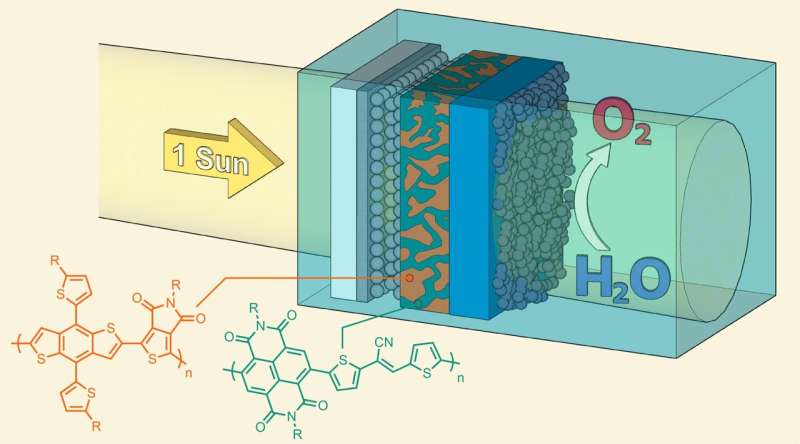
Generating oxygen from sunlight, water and semiconducting polymers. Credit: LIMNO / EPFL

EPFL scientists are generating oxygen from sunlight, water and semiconducting polymers. They present a promising way towards economical and scalable solar fuel production.

Natural photosynthesis evolved to covert water and sunlight into oxygen (O2) and stored chemical energy. In plants this process is not very efficient, however the possibility to convert sunlight into chemical fuel in an economical and globally scalable manner is a very attractive method for reducing our dependence on fossil fuels. As such, scientists have been searching for routes toward efficient and inexpensive mimics of natural photosynthesis for decades. It turns out that the O2 production step is quite tricky and remains a major challenge toward artificial photosynthesis.

Now, in a recent report published in Nature Catalysis, Prof. Kevin Sivula and his co-workers in the Laboratory for Molecular Engineering of Optoelectronic Nanomaterials (LIMNO) at EPFL describe a mixture of semiconducting polymers, commonly known as plastic electronics, that demonstrates highly efficient solar-driven water oxidation (H2O → O2).

Compared to previously-reported systems, which employ inorganic materials such as metal oxides or silicon and have not met the performance and cost requirements for industrialization, the polymeric materials reported in this new work have molecularly tunable properties, and are solution-processable at low temperature, allowing large scale device fabrication at low manufacturing cost.

The EPFL team’s breakthrough was realized by tuning the properties of the polymers to match the requirements of the water oxidation reaction and by assembling them into what is called “a bulk heterojunction” (BHJ) blend that further improves the efficiency of the solar-driven catalytic reaction. By also optimizing the conduction of the electronic charges in the device by using carefully engineered interfaces, they realized the first demonstration of a water oxidizing “photo-anode” based on a BHJ polymer blend that exhibits a benchmark performance to date—performing two orders of magnitude better than previous organic-based devices. Moreover, the team identified key factors that influence the robust performance of O2 production, which will help define paths forward to further improve the performance.

By virtue of the potential of this approach, the system developed by Prof. Kevin Sivula and colleagues could substantially contribute to advancing the field of polymer-based electronics and establishing a promising route towards economical, efficient, and scalable solar fuel production by artificial photosynthesis.


Explore furtherSoaking up the sun: Artificial photosynthesis promises clean, sustainable source of energy


More information: Han-Hee Cho et al, A semiconducting polymer bulk heterojunction photoanode for solar water oxidation, Nature Catalysis (2021). DOI: 10.1038/s41929-021-00617-xJournal information:Nature CatalysisProvided by Ecole Polytechnique Federale de Lausanne

https://medicalxpress.com/news/2021-06-combining-techniques-boosts-brain-imaging-precision.html

Combining three techniques boosts brain-imaging precision

by University of Illinois at Urbana-Champaign

Combining three techniques boosts brain-imaging precision
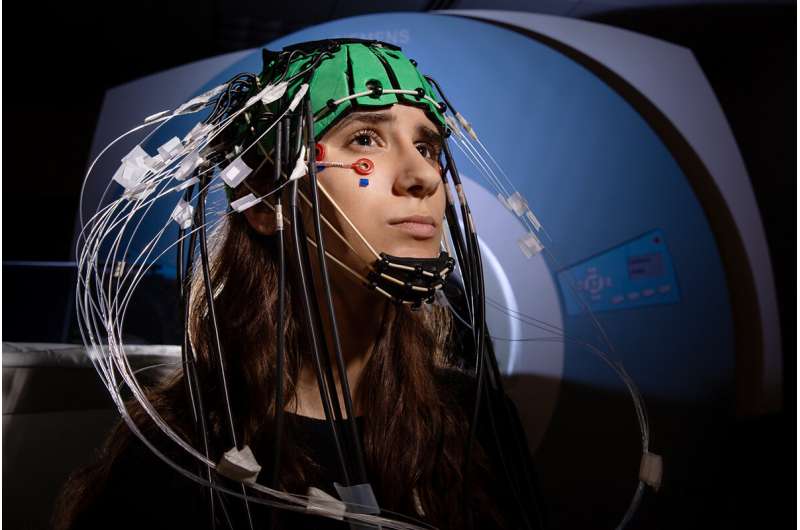
A new approach to brain imaging combines functional MRI, electroencephalography and a technique known as EROS, which shines near-infrared light on the scalp to capture brain activity. (A young woman inside an MRI suite wears an imaging cap with many sensors attached.). Credit: L. Brian Stauffer

Researchers report that they have developed a method to combine three brain-imaging techniques to more precisely capture the timing and location of brain responses to a stimulus. Their study is the first to combine the three widely used technologies for simultaneous imaging of brain activity. The work is reported in the journal Human Brain Mapping.https://3040a7552fc34f7f9676dd5ba7786a75.safeframe.googlesyndication.com/safeframe/1-0-38/html/container.html

The new “trimodal” approach combines functional MRI, electroencephalography and a third technique, called EROS, that tracks the activity of neurons near the surface of the brain using near-infrared light.

“We know that fMRI is very good at telling us where in the brain things are happening, but the signal is quite slow,” said postdoctoral researcher Matthew Moore, the first author of the study, which was conducted at the University of Illinois Urbana-Champaign’s Beckman Institute for Advanced Science and Technology. “And when we measure electrical activity through EEG, it is very good at telling us when things happen in the brain—but it’s less precise about where.”

The third method, called event-related optical signal, provides a measure of spatial information that is similar to fMRI but, like EEG, can more accurately assess the timing of brain responses. This helps researchers fill in the blanks left by the other two technologies, Moore said. The result is a clearer picture of how different parts of the brain are activated and communicate with one another when an individual engages in a cognitive task and is distracted—in this case, by emotionally challenging information.

Functional MRI captures a signal from the flow of oxygenated blood in the brain when a person sees or responds to a stimulus. This signal is very useful for determining which brain structures are being activated, Moore said.

“Changes in blood oxygenation levels occur over a period of seconds, but the brain actually responds within hundreds of milliseconds,” he said. This lag between brain activity and oxygenation signals means fMRI is unable to detect changes occurring faster than seconds.

“On the other hand, EEG is very good at telling us when things happen,” Moore said. “But we’re collecting from sensors placed on the scalp, and we’re getting a summation of activity, so really, we’re blurring across centimeters of the scalp.”

The third technique, EROS, was developed by two co-authors of the new report, U. of I. psychology professors Monica Fabiani and Gabriele Gratton. This method shines near-infrared light into the brain and measures changes in how the light scatters, a reflection of neural activity. EROS provides precise information about where and when the brain responds, but it can only penetrate a few centimeters below the scalp, so it cannot detect events occurring deeper in the brain, as fMRI can, the researchers said.https://googleads.g.doubleclick.net/pagead/ads?client=ca-pub-0536483524803400&output=html&h=188&slotname=7099578867&adk=4039075515&adf=1873531024&pi=t.ma~as.7099578867&w=750&fwrn=4&lmt=1624553639&rafmt=11&psa=1&format=750×188&url=https%3A%2F%2Fmedicalxpress.com%2Fnews%2F2021-06-combining-techniques-boosts-brain-imaging-precision.html&flash=0&wgl=1&uach=WyJtYWNPUyIsIjEwXzExXzYiLCJ4ODYiLCIiLCI5MS4wLjQ0NzIuMTE0IixbXSxudWxsLG51bGwsbnVsbF0.&dt=1624553638208&bpp=13&bdt=5117&idt=1521&shv=r20210621&cbv=%2Fr20190131&ptt=9&saldr=aa&abxe=1&cookie=ID%3D159a91dc538ead62-22cf61eea6c20048%3AT%3D1596518137%3AR%3AS%3DALNI_Mbw-dfbnrOLWYH3Rv2C7X_TIML9VA&correlator=8680348328955&frm=20&pv=2&ga_vid=1534776174.1526672041&ga_sid=1624553640&ga_hid=1834301505&ga_fc=0&ga_wpids=UA-73855-15&rplot=4&u_tz=-420&u_his=1&u_java=0&u_h=1050&u_w=1680&u_ah=980&u_aw=1680&u_cd=24&u_nplug=3&u_nmime=4&adx=335&ady=2423&biw=1680&bih=900&scr_x=0&scr_y=0&eid=31060974&oid=3&pvsid=2633242047870989&pem=424&ref=https%3A%2F%2Fnews.google.com%2F&eae=0&fc=896&brdim=0%2C23%2C0%2C23%2C1680%2C23%2C1680%2C980%2C1680%2C900&vis=1&rsz=%7C%7CpeEbr%7C&abl=CS&pfx=0&fu=128&bc=31&ifi=1&uci=a!1&btvi=1&fsb=1&xpc=PXlpQ4FoG9&p=https%3A//medicalxpress.com&dtd=1783

Combining the three techniques was no easy task. There is limited space available on the scalp for various electrodes and sensors, and the EEG and EROS equipment had to fit within an fMRI coil and could not contain any magnetic metals, the researchers said. Over a period of years, the researchers found a way to include EROS patches that could share space with EEG electrodes on the scalp. They tested different combinations of the three techniques to determine how to intertwine them and how to interpret the information coming through the different channels.

To study how the brain behaves when an individual tries to focus on a task but is distracted by emotional information, the researchers gave study participants a goal of quickly picking out circles from a series of squares and other images that had either emotionally neutral or negative content.

The imaging results revealed that various brain regions responded rapidly to the stimuli. The signals cycled back and forth between locations over parts of the prefrontal and parietal cortices, brain areas that work together to maintain attention and process distractions. This switching occurred on a time scale of hundreds of milliseconds, the researchers found.

The ability to switch attention from a distraction and get back on task is highly relevant to normal cognitive function, said study leader Florin Dolcos, a professor of psychology at Illinois who studies emotional regulation and cognition.

“Sometimes people with depression or anxiety are not able to switch away from emotional distractions and focus,” he said. “Better imaging studies will make it easier to test individuals who have been trained in specific emotion-regulation strategies to see if those strategies are working to improve their cognition. And now we can image this with precision in real time, at the mind’s speed,” he said.

The trimodal approach will provide better answers to other questions about how the brain operates, the researchers said.

“In previous work, these three technologies were applied on the same individuals at different times,” Gratton said. “But we gain a lot from measuring these things together.”

“This new approach could have a profound effect on neuroscience theory in general, on human neuroscience,” Fabiani said. “Because now we don’t have to guess about how these different signals align.”


Explore furtherMeasuring brain blood flow and activity with light


More information: Proof-of-concept evidence for trimodal simultaneous investigation of human brain function, Human Brain Mapping (2021).Journal information:Human Brain MappingProvided by University of Illinois at Urbana-Champaign

https://neurosciencenews.com/melatonin-metabolism-mice-18793/

tonin in Mice: There’s More to This Hormone Than Sleep

FeaturedNeuroscience·June 23, 2021

Summary: In mice, natural melatonin is linked to a pre-hibernation state, allowing for a slower metabolism and survival when food is scarce or the temperature is too cold.

Source: RIKEN

Researchers at the RIKEN Center for Brain Science and the RIKEN BioResource Research Center in Japan, along with collaborators at the State University of New York at Buffalo, have created a mouse model that allows the study of naturally occurring melatonin.

Published in the Journal of Pineal Research, these first experiments using the new mice showed that natural melatonin was linked to a pre-hibernation state that allows mice to slow down their metabolism and survive when food is scarce, or temperatures are cold.

Melatonin is called “the hormone of darkness” because it’s released by the brain in the dark, which usually means at night. It tells the body when it’s dark outside so that the body can switch to ‘night mode’. Although other hormones are easily studied in the laboratory, it has been difficult to study how the body reacts to melatonin because laboratory mice don’t actually have any.

To solve this problem, the researchers crossed laboratory mice with wild mice–which do produce melatonin–and bred new lab mice that can produce melatonin innately. This was a lot harder than it sounds and took over 10 mouse generations.https://608fc373c578aae92d1a871793831611.safeframe.googlesyndication.com/safeframe/1-0-38/html/container.html

Once they had melatonin-producing lab mice, the researchers were able to study how the hormone affects entrainment–the alignment of the body clock with the outside world. Mice like to run on wheels regularly, and researchers can use this to measure entrainment after suddenly changing the light/dark cycle, which mimics sudden changes in times zones.

Compared with regular lab mice, the mice with innate melatonin adapted their wheel running times faster to darkness starting six hours earlier, similar to ‘east-bound jet lag’.

The researchers were also able to resolve a debate about whether life span is affected by melatonin, which has been hard to study because of the missing melatonin in lab mice. “Now we finally have an answer: endogenous melatonin has no life-extending effects,” says Takaoka Kasahara, a senior author of the new study.

Despite many similarities, mice with innate melatonin differed from regular lab mice in several ways. The regular lab mice were heavier, had bigger reproductive organs, and were more successful at mating, producing more pups. On the other hand, melatonin-producing female mice were able to enter a state called daily torpor, a kind of low-power mode similar to hibernation that can last for a few hours a day. Daily torpor is a way for mice to deal with food scarcity and cold temperatures by conserving energy.https://imasdk.googleapis.com/js/core/bridge3.468.0_en.html#goog_1563572502https://608fc373c578aae92d1a871793831611.safeframe.googlesyndication.com/safeframe/1-0-38/html/container.html

“There is an evolutionary advantage to producing melatonin, because it protects wild mice from losing weight when they can’t find enough food. Lab mice, however, are typically given unlimited food and live in warm cages,” Kasahara observes.

This shows a mouse
The new lab mice that naturally produce melatonin were able to enter a state of daily torpor. Credit: RIKEN

https://608fc373c578aae92d1a871793831611.safeframe.googlesyndication.com/safeframe/1-0-38/html/container.html

“Our finding that mice lacking melatonin are more successful at reproducing can explain why lab mice lack melatonin. Over the years, by selecting for mice that reproduce the most pups, we might have also been inadvertently selecting for mice with lower and lower levels of melatonin.”

Having shown that melatonin can affect circadian rhythms, the specially bred melatonin-proficient mice will be valuable for studying the detailed molecular and neural mechanisms of melatonin signaling on the circadian clock and sleep, as well as the effects of melatonin on immunity and bone formation. These relationships have been suggested, but have not yet been closely examined.

Further research on melatonin’s relationship with daily torpor and hibernation is also important. Melatonin is necessary for seasonal reproduction in several animals, signaling the length of the night, which indicates the season. “This research could very well lead to a better understanding of seasonal affective disorder, or winter depression, in humans,” says Kasahara. “Indeed, one of the newest antidepressants, agomelatin, activates melatonin receptors.”https://608fc373c578aae92d1a871793831611.safeframe.googlesyndication.com/safeframe/1-0-38/html/container.html

The study was authored by the following researchers: Chongyang Zhang, Shannon J. Clough, Ekue B. Adamah-Biassi, Michele H. Sveinsson, Anthony J Hutchinson, Ikuo Miura, tamio Furuse, Shigeharu Wakana, Yui K. Matsumoto, Kazuo Okanoya , Randall L. Hudson, Tadafumi Kato, Margarita L. Dubocovich , and Takaoki Kasahara.