https://www.hindustantimes.com/trending/sleepy-cat-requests-human-to-stop-working-clip-may-make-you-smile-101627576976191.html


Sleepy cat requests human to stop working. Clip may make you smile

“Human, human, human…. shhhh… I’m trying to sleep,” commented a Reddit user.By Srimoyee ChowdhuryPUBLISHED ON JUL 29, 2021 10:31 PM IST

Remember the stern cat that refused to get pets from its human while they were working? Well this Reddit video of a sleepy cat is totally the opposite of it. The video shows the cat requesting its human to stop working in the most adorable way.

The recording starts with a person typing something on their laptop. A few seconds into the clip a fluffy paw enters the frame to stop the person from typing. The camera then pans out to show a sleepy cat lying on the laptop and refraining the human from working.

Take a look at the video:https://www.redditmedia.com/r/aww/comments/otvf3u/man_you_need_to_stop_working_for_a_sec/?ref_source=embed&ref=share&embed=trueMORE FROM THIS SECTION

Shared some five hours ago, the clip has garnered over 18,200 upvotes and tons of reactions. While some couldn’t stop swooning at the adorable and lazy cat’s cuteness, others wished to get a cat like it only. Many simply shared heart emojis.

One individual wrote a cute poem about the clip. “Now I lay me down for naps, please, human – stop them finger taps . . .I rest my paw upon your hand, am hoping that you understand. My weary head upon your keys, some quiet rest is what I please.” It read.

“Human, human, human…. shhhh… I’m trying to sleep,” commented another. “Stop that noise and let the petting begin,” said a third.

https://finance.yahoo.com/news/elon-musk-brain-computer-startup-222139867.html


Elon Musk’s Brain-Computer Startup Neuralink Raises $205 Million

Sarah McBrideThu, July 29, 2021, 3:21 PM·2 min read

(Bloomberg) — Neuralink, the futuristic brain-computer interface company founded by Elon Musk, said it has raised $205 million in fresh venture backing, by far the biggest haul of any company in its field.

In a blog post on Thursday, Neuralink said Dubai-based venture firm Vy Capital had led the latest funding round. It comes two years after filings showed Neuralink was raising $51 million in a previous round.

The funds will help Musk’s Austin, Texas-based Neuralink work on its brain implant for quadriplegics, a device which in time could also assist other people with neurological disorders. The technology could help provide patients “digital freedom” by allowing them to interact with computers and phones “in a high bandwidth and natutralistic way,” according to the announcement.

The next big step for Neuralink will be clinical trials in humans of its device, which so far has been shown off in pigs and a Pong-playing monkey.

It has yet to announce human trials, although one of its rivals, Synchron, announced early trials for its own brain-computer interface just this week.

Seven months in, 2021 has already become a record year in brain-computer interface funding. A few days ago, Paradromics said it had raised $20 million. Excluding that round and the latest Neuralink funding, brain-computer interface companies had raised $132.8 million this year. All told, including the latest funding rounds, 2021 has already tripled the $97 million raised in all of last year, according to PitchBook data.

Neuralink first registered as a California company in 2016, although Musk didn’t discuss the company publicly until the following year.

Vy Capital was founded by Alexander Tamas, a former partner at DST, the investment firm founded by billionaire Yuri Milner. Other investors in the Neuralink round include Alphabet Inc.’s GV, Founders Fund and Craft Ventures.

More stories like this are available on bloomberg.com

Subscribe now to stay ahead with the most trusted business news source.

©2021 Bloomberg L.P.

https://brobible.com/culture/article/no-sleep-64-straight-hours-transformation-guy-suffers/

This Guy Stayed Awake For 264 Straight Hours And Something Strange Happened After He Finally Got Some Sleep

#SLEEPINGBY CHRIS ILLUMINATIJULY 29, 2021FACEBOOKTWITTERREDDITFLIPBOARDhttps://www.youtube.com/embed/9v3tZQOQshE?version=3&rel=1&showsearch=0&showinfo=1&iv_load_policy=1&fs=1&hl=en-US&autohide=2&wmode=transparent

How long do you think you could without sleeping?

Classmates Randy Gardner and Bruce McAllister wanted to test their ability to stay awake for a school project back in 1963.  The science fair projected ended up putting Gardner in the record books after the high school student went without sleep for 264 straight hours.

Gardner retold his story to the YouTube channel Be Amazed and explained how the duo chose which one of them would be the guinea pig and what happened after going 11 days without sleeping.

https://imasdk.googleapis.com/js/core/bridge3.473.0_en.html#goog_595509954Volume 0% This video file cannot be played.(Error Code: 232001)

The pair flipped a coin, with Gardner coming out the winner – or loser, depending on your perspective. After two days without sleep, Gardner had noticeable side effects like stumbling over words and trouble focusing on his vision. McAllister tried to stay awake to make sure Gardner stayed awake but couldn’t, so they enlisted a third person to help with the experiment.

By day three, Gardner was having serious issues.

Gardner became uncoordinated and exhibited extreme mood swings. By day five, he started experiencing hallucinations.

RELATED: I Can’t Sleep Without Watching Bob Ross And Here’s How I Got To This Point

Gardner and McAllister’s experiment went on so long, Gardner ended up being observed by Stanford sleep researcher Dr. William Dement and U.S. Navy medic Lieutenant Commander John J. Ross.

After beating the previous world record, Gardner ended the experiment at 264.4 hours. Unfortunately for Gardner, he couldn’t go right to bed after the experiment.

First, he held a press conference about his experience, and then Gardner was sent to a Naval hospital. Dr. Dement and his staff conducted an EEG and studied his brainwaves.

Finally, Gardner was allowed to go to bed. He slept 14 hours and noticed something unexpected after the experiment was done.

He felt fine when he woke up and experienced zero side effects from starving his body of sleep for so long.

https://www.eurekalert.org/news-releases/483426


‘Feel good’ brain messenger can be willfully controlled, new study reveals

Neuroscientists show that mice can learn to manipulate random dopamine impulses for rewardPeer-Reviewed Publication

UNIVERSITY OF CALIFORNIA – SAN DIEGOPrintEmail App

Spontaneous dopamine pulses
IMAGE: UC SAN DIEGO RESEARCHERS AND THEIR COLLEAGUES HAVE DISCOVERED THAT SPONTANEOUS IMPULSES OF DOPAMINE, THE NEUROLOGICAL MESSENGER KNOWN AS THE BRAIN’S "FEEL GOOD" CHEMICAL, OCCUR IN THE BRAINS OF MICE. view more CREDIT: JULIA KUHL

From the thrill of hearing an ice cream truck approaching to the spikes of pleasure while sipping a fine wine, the neurological messenger known as dopamine has been popularly described as the brain’s “feel good” chemical related to reward and pleasure.

A ubiquitous neurotransmitter that carries signals between brain cells, dopamine, among its many functions, is involved in multiple aspects of cognitive processing. The chemical messenger has been extensively studied from the perspective of external cues, or “deterministic” signals. Instead, University of California San Diego researchers recently set out to investigate less understood aspects related to spontaneous impulses of dopamine. Their results, published July 23 in the journal Current Biology, have shown that mice can willfully manipulate these random dopamine pulses.

Rather than only occurring when presented with pleasurable, or reward-based expectations, UC San Diego graduate student Conrad Foo led research that found that the neocortex in mice is flooded with unpredictable impulses of dopamine that occur approximately once per minute.

Working with colleagues at UC San Diego (Department of Physics and Section of Neurobiology) and the Icahn School of Medicine at Mount Sinai in New York, Foo investigated whether mice are in fact aware that these impulses–documented in the lab through molecular and optical imaging techniques–are actually occurring. The researchers devised a feedback scheme in which mice on a treadmill received a reward if they showed they were able to control the impromptu dopamine signals. Not only were mice aware of these dopamine impulses, the data revealed, but the results confirmed that they learned to anticipate and volitionally act upon a portion of them.

“Critically, mice learned to reliably elicit (dopamine) impulses prior to receiving a reward,” the researchers note in the paper. “These effects reversed when the reward was removed. We posit that spontaneous dopamine impulses may serve as a salient cognitive event in behavioral planning.”

The researchers say the study opens a new dimension in the study of dopamine and brain dynamics. They now intend to extend this research to explore if and how unpredictable dopamine events drive foraging, which is an essential aspect of seeking sustenance, finding a mate and as a social behavior in colonizing new home bases.

“We further conjecture that an animal’s sense of spontaneous dopamine impulses may motivate it to search and forage in the absence of known reward-predictive stimuli,” the researchers noted.

In their efforts to control dopamine, the researchers clarified that dopamine appears to invigorate, rather than initiate, motor behavior.

“This started as a serendipitous finding by a talented, and curious, graduate student with intellectual support from a wonderful group of colleagues,” said study senior co-author David Kleinfeld, a professor in the Department of Physics (Division of Physical Sciences) and Section of Neurobiology (Division of Biological Sciences). “As an unanticipated result, we spent many long days expanding on the original study and of course performing control experiments to verify the claims. These led to the current conclusions.”

https://www.nih.gov/news-events/news-releases/nih-researchers-find-many-people-want-secondary-genomic-findings-after-initially-refusing


NIH researchers find many people want secondary genomic findings after initially refusing

New study brings into question current policies on receiving secondary genomic findings.

A study published today by researchers at the National Institutes of Health revealed that about half of individuals who said they don’t want to receive secondary genomic findings changed their minds after their healthcare provider gave them more detailed information. The paper, published in Genomics in Medicine, examines people’s attitudes about receiving secondary genomic findings related to treatable or preventable diseases.

The study was led by scientists at the National Human Genome Research Institute (NHGRI) and the National Institute of Environmental Health Sciences (NIEHS), both part of NIH.

With the broader adoption of genome sequencing in clinical care, researchers and the bioethics community are considering options for how to navigate the discovery of secondary genomic findings. Secondary findings that come out of genome sequencing reflect information that is separate from the primary reason for an individual’s medical care or participation in a study. For example, the genomic data of a patient who undergoes genome sequencing to address an autoimmune problem might reveal genomic variants that are associated with a heightened risk for breast cancer.

Based on the American College of Medical Genetics and Genomics recommendations in 2021(link is external), individuals who have their genomes sequenced for a clinical reason should also be screened for genomic variants in 73 genes, including BRCA1 and BRCA2, both of which are linked to an increased risk of breast and ovarian cancer. All 59 genes are associated with treatable or potentially severe diseases. Proponents of a person’s right to not know their secondary genomic findings have argued that, to maintain autonomy, individuals should have the opportunity to decide whether to be provided information about genomic variants in these additional genes.

“Because these genomic findings can have life-saving implications, we wanted to ask the question: Are people really understanding what they are saying no to? If they get more context, or a second opportunity to decide, do they change their mind?” said Benjamin Berkman, J.D., M.P.H., deputy director of the NHGRI Bioethics Core and senior author on the study.

The research group worked with participants from the Environmental Polymorphisms Registry, an NIEHS study examining how genetic and environmental factors influence human health. Out of 8,843 participants, 8,678 elected to receive secondary genomic findings, while 165 opted out. Researchers assessed those 165 individuals to determine how strongly and consistently they maintained their “right not to know” decision. The researchers wanted to determine whether providing additional information to people about their genomic variants influenced their decision and to better understand why some people still refused their secondary genomic findings after they received the additional information.

Following the intervention, the researchers found that the 165 people sorted into two groups: “reversible refusers” who switched their decision to accept to know their secondary genomic findings and “persistent refusers” who still refused.

“It is worth noting that nearly three-quarters of reversible refusers thought they had originally agreed to receive secondary genomic findings,” said Will Schupmann, a doctoral candidate at UCLA and first author on the study. “This means that we should be skeptical about whether checkbox choices are accurately capturing people’s preferences.”

Based on the results, the researchers question whether healthcare providers should ask people who have their genome sequenced if they want to receive clinically important secondary genomic findings. Investigators argue that enough data supports a default practice of returning secondary genomic findings without first asking participants if they would like to receive them.

But research studies should create a system that also allows people who do not want to know their secondary genomic findings to opt out. The researchers suggest that if healthcare providers actively seek their patients’ preferences to know or not know about their secondary genomic findings, the providers should give the individuals multiple opportunities to make and revise their choice.

“The right not to know has been a contentious topic in the genomics research community, but we believe that our real-world data can help move the field towards a new policy consensus,” said Berkman.

Researchers at the NIH Department of Bioethics, NIEHS, Harvard University and Social & Scientific Systems collaborated on the study.

About the National Human Genome Research Institute (NHGRI): At NHGRI, we are focused on advances in genomics research. Building on our leadership role in the initial sequencing of the human genome, we collaborate with the world’s scientific and medical communities to enhance genomic technologies that accelerate breakthroughs and improve lives. By empowering and expanding the field of genomics, we can benefit all of humankind. For more information about NHGRI and its programs, visit www.genome.gov.

About the National Institutes of Health (NIH): NIH, the nation’s medical research agency, includes 27 Institutes and Centers and is a component of the U.S. Department of Health and Human Services. NIH is the primary federal agency conducting and supporting basic, clinical, and translational medical research, and is investigating the causes, treatments, and cures for both common and rare diseases. For more information about NIH and its programs, visit www.nih.gov.

https://www.businessinsider.com/synchron-brain-computer-chip-implant-elon-musk-neuralink-human-trial-2021-7


This 20-person biotech firm just beat Elon Musk’s Neuralink in getting the OK to test brain chip implants in humans with paralysis

Sarah Jackson Jul 28, 2021, 11:00 AM

 brain scan COVID
  • Synchron has beat rival Neuralink to human trials of its “implantable brain computer interface.”
  • The chip will be studied in six patients later this year as a possible aid for paralyzed people.
  • Elon Musk previously used Neuralink’s chip in a monkey, which then played video games with its mind.

10 Things in Tech: Get the latest tech trends & innovations.Email addressBy clicking ‘Sign up’, you agree to receive marketing emails from Insider as well as other partner offers and accept our Terms of Service and Privacy Policy.

A competitor to Elon Musk’s Neuralink has edged out its rival in getting permission for a trial to implant chips in people.

The brain data transfer company Synchron has gotten the green light from the FDA to begin a human trial of its brain chip, according to a press release issued Wednesday.

The company will begin what is called an early feasibility study later this year at New York’s Mount Sinai Hospital. The study will examine the safety and efficacy of its flagship product, known as the Stentrode motor neuroprosthesis, in patients with severe paralysis. Synchron is hopeful that its device will allow the patients to use brain data to “control digital devices and achieve improvements in functional independence.” The study, called the COMMAND trial, will enroll six patients.

The FDA’s go-ahead “reflects years of safety testing performed in conjunction with FDA,” Synchron CEO Thomas Oxley said in the release.

“We have worked together to pave a pathway forward, towards the first commercial approval for a permanently implanted [brain-computer interface] for the treatment of paralysis,” he added in the release. “We are thrilled to finally be launching a U.S. clinical trial this year.”

The company says its device will allow patients to “wirelessly control external devices by thinking about moving their limbs,” which can help with activities ranging from texting and emailing to online shopping and accessing telemedicine.

“Synchron’s north star is to achieve whole-brain data transfer,” Oxley continued. “Our first target is the motor cortex for treatment of paralysis, which represents a large unmet need for millions of people across the world, and market opportunity of $20B.” 

The device gets to the brain via blood vessels in a minimally invasive procedure of around two hours that Synchron says is similar to the placement of stents in the heart. The company adds that the procedure can be done in “widely available angiography suites” and that there are no wires coming out of the body after the device is implanted. https://89dc7e5c1fbee390fec8e04c17187a4a.safeframe.googlesyndication.com/safeframe/1-0-38/html/container.html

Synchron also says there is no robotic assistance required for its procedure, unlike competitor Neuralink, which previously unveiled a robot designed to implant its chips.

Synchron currently has a separate clinical trial underway outside of the US, with four patients in Australia having already received the implant. The company published a study last year showing that the first two patients from this study were able to “control their devices to text and type through direct thought.”

Read more: 23 of the most promising healthcare startups of 2021, according to top VCs

Synchron competitor Neuralink made headlines in April when it released a video showing its chip at work in a monkey. The clip showed a macaque named Pager playing video games with its mind six weeks after receiving the implant in its brain. 

Neuralink founder Elon Musk tweeted at the time that the company’s first device would “enable someone with paralysis to use a smartphone with their mind faster than someone using thumbs.” In a subsequent tweet, Musk added that later versions of Neuralink’s products would succeed in “enabling, for example, paraplegics to walk again.”

https://golf.com/instruction/fitness/5-tips-better-sleep-team-usa-exper/

5 tips for better sleep from Team USA’s sleep expert

BY: RACHEL BLEIER JULY 29, 2021

Sleep is incredibly important if you want to go low on the course.

Catching more Z’s will help you make more birdies.

GETTY IMAGES

Sleep is something we all need more of, especially us golfers who rise before the sun to make that early morning tee time. 

Whether you’re an Olympic golfer or an average Joe, sleep can only help you improve your performance on the course.

That’s because getting enough rest and recovery can support your mental, physical and immune resilience. If you don’t believe us, maybe you’ll listen to an expert like Dr. Jeffrey Durmer, Chief Medical Officer of Nox Health and a neuroscientist specializing in sleep.

Dr. Durmer also happens to be employed by Team USA’s weightlifting team to help those athletes use sleep to peak during training and competition. 

In an interview with Good Morning America, Dr. Durmer put the importance of getting enough good sleep in pretty black and white terms: 

“It has changed a lot — the perception about sleep, where [athletes] kind of looked at sleep as ‘I’ll sleep when I’m dead. I can workout three times a day.’ What we found is that this concept of overtraining syndrome is really not about overtraining, it’s about under-recovery. So if you’re not recovering enough, your training itself could become a detriment.” 

You might read that and think it’s not that relatable to the average golfer, but that’s where you’re wrong. Golf no matter how you look at it, is about performance. You may not be expecting to shoot 8-under at the Olympics like Sepp Straka did in round one, but you do expect to perform to a certain level on the course. 

A good night's sleep can help you feel better and play better on the course.
4 ways to improve your sleep so you can play better golfBY: RACHEL BLEIER

Not getting enough hours in bed can severely impact your ability to play golf to your standards. 

That’s why in the GMA Segment, Dr. Durmer stressed the importance of rest to athletes of all abilities. “If you can actually start to build that into your training routine, it will support all kinds of resilience, mental resilience, physical resilience, immune resilience…so you can actually perform at your highest level,” he says.

Performing at our highest level is something that’s obviously important for us golfers, so if having better mental and physical capacity to play the game you love sounds good to you, here are some tips from Dr. Durmer to help you catch more z’s and make more birdies.https://abcnews.go.com/video/embed?id=68204620

1. Build a bedtime routine:

Set a bedtime for yourself that allows you to get at least eight hours of sleep. Set an alarm to remind you it’s time to hit the hay, and make sure you take the time to wind down with a simple relaxing activity like meditation, reading, stretching or anything you find calming.

2. Cool down:

We sleep best when our core temperature cools down. Taking a warm shower and then cooling down quickly will help you fall asleep. Keeping the room you will be sleeping in at a cooler temperature will also help you fall asleep and stay asleep. 

3. Kick technology out of your room:

Where possible, remove technology and devices from your room. The light from these devices can put your circadian rhythm out of whack and disturb your sleep with the sounds they make. Essentially, you shouldn’t have anything in your room that you don’t need to fall asleep or that will keep you awake. 

4. View sleep as part of your performance:

A good night’s sleep is the basis for your ability to perform on the course the next morning. Treating as such will help you prioritize a good night’s rest and keep you fresh for that ungodly early tee time. 

5. Pay attention to your sleep habits:

How long you sleep for and when you sleep are in your control, however, sleep quality is not. If you notice that you’re giving yourself plenty of time to sleep with a regular routine, but you don’t feel rested, it might be time to consult and expert. 

You don’t have to be an Olympian to sleep like one or see results on the course from getting a better night’s sleep. And with a few simple changes, you could be just one night’s sleep away from playing your best golf yet. 

https://www.independent.co.uk/life-style/health-and-families/ipsos-mori-children-almonds-tvs-b1892726.html

Sleep plays a powerful role in your energy levels (Alamy/PA)

WHAT IS SLEEP HYGIENE AND WHY SHOULD YOU BEING PRACTISING IT?

Cut the caffeine and watch your bedroom temperature.

Liz Connor12 hours agohttps://buy.tinypass.com/checkout/template/cacheableShow?aid=SEz5CAOYyJ&templateId=OT5OZRMVSXLJ&templateVariantId=OTV33PIX57HWG&offerId=fakeOfferId&experienceId=EXG6HYYM2MAQ&iframeId=offer_c23f79026872ee1a1bdf-0&displayMode=inline&widget=template

The tumultuous events of the past year have wreaked havoc with our sleeping patterns, leaving us wide awake with worries in the early hours of the morning and reaching for the coffee during the day.

According to a recent survey by King’s College London and Ipsos MORI half of people have been sleeping poorly on a regular basis since the pandemic, with two in five saying they’ve slept fewer hours a night on

https://www.zdnet.com/article/ibms-newest-quantum-computer-is-now-up-and-running-heres-what-its-going-to-be-used-for/

IBM’s newest quantum computer is now up-and-running: Here’s what it’s going to be used for

Big Blue is expanding the reach of its quantum hardware by physically bringing its quantum computers to customers.

Daphne Leprince-Ringuet

By Daphne Leprince-Ringuet | July 27, 2021 — 09:34 GMT (02:34 PDT) | Topic: Quantum Computing

q-system-one-hero.jpg
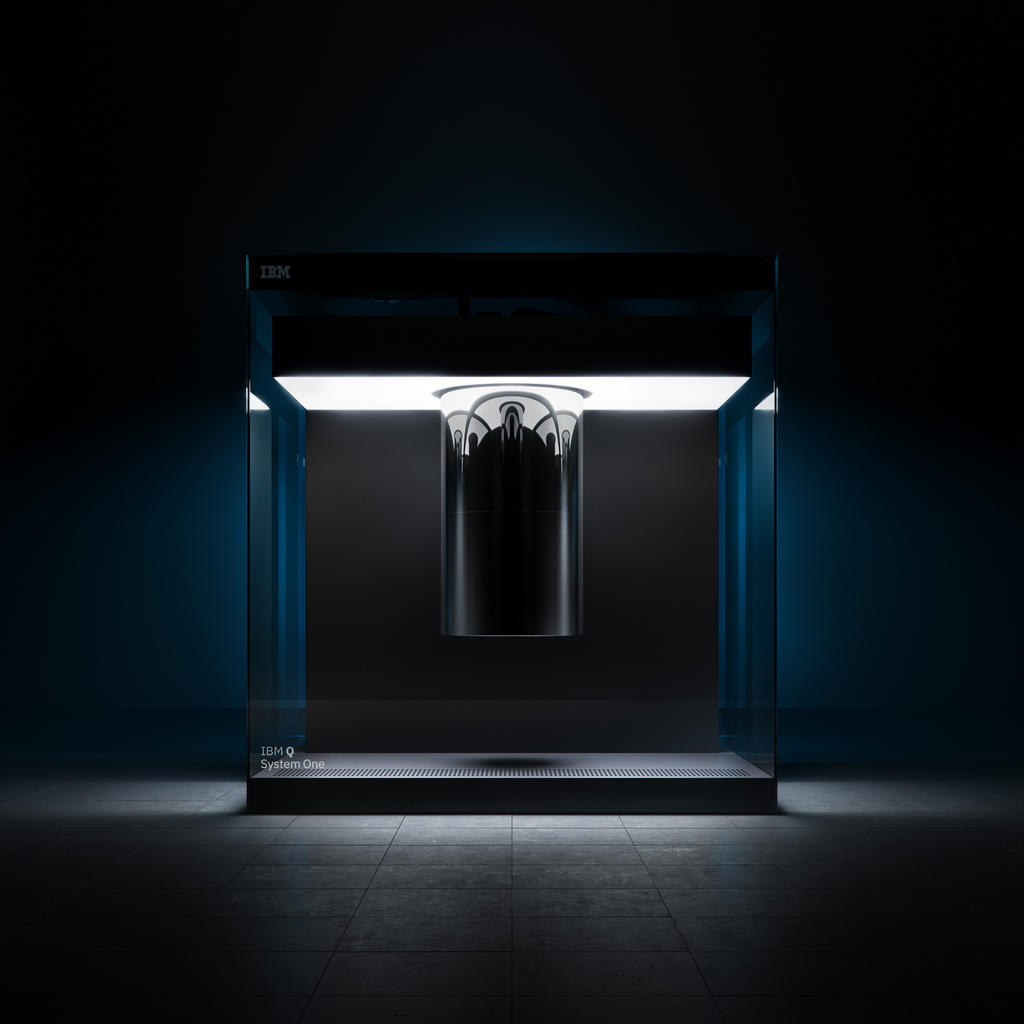
A Quantum System One, IBM’s flagship integrated superconducting quantum computer, is now available on-premises in the Kawasaki Business Incubation Center in Kawasaki City.  IBM

IBM has unveiled a brand-new quantum computer in Japan, thousands of miles away from the company’s quantum computation center in Poughkeepsie, New York, in another step towards bringing quantum technologies out of Big Blue’s labs and directly to partners around the world. 

A Quantum System One, IBM’s flagship integrated superconducting quantum computer, is now available on-premises in the Kawasaki Business Incubation Center in Kawasaki City, for Japanese researchers to run their quantum experiments in fields ranging from chemistry to finance. 

Most customers to date can only access IBM’s System One over the cloud, by connecting to the company’s quantum computation center in Poughkeepsie.  

QUANTUM COMPUTING

Recently, the company unveiled the very first quantum computer that was physically built outside of the computation center’s data centers, when the Fraunhofer Institute in Germany acquired a System One. The system that has now been deployed to Japan is therefore IBM’s second quantum computer that is located outside of the US. 

The announcement comes as part of a long-standing relationship with Japanese organizations. In 2019, IBM and the University of Tokyo inaugurated the Japan-IBM Quantum Partnership, a national agreement inviting universities and businesses across the country to engage in quantum research. It was agreed then that a Quantum System One would eventually be installed at an IBM facility in Japan.  

Building on the partnership, Big Blue and the University of Tokyo launched the Quantum Innovation Initiative Consortium last year to further bring together organizations working in the field of quantum. With this, the Japanese government has made it clear that it is keen to be at the forefront of the promising developments that quantum technologies are expected to bring about. 

Leveraging some physical properties that are specific to quantum mechanics, quantum computers could one day be capable of carrying out calculations that are impossible to run on the devices that are used today, known as a classical computers.  

Gartner IT Symposium/Xpo | 25 – 27 October | Sydney, Australia

Join a community of CIOs and IT Executives. Last year was a catalyst that brought digital business innovation to the forefront of organizations. CIOs and IT executives were at the core of driving that innovation. 2021 is the time to build on your momentum to enhance customer engagement, generate new revenue & serve customers. Digital business acceleration is execution at speed and we’re your co-pilot.Live Event provided by Gartner

In some industries, this could have big implications; and as part of the consortium, together with IBM researchers, some Japanese companies have already identified promising use cases. Mitsubishi Chemical’s research team, for example, has developed quantum algorithms capable of understanding the complex behavior of industrial chemical compounds with the goal of improving OLED displays. 

A recent research paper published by the scientists highlighted the potential of quantum computers when it comes to predicting the properties of OLED materials, which could eventually lead to more efficient displays requiring low-power consumption. 

Similarly, researchers from Mizuho Financial Group and Mitsubishi Financial Group have been developing quantum algorithms that could speedup financial operations like Monte Carlo simulations, which could allow for optimized portfolio management thanks to better risk analysis and option pricing. 

With access to IBM’s Quantum System One, research in those fields is now expected to accelerate. But other industry leaders exploring quantum technologies as part of the partnership extend from Sony to Toyota, through Hitachi, Toshiba or JSR. 

Quantum computing is still in its very early stages, and it is not yet possible to use quantum computers to perform computations that are of any value to a business. Rather, scientists are currently carrying out proofs-of-concept, by attempting to identify promising applications and testing them at a very small scale, to be prepared for the moment that the hardware is fully ready. 

This is still some way off. Building and controlling the components of quantum computers is a huge challenge, which has so far been limited to the confines of specialist laboratories such as IBM’s Poughkeepsie computation center. 

It is significant, therefore, that IBM’s Quantum System One is now mature enough to be deployed outside of the company’s lab.  

“Thousands of meticulously engineered components have to work together flawlessly in extreme temperatures within astonishing tolerances,” said IBM in a blog post. 

Back in the US, too, quantum customers are showing interest in building quantum hardware in their own facilities. The Cleveland Clinic, for example, recently invested $500 million for Big Blue to build quantum hardware on-premises

https://www.ctvnews.ca/sports/here-s-what-canada-did-while-you-were-sleeping-on-day-5-of-tokyo-olympics-1.5525857


Here’s what Canada did while you were sleeping on day 5 of Tokyo Olympics

Adam FriskCTVNews.ca Producer, Local

@adamfrisk ContactPublished Wednesday, July 28, 2021 6:02AM EDTLast Updated Wednesday, July 28, 2021 6:02AM EDThttps://imasdk.googleapis.com/js/core/bridge3.473.0_en.html#goog_636462497Volume 90% CTV National News: Canada’s women leading the way NOW PLAYINGWomen are leading the way for Canada at the Tokyo Summer Games. Grace Lee has more on their podium performances.Penny Oleksiak wins historic bronze medal NOW PLAYINGGrace Lee reports from Tokyo on Penny Oleksiak becoming Canada’s most decorated summer Olympian, and the latest on gymnast Ellie Black.Women winning in Tokyo an inspiration for girls NOW PLAYINGAll of Canada’s medals so far have gone to women, and it’s inspiring a new generation of athletes. CTV London’s Jaden Lee-Lincoln explains.Penny Oleksiak showing determination in Tokyo NOW PLAYINGOlympic Champion and Canadian Olympic Committee Vice-President Mark Tewksbury breaks down Penny Oleksiak’s bronze medal race.Canadian rowers looking to reach the podium NOW PLAYINGTwo-time Canadian Olympic Rower Dr. Sabrina Kolker gives a preview of the big rowing events for Canada at the Tokyo Games.A cycling performance to be proud of in Tokyo NOW PLAYINGCyclingnews Women’s Editor Kirsten Frattini talks about Canada’s performance in the women’s cycling time trials in Tokyo.Facing the challenges of Olympic competition NOW PLAYINGFormer Olympic Beach Volleyball Player Jamie Broder talks about how athletes manage the challenges posed by the 2020 Tokyo Games.Canada strikes gold in women’s weightlifting NOW PLAYINGSo far, Canada’s women have done all the heavy lifting at the Summer Games, and none moreso than Maude Charron. Angie Seth has more.CEO of Own The Podium shares expectations for Team Canada at the Olympics NOW PLAYINGAnne Merklinger shares what she would consider a successful Olympics this year amid COVID-19 restrictions.CTV National News: Making Canada proud in Tokyo NOW PLAYINGCanada added to its count, winning the country’s first gold medal of the Tokyo Games in swimming while adding a bronze in judo.‘An incredible moment’: Maggie MacNeil’s family celebrates her gold medal victory NOW PLAYINGSusan, Edward and Clara MacNeil share their reaction to her incredible performance.Mac Neil wins Canada’s first gold of Tokyo Games NOW PLAYINGGrace Lee reports from Tokyo on Canada picking up its first gold medal of the 2020 Tokyo Olympics, as well as growing weather concerns.Maggie Mac Neil on her 100-metre butterfly gold NOW PLAYINGMaggie Mac Neil says it might take her a few years to fully process winning gold in the women’s 100-metre butterfly at the Tokyo Olympics.‘Indescribable’ gold medal win for Mac Neil NOW PLAYINGThe family of Maggie Mac Neil talk about how they reacted when she won gold in the women’s 100-metre butterfly.CTV National News: Reaction from Tokyo Olympics NOW PLAYINGCanada saw success in the pool, securing its first medals at the Tokyo Olympics. CTV’s Kevin Gallagher has the details.The psychological reason why winning a silver medal is so hard for Olympic athletes NOW PLAYINGSilver medallist Annie Vernon joins us to explain why it’s tougher to come second than fourth, fifth, or sixth.Canada wins first two medals NOW PLAYINGCanada picked up its first medals of the 2020 Tokyo Olympics, two silvers in the 4×100 freestyle relay and the women’s three-metre synchronized springboard.Alberta swimmer helps score silver NOW PLAYINGTyson Fedor chats with the family of Red Deer’s Rebecca Smith, one of the members of Canada’s women’s relay swim team.Two Montrealers take silver in Olympics NOW PLAYINGJennifer Abel and Melissa Citrini-Beaulieu took silver in women’s 3 metre synchronized diving.Patrick Chan ‘excited’ for Canada’s early success NOW PLAYINGFormer Olympian Patrick Chan speaks on Canada’s early success at the Tokyo Games.Day 1 roundup from Tokyo NOW PLAYINGCanada came close to winning its first medal at the 2020 Olympics as COVID-19 continues to be an issue at the games. Grace Lee has more.

Next

SHARE:

Share3https://platform.twitter.com/widgets/tweet_button.06c6ee58c3810956b7509218508c7b56.en.html#dnt=false&id=twitter-widget-0&lang=en&original_referer=https%3A%2F%2Fwww.ctvnews.ca%2Fsports%2Fhere-s-what-canada-did-while-you-were-sleeping-on-day-5-of-tokyo-olympics-1.5525857&size=m&text=Here%27s%20what%20Canada%20did%20while%20you%20were%20sleeping%20on%20day%205%20of%20Tokyo%20Olympics&time=1627535733633&type=share&url=https%3A%2F%2Fwww.ctvnews.ca%2Fsports%2Fhere-s-what-canada-did-while-you-were-sleeping-on-day-5-of-tokyo-olympics-1.5525857&via=CTVNewsReddithttps://www.facebook.com/plugins/share_button.php?app_id=404047912964744&channel=https%3A%2F%2Fstaticxx.facebook.com%2Fx%2Fconnect%2Fxd_arbiter%2F%3Fversion%3D46%23cb%3Df38e661fb5631f4%26domain%3Dwww.ctvnews.ca%26origin%3Dhttps%253A%252F%252Fwww.ctvnews.ca%252Ff1a47e181615e4c%26relation%3Dparent.parent&container_width=64&href=https%3A%2F%2Fwww.ctvnews.ca%2Fsports%2Fhere-s-what-canada-did-while-you-were-sleeping-on-day-5-of-tokyo-olympics-1.5525857&layout=button_count&locale=en_US&sdk=joey&size=small

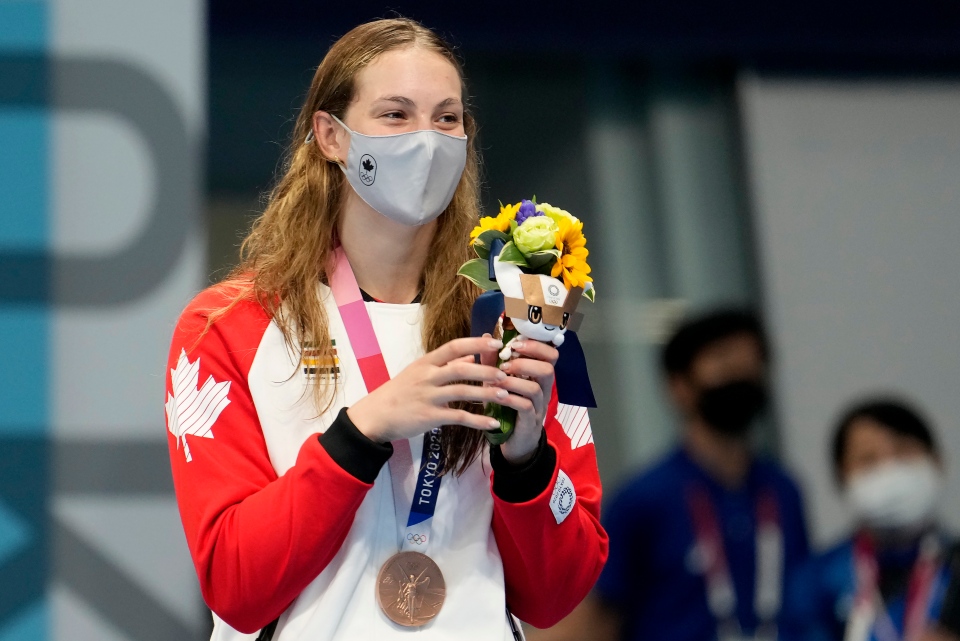
HALIBURTON, ONT. — Penny Oleksiak added to Canada’s medal haul in the pool on day 5, capturing bronze and becoming the country’s most decorated Canadian Summer Olympian of all time.

Here’s a look at some of the 2020 Summer Olympic medal events you may have missed overnight.

Swimming

Penny Oleksiak

Penny Oleksiak captured the bronze medal in the 200-metre freestyle event on Wednesday, giving the Toronto native her sixth Olympic career medal and making her Canada’s most decorated summer Olympian. The 21-year-old’s latest performance also ties her for the most decorated Canadian Olympian of all time, joining the ranks with speedskater/cyclist Clara Hughes and speedskater Cindy Klassen.

Rowing

Canada's Gabrielle Smith and Jessica Sevick

Canada missed the podium in the women’s double sculls competition with Jessica Sevick and Gabrielle Smith finishing the 2,000-metre race in sixth place with a time of six minutes 53.19 seconds, well behind medal winners Romania, New Zealand and the Netherlands. The Canadian pair had posted the fourth-fastest time in the semi-finals.

Cycling

Canada's Leah Kirchmann

Canada’s Leah Kirchmann competed in the women’s road cycling individual time trial, finishing in 12th while fellow Canadian Karol-Ann Canuel finished in 14th position. On the men’s side, Canada’s Hugo Houle finished 13th overall.RELATED IMAGES

  • Canada’s Penny Oleksiak waves her flowers after winning the bronze medal in the women’s 200-metre freestyle final at the 2020 Summer Olympics, July 28, 2021, in Tokyo, Japan. (AP Photo/Martin Meissner)