Our eyes get so much attention that sonnets have been written about them and songs have been sung about them. Of course, we rely on them for more than their appearance: Having great vision is important for everyday tasks like driving, typing, and reading, not to mention enjoying the gift of being able to see all of the beautiful things around you.
But over time, your eyes can become blurry, teary, irritated, or totally Zoomed-out. It’s important to take care of them throughout your life, but there are lots of misconceptions about how to do that. To see things clearly, you’ll want to separate fact from fiction. Here are the most common myths about your eye health, according to experts.
Myth #1: Staring at a screen all day will wreck your eyes.
Not to worry: All those hours working and Zooming haven’t done permanent damage to your eyes. The blue light from electronic devices like computers, smartphones, and tablets isn’t bright enough to do lasting harm. What that light can do in the short term, says Chris Easley, O.D., of the Milan Eye Center in Alpharetta, GA, is give you eyestrain and dry eye, both of which “are very treatable.”ADVERTISEMENT – CONTINUE READING BELOWhttps://8cca26eff9fab3d05b50066c4a90362e.safeframe.googlesyndication.com/safeframe/1-0-38/html/container.html
The reason your eyes dry out after screen time is that “staring at nearby objects for a long time reduces your blink rate,” Easley says. It also tires your eye muscles. One study of college students found that 90% of them experienced symptoms of computer vision syndrome (CVS)—eyestrain, dry eyes, headaches—after two hours of screen time. To combat CVS, blink more often, keep your prescription for glasses or contacts up to date, and give your eyes regular breaks so they can rest and refocus.
Myth #2: If your vision hasn’t changed, you can wait on an exam.
Issues like glaucoma, macular degeneration, and diabetic retinopathy can sneak up on you without symptoms, says Raman Bhakhri, O.D., an associate professor at the Illinois College of Optometry in Chicago. All three can eventually cause irreversible damage, leading to vision loss or sometimes total blindness, but catching them early can potentially stop or delay the damage.
Eye exams also offer clues about the health of your blood vessels, nerves, and connective tissue that can be warning signs of problems such as brain tumors, diabetes, and high blood pressure. Get a comprehensive eye exam at least every two years between the ages of 40 and 64, and every year once you turn 65 or if you have risk factors such as diabetes, high blood pressure, or a personal or family history of eye disease.
Myth #3: Sunglasses are to keep you from having to squint.
Sunglasses are major multitaskers. Sure, they’ll protect your skin from crow’s feet caused by squinting. But damage to the eyes from the sun’s UV rays accumulates over a lifetime, and eventually that UV exposure ups your risk of cataracts, macular degeneration, and skin cancer around your eyes and on your eyelids, says Bhakhri. In fact, up to 20% of cataracts are caused by UV exposure, and 5% to 10% of all skin cancers are on the eyelids, according to the Skin Cancer Foundation. So wear sunglasses with UVA- and UVB-protectant coatings year-round. Make sure your eyeglasses have those coatings as well. And don’t skip the shades on cloudy days: Clouds block only about 20% of UV rays.
Myth #4: The best way to get out an irritant is to make yourself cry.
Hold the tears—crying can help only with minor stuff like an eyelash or a fleck of dirt, Bhakhri says. If you’re experiencing heavy tearing, redness, or light sensitivity because of something in your eye, immediately flush the eye with a sterile, medical-grade saline solution if you have it or else with tap water. Hold your face under a running faucet or shower or use a clean cup to pour water into your eye. If it is no longer red, painful, watering, or irritated after 20 minutes, you are probably in the clear, but see a doctor if redness returns, your eye hurts, or your vision becomes impaired. If something is embedded in your eye or you get a chemical in it, seek immediate medical care, Easley says.ADVERTISEMENT – CONTINUE READING BELOW
ANDREA DE SANTIS
Myth #5: Carrots can improve vision.
You won’t be able to see in the dark no matter how many you munch. That’s because while studies show that carotenoids (do-good micronutrients in carrots) can reduce the risk of cataracts and macular degeneration, no food will actually improve vision, says Easley. Peeper-friendly produce isn’t limited to carrots: Broccoli, leafy greens, spinach, summer squash, and peas are high in antioxidant vitamins like C and E and plant pigments like lutein and zeaxanthin, all of which help keep eyes healthy. Researchers from the University of Georgia in Athens also found that carotenoids could reduce eye stress from glare and bright light. And Easley notes that omega-3 fatty acids (in salmon, cod, tuna, and halibut) are essential for good eye health too.
Myth #6: Blurry vision means you definitely need reading glasses.
Not definitely. Presbyopia makes it hard to see things up close for most people after age 40, and reading glasses will usually do the trick. But blurry vision that isn’t solved by magnifiers may be due to high blood sugar (which can cause swelling that changes the shape of the eye), uncontrolled diabetes (which can damage the blood vessels in the back of the eye and cause permanent vision loss), cataracts (which affect about half of Americans by age 75), or an infection. As with any vision change, it’s worth getting an eye exam to rule out more serious medical conditions.
This article originally appeared in the August 2021 issue of Prevention.
Now through September 12th, you can buy three Philips Hue bulbs for the price of two.
This story is part of a group of stories called
Only the best deals on Verge-approved gadgets get the Verge Deals stamp of approval, so if you’re looking for a deal on your next gadget or gift from major retailers like Amazon, Walmart, Best Buy, Target, and more, this is the place to be.
The upcoming Labor Day holiday signals the end of summer and the ramp-up of everything from the school year to new gadget season. While you can expect to get plenty of Labor Day-related deals from us coming very shortly, Philips has gotten a bit of a head start with their “Summer of Hue” savings promo, so you’re not stuck with having a single shade of lighting after Labor Day.
Right now, Philips is offering three white and color smart bulbs for the price of two, shaving $35 off the cost of some of the most popular smart home lights through September 12th. The vibrant E26 Hue bulbs allow for funky lighting while offering a full spectrum of 16 million colors, as well the flexibility to stretch from a warm white to daylight-balanced cool white with up to 800 lumens of brightness. As the fall months come around, it can be refreshing to have color temperature options at your disposal to try and keep your mental state up, or at the very least to have adjustable smart timers for when the daytime hours get shorter. This is a great way to get into the Philips Hue ecosystem — the E26 bulbs can work with a Hue Bridge or without one via Bluetooth — or build up the stock of lights already set up in your home.
Philips’ Bluetooth-enabled smart bulbs feature simple functionality and allow for a broad range of colors, giving you a quick means for controlling your lighting even without a Hue Bridge.
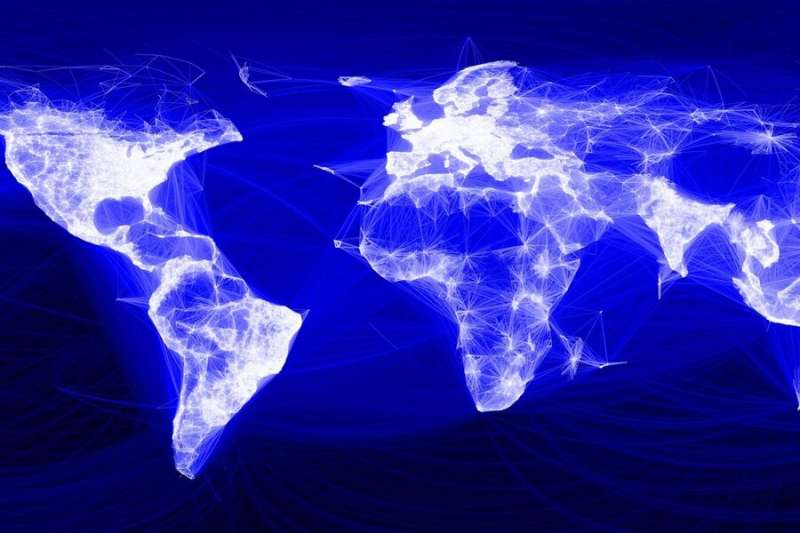
Today’s networks are struggling to deliver high bandwidth and availability imposed by emerging workloads. Credit: Facebook
Wide Area Networks (WANs), the global backbones and workhorses of today’s internet that connect billions of computers over continents and oceans, are the foundation of modern online services. As COVID-19 has placed a vital reliance on online services, today’s networks are struggling to deliver high bandwidth and availability imposed by emerging workloads related to machine learning, video calls, and health care.
To connect WANs over hundreds of miles, fiber optic cables that transmit data using light are threaded throughout our neighborhoods, made of incredibly thin strands of glass or plastic known as optical fibers. While they’re extremely fast, they’re not always reliable: They can easily break from weather, thunderstorms, accidents, and even animals. These tears can cause severe and expensive damage, resulting in 911 service outages, lost connectivity to the internet, and inability to use smartphone apps.
Scientists from the MIT Computer Science and Artificial Intelligence Laboratory (CSAIL) and from Facebook recently came up with a way to preserve the network when the fiber is down, and to reduce cost. Their system, called ARROW, reconfigures the optical light from a damaged fiber to healthy ones, while using an online algorithm to proactively plan for potential fiber cuts ahead of time, based on real-time internet traffic demands.
ARROW is built on the crossroads of two different approaches: “Failure-aware traffic engineering,” a technique that steers traffic to where the bandwidth resources are during fiber cuts, and “wavelength reconfiguration,” which restores failed bandwidth resources by reconfiguring the light.
Though this combination is powerful, the problem is mathematically difficult to solve because of its NP-hardness in computational complexity theory.
The team created a novel algorithm that can essentially create “lottery tickets” as an abstraction for the wavelength reconfiguration problem on optical fibers and only feed essential information into the traffic engineering problem. This works alongside their optical restoration method, which moves the light from the cut fiber to surrogate healthy fibers to restore the network connectivity. The system also takes real-time traffic into account to optimize for maximum network throughput.
Using large-scale simulations and a testbed, ARROW could carry 2 to 2.4 times more traffic without having to deploy new fibers, while maintaining the network highly reliable.https://www.youtube.com/embed/DYvYNSH1cRA?color=white
The design of today’s network infrastructures, both in data centers and in wide-area networks, still follows the telephony model, where network engineers treat the physical layer of networks as a static black box with no reconfigurability.
As a result, the network infrastructure is equipped to carry the worst-case traffic demand under all possible failure scenarios, making it inefficient and costly. Yet, modern networks have elastic applications that could benefit from a dynamically reconfigurable physical layer, to enable high throughput, low latency, and seamless recovery from failures, which ARROW helps enable.
In traditional systems, network engineers decide in advance how much capacity to provide in the physical layer of the network. It might seem impossible to change the topology of a network without physically changing the cables, but since optical waves can be redirected using tiny mirrors, they’re capable of quick changes: no rewiring required. This is a realm where the network is no longer a static entity but a dynamic structure of interconnections that may change depending on the workload.
Imagine a hypothetical subway system where some trains might fail once in a while. The subway control unit wants to plan how to distribute the passengers to alternative routes while considering all possible trains and traffic on them. Using ARROW, then, when a train fails, the control unit just announces to the passengers the best alternative routes to minimize their travel time and avoid congestion.
“My long-term goal is to make large-scale computer networks more efficient, and ultimately develop smart networks that adapt to the data and application,” says MIT Assistant Professor Manya Ghobadi, who supervised the work. “Having a reconfigurable optical topology revolutionizes the way we think of a network, as performing this research requires breaking orthodoxies established for many years in WAN deployments.”
To deploy ARROW in real-world wide-area networks, the team has been collaborating with Facebook and hopes to work with other large-scale service providers. “The research provides the initial insight into the benefits of reconfiguration. The substantial potential in reliability improvement is attractive to network management in production backbone,” says Ying Zhang, a software engineer manager at Facebook who collaborated on this research.
“We are excited that there would be many practical challenges ahead to bring ARROW from research lab ideas to real-world systems that serve billions of people, and possibly reduce the number of service interruptions that we experience today, such as less news reports on how fiber cuts affect internet connectivity,” says Zhong. “We hope that ARROW could make our internet more resilient to failures with less cost.”
Zhong wrote the paper alongside Ghobadi; MIT graduate student Alaa Khaddaj; and Facebook engineers Jonathan Leach, Ying Zhang, and Yiting Xia. They presented the research at ACM’s SIGCOMM conference.
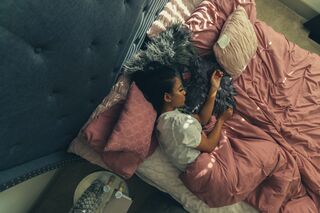
You can improve your self-hygiene without giving up activities you like.
There are alternatives to giving up electronics and all caffeine.
Source: Ashley Byrd/Unsplash
You’ve no doubt heard many of the standard tips for what you should do if you can’t sleep. Collectively, these are often termed sleep hygiene. The most commonly mentioned suggestions include:
stop consuming caffeine
have a consistent wind-down routine for before you go to bed
don’t use your bedroom for anything other than sleep and sex
don’t use any devices in the hours just before bed
That’s all well and good. But what if you can’t get yourself to do those things? What if you don’t want to do those things?
What If Sleep Hygiene Is Too Hard?
If you’ve heard those recommendations before and just blown them off, no judgment here. Try these more achievable suggestions. It’s OK if not all of these appeal. Start with one or two that feel genuinely achievable and appealing to you.
1. Dim, red light.
Most nights before I go to sleep, I watch YouTube on my phone in bed. However, I have my phone in night mode (so less blue light comes from the phone.) I also use a color-changing lightbulb in my bedroom. When I’m winding down to go to sleep, I switch it to low brightness and a dark red color. Why red? Red light mimics sunset. Switching the color is a strong visual cue. My brain associates it with getting ready for sleep. It’s an easy wind-down routine.
2. Expose yourself to bright sunlight in the mornings.
My spouse recently asked me why I’d been going to bed earlier. I had to think about it. Then I realized what the change was. Recently, I purchased a cooling vest (a vest with pockets for ice packs), so I can walk outside in hotter weather. Since I got it, I’ve been going for walks as soon as I get up.
Light sets your circadian rhythms—the times you naturally want to wake up and go to sleep. I live in the desert where it is very bright. Exposing myself to so much bright light early in my day had shifted my rhythms earlier, without me having to try to go to sleep earlier.
This pattern becomes self-perpetuating. The earlier you feel ready for sleep, the earlier you’ll wake up, and the more interested you’ll be in a morning walk.
Whatever you usually do in the mornings, try switching to walking outside as soon as you wake up. Have breakfast, your shower, and do whatever else you currently do either later in the day or skip it.
3. Focus on an earlier point in your evening.
When people struggle to sleep, they often develop anticipatory stress about getting to sleep. You might think, “Will I get to sleep tonight? Will I end up lying in bed with my mind going 100 miles an hour, feeling agitated?”article continues after advertisement
Instead of over-focusing on what you do right before bed, think about a point earlier in the evening. For example, preparing dinner or getting your children to sleep. Try to establish a better routine for that earlier part of your evening. Many people need a few hours of relaxation between when they finish their responsibilities for the night and when they go to sleep. If you’re better organized about whatever happens early in your night, you’ll be ready for sleep earlier.
Pro tip: Any routine you set at any point of your day will typically flow onto better routines later in the day.
4. Switch your last caffeinated beverage of the day to half-caf or no caf.
With psychology advice, think: good, better, best.
The way to get the best sleep would be to consume no caffeine and no alcohol. Both disrupt sleep. If you want to sleep like you did as a teenager, completely ditching caffeine might get you there.
However, ask yourself, “What’s the best thing I’m willing to do?” Perhaps you say, “I’m not willing to change my caffeine consumption.” But there might be something you’re willing to do, like drinking a caffeine-free soda for your last soda of the day. Or, having a half-caf/half-decaf coffee for your last coffee of the day.
If you want to experiment with going caffeine-free, there are ways to do without brutal caffeine withdrawal. About 20 months ago, I switched from caffeinated to caffeine-free soda. I did it by taking a swig out of a bottle of caffeinated soda, and then pouring in caffeine-free soda to fill up the bottle. Every time I would take a drink out of the bottle, I would pour in more caffeine-free sofa, to continually dilute the caffeine content. Within 7-10 days, I moved completely to caffeine-free. It was never intended as a permanent change, but so far I haven’t gone back. Lately, I’ve been drinking more electrolyte water and less soda.
5. Find content that only requires listening, not watching.
If you struggle with worry or rumination, you may find that entertainment helps you get to sleep. Standard suggestions are to listen to an audiobook, a meditation, or relaxing sleep sounds (like sounds of rain or a crackling fire). However, lots of video content doesn’t actually require watching it. Pick comforting topics—not anything about the news, the pandemic, or business. Don’t pick anything that is focused on you doing something, like DIY or self-improvement. For example, you could pick videos or podcasts that discuss TV shows. Find content you like to listen to only.article continues after advertisement
6. Take to-dos off your mind.
If you find yourself thinking “I need to remember to do X in the morning,” try to take that off your mind. For example, if there is something you need to take with you, put it in your car or at your front door so that forgetting it will be impossible. Take anything you need to remember off your mind.
Of course, we could all practice perfect sleep hygiene. But most people who know about good sleep hygiene buck that in some ways, and still choose to use their phones or TVs in the evenings. If you can’t do what’s ideal—or don’t want to—try these suggestions instead. If you can’t do what’s best, do what’s good—or at least good-ish!
The venture world is — quite literally — waking up to the potential of applying artificial intelligence to a wider variety of real-world, consumer-driven problems, and today comes the latest development on that front: Eight Sleep, which makes “smart” mattresses and mattress covers (for regular mattresses) that use machine learning and other artificial intelligence-based algorithms to improve your sleep both by changing temperature and monitoring other physical parameters to provide an overall picture of your health, has raised $86 million in a Series C round of funding.
Valor Equity Partners — the firm that has backed the likes of Tesla, SpaceX, GoPuff and many other big tech firms — is leading this latest investment, with SoftBank, Khosla Ventures, Founders Fund and General Catalyst also participating, along with a lot of high-profile individuals who are also users of the product: athletes Alex Rodriguez, Kris Bryant and J.D. Martinez; celebs Kevin Hart; and tech figures Sophia Amoruso, Naval Ravikant and Kyle Vogt.
This Series C brings the total raised by Eight Sleep to $150 million, and the startup has confirmed to me that its valuation is now close to $500 million.
Matteo Franceschetti, Eight Sleep’s CEO, said in an interview that the funding will be used in a few ways.
First, the plan is to double down on building out more technology. Today, Eight’s Pod technology can detect your temperature, heartbeat and breathing and heat or cool a bed accordingly. Tomorrow, that could also include more physical products, additional ambient factors like lighting, and other diagnostics related to you, the sleeper.
Franceschetti — who co-founded the company with Massimo Andreasi Bassi, Andrea Ballarini and Alexandra Zatarain — told TechCrunch that he came to think about sleep and the need to improve it by way of having been an avid and active sports enthusiast.
“I was into the idea of sleep as recovery,” he said. “That is how we came up with the idea of sleep fitness.” Sleep he said, “is not just a waste of time.” Extrapolating that, it’s not just important for athletes, but everyone, to have better-quality sleep.
“The vision for us is to compress your sleep and save your life,” he said. A good six hours, he added, “are better than eight hours that are not.” The company’s original name, Eight, was in reference to those fabled eight hours. Eight Sleep claims that when people use its products, they fall asleep 40% faster, get up to 20% more deep sleep and experience 30% fewer mid-night wake-ups and up to 30% fewer tosses and turns.
(But can it get me to stop worrying about COVID, the economy and societal collapse, whether my kids will be happy in life, and if we remembered to lock the door downstairs? Or maybe all of those just seem less serious when you are actually comfortable in bed…)
While Eight has definitely had a lot of traction with athletes — some 100 big names use it today — it’s hoping that the big boom in quantified self technology — hardware and software built to measure our blood pressure, heart rate, how much we sleep, how much we walk or do other activities, and much more — will mean that it can ultimately have a mass market appeal.
Indeed, that we are living in a world with wearable tech that tracks our every movement is nothing new. And, as computing and communications technologies have become smaller and more portable, and infinitely more powerful, and cloud technology and advances in big data analytics has made the gathering of data and the ability to parse it more sophisticated, we have only seen the possibilities for how that can be used to measure (and potentially “improve”) our lives increase.
Within that, sleep has been a large category of opportunity both for startups and tech companies. Earlier this year, Oura raised $100 million for its fitness and sleep tracking rings; others like Zeit have been exploring how to use wearable technology to address more acute sleep-related issues like sleep strokes.
Larger tech companies are not asleep at the wheel, either. Google recently updated its Nest Hub to track sleep; and even Apple has acquired a sleep tech company, Beddit (that deal was back in 2017, however, and it has been years since that hardware was updated: that could be one sign that Apple was more interested in using some of the technology in some of its other health-related efforts).
All this points to many more developments in a sleep tech market estimated to be worth some $30 billion. Within that Eight Sleep has been on a roll, with revenues for 2021 currently on track to triple versus 2020 on the back of two main products, a mattress that retails for $2,500 and a smart cover that sells for $1,500. (The company does not disclose user numbers, but Franceschetti said that the figures are in the “several thousands.”)
The funds will be used to accelerate the company’s innovation and technology roadmap and grow the size of the team.
“The sleep tech market is only in its infancy. The opportunity is limitless, as we spend up to a third of our lives asleep. Consumers are increasingly focused on sleep fitness as the understanding of how deeply important sleep is to overall health becomes more widely known,” said Antonio Gracias of Valor Equity in a statement.
Gracias founded Valor and is joining the board with this round, and as with other investors, he seems to have been won over in part by becoming a user: “The first night I slept on the Pod I knew we had to get involved,” he said. “We’ve seen this in our portfolio many times – Eight Sleep’s products and technology are disrupting the sleep market, and its rapid innovation is outpacing the competition as it builds a new sleep fitness focused category that delivers results.”
SCIENTISTS DISCOVER ONE KIND OF FRIEND IS BEST FOR BRAIN HEALTH
And it costs zero dollars.Andriy Onufriyenko/Moment/Getty ImagesELANA SPIVACK8 HOURS AGO
IN THE 14TH CENTURY, SO THE LEGENDS GO, French alchemist Nicholas Flamel and his wife Perenelle managed to decode the words in a curious book. Encrypted in the text was a series of instructions, that, if followed to the letter, could be used to create an ‘elixir of life.’
In a new study, researchers show that if you want to build your cognitive resilience, surrounding yourself with people who pay attention to you when you tell stories or vent is an excellent strategy. In turn, if you care about your parent’s and friends’ brain health, too, you could start by being a good listener.
The study, published Monday in the journal JAMA Network Open, found that strong social support — in this case, just making oneself available to listen — was associated with greater cognitive resilience.
LONGEVITY HACKS is a regular series from Inverse on the science-backed strategies to live better, healthier, and longer without medicine. Get more in our Hacks index.
WHY IT’S A HACK — It costs zero dollars to be a good listener, and the payoff is enormous.
One 2016 study, for example, indicates that loneliness accelerates cognitive decline, and poorer cognition is in turn associated with a greater likelihood of loneliness.
The new study found that supportive listening could contribute to cognitive resilience — it seems that having someone who listens to you helps spur neurogenesis, which is the neuroscience term for the growth of new neurons, and boosts synaptic plasticity. Essentially, a friend who pays attention can help your brain continue to work and grow throughout life.
The researchers think that certain neurons involved in brain processes to do with the social interactions that involved supportive listening may make amino acids that contribute to neural repair. These neurons may also be linked to oxytocin production — the “love hormone.”https://7f6a43b2f0bf45113f704dd7c83b9d38.safeframe.googlesyndication.com/safeframe/1-0-38/html/container.html
In an older study based on a mouse model that looked at the risk of neuropathological disease, social interaction appeared to spur neurogenesis and boost cognitive function.
Taken together, the data suggest having a good listener on hand could not only make you feel a little better but can also help to promote the mechanisms that build cognitive resilience to see us through our whole life.
Building a strong network of good, supportive listeners now will help build cognitive resilience, protecting you from cognitive decline in the future.
SCIENCE IN ACTION — This study analyzed an existing dataset that included 2,171 adults who had an average age of 63 years.
Researchers looked at two factors to assess cognitive ability:
Total cerebral volume
Global cognitive scores
They also measured cognitive resilience using a brain MRI.
Researchers found that people who reported their friends and family listened to them as a source of support had a lower risk of developing age-related cognitive problems, like Alzheimer’s disease and other dementia. Interestingly, the researchers didn’t observe the same correlation for other types of social support, such as love-affection and emotional support.
The researchers did not comment on the study findings for Inverse.
HOW THIS AFFECTS LONGEVITY — Alzheimer’s disease largely affects people over the age of 65, but the friends you make in your earlier years — your college roomie, your work wife, your playdate pal — are also likely the people who listen to you and make you feel heard.
This particular hack won’t necessarily extend your lifespan, but it could help keep your brain healthy, stave off the ill effects of age in the brain, and benefit your mental health throughout life.
While the payoff is most evident later in life, now is the time to start fortifying your social support network. The study found that those in their forties and fifties who reported low listener availability had a cognitive age four years older than someone of the same age with high listener availability.
Basically, two people of similar age and physiological health might have different cognitive abilities based on whether they can turn to a friend in their moment of need. On the other hand, be that friend — it will benefit you both.
Tiny chips called neurograins are able to sense electrical activity in the brain and transmit that data wirelessly. Credit: Jihun Lee / Brown University
Brain-computer interfaces (BCIs) are emerging assistive devices that may one day help people with brain or spinal injuries to move or communicate. BCI systems depend on implantable sensors that record electrical signals in the brain and use those signals to drive external devices like computers or robotic prosthetics.
Most current BCI systems use one or two sensors to sample up to a few hundred neurons, but neuroscientists are interested in systems that are able to gather data from much larger groups of brain cells.
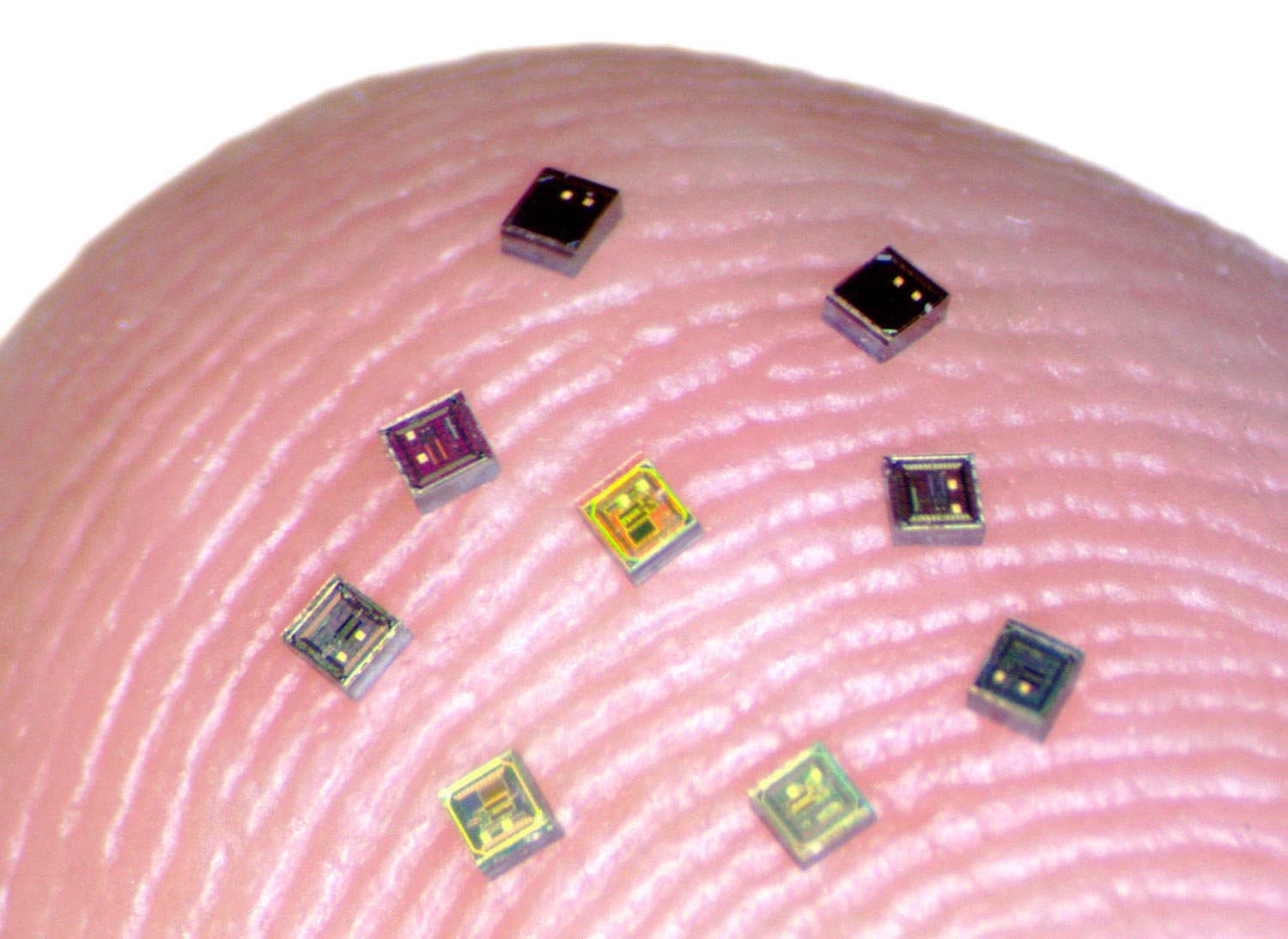
Now, a team of researchers has taken a key step toward a new concept for a future BCI system — one that employs a coordinated network of independent, wireless microscale neural sensors, each about the size of a grain of salt, to record and stimulate brain activity. The sensors, dubbed “neurograins,” independently record the electrical pulses made by firing neurons and send the signals wirelessly to a central hub, which coordinates and processes the signals.
In a study published on August 12, 2021, in Nature Electronics, the research team demonstrated the use of nearly 50 such autonomous neurograins to record neural activity in a rodent.
The results, the researchers say, are a step toward a system that could one day enable the recording of brain signals in unprecedented detail, leading to new insights into how the brain works and new therapies for people with brain or spinal injuries.
“One of the big challenges in the field of brain-computer interfaces is engineering ways of probing as many points in the brain as possible,” said Arto Nurmikko, a professor in Brown’s School of Engineering and the study’s senior author. “Up to now, most BCIs have been monolithic devices — a bit like little beds of needles. Our team’s idea was to break up that monolith into tiny sensors that could be distributed across the cerebral cortex. That’s what we’ve been able to demonstrate here.”
The team, which includes experts from Brown, Baylor University, University of California at San Diego and Qualcomm, began the work of developing the system about four years ago. The challenge was two-fold, said Nurmikko, who is affiliated with Brown’s Carney Institute for Brain Science. The first part required shrinking the complex electronics involved in detecting, amplifying and transmitting neural signals into the tiny silicon neurograin chips. The team first designed and simulated the electronics on a computer, and went through several fabrication iterations to develop operational chips.
The second challenge was developing the body-external communications hub that receives signals from those tiny chips. The device is a thin patch, about the size of a thumb print, that attaches to the scalp outside the skull. It works like a miniature cellular phone tower, employing a network protocol to coordinate the signals from the neurograins, each of which has its own network address. The patch also supplies power wirelessly to the neurograins, which are designed to operate using a minimal amount of electricity.
“This work was a true multidisciplinary challenge,” said Jihun Lee, a postdoctoral researcher at Brown and the study’s lead author. “We had to bring together expertise in electromagnetics, radio frequency communication, circuit design, fabrication and neuroscience to design and operate the neurograin system.”
The goal of this new study was to demonstrate that the system could record neural signals from a living brain — in this case, the brain of a rodent. The team placed 48 neurograins on the animal’s cerebral cortex, the outer layer of the brain, and successfully recorded characteristic neural signals associated with spontaneous brain activity.
The team also tested the devices’ ability to stimulate the brain as well as record from it. Stimulation is done with tiny electrical pulses that can activate neural activity. The stimulation is driven by the same hub that coordinates neural recording and could one day restore brain function lost to illness or injury, researchers hope.
The size of the animal’s brain limited the team to 48 neurograins for this study, but the data suggest that the current configuration of the system could support up to 770. Ultimately, the team envisions scaling up to many thousands of neurograins, which would provide a currently unattainable picture of brain activity.
“It was a challenging endeavor, as the system demands simultaneous wireless power transfer and networking at the mega-bit-per-second rate, and this has to be accomplished under extremely tight silicon area and power constraints,” said Vincent Leung, an associate professor in the Department of Electrical and Computer Engineering at Baylor. “Our team pushed the envelope for distributed neural implants.”
There’s much more work to be done to make that complete system a reality, but researchers said this study represents a key step in that direction.
“Our hope is that we can ultimately develop a system that provides new scientific insights into the brain and new therapies that can help people affected by devastating injuries,” Nurmikko said.
Reference: “Neural recording and stimulation using wireless networks of microimplants” by Jihun Lee, Vincent Leung, Ah-Hyoung Lee, Jiannan Huang, Peter Asbeck, Patrick P. Mercier, Stephen Shellhammer, Lawrence Larson, Farah Laiwalla and Arto Nurmikko, 12 August 2021, Nature Electronics. DOI: 10.1038/s41928-021-00631-8
Other co-authors on the research were Ah-Hyoung Lee (Brown), Jiannan Huang (UCSD), Peter Asbeck (UCSD), Patrick P. Mercier (UCSD), Stephen Shellhammer (Qualcomm), Lawrence Larson (Brown) and Farah Laiwalla (Brown). The research was supported by the Defense Advanced Research Projects Agency (N66001-17-C-4013).
By Sharon Levy29th August 2021From Knowable MagazineCommonly thought of as a human response to danger, injury and loss, there is growing evidence that many animals show lasting changes in their behaviour after traumatic events. Can they point to an evolutionary source for PTSD?E
Every few years, snowshoe hare numbers in the Canadian Yukon climb to a peak. As hare populations increase, so do those of their predators, lynx and coyotes. Then the hare population plummets and predators start to die off. The cycle is a famous phenomenon among ecologists and has been studied since the 1920s.
In recent years, though, researchers have come to a startling conclusion – hare numbers fall from their peak not just because predators eat too many of them. There’s another factor: chronic stress from living surrounded by killers causes mother hares to eat less food and bear fewer babies. The trauma of living through repeated predator chases triggers lasting changes in brain chemistry that parallel those seen in the brains of traumatised people. Those changes keep the hares from reproducing at normal levels, even after their predators have died off.
And it’s not just snowshoe hares, as behavioural ecologists Liana Zanette and Michael Clinchy have shown. Zanette and Clinchy, both at the University of Western Ontario, are a married couple who majored in psychology as undergraduates. Today, they study what they call the ecology of fear, which combines the psychology of trauma with the behavioural ecology of fear in wild animals. They’ve found that fear of predators can cause other wild mammals and songbirds to bear and raise fewer young. The offspring of frightened voles and song sparrows, like those of stressed snowshoe hares, are less likely to survive to adulthood and succeed in reproducing.ADVERTISEMENT
These findings add to a growing body of evidence showing that fearful experiences can have long-lasting effects on wildlife and suggesting that post-traumatic stress disorder, with its intrusive flashback memories, hypervigilance and anxiety, is part of an ancient, evolved response to danger. The work is part of a wider scientific debate over the nature of PTSD and whether it is an evolved response shared among mammals, birds and other creatures, or is unique to humans.
Fearful experiences such as being hunted by predators or humans may leave a long-lasting effects on animals (Credit: Arctic Images/Getty Images)
Studies of the ecology of fear started in the 1990s. Before then, scientists assumed that the impact of a predator on an individual prey animal was either deadly or fleeting. If a hare survived a coyote attack, or a zebra escaped the claws of a lion, it would move on and live its life as before.
But research shows that fear can alter the long-term behaviour and physiology of wild animals, from fish to elephants. “Fear is a response all animals mount to avoid being killed by predators,” says Zanette. “It’s enormously beneficial, because it keeps you alive to breed another day. But it does carry costs.”
Rudy Boonstra, a population ecologist at the University of Toronto, has studied the impacts of extreme stress on the snowshoe hares and other small mammals of the Canadian Yukon since the 1970s. He was inspired by his own family history: Boonstra was born in the Netherlands, where his mother — like many of the Dutch — experienced severe stress during World War Two. “That likely affected her children,” he says. “That sense of stress being a relevant factor in our biology was always in the back of my mind.”
Boonstra knew that during the decline phase of the snowshoe hare cycle, the great majority of hares are killed by predators. But there turned out to be more to the story. When Boonstra’s student, Michael Sheriff, tested faeces of live-caught hares during the rise and fall phases of the population cycle, he found that levels of the stress hormone cortisol in mother hares fluctuated with predator density, peaking when predators were most numerous.
Those highly-stressed mothers, the researchers found, bore fewer, smaller babies. And heightened stress hormone levels were also passed from mothers to daughters, slowing the rates of hare reproduction even after predators had died off and abundant vegetation was available for hares to eat. This explains why the hare population remains low for three to five years after predators have all but vanished from Boonstra’s study site.
Animals stressed by many predators spend more time hiding and less time feeding, so they produce fewer young — but that may allow more adult hares to survive to rebuild the population
Early pioneers of stress physiology focused on human problems and viewed such stress responses as pathological, but Boonstra has come to disagree. He sees the response of snowshoe hares as an adaptation that allows the animals to make the best of a bad situation. Animals stressed by many predators spend more time hiding and less time feeding, so they produce fewer young — but that may allow more adult hares to survive to rebuild the population when the cycle starts again.
Some of the most dramatic impacts of wildlife trauma have been observed in African elephants. Their populations have declined drastically due to poaching, legal culling and habitat loss. Undisturbed elephants live in extended family groups ruled by matriarchs, with males departing when they reach puberty. Today, many surviving elephants have witnessed their mothers and aunts slaughtered before their eyes. A combination of early trauma and the lack of stable families that would ordinarily be anchored by elder elephants has resulted in orphaned elephants running amok as they grow into adolescence.
“There are interesting parallels between what we see in humans and elephants,” says Graeme Shannon, a behavioural ecologist at Bangor University in Wales who studies the African elephant. Trauma in childhood and the lack of a stable family are major risk factors for PTSD in people. And among elephants who’ve experienced trauma, Shannon notes, “we’re seeing a radical change in their development and their behaviour as they mature”. Elephants can remain on high alert years after a terrifying experience, he says, and react with heightened aggression.
Shannon experienced this first-hand when he and his colleagues were following a herd of elephants in South Africa’s Pongola Game Reserve. The researchers kept their car at a respectful distance. But when they rounded a curve, Buga, the herd’s matriarch, stood blocking the road. The driver immediately turned off the engine, which generally causes elephants to move on peaceably. Instead, Buga charged the car. “Next thing we knew, the car was upside down and we were running,” remembers Shannon. Buga’s extreme reaction, he suspects, was linked to trauma she experienced when she was captured and relocated six years earlier.
Human responses to danger, injury and loss are likely part of this same evolved set of responses. A vast body of evidence shows that the brains of mice, men — in fact, all mammals and birds, fish, even some invertebrates — share a common basic structure, and common responses to terror or joy. The brain circuitry that signals fear and holds memories of terrifying events lies in the amygdala, a structure that evolved long before hominids with bulging forebrains came into being.
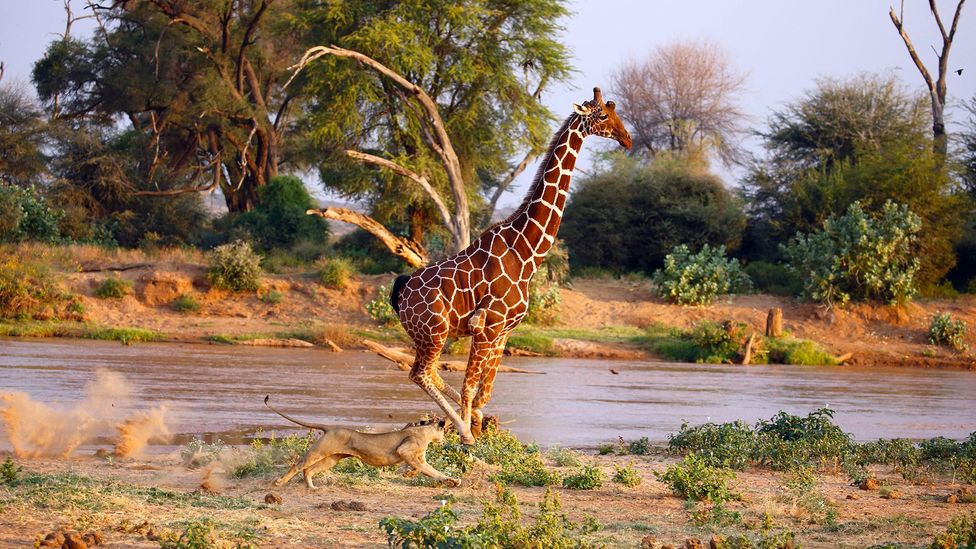
Many adult giraffes bear the scars from lions, but these encounters may leave non-physical marks too (Credit: BiosPhoto/Alamy)
Most modern people with PTSD have been traumatised in combat or during a criminal attack or a car crash. But the intrusive memories of trauma, the constant state of alarm that can wear down the body’s defences and lead to physical illness — these arise from the same ancient brain circuits that keep the snowshoe hare on the lookout for hungry lynx, or the giraffe alert for lions.
The amygdala creates emotional memories, and has an important connection to the hippocampus, which forms conscious memories of everyday events and stores them in different areas of the brain. People or other animals with damaged amygdalae can’t remember the feeling of fear, and so fail to avoid danger.
Brain imaging studies have shown that people with PTSD have less volume in their hippocampus, a sign that neurogenesis — the growth of new neurons — is impaired. Neurogenesis is essential to the process of forgetting, or putting memories into perspective. When this process is inhibited, the memory of trauma becomes engraved in the mind. This is why people with PTSD are haunted by vivid memories of an ordeal long after they’ve reached safety.
In a similar manner, fear of predators suppresses neurogenesis in lab rats. And Zanette and Clinchy are demonstrating that the same pattern holds in wild creatures living in their native habitats.
The scientists began by broadcasting the calls of hawks in a forest and found that nesting female song sparrows that heard the calls produced 40% fewer live offspring than those that did not. In later experiments, they showed that brown-headed cowbirds and black-capped chickadees that heard predator calls showed enduring neurochemical changes due to fear a full week later. The cowbirds had lowered levels of doublecortin, a marker for the birth of new neurons, in both the amygdala and hippocampus.
Repeated chases by predators can alter snowshoe hare behaviour and lead them to have fewer young (Credit: Tom Brakefield/Getty Images)
The same pattern has been shown in wild mice and in fish living with high levels of predator threat. These neurochemical signals parallel those seen in rodent models of PTSD that researchers have long used to understand the syndrome in humans.
Despite the mounting evidence that a wide range of animals experience long-term impacts of extreme stress, many psychologists still see PTSD as a uniquely human problem. “PTSD is defined in terms of human responses,” says David Diamond, a neurobiologist at the University of South Florida. “There is no biological measure — you can’t get a blood test that says someone has PTSD. This is a psychological disease, and that’s why I call it a human disorder. Because a rat can’t tell you how it feels.”
Some researchers now disagree with this human-centric view of PTSD, however. “A lot of things are shared between humans and other mammals,” says Sarah Mathew, an evolutionary anthropologist at Arizona State University. This includes learning about and responding to danger, and avoiding situations that present life-threatening risks. Mathew believes that PTSD has deep evolutionary roots, and that some of its symptoms arise from adaptations — like a heightened state of alert — that allow individuals of many species, including our own, to manage danger.
This evolutionary perspective is beginning to change minds. Clinchy and Zanette have organized conferences on the ecology of fear and PTSD that bring together ecologists, psychiatrists and psychologists. “The psychiatrists and psychologists were talking about PTSD as maladaptive,” recalls Clinchy. “We were arguing that this is an adaptive behaviour, to show these extreme reactions in this particular context, because that increases your survival.”
Diamond came to agree. The brain of someone with PTSD, he says, “is not a damaged or dysfunctional brain, but an overprotective brain”.
“You’re talking about someone that has survived an attack on his or her life,” he adds. “So the hypervigilance, the inability to sleep, the persistent nightmares that cause the person to relive the trauma — this is part of an adaptive response gone awry.”
“There’s a stigma involved in PTSD, frequently,” says Zanette, “so people don’t seek treatment. But if patients can understand that their symptoms are perfectly normal, that there is an evolutionary function for their symptoms, this might relieve some of the stigma around it so that people might go and seek treatment.”
* This article originally appeared in Knowable Magazine, and is republished under a Creative Commons licence.
Credit: Eric Byler/The Australian National University
Scientists at The Australian National University (ANU) have produced a more efficient type of solar cell, using laser processing and setting a new world record in the process.
The solar cells are dual-sided, meaning both the front and back of the cell generate power.
Principal Investigator Dr. Kean Chern Fong said the so-called bifacial solar cells easily beat the performance of single-sided silicon solar cells.
“We have developed what I would call a true bifacial solar cell, as it has nearly symmetrical power generation capacity on both surfaces of the device,” Dr. Fong said.
“When deployed on a conventional solar farm, a bifacial cell absorbs direct incoming light, while also taking advantage of ground reflection, which can contribute up to an additional 30 percent power generation.
“Bifacial solar cells are becoming increasingly important in the rollout of solar farms and are expected to have a market share of over 50 percent in the next five years.
“Our work demonstrates the incredible capabilities of this technology.”
Credit: Eric Byler/The Australian National University
The team used specific laser doping technology to fabricate the cells.
“Laser-doping uses lasers to locally increase electrical conductivity,” Chief Investigator Dr. Marco Ernst said.
“It is a low-cost, industry-compatible process for boosting solar cell efficiency.”
This allowed the research team to achieve a front conversion efficiency of 24.3 percent and a rear conversion efficiency of 23.4 percent, representing a bifacial factor of 96.3 percent.
Credit: Eric Byler/The Australian National University
This performance represents an effective power output of approximately 29 percent, well exceeding the performance of the best single-sided silicon solar cell.
“This is a world record for selectively laser-doped solar cells and among the highest efficiency bifacial solar cells,” Dr. Ernst said.
This work has been supported by the Australian Government through the Australian Renewable Energy Agency (ARENA) and Australian Centre for Advanced Photovoltaics (ACAP).
The results have been independently verified by the CSIRO.
 ANDREA DE SANTIS
/cdn.vox-cdn.com/uploads/chorus_image/image/69797569/Philips_Hue_E26_smart_bulbs_press_image.5.jpeg)
/cdn.vox-cdn.com/uploads/chorus_asset/file/22815425/9c1c4ec1886346919d60ac6700cb772c.jpeg)




 Bruce's Blog