Elon Musk’s Brain Chip Company Is Preparing to Launch Human Trials
The technology could eventually treat people with brain and spinal injuries.
By Adele AnkersUpdated: 24 Jan 2022 9:47 amPosted: 24 Jan 2022 9:47 am
Elon Musk’s brain chip company Neuralink appears to be gearing up to launch its first-ever human trials, with the firm now looking to recruit a director to run the tests.
According to The Guardian, the entrepreneur, who owns a variety of science-based start-ups, is preparing to take Neuralink’s brain chip research to the next stage by hiring a mission-driven Clinical Trial Director to begin human testing. The company is moving toward potentially finding a way to use the technology to treat people with brain and spinal injuries.Elon Musk Wants to Put a Chip in Your Brain – IGN Daily Fix1:35Autoplay setting: On
“You’ll work closely with some of the most innovative doctors and top engineers, as well as working with Neuralink’s first clinical trial participants,” per the advert. “You will lead and help build the team responsible for enabling Neuralink’s clinical research activities and developing the regulatory interactions that come with a fast-paced and ever-evolving environment.”
Neuralink previously conducted trials of its neurotech on pigs and monkeys, including one test that involved implanting a chip into a monkey’s brain. Using the device, the primate found a way to interact with a computer and play video games such as “mind pong,” proving humans may eventually be able to use the chip to control computerized devices with their minds.
“First Neuralink product will enable someone with paralysis to use a smartphone with their mind faster than someone using thumbs,” Musk tweeted last year, reinforcing the company’s goals. “Later versions will be able to shunt signals from Neuralinks in brain to Neuralinks in body motor/sensory neuron clusters, thus enabling, for example, paraplegics to walk again.”
Musk co-founded the Silicon Valley tech company in 2016 and continues to build out its team. Another recent job advertisement on the Neuralink website reveals that the organization is currently on the lookout for a Clinical Trial Coordinator who will support future studies as the company moves towards testing its brain-computer interface in human trials.Best Virtual Reality Adventure Movies
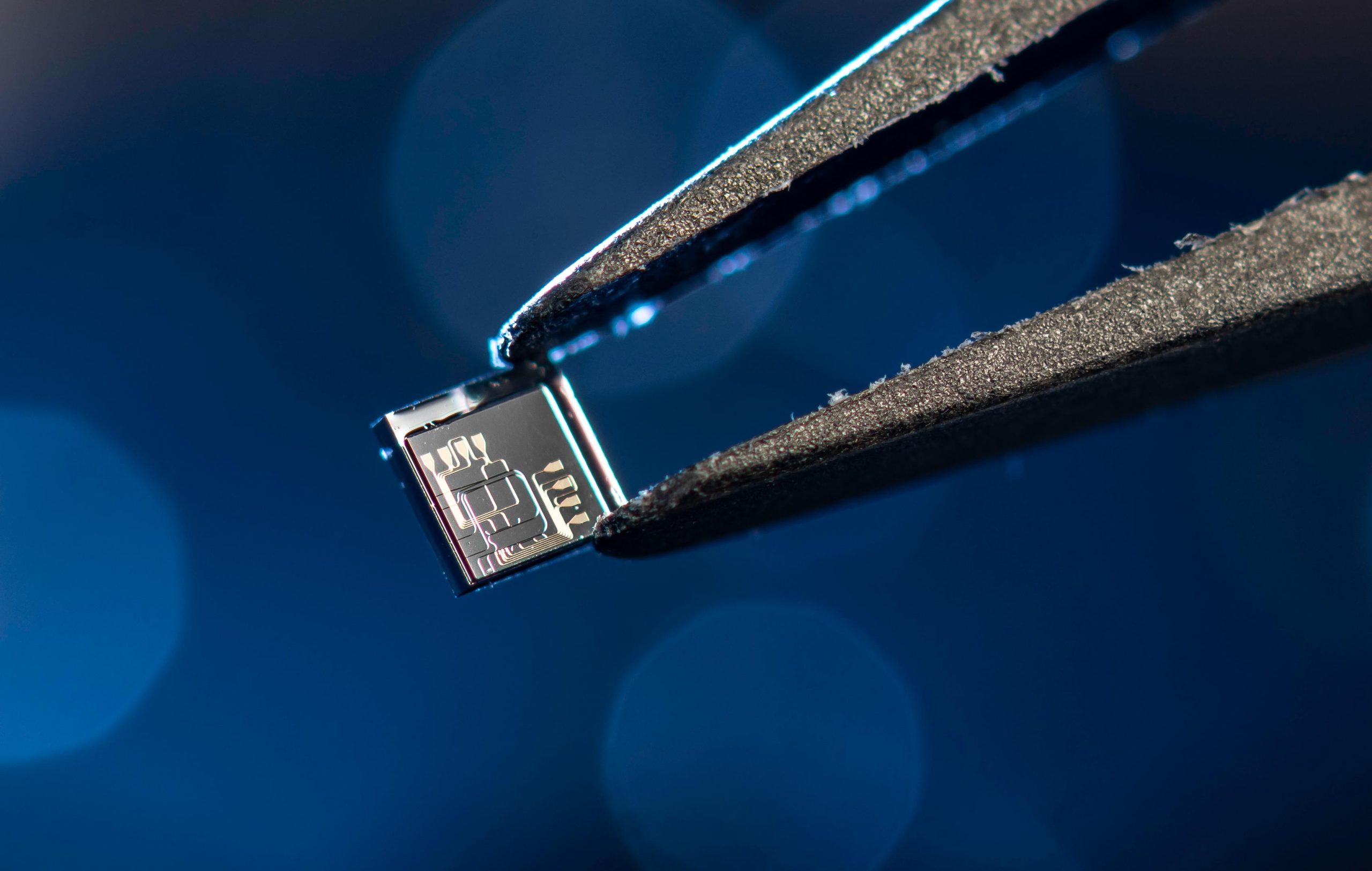
A 2 mm by 2 mm integrated photonic chip developed by Jaime Cardenas, assistant professor of optics, and PhD student Meiting Song (lead author) will make interferometers—and therefore precision optics—even more powerful. Potential applications include more sensitive devices for measuring tiny flaws on mirrors, or dispersion of pollutants in the atmosphere, and ultimately, quantum applications. Credit: J. Adam Fenster/University of Rochester
Researchers at University of Rochester’s Institute of Optics for first time distill novel interferometry into a photonic device.
University of Rochester researchers for the first time package a way of amplifying interferometric signals using inverse weak value amplification —without increase in extraneous input or “noise”—on an integrated photonic chip.
By merging two or more sources of light, interferometers create interference patterns that can provide remarkably detailed information about everything they illuminate, from a tiny flaw on a mirror, to the dispersion of pollutants in the atmosphere, to gravitational patterns in far reaches of the Universe.
“If you want to measure something with very high precision, you almost always use an optical interferometer, because light makes for a very precise ruler,” says Jaime Cardenas, assistant professor of optics at the University of Rochester.
Now, the Cardenas Lab has created a way to make these optical workhorses even more useful and sensitive. Meiting Song, a PhD student, has for the first time packaged an experimental way of amplifying interferometric signals—without a corresponding increase in extraneous, unwanted input, or “noise”—on a 2 mm by 2 mm integrated photonic chip. The breakthrough, described in Nature Communications, is based on a theory of weak value amplification with waveguides that was developed by Andrew Jordan, a professor of physics at Rochester, and students in his lab.
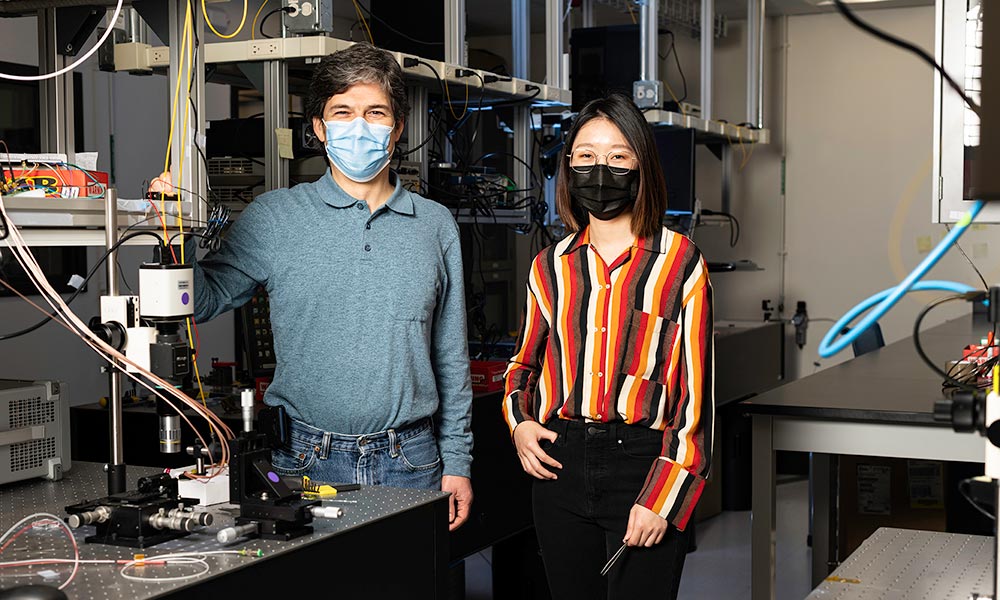
Jaime Cardenas (left) and Meiting Song in the Cardenas Lab at Rochester’s Institute of Optics. Credit: University of Rochester / J. Adam Fenster
Jordan and his group have been studying weak value amplification for over a decade. They have applied mode analysis in a novel way on free space interferometer with weak value amplification, which bridged the gap between free space and waveguide weak value amplification. Therefore, they were able to prove the theoretical feasibility of integrating weak value amplification on a photonic chip.
“Basically, you can think of the weak value amplification technique as giving you amplification for free. It’s not exactly free since you sacrifice power, but it’s almost for free, because you can amplify the signal without adding noise—which is a very big deal,” Cardenas says.
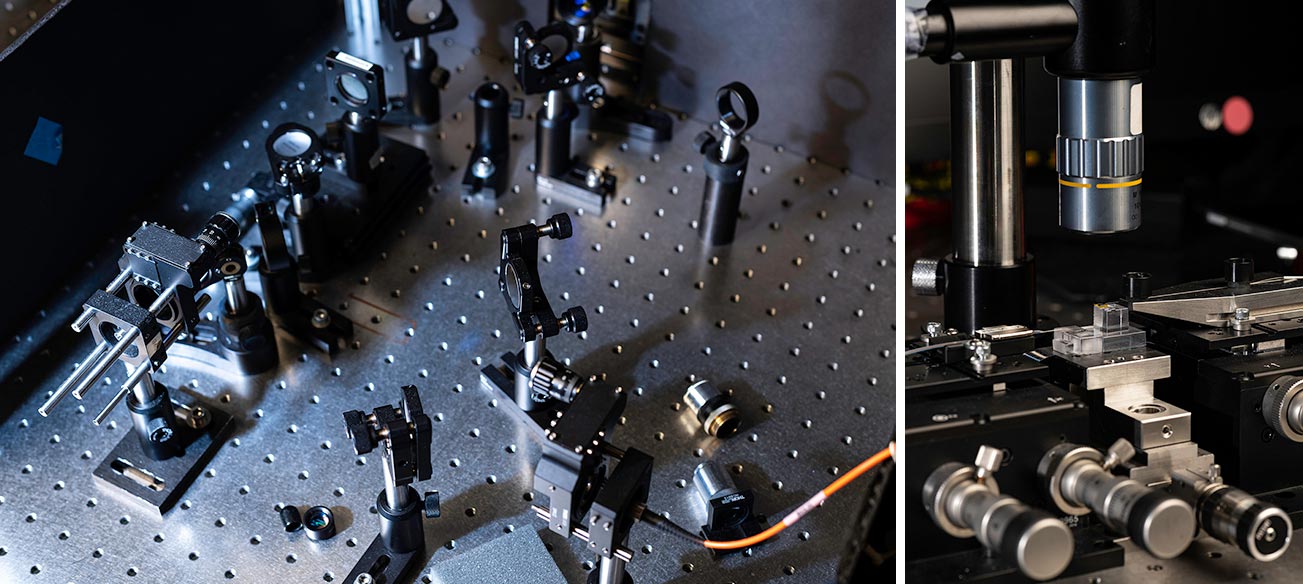
Weak value amplification is based on the quantum mechanics of light, and basically involves directing only certain photons that contain the information needed, to a detector. The concept has been demonstrated before, “but it’s always with a large setup in a lab with a table, a bunch of mirrors and laser systems, all very painstakingly and carefully aligned,” Cardenas says.
“Meiting distilled all of this and put it into a photonic chip,” Cardenas says. “And by having the interferometer on a chip, you can put it on a rocket, or a helicopter, in your phone—wherever you want—and it will never be misaligned.”
Traditional interferometry (left) requires an elaborate set up of mirrors and laser systems all very painstakingly and carefully aligned,” Cardenas says. Song “distilled all of this and put it into a photonic chip.” The chip (right) requires only a single microscope. Credit: University of Rochester / J. Adam Fenster
The device Song created does not look like a traditional interferometer. Instead of using a set of tilted mirrors to bend light and create an interference pattern, Song’s device includes a waveguide engineered to propagate the wavefront of an optical field through the chip.
“This is one of the novelties of the paper,” Cardenas says. “No one has really talked about wavefront engineering on a photonic chip.”
With traditional interferometers, the signal to noise ratio can be increased, resulting in more meaningful input, by simply cranking up the laser power. But there’s actually a limitation, Cardenas says, because the traditional detectors used with interferometers can handle only so much laser power before becoming saturated, at which point the signal to noise ratio can’t be increased.
Song’s device removes that limitation by reaching the same interferometer signal with less light at the detectors, which leaves room to increase the signal to noise ratio by continuing to add laser power.
Bottom line: “If the same amount of power reaches the detector in Meiting’s weak value device as in a traditional interferometer, Meiting’s device will always have a better signal to noise ratio,” Cardenas says. “This work is really cool, really subtle, with a lot of very nice physics and engineering going on in the background.”
Next steps will include adapting the device for coherent communications and quantum applications using squeezed or entangled photons to enable devices such as quantum gyroscopes.
Reference: “Enhanced on-chip phase measurement by inverse weak value amplification” by Meiting Song, John Steinmetz, Yi Zhang, Juniyali Nauriyal, Kevin Lyons, Andrew N. Jordan and Jaime Cardenas, 29 October 2021, Nature Communications. DOI: 10.1038/s41467-021-26522-2
Other collaborators include Yi Zhang and Juniyali Nauriyal of the Cardenas lab, John Steinmetz of the Department of Physics and Astronomy, and Kevin Lyons of Hoplite AI.
The project was funded by A. N. Jordan Scientific, in partnership with Leonardo DRS, and in part by the Center for Emerging and Innovative Sciences (CEIS). Fabrication was performed at the Cornell NanoScale Facility, with support from the National Science Foundation.
Here’s a bit of information that could knock your socks on.
Cleveland Clinic is a non-profit academic medical center. Advertising on our site helps support our mission. We do not endorse non-Cleveland Clinic products or services. Policy
Wearing socks to bed may help you fall asleep faster and snooze better during the night. Research shows that thawing out icy feet can adjust your body’s core temperature to put restful ZZZs within reach.
But the potential benefits of socking up for bedtime go beyond just warming toes and regulating your internal thermostat. It also opens the door for skincare pampering and maybe even (ahem) some extra zing in your love life.
Let’s break down the reasons to pull on a pair of socks tonight with behavioral sleep disorders specialist Michelle Drerup, PsyD, DBSM.
Why should you sleep with socks on?
Nobody likes cold feet, right? It’s just downright uncomfortable — and not a sensation that leads to sound sleep. (Chilly toes can even jolt you awake, a fact known by anyone who has kicked bare feet out from under the covers.)
But there’s a deeper, physiological reason for wearing socks to bed that goes beyond toastier tootsies, says Dr. Drerup. It’s a process called distal vasodilation. Here’s how it works.
Your body naturally works to lower your core temperature at night to help you sleep. This happens as part of your circadian rhythm, a 24-hour internal clock that manages your sleep-wake cycle. (That’s also why a cooler room temperature is better for sleep.)
But if your feet are too cold, your core temperature may actually click up a notch or two, says Dr. Drerup. That’s because your body is sending more blood flow — and the heat that comes with it — to your core areas.
So, what does adding in a fluffy pair of socks do? Those cuddly duds warm your feet, relaxing and widening blood vessels that constricted while cold.
This improved blood circulation in your overall body helps release more heat through your skin.
“By making your feet warmer, you’re opening up blood vessels to help cool down the rest of the body,” notes Dr. Drerup. “So increasing the blood circulation to your feet results in a lower core temperature. It seems counterintuitive, but that’s what happens.”
COVID-19: Investigations underway as Omicron variant BA.2 spreads worldwide
B.C. Ministry of Health has not confirmed whether this new Omicron spinoff has appeared in the provinceAuthor of the article:David CarriggPublishing date:Jan 25, 2022 • 1 hour ago • 3 minute read • 84 Comments
A variant of the Omicron COVID-19 variant has appeared across the world.
Article content
A variant of Omicron that is more difficult to detect through testing and spreads more easily has appeared, says an epidemiologist and the World Health Organization.
Omicron is more transmissible because it does a better job of attaching itself to cells in the nose and is also better able to evade vaccines in the body.
In B.C. all COVID-19 cases are considered to be BA.1 Omicron — which can be identified from a PCR test. The B.C. Ministry of Health did not confirm by deadline whether any cases of BA.2 had appeared in the province.
In a WHO technical briefing on Omicron published on Friday, it was stated “while the BA.1 (original) lineage has previously been the most dominant, recent trends from India, South America, the United Kingdom and Denmark suggest that BA.2 is increasing in proportion.”
As a result, last Friday the U.K. Health Security Agency marked BA.2 a variant under investigation.
Katelyn Jetelina, an epidemiologist at UT Health Science Centre in Houston, published a “COVID-19 State of Affairs” report on Jan. 24 that said case patterns could change worldwide because of the emergence of BA.2.
“BA.2 lacks the (69-70) spike mutations. This is important, because it means, unlike with BA.1, BA.2 doesn’t have a special signal on PCR tests to tell labs that it is Omicron. All tests now need to go to genetic sequencing for variant identification,” Jetelina wrote.
Genetic sequencing takes time and is costly, so it cannot be done en masse on samples.
Jetelina wrote that studies out of the U.K. showed BA.2 was more transmissible than BA.1 but by way less than BA.1 was compared to Delta.
“On Friday, the U.K. labelled BA.2 a variant under investigation as it’s doubling every four days there which equates to a 120 per cent growth advantage over BA.1. Variant under investigation is the least severe variant classification, but still a signal that we need to pay attention. BA.2 has already started to take hold in places like India, Philippines, Netherlands, France, and Denmark,” Jetelina wrote.
Advertisement
STORY CONTINUES BELOW
Article content
“The consistency of BA.2 growth across several countries means that it’s more transmissible than BA.1. But it’s likely nothing like the huge transmissibility jump we saw from Delta to Omicron.”
She said that early data out of Denmark showed no disease severity difference between the two Omicrons.
“We know this virus will mutate. And BA.2 is an example that it’s doing what we expect. We should keep an eye on this, but I’m not too concerned right now. I’m more concerned about another variant popping out of nowhere like Omicron did.”
Image by fizkes / iStockOur editors have independently chosen the products listed on this page. If you purchase something mentioned in this article, we may earn a small commission.January 25, 2022 — 1:05 AMShare on:
Of the four main sleep chronotypes, there’s one that stands out as the quintessential night person: the wolf. Roughly 15 to 20% of the population falls into this chronotype. If you’re one of them, there are a few tips that can help you keep your sleep schedule and energy levels in tiptop shape. Here’s how to thrive as a wolf chronotype.In This Article
Your sleep chronotype describes your body’s biological clock (or circadian rhythm), which influences your energy levels throughout the day.
Most of us fall into one of four chronotypes: lions, bears, wolves, and dolphins. We all know people who are bright-eyed and bushy-tailed in the morning, and they tend to be your lions and bears. Wolves and dolphins, on the other hand, tend to have more energy later in the day.
Understanding your chronotype and its needs can help you structure your day in a way that works for your body. It can help inform what time you wake up, go to bed, work out, eat, and take meetings. Here’s a quick overview of the four types:
Lions: Morning people who like to wake up early and are most productive in the morning
Bears: Sleep schedule is synced with the sun, with most productivity in the morning
Wolves: Prefer to wake up later in the day, most productive in the afternoon/evening
Dolphins: Trouble waking up and falling asleep, most productive around midday
Just like we picture wolves howling at the moon, people with this chronotype tend to be active at night. As such, they often struggle with waking up early.
As board-certified sleep specialist and co-author of Energize!Michael J. Breus, Ph.D., tells mbg, wolves are the people who need to drag themselves out of bed in the morning and don’t start feeling tired until around midnight.
“Wolves are creative, impulsive, and emotionally intense,” he says, adding that they love to seek out new experiences and take risks. They have a medium sleep drive, which gives them peaks of productivity in the late morning and again in the late evening.
Unfortunately for wolves, they may find their preference for nighttime isn’t conducive to the demands of work or school. “Things like work and school get going too early, and social fun ends too soon [for this type],” Breus explains, noting that wolves are highly susceptible to social jet lag and insufficient sleep.
Wolf chronotype schedule.
Calling all wolves: Here’s an ideal 24-hour schedule that will maximize your energy peaks and respect your dips, according to Breus:
7 a.m.: Wake up to your first alarm. Drift until your second alarm 20 minutes later. When you get up, quickly write down or voice memo any ideas.
7:30 to 8 a.m.: Get dressed, help the kids if applicable.
8:30 to 9 a.m.: Get out the door and into the sunlight. A short morning walk (even if it’s just to the car or train) will help you wake up.
9 to 11 a.m.: Use the morning to consolidate and get organized. Your peak hours are yet to come, so prepare yourself now for your productive hours later.
11 a.m.: Coffee break, no snack. Carbs will only slow you down.
11:15 to 1 p.m.: Knock off all busywork tasks that don’t require too much concentration or insight.
1 p.m.: Eat a balanced lunch. Your brainpower is sharp right around now. At lunch with colleagues, you’ll be impressive and charming.
2 to 4 p.m.: Tackle hard tasks that require concentration.
4 p.m.: Have a light snack that features protein and healthy carbs.
4:15 p.m. to 6 p.m.: Connect and interact with others. While their energy is waning, you’re wide-awake and alert. Take advantage and attend meetings, make phone calls, and send emails during this time.
6 p.m. to 7 p.m.: Exercise while your body is all warmed up for performance.
7 p.m. to 8 p.m.: Post-workout Happy Hour, predinner social hour with friends, homework hour with kids. You should be up for anything now, so go do it.
8 p.m. to 9 p.m.: Dinner. By delaying your meal until now, you’ll resist the urge to eat later on, too close to bedtime. Carbs will help calm you down for sleep.
9 p.m. to 11 p.m.: This is when you tend to be in your best mood of the day, so do something fun!
11 p.m.: Turn off all screens. Relax, meditate, read, stretch, take a hot bath.
Midnight: Go to bed.
Tips for thriving as a wolf chronotype.
When to work out:
Wolves will see peak workout performance around 6 p.m., Breus says. By this time, their hand-eye coordination has peaked (until 9 p.m.) as have their fat-burning abilities.
In addition to that, the cortisol-testosterone ratio for wolves reaches its ideal point for resistance training in the late evening from 6 to 7 p.m., and if you happen to be a yogi and a wolf, Breus says you can do yoga three hours after waking and again before dinner or to relax before bed.
When and what to eat:
If you’re following the wolf schedule above and waking up at 7 a.m., you’ll want to eat breakfast an hour later, around 8 a.m.—without coffee! Don’t worry, you can have a cup at 11 a.m., but drinking it too soon can make you jittery.
At 1 p.m., it’s time for a balanced lunch, and come 4 p.m., Breus recommends a snack that’s around 250 calories, with 25% protein and 75% carbs, to help you power through the rest of the afternoon.
Dinner is best served at 8 p.m. for you. Be sure to include some healthy carbs on your plate to help you to wind down and prevent getting hungry again before bed.
When to have sex:
According to Breus, all of the chronotypes benefit from morning sex, as it gets your day started on an energizing note. In the case of wolves, they also have a good window for sex in the late evening, around 10 p.m.
Of course, you’ll also want to consider your sexual partner’s chronotype since a bear, for example, will probably prefer earlier than that, while another wolf would be ready to romp as late as 11 p.m.
Optimizing sleep as a wolf chronotype:
1. Go to bed by midnight.
While you might easily be able to stay up well into the wee hours as a wolf, try to resist the urge and get to bed by midnight, Breus says. By this time, your body is naturally starting to wind down, and you’ll be able to get enough sleep without having to sleep in the next day. This brings us to our next point.
2. Get at least seven hours of sleep.
While there’s no magic number, Breus notes that wolves typically perform their best when they’re getting around seven hours of sleep. He’s found that the average wolf gets through four 90-minute sleep cycles a night and can take 40 minutes to fall asleep (hence why he recommends going to sleep at midnight and waking up at 7 a.m.)
“Getting that much sleep can be tough for wolves because their biological rhythm is so at odds with society’s timetable for daily life,” he notes.
Since it can take a while for wolves to quiet their minds and fall asleep, they may want to consider a sleep supplement like mindbodygreen’s sleep suppport+.*
The formula contains highly absorbable and gentle magnesium bisglycinate paired with PharmaGABA®, a neurotransmitter shown in clinical trials to enhance natural sleep quality, as well as jujube, a fruit used in traditional Chinese medicine for calming.*
4. Set yourself up for a good night’s sleep as soon as you wake up.
According to Breus, if you struggle with grogginess in the morning, you’ll want to prioritize hydrating and getting sunlight first thing. This will help keep your biological clock ticking along smoothly. When your body knows when to wake up, it will also know when it’s time to hit the hay.
The bottom line.
Having a wolf chronotype isn’t always easy, especially in a world that can feel like it’s made for early birds. But each chronotype has its strengths, and wolves just happen to be strongest later in the day. When you understand how to make your chronotype work for you, not only will you be more energized and productive, but you’ll also sleep better and feel better overall.
Orange Pi 4 LTS: Raspberry Pi alternative with a Rockchip RK3399 SoC to starts from US$55
The Orange Pi 4 LTS will be available in several configurations. (Image source: Orange Pi)
Orange Pi has revealed another mini-PC, the Orange Pi 4 LTS. The new Raspberry Pi alternative relies on a Rockchip RK3399 SoC and will be available from the middle of next month, starting at US$55.Alex Alderson, 01/24/2022 🇪🇸🇵🇹…ARMGadgetSingle-Board Computer (SBC)
Working For Notebookcheck
Are you a techie who knows how to write? Then join our Team! English native speakers welcome!
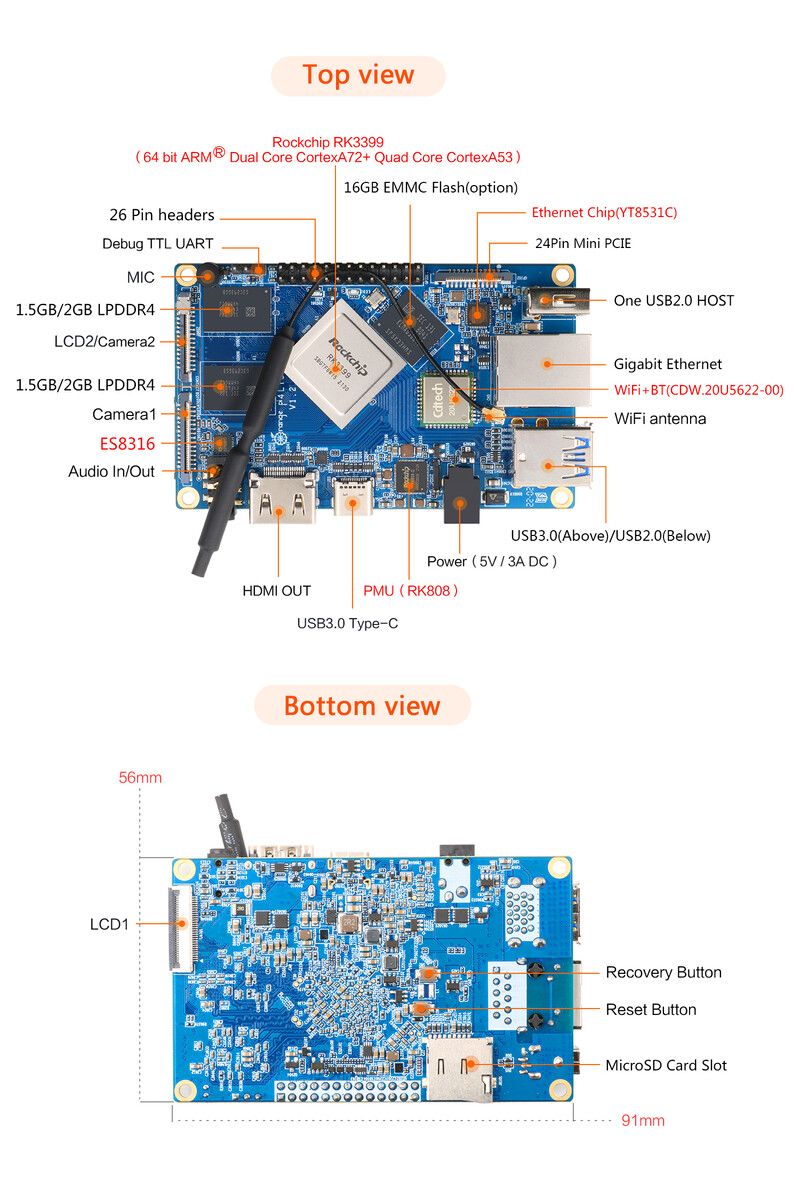
Orange Pi has announced another single-board computer (SBC), having also released other boards like the Zero2 in the last few years. According to the manufacturer, the new Orange Pi 4 LTS contains the Rockchip RK3399, an SoC with two ARM Cortex-A72 and four Cortex-A53 CPU cores, plus a Mali-T860 MP4 GPU.
Additionally, Orange Pi will offer the SBC with up to 4 GB of RAM and 16 GB of eMMC flash storage. Unlike the Raspberry Pi, the Orange Pi 4 LTS lacks a 40-pin GPIO header. Instead, Orange Pi has opted for a 26-pin header, making the board incompatible with most HATs and other expansion boards. The 91 x 56 mm board is larger than the Raspberry Pi Model B as well, which measures 85 x 56 mm.
As Orange Pi’s images show, the board also has several USB ports, a microSD card slot and a 24-pin mini PCIe slot, among other features. The board supports wired and wireless internet connections out of the box, too.
Supposedly, the Orange Pi 4 LTS is compatible with multiple operating systems, including Android and Ubuntu. Orange Pi hopes to begin selling the Orange Pi 4 LTS by the middle of February. The company states that the SBC will be available from US$55 and will top out at US$70.
OpenAI’s impressive AI language model GPT-3 has plenty of things going it, but with 175 billion parameters no one would claim it’s particularly streamlined. The Allen Institute for AI (AI2) has demonstrated a model that performs as well or better than GPT-3 on answering questions, but is a tenth the size.
Macaw, AI2’s model, emerged from research being done at the nonprofit into creating an AI that performs at human levels on standardized tests.
“After we got a very high score they moved on to harder questions,” said AI2 head Oren Etzioni. “There’s this paradox where sometimes the questions that are easiest for people are the hardest for machines — and the biggest gap was in common sense.”
For instance, he said, asking “When did Tom Hanks land on the moon?” GPT-3 says 1995, since that’s when the film Apollo 13 came out. But Macaw correctly notes that, as far as we know, Tom Hanks has in fact never been to the moon.
AI2 has published a collection of examples (“demo” is probably too strong a word) that illustrate the difference, with Macaw often providing the better answer to a variety of tricky and not-so-tricky questions.
It’s humorous to compare the two, as sometimes they both miss or give absurd answers at a pretty high rate. Macaw is good at tracking who did what, but is convinced snakes have legs. GPT-3’s answers are confident (perhaps overly so) and readable, even when they amount to conspiracy theories like that COVID-19 is “a new, experimental, and potentially dangerous drug.”
A couple examples:
How would you make a marriage stronger? Macaw: Communicate GPT-3: I would make sure that I was the one who was always right.
If a bird didn’t have wings, how would it be affected? Macaw: It would be unable to fly GPT-3: It would be a bad bird.
You poured yourself a glass of cranberry juice, but then absentmindedly, you poured about a teaspoon of grape juice into it. It looks OK. You try sniffing it, but you have a bad cold, so you can’t smell anything. You are very thirsty. So you drink it. What happens next? Macaw: You get sick GPT-3: You will probably die
How does a snake move around? Macaw: By slithering on all fours GPT-3: Snakes move by using their muscles to push against the ground. They can move in any direction, but they cannot move backwards.
Clearly there’s still a ways to go in creating a question-answering AI that doesn’t trip up on basic questions that a child could answer. But it’s also worth noting that Macaw achieves a similar level of success with a far, far less data-intensive process. Etzioni was clear that this is not meant to be a GPT-3 replacement in any way, just another step in the research going on worldwide to advance the ball on language generation and understanding.
“GPT-3 is amazing, but it only came out 18 months ago, and access is limited,” he said. The capabilities it demonstrated are remarkable, “But we’re learning you can do more with less. Sometimes you have to build something with 175 billion parameters to say, well, maybe we can do this with 10 billion.”
A good question-answering AI isn’t just good for party tricks, but is central to things like voice-powered search. A local model that can answer simple questions quickly and correctly without consulting outside sources is fundamentally valuable, and it’s unlikely your Amazon Echo is going to run GPT-3 — it would be like buying a semi truck to go to the grocery store with. Large scale models will continue to be useful, but pared-down ones will likely be the ones being deployed.
A part of Macaw not on display, but being actively pursued by the AI2 team, is explaining the answer. Why does Macaw think snakes have legs? If it can’t explain that, it’s hard to figure out where the model went wrong. But Etzioni said that this is an interesting and difficult process on its own.
Image by Mihajlo Ckovric / StocksyOur editors have independently chosen the products listed on this page. If you purchase something mentioned in this article, we may earn a small commission.January 25, 2022 — 12:16 PMShare on:
Here, their go-to tips for a successful snooze: ADVERTISEMENT
1. Dim the lights.
Ask any expert, the key to balancing your circadian rhythm, and they’ll likely agree with Long: “Leverage light.” See, as natural light starts to dwindle, your body’s internal clock kick-starts melatonin production, which signals that it’s time for sleep. “So that means that for an hour and a half before bed, we aren’t using bright lights,” Long says of her household, as any cool, bright light makes it harder for your body to register that it’s time to wind down. “We turn off the bright overhead lights, and we just use dim, 30-watts-or-less light bulbs on all of our bedside tables” (like these low-watt light bulbs from Amazon).
“Then on the flip side, when you wake up in the morning, the first thing you want to do is get bright light,” Long continues, as the sun’s natural blue light regulates your sleep and wake cycle, helps boost alertness, and can even elevate your mood. “You’re resetting your circadian rhythm for the day, so it will make you more awake at that moment and make it easier to fall asleep at night.”
2. Turn off devices.
As we’ve discussed, blue light interferes with melatonin production, causing the brain to think it’s still daytime. Aside from the light exposure, endlessly doomscrolling before bed can also stimulate your brain, thus keeping you from reaching a deeper sleep. So “if you have trouble falling asleep, I tell people to turn off your devices for 60 to 90 minutes before bedtime,” suggests Long. “Or you can wear one of those lovely blue-blocker glasses.” (Here’s how to tell if your blue blockers are actually working.)
But just because Long suggests avoiding screens doesn’t mean you have to have a completely silent home for an hour or two before bed: Bock, for example, listens to podcasts or audiobooks with her fiancé during their wind-down routine. So she’s not exposing herself to as many screens, but she’s still enjoying a source of digital entertainment before bed. “Listening to a story can be calming—it’s like an adult bedtime story,” Bock notes.
“If you can take a natural supplement that will help your eyes feel heavy, that is the dream,”* says Bock. “It takes the stress off of sleeping.” Because we’ve all been there: You lie in bed and try to force yourself to feel sleepy, which makes you feel even more wired. “When you get in bed and you can’t fall asleep, it’s torture,” she adds (I can certainly relate).
Specifically, she’s a fan of mbg’s sleep-support, which contains a powerful blend of magnesium bisglycinate, jujube, and PharmaGABA® that helps you fall asleep faster and enhances overall sleep quality.* Bock takes it about 30 minutes to an hour before going to bed, and it helps her sleep soundly throughout the night.*
4. Take an Epsom salt bath.
Bock is also a fan of Epsom salts: “If I take a hot Epsom salt bath before bed, it relaxes my entire nervous system and calms my body,” she notes. Epsom salts (which are made of magnesium sulfate) are lauded for easing stress while promoting calm and full-body relaxation—all necessary components for a stellar night’s sleep.
Even if you don’t have any Epsom salts to add to your bath, the soak itself is worth your while: One large meta-analysis found that taking a bath one to two hours before bed can improve overall sleep quality and how quickly you fall asleep. Just make sure to give your body enough time to cool down by taking your bath (or steamy shower) one to two hours before bed—raising your body temperature can make it harder for you to fall right asleep. “When you get out of the bathtub, your body temperature drops and your brain thinks, ‘Oh, my body temperature dropped, so it’s time to go to sleep.’ Hence, sleepy time. It works,” says Long.
No bath? No problem: Here’s how to reap the benefits of soothing magnesium without the soak.*
The takeaway.
After trial and error, both Bock and Long have nailed down their ideal bedtime routines (make sure to catch their full conversation). Of course, sleep routines are entirely personal, and you might rely on a different set of practices to help you wind down. That’s OK—we have plenty more tips in our growing library.
Optimal levels of exercise reverse cognitive decline in mice
MoMo Productions/Getty Images
A recent study has discovered an exercise “sweet spot” that reverses cognitive decline in aging mice.
The research team discovered that 35 days of continuous exercise improved learning and memory deficits in the aging animals.
Their findings also suggest an explanation for how and why exercise improves cognitive function.
Various studiesTrusted Source show that exercise provides the body with multiple potential health benefits.
From immediate improvements, such as more efficient metabolism, to long-term gains, such as protection against cancer, the benefits are abundant.
Recently, these benefits have come to include the health of the brain — particularly the hippocampus, which is responsible for learning, emotions, and memory formation.
For a long time, scientists have been unsure of how and why exercise improves brain function.
Now, a new study by researchers at the Queensland Brain Institute (QBI) at the University of Queensland, Australia, has set out to explain this phenomenon.
The research suggests that optimal levels of exercise lead to an increase in circulating growth hormone (GH), resulting in an improvement in cognitive functions.
GH, a protein that the pituitary gland makes, helps control growth and the use of glucose and fat in the body.
“The work we conducted identifies some key mechanisms as to how and why exercise induces [cognitive] changes,” says co-lead author and research fellow Daniel Blackmore, Ph.D.
The conclusions from the new research appear in two separate papers in the journal iScience — the firstTrusted Source published in October 2021 and the secondTrusted Source in November.
In this study, Dr. Blackmore and his colleagues conducted two experiments.
First, they investigated whether an increase in GH levels correlated with exercise points at which aged mice showed significant cognitive improvements.
Then, they looked at whether GH played a causal role in the timing and activation of the exercise-related benefits that they observed in the animals.
During the experiments, the scientists used various behavioral tests to assess the animals’ cognitive functions, noting the corresponding results.
In addition to behavioral tests, the experimenters harvested blood samples from the animals, alongside tissue samples from the brain and the pituitary gland. These samples allowed them to observe exercise-induced changes in the hippocampus and to monitor changes in GH levels.
The researchers compared all test results against a control group.
At first, the scientists observed that the older mice performed significantly less well than their younger counterparts in the behavioral tests.
Following this round of tests, the team housed the animals in a cage and gave them access to a running wheel.
On repeating the behavioral tests, the scientists found that older animals that ran for 35 days showed learning improvements similar to those of non-running young animals.
Surprisingly, they discovered that exercise periods longer or shorter than 35 days had no noticeable effects on learning. Due to this, they called the 35-day mark an exercise “sweet spot.”
To confirm the importance of this sweet spot, the scientists tested another set of animals using a different behavioral test. They observed similar learning improvements in the new set of aged mice that ran for 35 days.
After this observation, the researchers turned to GH levels to understand why a precise period of exercise improved cognitive functions. Here, they noticed that circulating GH levels peaked during the exercise sweet spot.
In addition, the team discovered that GH stimulates the production of new neurons in the hippocampus.
This led the scientists to conclude that GH plays a central role in the cognitive benefits observable from exercise in aged mice.
In the second study, they investigated how the production of new neurons changed the circuitry in the aged murine brain.
Using a noninvasive MRI procedure, the team discovered that improved spatial learning was a result of enhanced connectivity in the dentate gyrus, part of the gateway to the hippocampus.
“This study showed for the first time that exercise can restore connectivity within the mouse brain,” Dr. Blackmore told Medical News Today, noting that the study “identified which regions [in the brain] are essential for successful spatial learning.”MEDICAL NEWS TODAY NEWSLETTERKnowledge is power. Get our free daily newsletter.
Dig deeper into the health topics you care about most. Subscribe to our facts-first newsletter today.Enter your emailSIGN UP NOW
To understand the implication of the results, MNT sought an expert opinion.
Dr. Jennifer Bramen, Ph.D., a senior research scientist at the Pacific Neuroscience Institute, Santa Monica, CA, explained that any intervention that shows neurogenesis — the growth of new neurons — in the adult brain is “highly exciting.”
She also added that the “results from the study are highly valuable.”
However, she encouraged the public to adopt a mindset of patient optimism:
“The clinical implication of this and the growing body of research on aerobic exercise is that it is an incredibly valuable tool for preserving brain health and cognitive abilities as we age.”
“One of their key findings,” Dr. Bramen added, “is that it takes time (35 days) for mice to experience significant improvement in their cognition.”
“It is important to manage expectations regarding how quickly a person will experience a significant benefit from regular aerobic exercise. [However], it is [also] important to continue to exercise to maintain these benefits,” she concluded.
As Dr. Bramen noted, the results from the study are valuable. However, the study is not without limitations.
First, the team used only healthy aged female mice in their work. Therefore, the experiments need repeating in male mice to determine whether the findings apply to both sexes.
This is necessary because the exact timing to experience the benefits of physical exercise may differ between the sexes.
Furthermore, there is still a need for human studies to confirm the scientists’ findings.
The team plans to study this in the future. In a conversation with MNT, Dr. Blackmore revealed that as a result of the GH biomarker, scientists can now identify when exercise has reached an optimal level that aids brain function.
Additionally, he said, because of the noninvasive approach that the researchers used in the experiments, he is confident that “similar approaches can be undertaken with human subjects.”
“Our ultimate goal is to identify an optimal exercise paradigm that can improve human cognition in aged people to slow down the rate, delay, or even prevent dementia. These animal studies pave the way for this work.”
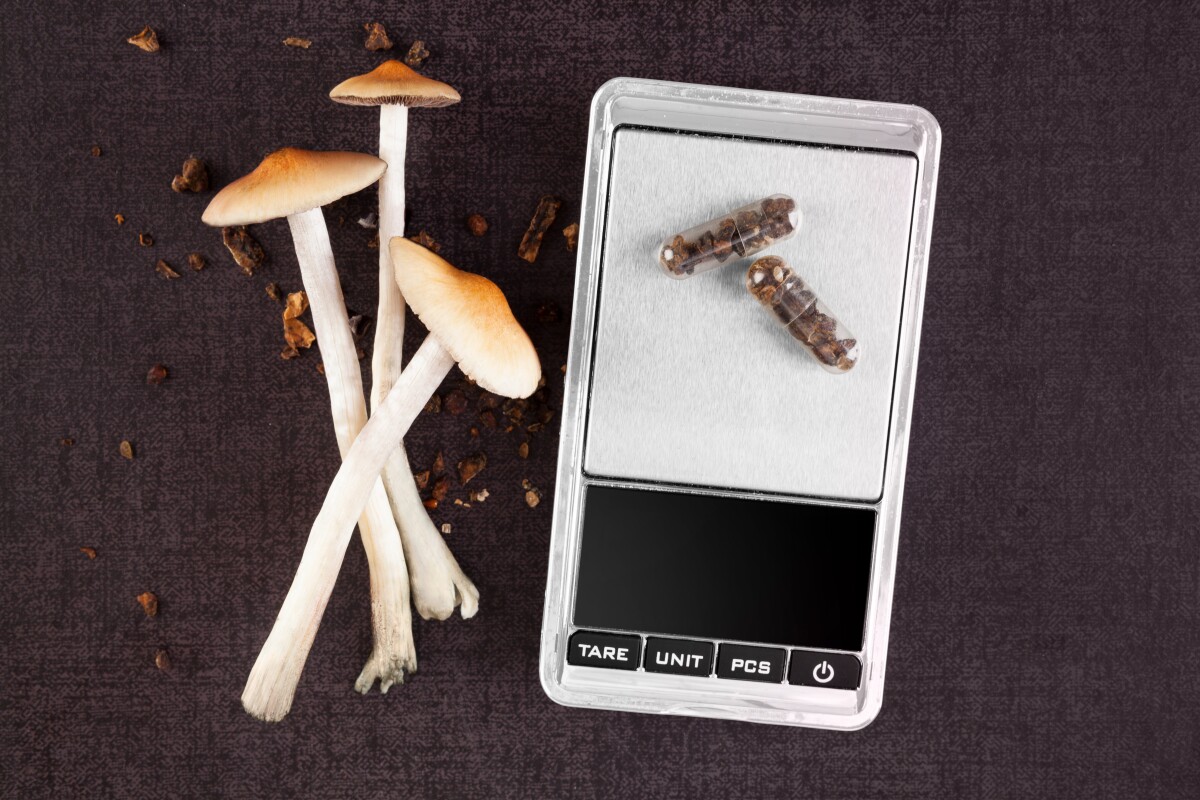
A trial found no differences across a number of tests between those taking psilocybin microdoses for three weeks and those taking a placeboDepositphotosVIEW 1 IMAGES
With psychedelics well and truly hitting the mainstream, scientists are finally subjecting many anecdotal claims to the rigors of clinical research. The phenomenon of microdosing is one of those well-known psychedelic practices that many advocates ardently suggest leads to numerous improvements in well-being.
Despite its prevalence in popular culture, the idea of microdosing is relatively new. Characterized in detail little more than a decade ago by James Fadiman, the practice suggests tiny sub-perceptual doses of psychedelic drugs can lead to enhancements in productivity, creativity, mental well-being and energy.
The key to microdosing is repeated small doses, usually once every three days for a few weeks, and psilocybin or LSD are the most common psychedelic drugs microdosed. Doses are usually no more than 10 percent of a standard psychedelic dose, and it is important users garner no acute perceptual hallucinogenic effects from a given microdose. Basically, if you feel like you are tripping then you have taken too much.
Despite the popularity of microdosing, it is still unclear whether the practice actually works or is just a glorified placebo. Very little clinical research has so far tested the phenomenon, and the few studies that have been published to date seem to indicate microdosing may not be doing much at all.
This new study is among the first to use a double-blind, placebo-controlled design to test microdosing. The European study looked at whether psilocybin microdosing led to improvements in emotion processing and reductions in symptoms of anxiety and depression.
Over 50 subjects participated in the cross-over trial, completing a pair of three-week testing blocks. For one block the participants took five to seven psilocybin microdoses, and in the other block they were given placebo capsules. On two occasions during each three-week block the participants came into the lab to perform a variety tests exploring creativity, emotion perception and aesthetic feelings.
Corresponding author on the study, Michiel van Elk tells New Atlas his team found no tangible differences in participants comparing the periods they were psilocybin microdosing and the periods they were given placebo. In fact, van Elk says the biggest surprise was how many participants guessed when they were taking active microdoses and when they were taking a placebo.
“Indeed it turned out that there was no effect of psilocybin on most of the different measures that we included in our study,” van Elk says in an email to New Atlas. “What surprised us most was that many participants broke blind: they figured out what condition they were assigned to (placebo or microdosing). This might well be related to the fact that many participants also had prior experience with microdosing and psychedelic drug use.”
Interestingly, the study reports depression scores improved from baseline to block one regardless of whether a participant was randomized to placebo or psilocybin in that first block. And in block two, when participants mostly broke blind and correctly guessed which block was active and which was placebo, they still registered little difference on all measures studied, regardless of what they had been taking.
One of the few objective measures van Elk says seemed to be directly influenced by psilocybin microdosing was a dilation of time perception, but not in the direction the research team expected. Instead of psilocybin potentially slowing a person’s sense of time it seemed to do the opposite.
“… we found that psilocybin microdosing resulted in an underestimation of time, whereas we would have expected that it would dilate time perception,” explains van Elk. “We found this by using a so-called temporal reproduction task, in which participants were instructed to reproduce short temporal intervals. This task is difficult to fake and thus we are quite confident that these findings are not driven by participants breaking blind, but reflect some low-level effect of the psilocybin microdose on temporal perception.”
Unlike some prior clinical studies looking at the effect of a single microdose, this trial explored the effect of microdosing for up to three weeks. While there is a suggestion that the benefits of microdosing require a cumulative effect of engaging in the practice for weeks, or even months, van Elk is skeptical his study simply missed certain improvements that would have ultimately appeared if the trial was conducted for a longer period of time.
“I would be surprised if the long-term effects outweigh the short-term effects of microdosing,” van Elk says. “Psilocybin appears to exert a very direct acute effect on the neurotransmitters in the brain, which should be picked up by sufficiently sensitive measures. So far most studies have not provided convincing evidence for the effects of microdosing, but I am sure that with more sensitive measures, it should be possible to detect an effect. If there are longer-term effects at all, I guess these should be mediated by the downstream effects that psilocybin has on our brain and body, such as increases in glutamate, BDNF, anti-inflammatory properties and increased neuroplasticity. But we are only beginning to understand these complex effects.”
A recent observational study from researchers Vince Polito and Richard Stevenson at Australia’s Macquarie University did find signals that psychedelic microdoses may be generating some kind of effect. But most significantly, Polito and Stevenson’s research found the measured effects of microdosing were not exactly what the users subjectively assumed.
Ultimately, van Elk believes his data points to the popular benefits of psilocybin microdosing being mostly a manifestation of the placebo effect. However, he doesn’t rule out there being some tangible effects from the practice. It just may not be doing what people think it’s doing.
“Most of the evidence so far points out that it is likely a placebo-effect,” van Elk says of microdosing. “At the same time, I remain open to the possibility that there might be more to it – as the findings with the temporal reproduction task demonstrate. I strongly believe in the power of placebo and many important findings can likely be accounted for by placebo. But at the same time, there are also boundary conditions on what a placebo can achieve.”
Exploring the placebo effect further, van Elk says he and colleagues have conducted a study on placebo microdosing, in which all groups in a cohort received placebo doses. The results are yet to be published but van Elk does indicate many subjects taking a placebo microdose reported subjective effects.
“We pick up some subjective effects, as it seems that some participants indeed believed they were affected by the placebo,” notes van Elk. “But also there, we could not find any effect on the different dependent measures that we included.”https://9c0ef6613209c95c5dbb39d990ad8684.safeframe.googlesyndication.com/safeframe/1-0-38/html/container.html
Moving forward, the next focus of investigation for van Elk will be to look at the effects of what he refers to as mini-doses of psilocybin. These are doses of psilocybin where mild subjective hallucinogenic effects can be detected, but they are still much lower than what many would regard as a full psychedelic dose of the drug.
Ultimately, van Elk still thinks there may be some effects from psilocybin microdosing but he is cautious to point out that the effects of the popular practice may not necessarily be all positive.
“Psilocybin microdosing might still play a role – but it is good to remain cautious on using it in practice, as it might also have unwanted side effects,” van Elk tells New Atlas. “If anything, most studies show that psychedelics hamper rather than facilitate performance, so I don’t expect microdosing to actually have a beneficial effect on many objective measures of cognitive performance. Microdosing might also result in dangerous interactions, when consumed together with other substances, so it is important to remain careful.”
 By Adele AnkersUpdated: 24 Jan 2022 9:47 amPosted: 24 Jan 2022 9:47 am





 Bruce's Blog