YouTube
https://www.euronews.com/green/2022/02/19/solar-panels-built-from-waste-crops-can-make-energy-without-direct-light
Solar panels built from waste crops can make energy without direct light

The material could be applied to entire buildings such as the Montreal Convention Centre. – Copyright The James Dyson Foundation
By Lottie Limb • Updated: 19/02/2022 – 09:00
Solar panels that don’t require direct sunlight have been invented in another leap forwards for clean energy.
A Filipino engineering student designed the revolutionary material using luminescent particles from fruit and vegetable waste.
Carvey Ehren Maigue, 29, won the James Dyson Foundation Sustainability Award in 2020 for the panels he constructed at Mapua University in the Philippines.
ADVERTISING
As they do inside crops, these particles absorb the sun’s ultraviolet rays and turn them into visible light. The panels are then able to convert this harvested light into electricity.

Ultraviolet rays still reach us on cloudy days, meaning there is huge potential to scale the technology up in urban areas – as well as in other places that a conventional solar panel wouldn’t sit.
about:blank
Inspired by auroras and called AuREUS, the particles are placed in a resin surface which can be moulded into different shapes.
- Thinner than a pencil, these solar panels are set to revolutionise solar power
- Planting wildflowers around solar panels could make them a home for bees
The new solar material could even be fitted to our clothes
Discussing his invention in 2020, Maigue said he wanted to bring the product to the market immediately while also investing in further research.
“I want to create threads and fabric so that even your clothes would be able to harvest ultraviolet light and convert it into electricity.”
The prototype was a three-by-two foot panel installed in a window of Maigue’s apartment, capable of generating enough electricity to charge two phones each day. But he has ambitions to clad whole buildings in AuREUS, turning them into vertical solar farms.
Despite not facing the sun, skyscrapers with this exterior could absorb UV that bounces off walls, pavements and other buildings.
“We are also looking to create curved plates, for use on electric cars, aeroplanes and even boats,” he told the Foundation.
The electrical engineering student added that he wanted to democratise his new product. “AuREUS has the chance to bring solar energy capture closer to people,” he said.
“In the same way computers were only used by the government or the military and now the same technology is in our smartphones, I want solar energy harvesting to be more accessible.”
How ‘upcycling’ lost crops creates colourful clean energy
The new technology has strong sustainability credentials from start to finish.
“We upcycle the crops of the farmers that were hit by natural disasters, such as typhoons, which also happen to be an effect of climate change,” explains Maigue.
Of 78 types of local crops tested, nine showed high potential. These are crushed, juiced and filtered to extract the luminescent particles, which are then suspended in resin.

The resulting material can be moulded into cladding and clamped to walls, or sandwiched between two panes of double glazed window to start generating renewable energy for the building.
It does this by reflecting the converted light to the edges of the panel, where strings of regular photovoltaic (PV) cells are waiting to capture and convert it into electricity.
One area for improvement is moving from 80 per cent fruit and vegetable sources to 100 per cent, skipping chemical ones completely. Among the five colours used – red, orange, yellow, green and blue – a natural alternative for the blue dye has yet to be found.
https://www.makeuseof.com/gmail-send-fax/
How to Send a Fax From Gmail
BY GARGI GHOSALPUBLISHED 23 HOURS AGO
Tired of dashing from your desk to your fax machine between meetings? Sending a fax from Gmail can simplify your entire business workflow. Here’s how.
You’ve got a busy work schedule, so you can’t always physically drop off your documents at your fax machine. Fortunately, you have an information superhighway punching through the clouds above your office. It’s the internet!
With just a few minutes of spare time, you can send a fax from Gmail—no fax machine required. Here’s how to do just that.
Can You Send a Fax Using Gmail?
Google does not currently allow users to send or receive faxes directly from its Gmail email service. It is to say that Google does not have a built-in feature for sending faxes. However, you can use an online service to help you send a fax by Gmail.
Some of these services include eFax, GotFreeFax, MyFax, and FaxZero. There are other options available, too.
How to Send a Fax Using Gmail?
Once you’ve signed up for a service that supports faxing by Gmail, follow these steps:
1. Compose a Message to Fax
To compose a new message, navigate to the Gmail app or go to the web interface at mail.google.com and click Compose in the upper-right corner.
2. Add Recipient’s Fax Number With Area Code
Include recipient’s fax number with area code and fax provider’s domain in the To field. For example, if you have an eFax account, you would address your fax to 2-812-575-5675 by entering 28125755675@efaxsend.com.
The domain value is the specific individual fax service you’re using. In this case, it’s efaxsend.com. But, you must verify its exact syntax to fax your document.
MAKEUSEOF VIDEO OF THE DAY
Close
https://imasdk.googleapis.com/js/core/bridge3.501.0_en.html#goog_1899663162
4.8M
344
Microsoft Details Windows 11’s Accessibility Features #shorts

3. Attach Files
You can now add fax contents, and attach files. The contents must be within an attached file in a supported format, such as DOC, JPG, PDF, and TXT. Fax services usually allow multiple attachments, and they combine the contents of the files when they send the fax.
RELATED:Send Free Faxes From Your Android Phone Or Tablet
To add a file to an email message, click on the Attach Files icon, which is represented by a paper clip and located near the bottom of the New Message window.
If you use the Gmail app, tap the paper clip icon, found in the upper right-hand corner of the screen.
4. Add a Cover Letter
Include a cover letter or type one in the message body. This is optional; however, we recommend it because traditional fax messages include a cover letter.
5. Send the Fax
Once you’ve double-checked the fax contents, you can click Send. Your fax should be transmitted instantly, and you should receive the confirmation in your fax server’s interface.
Faxing Things From Gmail Is Easy
Faxing things from Gmail involves a straightforward process when you’re using an online service. The steps might vary a bit based on your service provider.
Once you’ve signed up for an online fax-by-email service, you need to compose and send the fax from the email address associated with your account. If this is not the same email address as your Gmail account, your transmission attempt will likely be rejected.
https://neurosciencenews.com/dendrites-information-processing-20084/
Dendrites May Help Neurons Perform Complicated Calculations
·February 19, 2022
Summary: Different types of dendrites process incoming information in different ways before sending it to the body of the neuron.
Source: MIT
Within the human brain, neurons perform complex calculations on information they receive. Researchers at MIT have now demonstrated how dendrites — branch-like extensions that protrude from neurons — help to perform those computations.
The researchers found that within a single neuron, different types of dendrites receive input from distinct parts of the brain, and process it in different ways. These differences may help neurons to integrate a variety of inputs and generate an appropriate response, the researchers say.
In the neurons that the researchers examined in this study, it appears that this dendritic processing helps cells to take in visual information and combine it with motor feedback, in a circuit that is involved in navigation and planning movement.
“Our hypothesis is that these neurons have the ability to pick out specific features and landmarks in the visual environment, and combine them with information about running speed, where I’m going, and when I’m going to start, to move toward a goal position,” says Mark Harnett, an associate professor of brain and cognitive sciences, a member of MIT’s McGovern Institute for Brain Research, and the senior author of the study.
Mathieu Lafourcade, a former MIT postdoc, is the lead author of the paper, which appears today in Neuron.
Complex calculations
Any given neuron can have dozens of dendrites, which receive synaptic input from other neurons. Neuroscientists have hypothesized that these dendrites can act as compartments that perform their own computations on incoming information before sending the results to the body of the neuron, which integrates all these signals to generate an output.
Previous research has shown that dendrites can amplify incoming signals using specialized proteins called NMDA receptors. These are voltage-sensitive neurotransmitter receptors that are dependent on the activity of other receptors called AMPA receptors. When a dendrite receives many incoming signals through AMPA receptors at the same time, the threshold to activate nearby NMDA receptors is reached, creating an extra burst of current.
This phenomenon, known as supralinearity, is believed to help neurons distinguish between inputs that arrive close together or farther apart in time or space, Harnett says.
In the new study, the MIT researchers wanted to determine whether different types of inputs are targeted specifically to different types of dendrites, and if so, how that would affect the computations performed by those neurons. They focused on a population of neurons called pyramidal cells, the principal output neurons of the cortex, which have several different types of dendrites. Basal dendrites extend below the body of the neuron, apical oblique dendrites extend from a trunk that travels up from the body, and tuft dendrites are located at the top of the trunk.
Harnett and his colleagues chose a part of the brain called the retrosplenial cortex (RSC) for their studies because it is a good model for association cortex — the type of brain cortex used for complex functions such as planning, communication, and social cognition. The RSC integrates information from many parts of the brain to guide navigation, and pyramidal neurons play a key role in that function.
In a study of mice, the researchers first showed that three different types of input come into pyramidal neurons of the RSC: from the visual cortex into basal dendrites, from the motor cortex into apical oblique dendrites, and from the lateral nuclei of the thalamus, a visual processing area, into tuft dendrites.
“Until now, there hasn’t been much mapping of what inputs are going to those dendrites,” Harnett says. “We found that there are some sophisticated wiring rules here, with different inputs going to different dendrites.”
A range of responses
See also

FeaturedNeurologyNeurosciencePsychology
November 26, 2021
Decluttering May Not Help People With Dementia
The researchers then measured electrical activity in each of those compartments. They expected that NMDA receptors would show supralinear activity, because this behavior has been demonstrated before in dendrites of pyramidal neurons in both the primary sensory cortex and the hippocampus.

In the basal dendrites, the researchers saw just what they expected: Input coming from the visual cortex provoked supralinear electrical spikes, generated by NMDA receptors. However, just 50 microns away, in the apical oblique dendrites of the same cells, the researchers found no signs of supralinear activity. Instead, input to those dendrites drives a steady linear response. Those dendrites also have a much lower density of NMDA receptors.
“That was shocking, because no one’s ever reported that before,” Harnett says. “What that means is the apical obliques don’t care about the pattern of input. Inputs can be separated in time, or together in time, and it doesn’t matter. It’s just a linear integrator that’s telling the cell how much input it’s getting, without doing any computation on it.”
Those linear inputs likely represent information such as running speed or destination, Harnett says, while the visual information coming into the basal dendrites represents landmarks or other features of the environment. The supralinearity of the basal dendrites allows them to perform more sophisticated types of computation on that visual input, which the researchers hypothesize allows the RSC to flexibly adapt to changes in the visual environment.
In the tuft dendrites, which receive input from the thalamus, it appears that NMDA spikes can be generated, but not very easily. Like the apical oblique dendrites, the tuft dendrites have a low density of NMDA receptors. Harnett’s lab is now studying what happens in all of these different types of dendrites as mice perform navigation tasks.
Funding: The research was funded by a Boehringer Ingelheim Fonds PhD Fellowship, the National Institutes of Health, the James W. and Patricia T. Poitras Fund, the Klingenstein-Simons Fellowship Program, a Vallee Scholar Award, and a McKnight Scholar Award.
About this neuroscience research news
Author: Anne Trafton
Source: MIT
Contact: Anne Trafton – MIT
https://www.slashgear.com/773143/this-quantum-crystal-defies-the-normal-laws-of-physics/
This Quantum Crystal Defies The Normal Laws Of Physics
luchschenF/Shutterstock
BY TUSHAR MEHTA/FEB. 18, 2022 1:41 PM EST
The field of quantum computing has progressed significantly over the last few years with companies such as IBM and Google pouring in substantial resources in research and development. Despite the advancements, quantum computing has been limited to only affluent organizations due to a dearth of candidate material that can be used to drive quantum computers. But researchers at University of Pennsylvania and the Indian Institute of Science Education and Research have identified a material that makes a good candidate for use in quantum computers. Harshvardhan Jog, a PhD fellow, along with Ritesh Agarwal, professor of material science at the University of Pennsylvania have discovered desired properties in the semimetal Ta2NiSe5 (also called TNSe).
Ideal materials must show two key properties — quantum entanglement, a quantum state when one particle is indistinguishable from the other, and coherence, the property of a material that allows it to maintain entanglement. Coherence in quantum computers is difficult to maintain and that is why quantum computing remains elusive from the mainstream despite decades of research. Academia is exploring complex material which possess desirable properties and TNSe is one of them. Here is what a TNSe looks like in the macroscopic form:
2D Semiconductors
The research was conducted under the guidance of Eugene Mele, Distinguished professor at the University of Pennsylvania and in collaboration with Luminita Harnagea, research scientist at Indian Institute of Science Education and Research (Pune). Harnagea also provided high-quality Ta2NiSe5 for the experiment while also contributing to studying the theoretical aspects of this
Why quantum coherence matters
Olga Smolina SL/Shutterstock
As per 2D Semiconductors, Ta2NiSe5 is a semimetal that undergoes excitonic insulator transition at 330 kelvin (57°C or 134°F). In the excitonic insulator state, quantum materials undergo rapid condensation in a mechanism similar to Bardeen–Cooper–Schrieffer mechanism that applies to superconductors — although quite the opposite, leading to insulation instead of conduction. This condensation of the material limits the movement of the exciton (a combination of a free electron and a vacant hole in a semiconductor or a semimetal), leading to a coherence between quantum particles. Below you’ll find a rather odd-looking but on-point YouTube video explaining the phenomenon in detail.
Coherence relies on the principle that every particle has a wave-like behavior and if the wave is split into two, then the waves may interfere with each other coherently in a way that they superimpose to form a single state, as explained on Phys.org. This co-existence is what forms the basis of quantum computing. Coherence is essential in quantum computing because unlike a classic computer bit, which either exists in on state (1) or off state (0), a Qubit or quantum bit can co-exist in multiple states simultaneously (think Schrödinger’s cat). This allows a quantum computer to process vast volumes of data very quickly.
New opportunities for quantum computing research
Encyclopedia Britannica
Jog and Agarwal used an probing technique called circular photogalvanic effect, in which a light signal is used to carry electric field. Although materials that demonstrate inversion symmetry, such as Ta2NiSe5, do not respond to circular photogalvanic effect, the researchers were surprised to see a signal being produced by the material. According to Physics Stack Exchange, inversion symmetry is the property of a crystalline material that is symmetric along a point. To envision this, one can image an infinitesimally small mirror placed at the origin in a 3D plot, and the reflection of a point will be visible in the diagonally opposite octant.
The researchers concluded this behavior occurred because Ta2NiSe5 breaks symmetry under low temperature. These conclusions align with previous research published in the physics journal Physics Review Letters, in which a group of researchers had established that Ta2NiSe5 undergoes “lattice distortion from an orthorombic to a monoclinic phase” i.e. the lattic titls sideways creating an oblique grid of atoms. The same shear is observed by Jog and Agarwal in their lab.
This research by Jog and Agarwal provides a new tool to the academia for researching similar complex crystalline materials that may exhibit properties of quantum entaglement and macroscopic coherance, both of which are essential for quantum computing. Agarwal said that with the understanding of these complex condensed states and “entangled states of matter,” materials like Ta2NiSe5 “can become natural platforms to do large-scale quantum simulation.”
https://www.tomshardware.com/news/raspberry-pi-pico-challenger-rp2040-lora-revealed
Raspberry Pi Pico’s RP2040 Gains Long-Range Radio
By Ian Evenden published 1 day ago
A new Challenger enters
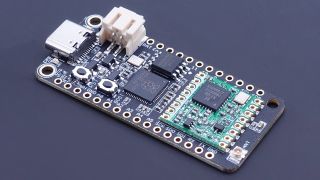
(Image credit: Invector Labs)
If the built-in Wi-Fi of the Challenger RP2040 board didn’t have the kind of range you were looking for in an IoT or home automation project, Invector Labs has you covered with its new LoRa model.

With a range of 15 miles, if you have line-of-sight, the RFM95W radio transceiver module from Hope RF gives it a touch more communication distance than Wi-Fi when in LoRa mode, which also gets you data transmission at 37.5kbps. It’s connected to the RP2040 SoC via the GPIO’s SPI channel, with an antenna connected by a U.FL connector. Should you wish to step up the power, bandwidth rises to 250kbps in FSK mode.
The new Challenger board, compatible with the Adafruit Feather format as well as CircuitPython and MicroPython, retains the RP2040 of the original Challenger, but loses Wi-Fi compatibility completely in favor of the longer-range system. The surprisingly long range comes from a combination of a high-sensitivity crystal and an integrated +20dBm power amplifier. As LoRa trades transmission speed for range, don’t expect to be getting the best bandwidth at the greatest distances. A typical LoRa device achieves up to three miles in urban areas, and up to 10 miles or more in rural areas with line of sight.
Also new since the Wi-Fi version a 2.0mm JST connector for rechargeable LiPo batteries, and an internal battery charger circuit that allows charging over USB. There’s a Type-C USB port for both power and communication needs, and the tiny board weighs just 0.009kg (0.317 ounces) and measures 5.07 x 2.28 x 0.72 cm (1.96 x 0.89in x 0.28 inches).
Programming the board is made possible via CircuitPython, MicroPython and an Arduino library developed by Earle F. Philhower.
LoRa is a proprietary data transmission protocol owned by Semtech which uses license-free sub-gigahertz radio frequency bands such as 865–867 MHz and 2.4GHz. Adafruit already has a board that uses it, the RFM95W, which has been used in projects such as model rocket telemetry.
The Challenger RP2040 LoRa is available from the Invector Labs Store, but was out of stock at the time of writing. Other versions of the board include one with LTE, and one with no wireless abilities, but retaining the LiPo battery charger circuit.
https://physics.aps.org/articles/v15/s23
Nanoscale Computer Operates at the Speed of Light
February 18, 2022• Physics 15, s23
Predictions indicate that a nanometer-sized wave-based computer could solve equations in a fraction of the time of their larger, electronic counterparts.

Booting up your laptop may seem like an instantaneous process, but in reality, it’s an intricate dance of signals being converted from analog wave forms to digital bytes to photons that deliver information to our retinas. For most computer uses, this conversion time has no impact. But for supercomputers crunching reams of data, it can create a serious, energy-consuming slowdown. Researchers are looking to solve this problem using analog, wave-based computers, which operate solely using light waves and can perform calculations faster and with less energy. Now, Heedong Goh and Andrea Alù from the Advanced Science Research Center at the City University of New York present the design for a nanosized wave-based computer that can solve mathematical problems, such as integro-differential equations, at the speed of light [1].
One route that researchers have taken to make wave-based analog computers is to design them into metamaterials, materials engineered to apply mathematical operations to incident light waves. Previous designs used large-area metamaterials—up to two square feet ( ∼0.2∼0.2 m2m2)—limiting their scalability. Goh and Alù have been able to scale down these structures to the nanoscale, a length scale suited for integration and scalability.
The duo’s proposed computer is made from silicon and is crafted in a complex geometrical nanoshape that is optimized for a given problem. Light is shone onto the computer, encoding the input, and the computer then encodes the solution to the problem onto the light it scatters. For example, the duo finds that a warped-trefoil structure can provide solutions to an integral equation known as the Fredholm equation.
Goh and Alù’s calculations indicate that their nanosized wave-based computers should be able to solve problems with near-zero processing delay and with negligible energy consumption.
–Sarah Wells
Sarah Wells is a freelance science journalist based in Boston.
References
- H. Goh and A. Alù, “Nonlocal scatterer for compact wave-based analog computing,” Phys. Rev. Lett. 128, 073201 (2022).
https://investorplace.com/hypergrowthinvesting/2022/02/machine-learning-breakthroughs-have-sparked-the-ai-revolution/
Machine Learning Breakthroughs Have Sparked the AI Revolution
With innumerable data and hyperefficient artificial intelligence, this takeover is coming at lightning speed
2d ago · By Luke Lango, InvestorPlace Senior Investment Analyst
It’s October 1950. Alan Turing — the generational genius who cracked the Enigma code and helped end World War II — has just introduced a novel concept.
It’s called the “Turing Test,” and it’s aimed at answering the fundamental question: Can machines think?
The world laughs. Machines — think for themselves? Not possible.
However, the Turing Test sets in motion decades of research into the emerging field of Artificial Intelligence (AI).
This is research conducted in some of the most prestigious labs in the world by some of the smartest people in the world, collectively working to create a new class of computers and machines that can, indeed, think for themselves.
Fast forward 70 years.
AI is everywhere.
It’s in your phones. What do you think powers Siri? How does a phone recognize your face?
It’s in your applications. How does Google Maps know directions and optimal routes? How does it make real-time changes based on traffic? And how does Spotify create hyper-personalized playlists for you or Netflix recommend movies?
AI is on your computers. How does Google suggest personalized search items for you? How do websites use chatbots that seem like real humans?
As it turns out, the world shouldn’t have laughed back in 1950.
The great Alan Turing ended up creating a robust foundation upon which seven decades of groundbreaking research has compounded. Ultimately, it resulted in self-thinking computers and machines not just being a “thing” — but being everything today.
Make no mistake. This decades-in-the-making “AI Revolution” is just getting started.
That’s because AI is mostly built on what industry insiders call “machine learning” (ML) and “natural language processing” (NLP) models. And these models are informed with data.
Accordingly, the more data they have, the better the models get — and the more capable the AI becomes.
Machine Learning Breakthroughs
When I say “identity,” what do you think of?
If you’re like me, you immediately start to think of what makes you, well, you — your height, eye color; what job you have, what car you drive, what shows you like to binge-watch.
In other words, the amount of data associated with each individual identity is both endless and unique.

Those attributes make identity data extremely valuable.
Up until recently, though, enterprises had no idea how to extract value from this robust dataset. That’s all changing right now.
Breakthroughs in artificial intelligence and machine-learning technology are enabling companies to turn identity data into more personalized, secure and streamlined user experiences for their customers, employees and partners.
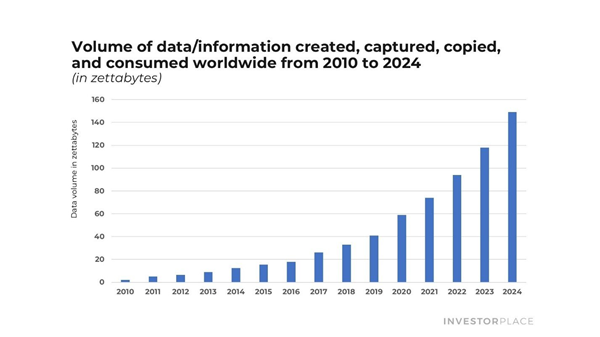
The volume and granularity of data is exploding right now, mostly because every object in the world is becoming a data-producing device.
Dumb phones have become smartphones and have started producing a ton of phone usage data.
Dumb cars have become smart cars and have started producing lots of in-car driving data.
And dumb apps have become smart apps and have started producing heaps of consumer preference data.
Dumb watches have become smartwatches and have started producing bunches of fitness and activity data.
The AI Revolution
As we’ve sprinted into the “Smart World” — where every object is a data-producing smart device — the amount of data that AI algorithms have access to has exploded at lightning speed, making them more capable than ever.
Why else has AI has started popping up everywhere in recent years? It’s because 90% of the world’s data was generated in the last two years alone.
More data, better ML and NLP models, smarter AI.
It’s that simple.
And guess what? The world isn’t going to take any steps back in terms of this “smart” pivot. No. We love our smartphones and smart cars and smartwatches far too much.
Instead, society is going to accelerate in this transition. Globally, the world produces about 2.5 exabytes of data per day. By 2025, that number is expected to rise to 463 exabytes.
A New Era of Machine Learning
Let’s go back to our process.
More data, better ML and NLP models, smarter AI.
Thus, as the volume of data produced daily soars more than 185X over the next five years, ML and NLP models will get 185X better (more or less), and AI machines will get 185X smarter (more or less).
Folks, the AI Revolution is just getting started.
As my friends in the machine learning and robotics fields like to remind me, most things a human does, a machine will be able to do better, faster and cheaper — if not now, then soon.
I’m inclined to believe them, given the advancements AI has made over the past few years with the help of data — and the exponential amount of it yet to come over the next few years.
Eventually — and inevitably — the world will be run by hyperefficient and hyperintelligent AI.
I’m not alone in thinking this. Gartner predicts that 69% of routine office work will be fully automated by 2024, while the World Economic Forum has said that robots will handle 52% of current work tasks by 2025.
The AI Revolution is coming — and it’s going to be the biggest revolution you’ve seen in your lifetime.
https://www.nytimes.com/wirecutter/blog/conquer-annoying-noises-to-sleep/
How to Conquer Annoying Noises So You Can Sleep
PUBLISHED FEBRUARY 18, 2022
Save
Is the relentless thump of a neighbor’s music driving you nuts? We’ve been there. Sound is probably the most frustrating thing that keeps people from getting good sleep because it’s often hard to control.
Fortunately, people don’t need total silence in order to sleep. The human brain just needs to feel safe, and a boring sound can help provide that sense, explains sleep specialist Rafael Pelayo, MD.
As a result, you may have more options for busting your bedtime-noise issues than you think. Here’s what to consider.
Fix the problem causing the noise
For creaky doors, unleash that WD-40. Tighten the screws in a squeaky bed frame. Call the super or a repairperson to silence that leaky faucet or loud radiator. Make an appointment with a doctor for your snoring partner.
Muffle the noise
If you can’t get rid of the source of the noise, and that noise is low-frequency (such as the deep drone of an air conditioner), a pair of noise-cancelling headphones may temper the sound. You have to sleep on your back, though. Otherwise, a pair of old-fashioned earplugs can help take the edge off any kind of noise, no matter its frequency.
Mask the noise
Is the noise too loud to muffle? Try to “blur” it away with another sound that has the same frequency but is more pleasant and calming: Try pink noise or ocean-wave sounds for the low-frequency buzzing of a generator, for instance, or white noise or a crackling-campfire sound for the higher-frequency taps of, say, an old radiator.
You can produce these calming sounds with a noise-generating machine—typically called a white-noise machine even though it generates a spectrum of colored or environmental sounds—or you can listen to them through a white-noise app or sleep headphones.

Did you know?
Human ancestors could sleep through loud but familiar noises, like chirping birds, but they would wake up at the sound of a potential predator.
This is why the click of a lock is more likely to disrupt sleep than the loud but constant whir of a fan, Pelayo says.
This article was edited by Alejandra Matos.
https://www.longevity.technology/crispr-rosetta-stone-of-immune-cell-function-revealed-by-scientists/
“Rosetta Stone” of immune cell function revealed by CRISPR scientists
February 15, 2022
Latest articles
Has evolution already found the key to human longevity?
Danny Sullivan – February 18, 2022
Could NMN supplements prevent cellular senescence?
Eleanor Garth – February 18, 2022
The state of longevity – why the antiaging space is more exciting than ever
Eleanor Garth – February 17, 2022
Research that aims to help aging brains stay lightning-fast
Eleanor Garth – February 17, 2022
Most read
New supplement slows aging and promotes weight loss
Eleanor Garth – October 7, 2021
An antiaging supplement that also reduces appetite?
Danny Sullivan – September 9, 2021
Has evolution already found the key to human longevity?
Danny Sullivan – February 18, 2022
Editor’s picks
Has evolution already found the key to human longevity?
Danny Sullivan – February 18, 2022
Could NMN supplements prevent cellular senescence?
Eleanor Garth – February 18, 2022
The state of longevity – why the antiaging space is more exciting than ever
Eleanor Garth – February 17, 2022
Click the globe for translations.
By adapting a variation of the CRISPR-Cas9 system, researchers are able to activate genes in human immune cells and study the consequences.
CRISPR genome editing has served as a powerful tool for deleting or altering DNA sequences and studying the resulting effect. A recent variation, known as CRISPRa, allows researchers to forcibly activate genes – rather than just edit them – in human cells. Now, researchers at Gladstone Institutes and UC San Francisco (UCSF) have adapted the CRISPRa system to human immune cells, creating a new tool that gives them a more thorough and rapid way to discover the genes that play a role in immune cell biology than previously possible.
Longevity.Technology: The study, published in the journal Science, is the first to successfully use CRISPRa at a large scale in primary human cells, which are cells isolated directly from a person. Findings from the new study should accelerate the design of improved CAR-T cell therapies and other treatments for cancer, infections and autoimmune diseases, as well as creating a platform that is scalable.
“This is an exciting breakthrough that will accelerate immunotherapy research,” says Alex Marson, MD, PhD, director of the Gladstone-UCSF Institute of Genomic Immunology and senior author of the new study. “These CRISPRa experiments create a Rosetta Stone for understanding which genes are important for every function of immune cells. In turn, this will give us new insight into how to genetically alter immune cells so they can become treatments for cancer and autoimmune diseases [1].”
The scientists activated each gene in the genome in different cells, which enabled them to test almost 20,000 genes in parallel. Because this method allowed the researchers to quickly discern the rules governing which genes provide the most powerful levers to reprogram cell functions, this could eventually lead to more powerful immunotherapies [2].
A new kind of CRISPR
The CRISPR-Cas9 genome-editing system typically relies on Cas9 proteins, often described as “molecular scissors,” to cut DNA at desired locations along the genome.
In recent years, Marson and his colleagues have used CRISPR’s targeted scissors to selectively remove (or “knock out”) genes from various types of human immune cells, including regulatory T cells and monocytes. Their results have begun to shine a light on how immune cells can be engineered to be more effective against infections, inflammation or cancer, but the researchers knew there was still a key part of the story missing.
READ MORE: Can CRISPR be used to diagnose aging?
“Knocking out genes is great for understanding the basics of how immune cells function, but a knock-out-only approach can miss pinpointing some really critical genes,” says Zachary Steinhart, PhD, a postdoctoral scholar in the Marson Lab and co-first author of the new paper [1].
For example, knocking out a gene does not tell you what would happen if you were to instead make the gene more active.
To investigate, the research team turned to CRISPR activation – or CRISPRa for short. In CRISPRa, the Cas9 protein is altered so that it can no longer cut DNA. Instead, scientists can attach an activator – a molecular “on” switch – to Cas9, so that when it binds to a gene, it activates it. Conversely, they can attach a repressor – an “off” switch – to Cas9 in order to turn genes off; this achieves a result similar to a typical knockout approach (called CRISPRi for CRISPR interference).
Mapping T cell genes
T cells, a type of white blood cell, are one of the key mediators of immunity in the human body; they not only target invading pathogens, but also direct other immune cells to increase or decrease their responses to intruders or cancer cells. This messaging is achieved through the production of signalling molecules known as cytokines. Different types of T cells produce different repertoires of cytokines, and different cytokines or cytokine cocktails have different effects on the immune response.
According to Marson, controlling T cell cytokines would offer new opportunities to reshape entire immune responses in a wide range of different disease contexts, but our ability to do this is hampered by an an incomplete understanding of exactly which genes control which cytokines.
In the new work, Marson, Steinhart and co-first author Ralf Schmidt, MD, worked with their colleagues to adapt CRISPRa and CRISPRi to work at high efficiency in primary T cells – something which has not been done before.
“This improved efficiency in delivering the CRISPRa or CRISPRi machinery into the cells was critical to enable genome-wide experiments and accelerate discoveries,” says Marson.
Next, the research team used these approaches to activate or inactivate nearly 20,000 genes in human T cells isolated directly from multiple healthy volunteers. The resulting cells were screened for changes to cytokine production and the researchers were able to home in on hundreds of genes that serve as key cytokine regulators, including some never before identified in knock-out screens.
READ MORE: Prime editing set to take slice from CRISPR
“Our work demonstrates the precision and scalability of this technology in human T cells,” says Schmidt. “And we quickly learned the rules of which genes you could turn on to dial the levels of certain cytokines [1].”
Better T cell therapies
To treat some cancer types, clinicians are increasingly using CAR-T cell therapy, in which T cells are removed from a patient’s body, engineered in a lab to target cancer cells, and then reinfused. Boosting the ability of T cells to fight cancer – by altering their cytokine production, for instance – could make CAR-T cell therapy even more powerful.
“Our new data give us this incredibly rich instruction manual for T cells,” says Marson. “Now we have a basic molecular language we can use to engineer a T cell to have very precise properties [1].”
Marson’s lab is now studying some of the individual genes identified in their screen, as well as working to further leverage CRISPRa and CRISPRi to discover genes that control other critical traits in human immune cells.
“Working with the Gladstone-UCSF Institute of Genomic Immunology, the Innovative Genomics Institute, and the UCSF Living Therapeutics Initiative, our team now hopes to use our new instruction manual to create synthetic gene programs that can be CRISPR-engineered into the next generation cellular immunotherapies to treat a wide-range of diseases,” says Marson [1].
[1] https://gladstone.org/news/scientists-reveal-rosetta-stone-immune-cell-function
[2] https://www.science.org/doi/10.1126/science.abj4008
 Bruce's Blog