The Raspberry Pi community discovers some fascinating hacks. One useful hack was recently shared by a Jeff Geerling, a Raspberry Pi aficionado we’ve had the pleasure of featuring in the past and have interviewed on our weekly Pi Cast show. This week, the maker shared an awesome breakdown of how to enable TRIM on an external USB SSD using a Raspberry Pi.
What Is TRIM?
Let’s get this out of the way for anyone new to using TRIM. In short, TRIM is an ATA interface command that tells an SSD which parts of the drive are no longer being used.
When the machine idles, Active Garbage Collection will delete all of the data that’s no longer in use, which is marked by the TRIM command. What Geerling has done is find a way to enable TRIM on a given SSD using a Raspberry Pi.
Enabling TRIM on an SSD Using Raspberry Pi
According to Geerling, the process for enabling TRIM within Linux is not straightforward.
“While internal microSD cards seem to support TRIM out of the box, none of the external USB drives I tested supported it out of the box. They all needed a little help,” Geerling wrote.
You will need to verify TRIM is even supported on the drive before you can proceed. Geerling recommends using root access to complete the process.
If your device supports TRIM, you can follow the steps in Geerling’s instructional guide to enable TRIM. If everything works without error, you may have to wait several seconds, depending on the size of your drive, while the operation runs.
There are additional steps you need to take in order to save the changes, otherwise, they will completely reset when you restart the Pi. You can also enable automatic trimming, so the process takes care of itself.
If you want to read more about how to enable TRIM with a Raspberry Pi, check out the full post on Geerling’s website and be sure to follow him for more cool Pi developments.
A joint study by researchers from the Chinese University of Hong Kong (CU Medicine), Hong Kong Polytechnic University (PolyU), and Western Sydney University have uncovered the complex workings of the human nervous system which control our ability to run.
Researchers recruited multiple groups of healthy volunteers—ranging from pre-school age children and physically inactive adults, to experienced marathon runners—to study how the nervous system controls running at different ages and training stages.
As each participant took part in a range of running exercises, either over-ground or on a treadmill. The electrical activities from multiple muscles, as well as the force that the body exerted onto the ground, were recorded.
After data collection, the team used a sophisticated machine learning algorithm to identify fixed co-activation patterns of multiple muscles—known as muscle synergies—that are embedded within the muscle data.
The results, which are published in the journal Nature Communications, indicate that the human nervous system is equipped with a mechanism that can flexibly adjust the motor commands for running, depending on the state of the body and the person’s prior running experience.
Professor Vincent Chi Kwan Cheung, the lead author of the study from the School of Biomedical Sciences at CU Medicine, said as muscle activities originate from the brain and spinal cord, muscle synergy offers a glimpse at how the human nervous system generates motion.
“Muscle synergies are believed to be the neural building blocks of movement, functioning like basic alphabets that can be flexibly recombined by the nervous system to result in diverse behaviors,” said Professor Vincent Chi Kwan Cheung.
“Our goal here is to analyze how these building blocks for running themselves may change across age and training groups.”
Associate Professor Chao-ying Chen, a pediatric physical therapist from the Department of Rehabilitation Sciences at PolyU, explained the important considerations for children, who have body-builds that are very different from those of adults, with muscles of weaker strengths and less-developed postural balance.
“The research team discovered that some of the preschoolers’ synergies may gradually reorganize themselves by fractionating into synergies comprising fewer muscles over the years of development,” said Associate Professor Chen.
“From the biomechanical perspective, the preschoolers’ synergies appear to be well suited for running with their less-mature body-builds.”
For adult runners, training may also lead to reorganization of muscle synergies. The research team found that months to years of training may induce merging of specific pre-training muscle synergies into units that comprise more muscles.
Remarkably, among the adults, the presences of specific synergy merging patterns are associated with either enhanced or reduced running energetic efficiency.
Professor Roy Tsz Hei Cheung, from the School of Health Sciences at Western Sydney University—who began contributing to this work when he was Associate Professor from the Department of Rehabilitation Sciences at PolyU—said it is notable that some experienced runners with unexpectedly low efficiency actually ran with the efficiency-reducing merging patterns.
“Our analysis is perhaps uncovering some muscle patterns that these runners inadvertently acquired over their training, though they would have to eventually learn to suppress these patterns before they could be the true elites,” said Professor Roy Tsz Hei Cheung.
Dr. Ben Man Fei Cheung, who collected and analyzed most of these data with the team when he was an MBChB student at CU Medicine, said the study’s findings may allow future researchers to design running training programs or devices that facilitate the learning of these efficiency-enhancing merging patterns, thus helping runners to run for longer with more ease.
“If you are training for your next marathon, you are not just training your cardiovascular fitness, but also your brain,” Dr. Ben Man Fei Cheung.
Just like with most things, the value of sleep is most appreciated when we miss it. Sadly, this happens way too often, with around 30 to 40% of people experiencing sleep problems and a whopping 70 million Americans and 45 million Europeans suffering from chronic sleep deprivation.
Although there are always unavoidable circumstances that reduce our sleep, the numbers show that we often misunderstand the potential benefits sleep has on our lives, including our careers. More worryingly, there appears to be a general lack of awareness around the negative impact sleep deficit has on our physical and mental health. The fact that so many of us — along with our peers, coworkers, and friends — still take pride in losing sleep to do more work (as if it makes us superstar students or employees) is a clear example of this.
But when we choose work over sleep, what we are really doing is choosing quantity over quality. If you want to be the best version of yourself — at work, at school, and at home — it would be wise to take advantage of what a good night’s rest can offer: sharper focus, higher alertness, better endurance, and a more positive mood and mindset.
I’m sure you’ve heard this advice before. But the best way to understand the value of sleep is to digest some recent lessons from neuroscience — a field that has devoted a great deal of time to researching how sleep affects your brain, and what happens to your brain when you don’t get the sleep you need.
Your Brain Without (Enough) Sleep
Before we get into the specifics, let’s start with a quick overview of what your brain is actually doing while you snooze: Multiple studies show that your brain remains active and “online” while the rest of your body goes on standby. Your brain is a bit like your smartphone: You may not be looking at it during the night, but that doesn’t mean that it’s idle.
During sleep, your brain’s main function is to eliminate what scientists often call mental wastage — toxins that build up between your neurons throughout the day and that can impair your normal cognitive functioning in both the short and long term. Your brain does this in order to make room for more important and fresh learning experiences. Think of it like “auto-delete” on your laptop, permanently eliminating the stuff in your recycle bin to free up space and ensure faster processing speed.
This waste elimination is key to supporting your core learning and memory functions, as well as regulating your mood, emotions, and sexual appetite. In other words, sleeping is the human equivalent of refueling a gas tank. The idea that sleeping less to work more will somehow make you more productive is as logical as the notion that not stopping for gas will help you arrive at your destination faster. (So, not very logical.)
Here’s what can happen to your mind, your body, and your work when you miss out on too much sleep:
You forget how to do simple things. A single night of sleep deprivation is enough to disrupt the normal functioning of your hippocampus, the area of the brain that is central to memory and learning. The hippocampus plays a key role in helping you retain information in both the short and long term. It also determines how well you are able to navigate directions and move through space (which is why a famous study of the brains of London taxi drivers found that their hippocampus is larger than normal).
When you don’t get enough sleep, you might find that you are more prone to forgetting things, have difficulties concentrating, retaining numbers, or encoding facts. All these problems will have a serious impact on your job performance, unless you are on autopilot, doing repetitive or routine-like work. But even when you’re doing relatively easy tasks, you may notice a drop in your performance. This is why sleep deprivation may feel a lot like a hangover: It makes focusing painful, and you may need to focus much more on tasks that came naturally to you before.
Your long-term memory suffers. As noted above, sleep gives your brain time to get rid of metabolic waste, including proteins that can build up and form plaque between your brain cells. Over the short term, poor sleep has been associated with a lower IQ, and over the long term it has been associated with Alzheimer’s disease.
A review of 86 scientific studies found that people who tend to sleep longer are more agile, efficient learners, and they have a greater ability to keep their minds engaged, explaining why people who get more sleep are more likely to have a slower mental decline while aging. Better sleep hygiene contributes to better academic and job performance, as well as higher intellectual development. The more complex your job, the more you will have to learn, reason, and solve new problems — meaning that you will need more and better sleep.
You’re more prone to aggression and anxiety. Sleep triggers a chemical reaction in your brain that is essential for mood and emotional regulation. The main brain hormone involved in this reaction is called melatonin. Your body tends to produce more melatonin during the evenings to make you sleepy, and less during the mornings to wake you up. Melatonin has also been linked to mood alterations. This often happens when your body releases the hormone, signaling that it is time to sleep, but you ignore it and stay awake.
When a lack of sleep makes you feel grumpy, cranky, or irritable, as those around you are likely to notice, it’s because melatonin is affecting the amygdala area of your brain. You can think of the amygdala as an emotional radar that determines whether you are having a positive experience (“I feel safe”) or a negative one (“I feel angry or scared”). Your anxiety, aggression, and impulsive decision-making are all fueled by activity in your amygdala. Any changes that impact this area of your brain overnight will carry over to the next morning and affect your behavior, including your capacity to be patient with others and empathize.
Negative emotions, like fear and anxiety, can also show up during your sleep in the form of frightening or disturbing dreams. And because you are more likely to be irritable and annoyed when you lack sleep, you may end up trapped in a vicious cycle whereby bad sleep destabilizes your mood, which then disrupts your sleep in form of nightmares. All this to say, if you want to be a kind and caring coworker, partner, or friend, you should really get more sleep.
You put your relationships at risk. Sleep deficit may harm your romantic or personal relationships. Most adults sleep in the same bedroom as the person they live or co-habit with. When the above factors are at play, they will not just impact your own life and career, but also your partner’s. Unsurprisingly, there is a reciprocal effect between sleep and relationship quality: Being in a happy relationship will make you sleep better, and sleeping better will make your relationship better, too.
Even with all the research at our fingertips, I’m sure you will continue to hear your friends and colleagues boasting about how little they sleep, as if that makes them more productive or successful. When this happens, remember that science says the opposite: The more time and uninterrupted freedom you give to your brain, the sharper, happier, and healthier you’ll be when you are awake.
Elon Musk’s brain-computer interface company Neuralink delivered a progress update last month—and it included several pigs.
At first glance, monkeys may seem like a better option for animal testing in neuroscience, but pigs are a more cost-effective alternative.
Musk has said in the past that Neuralink has conducted testing on monkeys.
Elon Musk‘s brain implant startup, Neuralink, aims to treat diseases—everything from blindness to strokes to depression—from the inside. “The neurons are like wiring,” Musk said in a livestream briefing late last month. “And you need an electronic thing to solve an electronic problem.”
But you also need a living creature to test out the technology. And in this case, Neuralink is using pigs. Lots and lots of pigs.
In a demo that Musk called “The Three Little Pigs,” he proved his team successfully embedded the Neuralink implant into swine brains, and the device seemed to be working.This content is imported from YouTube. You may be able to find the same content in another format, or you may be able to find more information, at their web site.https://www.youtube.com/embed/DVvmgjBL74w?start=0&enablejsapi=1&origin=https://www.popularmechanics.comADVERTISEMENT – CONTINUE READING BELOW
Still, at a time when U.S. scientists are using a record number of monkeys in their research—about 76,000 nonhuman primates in 2017—why has Neuralink opted to use pigs for its brain implant research, rather than primates, which are more closely related to humans?
Neuralink didn’t return a request for comment, but we can extrapolate why the company may have opted to use pigs over monkeys: When it comes to research animals, monkeys aren’t just more expensive to use compared to pigs, but they’re also more likely to lead to an ethics lawsuit. And regardless of the animals used in testing, there are limits to what scientists may deduce from those trials.
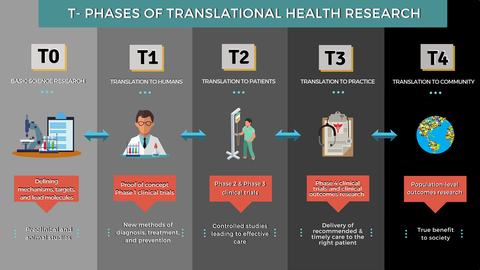
Translational Research Models
VANDERBILT INSTITUTE FOR CLINICAL AND TRANSLATIONAL RESEARCH
Animal models go back so far that scientists based the very first anatomy textbooks on pigs and apes instead of human cadavers. That makes sense, considering humans and pigs have some pretty striking similarities. A pig weighs about 60 kilograms (132 pounds) and has a similar anatomy to a human, including its fat distribution, organ placement, and even hair coverage on the skin, according to the Australian Academy of Science.
“For this reason, pigs have been used in medical research for over 30 years, and are what’s known as a translational research model,” the Academy says. “This means that if something works in a pig, it has a higher possibility of working in a human.”YOU’LL LOVE THISThese Tiny Organs Could Finally End Animal Testing
You can think of translational research models as a way to bridge the gap between the worlds of basic biomedical research and actual clinical practice. Animal testing largely occurs in the first stage of translational research, known as the T1 stage in research literature, according to a 2013 article published in the journal Missouri Medicine. Here, animal models, cell cultures, and molecular studies can be “used and forwarded for application in human clinical trials.”
Much of today’s emphasis on animal models is in disease research. For example, researchers can transplant human cancer tissue into immunosuppressed mice in a process known as xenografting. That way, scientists can study cancer development in vivo.
But the use of larger animals in neuroscience-related testing has only recently become quite popular, according to a July 2019 review article published in the journal Frontiers in Physiology. “While pigs have been used for various biomedical applications and research, it has only been recently that they have been used to study neurodegenerative diseases due to their neuroanatomically similar gyrencephalic brains and similar neurophysiological processes as seen in humans,” the authors say.This content is imported from {embed-name}. You may be able to find the same content in another format, or you may be able to find more information, at their web site.
Pigs could be extremely valuable in research relating to traumatic brain injuries and Alzheimer’s Disease, according to the authors, but they need to conduct further research to determine if pigs are the best choice for the work.
That’s partly for the simple reason that mice make for far cheaper test subjects; pigs need larger, specialized housing and trained experts to keep them healthy and comfortable during testing. But it’s also because different species of pigs exhibit different behaviors, according to the article—just like humans.
Three Little Pigs
Neuralink’s demo included three pigs: Joyce, a pig with no implant; Gertrude, a pig with a Neuralink implant currently in her brain; and Dorothy, a pig that had an implant in her brain until researchers removed it. Musk also showed the audience a few pigs that had multiple Neuralink implants put into their brains at once.
When Musk finally introduced Gertrude—after much coaxing from her handlers—her real-time brain activity was displayed on screen for the audience. In the video, you can hear a series of beeps, which Musk said were coming from the neural spikes in Gertrude’s brain when she sniffed her surroundings with her snout.
Dorothy’s brain, meanwhile, is important to study because it shows the implant can be embedded into the brain, and later removed, to ensure you’re “healthy and happy afterwards,” Musk said. In the case of humans, he explained, a person might decide they either no longer want the chip in their head, or that they want an upgrade, so it’s vital to demonstrate reversibility is possible.
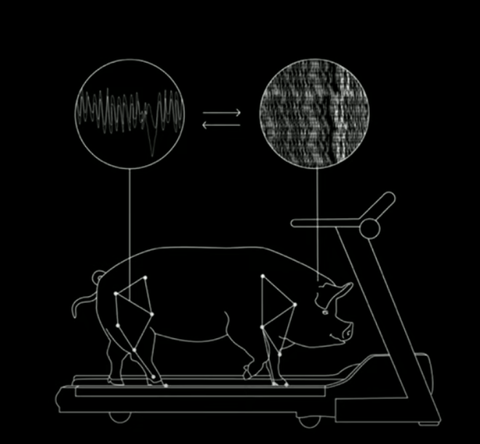
In testing out the pigs’ Neuralinks, the team put the pigs onto treadmills to observe their walking. With the implant, the scientists could compare their estimates for exactly how the pigs’ limbs would align while walking, against the actual positioning of their legs.
To write new information to the pigs’ brains, the scientists found different portions of the brain might require different levels of electrical stimulation: some areas need more, while some need a gentler current to avoid any long-term damage.
Musk said Neuralink is making leaps and bounds toward clinical trials; the company has recently received a “breakthrough device” designation from the U.S. Food and Drug Administration. “We’ll make this as safe as possible,” Musk said.
It looks like Neuralink takes pretty good care of the test subjects on campus. In a video, Neuralink employees describe their relationships with the pigs. Ankita Urala, one of the engineers creating the implant, says she’s constantly thinking about the fact that her invention will end up inside “Barbara” and “Cleo,” two of the pigs. Autumn Sorells, the lead behaviorist, says her job is to come up with training plans that ensure the animals are comfortable and treated well.This content is imported from YouTube. You may be able to find the same content in another format, or you may be able to find more information, at their web site.https://www.youtube.com/embed/gMCkMHbpPFA?start=0&enablejsapi=1&origin=https://www.popularmechanics.com
Still, that doesn’t mean everyone is thrilled—certainly not People for the Ethical Treatment of Animals, the nonprofit better known as PETA. President Ingrid Newkirk has quite the alternative suggestion for Elon Musk and his animal testing: “behave like a pioneer and implant the Neuralink chip in his own brain.”
Low-dose electrical stimulation helps adults with dyslexia read, study finds
ByBrian P. Dunleavy (0)A non-invasive procedure that delivers low-dose electricity to the brain over a period of 20 minutes was shown in a small study to improve dyslexia. File photo by Valkr/Shutterstock
Sept. 8 (UPI) — Electrical stimulation of the brain improves reading accuracy in adults with dyslexia, according to a study published Tuesday by PLOS Biology.
Transcranial alternating current stimulation, a non-invasive procedure that delivers low-dose electricity to the brain over a period of 20 minutes, was found to improve phonological processing — or ability to discern how words sound or are pronounced — and reading accuracy in 15 adults with dyslexia, the researchers said.
The beneficial effect on phonological processing was most pronounced in those individuals who had poor reading skills, while a slightly disruptive effect was observed in very good readers, they said.
Dyslexia, known commonly as a reading disorder, affects up to 10% of the population, and is characterized by lifelong difficulties with written material,” according to the researchers, who are from the University of Geneva in Switzerland.RELATED Gene linked to dyslexia associated with lower concussion risk
Although several possible causes have been proposed for dyslexia, the predominant one is a phonological deficit, or a difficulty in processing word sounds, the researchers said.
The phonological deficit in dyslexia is associated with changes in rhythmic or repetitive patterns of electrical activity in the brain, specifically “low-gamma” oscillations, measuring at 30 hertz or volts, in the left auditory cortex, they said.
For this study, the researchers applied transcranial alternating current stimulation over the left auditory cortex in 15 adults with dyslexia and 15 fluent readers for 20 minutes.
At a dose of 30 hertz or volts, the approach resulted in significant improvement in reading accuracy in those with dyslexia, the researchers said.
The results demonstrate for the first time that low-gamma oscillatory activity causes deficits in phonemic processing and may pave the way to non-invasive treatments aimed at normalizing oscillatory function in auditory cortex in people with dyslexia, the researchers said.
They plan “to investigate whether normalizing oscillatory function in very young children could have a long-lasting effect on the organization of the reading system [and] explore even less invasive means of correcting oscillatory activity,” study co-author Silvia Marchesotti, a post-doctural researcher at the University of Geneva, said in a press release.
This five-star app allows users to dream big with a better night’s sleep
RESTFLIX
MarketWatch has highlighted these products and services because we think readers will find them useful. This content is independent of the MarketWatch newsroom and we may receive a commission if you buy products through links in this article.
A good night’s sleep is essential to our health, but most Americans aren’t getting enough of it. According to the CDC, 70 percent of adults report that they get insufficient sleep at least one night a month, and 11 percent report insufficient sleep every night. The CDC has termed insufficient sleep “a public health epidemic“, but for a variety of reasons, the pervasive problem persists in millions of American households every single night.
Whether it’s insomnia, a heavy workload or the nightly distraction of social media, there are a million things keeping Americans up at night — but there’s a convenient new streaming service that plans to soothe those sleepless nights. Restflix is an innovative streaming service designed to help users fall asleep faster and get better rest than ever before. With extensive discounts on one-year, two-year, and three-year subscriptions, Restflix memberships are available for $29.99, $49.99 and $59.99. https://www.youtube.com/embed/19ZlTF-X3pQ?hd=1&rel=0&autohide=1&showinfo=0
Restflix utilizes the proven power of binaural beats, a rhythmic phenomenon created by overlapping frequencies that the brain finds pleasant and relaxing. It offers more than 20 personalized channels featuring meditative music, bedtime stories, and calming videos, all designed to ease users into a gentle night’s sleep. In addition to the enchanting rhythm of serene binaural beats, Restflix offers peaceful visuals and sounds created by nature, which many people tend to find relaxing as they fall asleep. While Restflix is designed to develop better sleep habits, the content can also be a great tool for meditation and mental healing.
Better sleep may actually be within reach with Restflix, an app that has earned its five-star reviews based on quality, effectiveness and tranquility. At least try to conquer whatever’s keeping you up at night with a limited-time discount on one, two or three years of Restflix, and start getting hundreds of days of good sleep instead of wistfully hoping for one.
In this paper, we present the first realisation and experimentation of a new eye tracking system using an infrared (iR) laser pointer embedded into a wireless smart contact lens. We denote this contact lens prototype as the cyclops lens, in reference to the famous hero of the X-Men comics. The full eye tracker device combines the smart contact lens and its eyewear, which provides a primary source of energy and the beam detection system. We detail the assembling and encapsulation process of the main functionalities into the contact lens and present how a gaze tracking system is achieved, compared to existing conventional eye-tracking ones. Finally, we discuss future technical improvements.
Introduction
Knowing and analysing the gaze direction has become a key operation when using, for instance, augmented or virtual reality display systems for which it is useful to assess the attentional or cognitive load or to validate an operation by designating it by gaze1,2,3. Although a wide range of eye tracking techniques exist, these techniques are not always best suited to be used with an AR/VR headset. For instance, electro-oculography4 has limited accuracy, scleral-coils5 are uncomfortable requiring the eye to be anesthetized. Standard video-based techniques3 require a clear view of the eyes (e.g., glasses are an issue), small yet high aperture cameras and relatively high computing power, to provide a sufficiently high accuracy. As a result, the issue of integrating a performing eye tracker into an AR/VR headset is still an active research topic6,7.
In parallel, encapsulation of functions in a wireless contact lens has been made possible thanks to recent advances in technologies for manufacturing micro-scale optoelectronic components, as well as methods for assembling them onto separately-formed substrates8,9. As a result, a variety of electronic contact lenses have been proposed in the last two decades. Due to the nature of the lens, the applications concern mainly wearable smart sensors for health diagnostics10,11, the correction of vision or refractive errors12, gaze tracking13 or displays14,15,16,17. Some wireless contact lenses have been tested on persons (e.g. studies carried out at Moorfields Eye Hospital in London18) and have been commercialized in medical products (e.g., Sensimed19). However, their overall functions were relatively specific (e.g., intraocular pressure gauge (IOP) or glucose monitoring) they operated as interrogators and did not implement complex cognitive tasks. In this context, including a laser pointer directly on the eye could provide a potentially simpler and more compact solution to measure eye gaze compared to available technologies based mostly on image processing20,21. It would also allow demonstrating the use of an electronic contact lens as component of a more complex system (eye tracking).
The operating principle of the eye tracking system is described below. The idea to use a marker into a contact lens is not new22 and neither the integration of a light source into a contact lens. The integration of a micro-LED has already been demonstrated for other applications [e.g.23]. We propose here to use a vertical cavity surface emitting laser (VCSEL) because of the good ratio between the laser power and the power supplied as well as the very low divergence (few tens of mrad without any additional optics) which allows for a high quality beam spot (necessary here to get a good detection accuracy). Our goal was here to scale all the elements to design and realize a complete eye tracking system, showing how the spot emitted by a laser pointer can be detected correctly by the sensor (independently from the eye rotation) with a good accuracy, for a given distance between the eye and the eyewear, and in compliance with the security standards (optical and RF).
Eyetracking operating principle
The idea here consists in encapsulating a laser pointer or a light emitting source24 into a contact lens to materialize the direction of gaze, therefore strongly simplifying its calculation. Most commercial eye trackers rely on imaging the eyes. This involves illuminating the eyes with IR light sources, recording several MB of information/s with fast cameras and processing this information to extract, from the pupil and corneal reflection position, the gaze direction at high frequencies. As stated previously, a number of factors such as iris pigmentation, wearing spectacles, sunlight can reduce such eye tracker performance. Other approaches such as electrooculography or lenses with magnetic coils exist but their implementation makes them suitable only for research or clinical studies25. Indeed, these two techniques, as the cyclops lens, require some preparation (fitting the lens, the electrodes or the coils) and are more invasive than the video based eye trackers. When compared to the scleral coil approach, the main advantage of the cyclops lens is that there are no external parts. All the electronics is embedded within the lens. Electrooculography can be useful in some context (e.g. when the eyes are closed) but offer limited resolution3 (~ 2°) and are sensitive to various factors (facial muscle activity, electrical interferences, etc.) that limit its use.
In our system, detecting the laser beam direction will directly provide the gaze direction. This can be achieved in different ways. A solution consists in using a 2D planar detector26 such as a position sensitive detector (PSD). In this case, the remote control system is replaced by the eye, provided that a collimated laser with a sufficient light power to be detected by the PSD is used, in case this one is far from the lens.
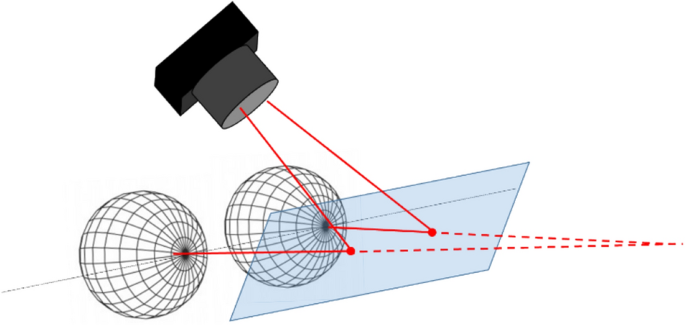
Using a PSD enables, in a simple way, to detect several spots together (in contrast to complex image processing) so, that for each eye equipped with a laser pointer contact lens, it becomes possible to extract the vergence angle and then to deduce the sight direction knowing the eye’s position. Transparent PSD (transparent for the eye while sensitive (absorbent) for the laser beam; the wavelength being chosen in any case out of the visible range) could be manufactured, at the cost of a more complex optimisation of the substrate27. A simple alternative to a transparent PSD consists in using a beam splitter (BS) as shown in Fig. 1 together with an IR camera. This beam splitter is coated to reflect the IR beams generated by the two laser spots while being transparent for the eyes and coated to avoid unwanted reflections. Furthermore, it enables to materialize the beams (since it intercepts it, cf. Fig. 1 so that a single IR camera can be used to detect the spot motions on the BS surface. We use an IR camera (ELP Full HD 1920 × 1080 p) for our demonstration. In this case, a very elementary software can be developed either to detect the direction of sight or to track the eye trajectories.
Figure 1
In the following section, we present how to make the Cyclops lens and how the energy transfer towards the laser pointers is performed to obtain a very compact prototype.
Now that summer vacation is winding down, it’s a good time to start developing a nightly routine so you can wake up fresh and well-rested for class, the remote office, or the to-be-named hot dog start-up you’ve recently created with your BFF.
No matter the particulars of your nightly wind-down routine, simply having one is a great start and will signal to your brain that it is officially “sleepy time.” Here are seven healthy nighttime habits to include to help you reset before the back-to-school/work season.
Set a time before bed when devices are banned from sight and use. Everyone has heard that bright screens from our tablets, phones, and laptops simulate daylight and keep your brain active, but it’s also hard to turn them off and wind down when every app is designed to keep you online.
Only the superhuman can sleep with the sound of work emails pinging their inbox. Just put the phone on Do Not Disturb and walk away. Start with no devices for an hour before bed if you can.
Dim the lights
Bright lights are for waking hours, so when you put your screens to bed, also take a look around your space and turn off unnecessary lighting. Cozy bedside lamps? Good. Illuminating overhead lighting that could outshine the sun? Not so good. Scented candles are a great two-birds-with-one-stone option and can relax you further with soothing scents like lavender or bergamot.
Creating a sustainable nighttime routine isn’t about adding a ton of steps to your evenings — it’s about adding smarter steps to improve your mental and physical health.
Case in point? The Philips Sonicare DiamondClean Smart toothbrush. This little wonder has smart sensors that track in-mouth location, scrubbing, and pressure usage. These sensors, combined with the personalized 3D mouth map, not only help track your brushing habits, but can also help you improve target areas through the Philips Sonicare App.
This toothbrush even has a personalized guidance setting that tracks which spots you’ve missed and takes you back to them for 100% coverage. With four modes — Clean for daily cleaning; Gum Health for a gentle clean along the gum line; White+ to remove stains; and Deep Clean for an invigorating deep clean — it will give you that dentist-clean feel from the comfort of home. Plus, the DiamondClean Smart toothbrush removes up to 10 times more plaque than a manual toothbrush.
Brushing your teeth is also a good way to curb cravings for sugary snacks pre-bedtime that will keep you up and fiending for just one more bowl of cereal.
Yin for the win
Generally, exercise should be limited to at least three hours before bed, but Yin yoga is far from vigorous. It’s resting in relaxing or light stretch positions for long periods of time. Like, very long. One pose could be 10 to 20 minutes. Sometimes you rest your head on an actual pillow.
Not all Yin is the same. Some sessions are long classes, others are shorter 10-minute pre-bedtime routines, but the name of the game is chilling and deep breathing. This is going to slow your heart rate, relax you, and get you ready for bed.
People often recommend a hot bath before bed for those who are having trouble sleeping because of the temperature change from the hot water to a cold sleeping environment. This drop in body temperature is another way to signal that it’s time for bed.
However, not everyone always has time for a bath (or likes baths), so sipping some hot (caffeine-free) tea, like peppermint or chamomile, can both soothe you and simulate the same effect.
Put pen to paper
There’s no need to go full journal sesh before bed. But if you’re stressed or anxious, sometimes capturing your thoughts and putting them in writing, like in a to-do list, can help quiet the mind. That way, they’re recorded and your brain doesn’t have to obsess or worry about forgetting things.
Giving yourself a story to look forward to can be a positive reinforcement for sticking to your nightly routine. Reading from a book or e-reader (these are not back-lit and therefore do not count as lava) can tucker the eyes out quickly, but listening to Stephen Fry read chapters of a Harry Potter audio book can also do the trick. (Bonus: wizard dreams).
Pick and choose which options appeal to you, invest in your nightly routine, and stick to it. The more you do, the easier it will be to get to sleep, enjoy quality sleep when you do, and wake up ready for a new day of video meetings and side hustles.
Neuralink: brain hacking is exceptionally hard, no matter what Elon Musk says
September 9, 2020 9.27am EDT
Author
Andrew JacksonProfessor of Neural Interfaces, Newcastle University
Disclosure statement
Andrew Jackson receives funding from the Wellcome Trust, the Medical Research Council and the Engineering and Physical Sciences Research Council.
If thoughts, feelings and other mental activities are nothing more than electrochemical signals flowing around a vast network of brain cells, will connecting these signals with digital electronics allow us to enhance the abilities of our brains?
That’s what tech entrepreneur Elon Musk suggested in a recent presentation of the Neuralink device, an innovative brain-machine interface implanted in a pig called Gertrude. But how feasible is his vision? When I raised some brief reservations about the science, Musk dismissed them in a tweet saying: “It is unfortunately common for many in academia to overweight the value of ideas and underweight bringing them to fruition. The idea of going to the moon is trivial, but going to the moon is hard.”
Brain-machine interfaces use electrodes to translate neuronal information into commands capable of controlling external systems such as a computer or robotic arm. I understand the work involved in building one. In 2005, I helped develop Neurochips, which recorded brain signals, known as action potentials, from single cells for days at a time and could even send electrical pulses back into the skull of an animal. We were using them to create artificial connections between brain areas and produce lasting changes in brain networks.
Unique brains
Neuroscientists have, in fact, been listening to brain cells in awake animals since the 1950s. At the turn of the 21st century, brain signals from monkeys were used to control an artificial arm. And in 2006, the BrainGate team began implanting arrays of 100 electrodes in the brains of paralysed people, enabling basic control of computer cursors and assistive devices.
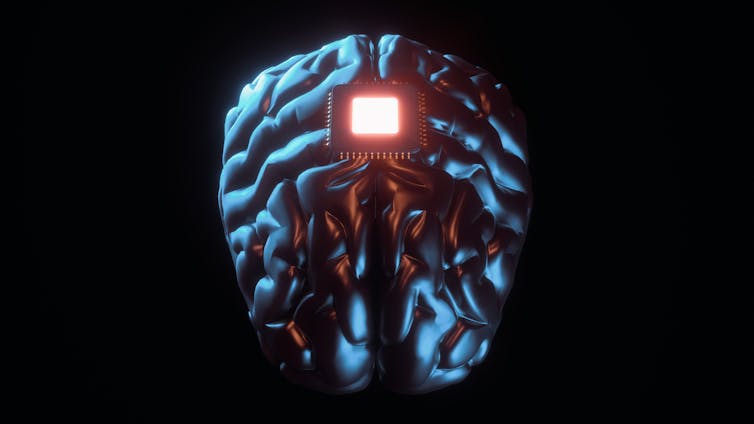
I say this not to diminish the progress made by the Neuralink team. They have built a device to relay signals wirelessly from 1,024 electrodes implanted into Gertrude’s brain by a sophisticated robot. The team is making rapid progress towards a human trial, and I believe their work could improve the performance of brain-controlled devices for people living with disabilities.
But Musk has more ambitious goals, hoping to read and write thoughts and memories, enable telepathic communication and ultimately merge human and artificial intelligence (AI). This is certainly not “trivial”, and I don’t think the barriers can be overcome by technology alone.
Today, most brain-machine interfaces use an approach called “biomimetic” decoding. First, brain activity is recorded while the user imagines various actions such as moving their arm left or right. Once we know which brain cells prefer different directions, we can “decode” subsequent movements by tallying their action potentials like votes.
This approach works adequately for simple movements, but can it ever generalise to more complex mental processes? Even if Neuralink could sample enough of the 100 billion cells in my brain, how many different thoughts would I first have to think to calibrate a useful mind-reading device, and how long would that take? Does my brain activity even sound the same each time I think the same thought? And when I think of, say, going to the Moon, does my brain sound anything like Musk’s?
Some researchers hope that AI can sidestep these problems, in the same way it has helped computers to understand speech. Perhaps given enough data, AI could learn to understand the signals from anyone’s brain. However, unlike thoughts, language evolved for communication with others, so different speakers share common rules such as grammar and syntax.
While the large-scale anatomy of different brains is similar, at the level of individual brain cells, we are all unique. Recently, neuroscientists have started exploring intermediate scales, searching for structure in the activity patterns of large groups of cells. Perhaps, in future, we will uncover a set of universal rules for thought processes that will simplify the task of mind reading. But the state of our current understanding offers no guarantees.
Alternatively, we might exploit the brain’s own intelligence. Perhaps we should think of brain-machine interfaces as tools that we have to master, like learning to drive a car. When people are shown a real-time display of the signal from individual cells in their own brain, they can often learn to increase or decrease that activity through a process called neurofeedback.
Maybe when using the Neuralink, people might be able to learn how to activate their brain cells in the right way to control the interface. However, recent research suggests that the brain may not be as flexible as we once thought and, so far, neurofeedback subjects struggle to produce complex patterns of brain activity that differ from those occurring naturally.
When it comes to influencing, rather than reading, the brain, the challenges are greater still. Electrical stimulation activates many cells around each electrode, as was nicely shown in the Neuralink presentation. But cells with different roles are mixed together, so it is hard to produce a meaningful experience. Stimulating visual areas of the brain may allow blind people to perceive flashes of light, but we are still far from reproducing even simple visual scenes. Optogenetics, which uses light to activate genetically modified brain cells, can be more selective but has yet to be attempted in the human brain.
Sleep-deprived teens need a later school start time
Dr. Reut Gruber is the director of the Attention Behaviour and Sleep Lab at the Douglas Mental Health University Institute and an associateprofessor of psychiatry at McGill’s Faculty of Medicine.
As we look for ways to reduce the number of interactions between students in schools so that physical distancing is feasible, there is an obvious solution: Follow teens’ delayed sleep biology.
Maturational changes in puberty result in adolescents shifting to a much later bedtime compared with children and adults; wake and sleep times occur approximately two hours later. By adjusting schedules to better accommodate teenagers we can reduce the total number of students attending school at one time, while improving their sleep and therefore their physical and mental health.
Many secondary schools will be usinga hybrid model that blends in-person and remote teaching. This creates a lot of flexibility. Schools can build their schedules so that remote teaching begins first, at the regular time or a bit later. This would allow students to sleep in a bit longer because they do not have to commuteduring rush hour.
Schools that are continuing with in-person teaching only can consider staggering arrival times. Younger students can maintain a regular or slightly delayed start time, with older teens starting and finishing later (this is okay in part because there are few extra-curricular activities right now). Each school can determine how to implement the idea based on their circumstances, includingaverage student commute time and any other relevant consideration. If they have to choose a universal start time, it is better to go with a later one, which would most likely benefit teachers as well because many of them, too, are sleep deprived and stressed.
As decades of research have shown, during our “old normal” teens were forced to learn much earlier in the day than their brains are primed to accommodate. They were also forced to go to bed before their brains and bodies were ready to transition to sleep. This is why 60 per cent reported feeling tired in the morning; 42 per cent reported having trouble falling asleep and almost a third weren’t getting the recommended amount of sleep. Indeed, educators often observe that older students are not fully awake through the first hours of school.
Parents, teachers and researchers alike can tell you: Well-rested adolescents are less irritable. They are better able to self-regulate and experience improved moods – which means they are more prepared to cope with stressors such as physical distancing, wearing masks and continued uncertainty. Healthy sleep promotes a strong immune system, making it easier for teens to fight off infections. And kids who’ve slept well perform better at school.
Conversely, sleep deprivation impairs teens’ health,alters immune responses,impairs learning and academic performance, and is associated with high levels of depression, inattention and drug use. This makes teenagers physically and emotionally vulnerable to stress, and at higher risk of suicide. We need to prevent that, and COVID-19 has given us the opportunity to do so.
A recent study my colleagues and I conducted in Quebec between the end of April and early June showed that adolescents’ sleep during the pandemic improved. School closures and the transition to remote learning removed normally imposed rise times,creating conditions for a natural experiment that allowed teens to self-select their sleep schedules.
The study’s participants reported that they went to bed and woke up two hours later than during regular school time. This helped them to fall asleep faster and sleep longer and better; they did not feel as tired during the day. As one teen said: “It’s been helping me fall asleep quicker. So it’s been getting better ever since we stopped going to school.” Other students have noted that although they’re going to bed later, they’re waking laterand are well-rested.
The COVID-19 response caused many negative societal changes,but this unique opportunity to better align school start times with the delayed circadian biology of adolescents could be a silver lining.
It is an affordable and efficient way to increase teens’ resilience in the face of the challenges and stress caused by the pandemic, while also providing students the opportunity to attend less crowded schools with reduced risk of virus transmission.




 A non-invasive procedure that delivers low-dose electricity to the brain over a period of 20 minutes was shown in a small study to improve dyslexia. File photo by Valkr/Shutterstock



 Bruce's Blog