https://vancouversun.com/business/robbie-the-robot-is-at-your-service-at-two-vancouver-island-restaurants

Robbie the robot is at your service at two Vancouver Island restaurants

Robbie greets customers at the front and will escort them to their tables.Author of the article:Carla Wilson  •  Victoria Times ColonistPublishing date:Sep 25, 2021  •  1 day ago  •  3 minute read  •   Join the conversation

Robbie the robot delivers food to tables at Mantra restaurant on Fort Street in Victoria.
Robbie the robot delivers food to tables at Mantra restaurant on Fort Street in Victoria. PHOTO BY DARREN STONE, TIMES COLONIST /PNG

Article content

Robots with cat-like faces are pitching in at two Vancouver Island restaurants to deliver food and drinks to customers at a time when the hospitality sector is desperate for staff.

Advertisement

STORY CONTINUES BELOWhttps://13cf44b0f8d9c044b7cee71774a9deb8.safeframe.googlesyndication.com/safeframe/1-0-38/html/container.html

Article content

Customers are enchanted by the devices, which can be programmed to carry out a multitude of tasks. They sing happy birthday — with multi-coloured lights flashing — and will greet customers.Premier John Horgan media availability | Vancouver Sun https://s3-us-west-2.amazonaws.com/distroscale-public/vplayer-parallel/20210408_1900/ima_html5/index.htmlhttps://c5x8i7c7.ssl.hwcdn.net/vplayer-parallel/20210408_1900/ima_html5/index.html

dslogo

The robot is cute. The ­BellaBot model has big round eyes, a smiling mouth and will change expressions. Move close to it and the robot moves automatically to avoid a collision.

BUSINESS TRENDS MARKET ONE

Sponsored by Market OneScroll Left

  1. Find out how Voyager Digital has unlocked a massive opportunity in the digital asset marketopen in new tab4 days ago
  2. Investors are eyeing Inca One Gold’s growth story in Peruopen in new tab5 days ago
  3. This leader in local chain ag-tech is spearheading an unstoppable movement to save the planetopen in new tab6 days ago
  4. Sarmaya is transforming neighbourhoods to benefit both investors and communitiesopen in new tabSeptember 14, 2021
  5. Meet Peru’s next high-growth silver producer: Silver Xopen in new tabSeptember 13, 2021
  6. Meet the company that’s taking Asia’s lithium market by stormopen in new tabSeptember 8, 2021
  7. The world needs more battery metals, and Euro Manganese can helpopen in new tabSeptember 7, 2021
  8. Boosh provides you with the plant-based comfort food you needopen in new tabSeptember 3, 2021
  9. Gold Terra is betting on a multi-million-ounce discovery in Canadaopen in new tabSeptember 1, 2021
  10. The financial sovereignty you need right nowopen in new tabAugust 30, 2021

Scroll Right

Article content

Restaurants appreciate the robots’ efficiency because they reduce the number of trips staff make to and from the kitchen.

Clair Zhang, co-owner of Nanaimo’s Driftwood Restaurant, 4711 Rutherford St., said Friday that Bella Holt (the nickname for the robot) is “really useful.”

The robots also function as marketing tools for businesses as they emerge from pandemic restrictions and want to fill their seats.

Advertisement

STORY CONTINUES BELOWhttps://13cf44b0f8d9c044b7cee71774a9deb8.safeframe.googlesyndication.com/safeframe/1-0-38/html/container.html

Article content

Bella is mainly used to ferry take-out orders from the kitchen to customers at the front door of the Driftwood restaurant. Packaged meals are carried on the robot’s shelves.

Driftwood obtained Bella in the summer under a three-year lease-to-own program with Edmonton supplier GreenCo Robots, which imports them from manufacturers in China.

At Mantra, 1015 Fort St., owner Dharmendar Sohal, said he bought the robot because the restaurant is short-staffed. “This is a good option for us. … It’s a good helping hand.”

Customers are happy when they see Robbie the robot and enjoy interacting with it, especially youngsters, he said. When children pet the robot, it smiles, its eyes move and it meows.

Sohal will likely get a second robot for Mantra’s other location at 3480 Tillicum Rd.

Advertisement

STORY CONTINUES BELOWhttps://13cf44b0f8d9c044b7cee71774a9deb8.safeframe.googlesyndication.com/safeframe/1-0-38/html/container.html

Article content

He expects a new version, able to take orders, will be available soon.

Fort Street Mantra manager Dharna Sohal said Robbie is bringing in a lot of new customers. They share videos of the robot in action as it delivers food and drinks to tables and they tell their families about it.

“When we are busy it is like an extension of me. I can do two things at the same time,” Dharna Sohal said.

It is programmed to know tables by number. Its sounds and volume can be changed. Robbie greets customers at the front and will escort them to their tables.

The robot is charged overnight and can operate for 12 hours on its battery.

When Robbie quietly rolled up to Ian Reid’s table, it was easy to understand what to do. An order of naan bread sat on the top shelf, which lit up.

Advertisement

STORY CONTINUES BELOWhttps://13cf44b0f8d9c044b7cee71774a9deb8.safeframe.googlesyndication.com/safeframe/1-0-38/html/container.html

Article content

“You just pick your item off the shelf and then you push a button on its face that says ‘done.’ Then the eyes come back up, it smiles and off it goes.”

The “face” will disappear at times, depending on what it is doing.

Liang Yu, owner of GreenCo Robots, said he’s sent about 30 BellaBot robots across Canada and has a waiting list for 10 more. “There’s definitely a good demand in the market.”

The first in B.C. went into service in a Richmond hot pot restaurant.

Depending on the model, robots cost a little less than $20,000 and up to $30,00.

The lease-to-own program costs less than $1,000 per month for three years, he said.

Robots roll along without bumping into people or furniture by using location and mapping technology.

They can be used for events such as business mixtures because robots can roll around a room carrying food and drinks. A robot will stop whenever someone touches it, Yu said.

A study of one restaurant robot found it made about 500 trips in one day and delivered about 750 meals, Yu said.

cjwilson@timescolonist.com

https://www.therecord.com/business/technology/2021/09/23/local-tim-hortons-franchisee-creates-a-robot-to-take-your-orders-at-the-drive-thru.html


Local Tim Hortons franchisee creates a robot to take your orders at the drive-thru

Cheyenne Bholla

By Cheyenne BhollaStaff ReporterThu., Sept. 23, 2021timer2 min. readupdateArticle was updated 2 days ago

WATERLOO — Soon, you may be speaking with a robot at a local grocery store or fast food restaurant drive-thru and not even know it.

AiDA, or the Automated Intelligent Digital Assistant, is a conversational AI meant to be used in live and busy industry environments.

Anik Seth, co-founder of a local artificial intelligence research group called HueX, started working on the technology two years ago. Having a family business of Tim Hortons franchises, Seth said he was inspired to create the technology to improve the experience of both customers and workers.

“Using a combination of speech recognition technologies and natural language processing technology, it’s able to communicate with the guests regardless of dialect, accent or what their order is,” said Seth.

AiDA “understands an order, takes their order and then inputs it into the register automatically to help expedite speed of service and the drive-thru.”

HueX, based in Toronto, is a member of the school’s GEDI Exchange. The GEDI Exchange program supports mainly startups and scaleups created out of the University of Waterloo.

Seth is an alum of the university.

The group wants to continue expanding the technology’s range, with potential in more grocery stores and even banks.

YOU MIGHT BE INTERESTED IN…

WATERLOO REGIONKitchener homicide victim is Conestoga College student, 18, from Toronto6 hrs agoWATERLOO REGIONElderly Kitchener man who killed son with hammer dies before sentencing2 days ago

In a grocery store you can interact via voice with a panel to be shown where to find an item such as canned beans, said Seth. With banking, AiDA could assist with common day-to-day interactions.

“So we see endless possibilities,” he said.

The technology is being tested with Canadian fast-food restaurants and a few American chains, but Seth said names can’t be released yet due to nondisclosure agreements.

Artificial intelligence technology has reached a number of industries.

The Record reported in late May of a technology developed by researchers at the University of Waterloo that could assist in treating COVID-19 patients.

The AI assesses the severity of the virus in patients by analyzing chest X-rays. If implemented, this technology could help doctors better understand the extent of a patient’s condition and necessary treatments.

Editor’s Note: This story has been corrected to clarify the relationship between HueX and University of Waterloo.Cheyenne Bholla is a Waterloo Region-based general assignment reporter for The Record. Reach her via email: cbholla@torstar.ca

https://thenextweb.com/news/this-portable-battery-station-and-solar-panel-are-the-power-backup-every-homeowner-needs-at-almost-500-off

This portable battery station and solar panel are the power backup every homeowner needs at almost $500 off

This portable battery station and solar panel are the power backup every homeowner needs at almost $500 off

STORY BYTNW Deals

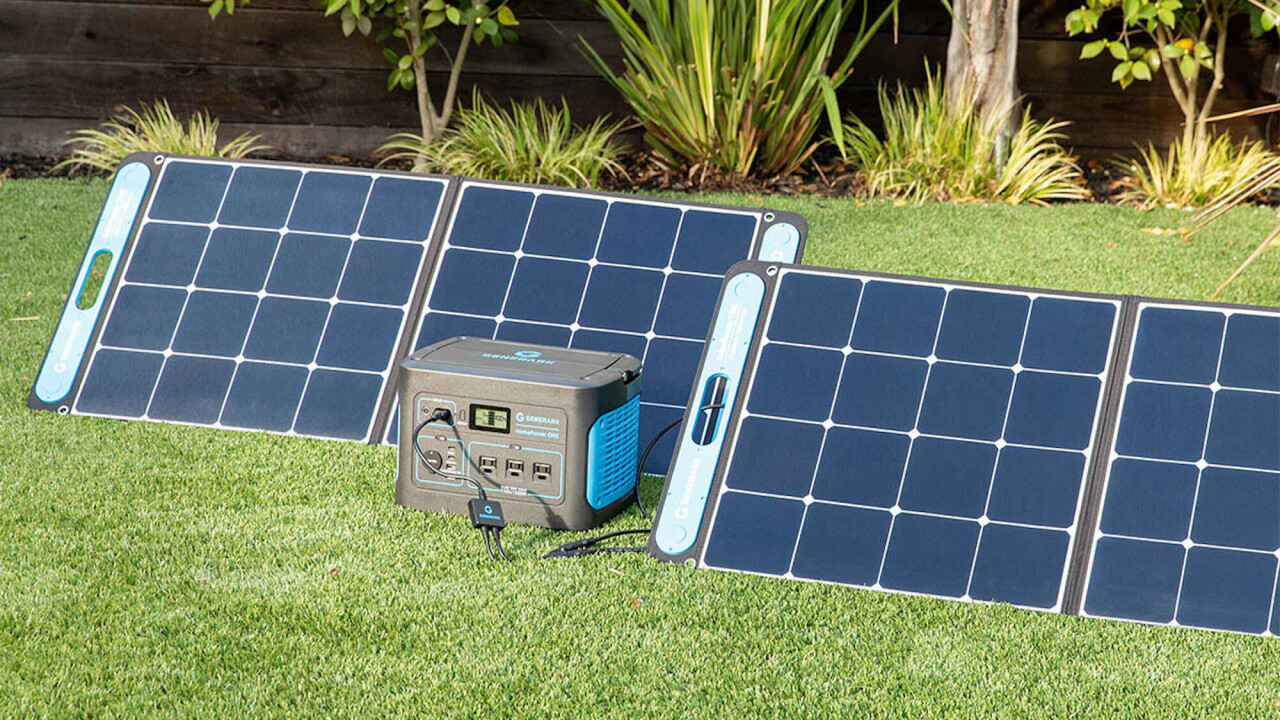
TLDR: The HomePower One Backup Battery Power Station offers up to 7 days of emergency power, while the SolarPower One Portable Solar Panel restores the battery in hours.

If you’re asking yourself if you’re ready for the effects of a potential disaster just as a vicious storm, wildfire, or another ferocious act of God is bearing down on your home region, it’s probably already too late. In those cases, you just have to cross your fingers and hope that homes, possessions, and the people closest to you are all spared the full brunt of nature’s fury. But even if you’re “lucky”…well, even then, you could be looking at some dark days ahead. Literally.

Hurricanes and tropical storms plunge thousands into extended power outages several times each year. And in many areas, even the threat of wildfires can trigger blackouts that can go on for days.TNW Conference 2021Attend the tech festival of the year and get your super early bird ticket now!GET TICKETS

Even if you aren’t routinely facing outage threats, it can be a major hassle when a random power hit leaves you in darkness, with your freezer thawing, and limited links to the outside world. Backup like the tag team of the Generark HomePower One Backup Battery Power Station and the SolarPower One Portable Solar Panel ($1,399, 26 percent off, from TNW Deals) can be the immediate lifeline that can get you through until the power returns.

The HomePower One is versatile, portable, reliable power that’s ready at a moment’s notice. This emergency backup battery station holds a power store of over 1,000 watts for up to a year, enough for supplying up to 7 days worth of juice on a single charge. The unit also makes it easy to feed that power where it’s needed, with three AC outlets, four USB-C and USB-A outputs, and even a 12-volt car output for compatible devices. Armed with all that connectivity, it’s enough power to keep everything, including your refrigerator and other home appliances, up and running for days while you wait for power to come back.

And if power isn’t restored quickly, the SolarPower One Portable Solar Panel has you covered in that eventuality. Made from durable cloth and PET high-temperature resistant material and deployable in less than 30 seconds, this panel’s monocrystalline solar cells drink in the sun’s rays and restores your HomePower One’s battery. With just one SolarPower One panel, it only takes about 19 hours to take a HomePower One from no power to 100 percent capability.

Together, the Generark HomePower One Backup Battery Power Station and the SolarPower One Portable Solar Panel tandem usually retail for almost $1,900, but as part of this offer, users can save almost $500 and get both pieces of critical backup equipment for just $1,399.

https://www.mindbodygreen.com/articles/social-jet-lag

That Monday Morning Exhaustion Has A Name: Social Jet Lag

mbg Senior Sustainability EditorBy Emma Loewe

Image by Ivan Gener / StocksyOur editors have independently chosen the products listed on this page. If you purchase something mentioned in this article, we may earn a small commission.September 25, 2021 — 9:02 AMShare on:

When someone travels across the world, they expect fatigue and grogginess to follow. But what about when they just head across town for the weekend? According to a phenomenon called social jet lag, people can experience jet lag features even if they’re not skipping time zones. Here’s what to know about this sleep misalignment and how to manage it.In This Article

What causes social jet lag?

The term “social jet lag” was coined and defined by a German researcher named Till Roenneberg, Ph.D., in 2006. At the time, Roenneberg, a sleep researcher and chronobiologist who studies biological rhythms, was interested in how different our sleep schedules tended to be on the weekends.sleep support+The deep and restorative sleep you’ve always dreamt about*★ ★ ★ ★ ★★ ★ ★ ★ ★ (172)SHOP NOW

“We saw people leading different lives on weekends and workdays,” he says on a call with mbg. On weekends, many people slept at times that differed greatly from those during the workweek, as if “they were flying from Europe to the States on Friday evening and flying back to Europe from the States on Monday morning. That’s where the term ‘social jet lag’ came from.”

You might be thinking, why does it matter if you go to bed later (and wake up later) on weekends—as long as you’re still getting the same amount of sleep? Roenneberg has found that even if people clock their eight hours of on the weekends, social jet lag still has potential health consequences because of the way it puts them out of sync with their circadian rhythms.

These biological clocks dictate the time window when each one of us naturally wants to spend asleep and awake. Someone with an early rhythm—or chronotype—is known as an early bird or lark, while someone with a late chronotype is more of a night owl. Where we fall on this spectrum is the result of our genetics, age (most people have the latest chronotype during adolescence, and it gradually gets earlier from there), and light conditions, Roenneberg explains.

When we travel across time zones, those lighting conditions change dramatically, and our clocks need a few days to catch up. “But unlike travel jet lag, social jet lag doesn’t stop,” Roenneberg says. “It’s chronic.”

You can think of social jet lag as the gap between when our bodies naturally want to sleep and when our social schedules allow us to sleep. If you’re someone who needs to set an alarm every morning of the workweek and are exhausted come Fridays, you already know what this gap feels like. You’re constantly awake during times when your body wants you to be asleep—and have the caffeine dependency to prove it. Switching your sleep schedule on the weekends will only confuse your circadian rhythm more, making it harder to return to your alarm clock on Monday morning.

Roenneberg explains that the later your chronotype, the more likely you are to suffer from social jet lag since many workplaces and schools start early in the morning, and we are generally told that it’s important to wake up early to get a head start on the day. “The later you are, the more likely it is that the social times are forcing you to live against your body clock,” he says.

Since it was first coined in 2006, social jet lag has appeared in over 200 academic papers. “It’s a concept that has conquered the world unexpectedly,” Roenneberg laughs. Marc Wittmann, Ph.D., a time perception researcher who has worked alongside Roenneberg, has a guess as to why it’s become so popular: “It’s because we all deal with it.”ADVERTISEMENT

Signs of social jet lag.

While social jet lag is not a medical diagnosis, Roenneberg says that there are many potential consequences of living against your internal clock. In one survey of over 500 people, those who had late chronotypes and were more prone to social jet lag also tended to be more likely to consume stimulants (caffeine, nicotine, and alcohol) and report a worse mood during the day. Separate research has found that social jet lag might also get in the way of maintaining a healthy weight.

What to do about it.

Ultimately, the only way to “cure” social jet lag is to ditch your alarm clock, sleep when you’re tired, wake up when you’re rested, and keep up with the same sleep schedule day after day, even on weekends. For most of us, it’s just not feasible.

But these tips can help ease some of the impacts of social jet lag so you don’t wake up on Monday morning feeling like you just took a trans-Atlantic flight.

1. See what time you wake up without an alarm.

Seeing what time you wake up without an alarm can give you a sense of your ideal sleep window. Once you know when your circadian rhythm wants you to sleep, you can start to prioritize that window as much as possible.

2. Adjust your weekend schedule.

Your rhythm appreciates consistency, so skipping the occasional late night will help you fall asleep easier and wake up more refreshed. Instead of shifting your sleep schedule by three hours on Fridays and Saturdays, for example, Shelby Harris, PsyD, DBSM, author of The Women’s Guide to Overcoming Insomnia, recommends keeping it to 1.5 hours.

If you wake up tired on the weekend and want to take a nap, she says that taking a shorter one earlier in the day, before 2 p.m., might help make Mondays a little more bearable. “It’s like a snack on sleep but it’s not multiple hours that will negatively impact your night,” she tells mbg.

3. Practice good sleep hygiene.

While it’s not possible to change your chronotype to avoid social jet lag altogether, Wittman says that good sleep hygiene can help you adapt to it a little better.

That means laying off the booze, caffeine, and late-night snacks and replacing them with daily movement, a relaxing sleep ritual, a consistent bedtime, and maybe a sleep supplement.*

4. Let there be light.

Light and sleep go hand in hand. Exposing yourself to plenty of bright natural light during the day and minimizing light exposure at night will help support a healthier circadian rhythm and healthier sleep in turn.

5. Push for more flexible hours at work and school.

To account for all the different chronotypes out there, Roenneberg says he always encourages employers and schools to allow employees and students to set their own hours that sync up with their natural sleep-wake cycle. Not only can this improve productivity and work ethic, but it will reduce the amount of sleep catch-up we need to do on the weekends.

The more we learn about the circadian rhythm and social jet lag, the more Wittman expects that this research will lead to real changes in our everyday lives.

The bottom line.

While spending the weekend catching up with friends until the wee hours is nourishing for the soul, it’s not so great for our sleep, according to a growing body of research. Thankfully, there are a few ways to minimize your social jet lag without totally ruining your social life.

https://www.castanet.net/news/The-Happiness-Connection/346763/Age-really-can-just-be-a-number-for-some-people

Age really can just be a number for some people

Aging yet ageless

Reen Rose – Sep 26, 2021 / 11:00 am | Story: 346763Photo: Contributed

I’d like to start by asking you to look at the photo that accompanies this week’s column.

Would it surprise you to know that the ages of these women span more than two decades?

I could have given birth to two of them, without even being a teenage mom, and I’m not the oldest one in the photo. There are two women in their early 40s, one in her 50s and two in their 60s.

The thing that struck me as I looked at this picture from a recent girl’s trip to Alberta, is how irrelevant age is.

When you’re young, a few years makes a huge difference. By the time you reach adulthood, you may not know how old your friends are. You may even struggle to remember how old you are.

Sometimes, the age difference that mattered when you were a teenager, continues to live in your head when it no longer makes any difference.

This was the case with my in-laws. They always talked about how much older Bill was than Beryl. When I did a calculation, I realized the age difference they talked about was less than three years.

That was similar to the age difference between their son and me. I’d tease him about being my toy boy, but I considered the 26-month difference to be insignificant.

Why the difference in perspective?

Bill and Beryl were 18 and 15 when they met. Three years is quite a difference at that age.

I’d had a five-year relationship was with someone 18 years my senior. By comparison, 26 months was nothing. That doesn’t mean I wasn’t aware of the age difference or that it didn’t matter.

Almost all my former husband’s friends were younger than me. I was keenly aware that I always hit the milestone birthdays first. I was also the old one amongst the parents of my kids’ friends. They assumed I was their age and I did nothing to dissuade them.

I think I carried this age awareness because I was also carrying an ancient idea of what it means to get old.

My parents and grandparents were like many people who settled into retirement as a precursor to death. They accepted aches, pains, slower brain function and less energy as a natural part of getting older. If that’s what it meant to age, I didn’t want anything to do with it. As a result, I was reminded of my age everywhere I looked.

It’s only relatively recently that I’ve stopped focusing on birth years. Perhaps that’s because many of my friends are in their 40s, but I live in a community of seniors. The juxtaposition has allowed me to look at aging differently.

I have the opportunity to spend time immersed in younger energy and also observe the process of moving into more senior years. Being younger doesn’t mean you aren’t as wise. Being older doesn’t mean you have to decline physically or mentally. The latter thought isn’t just wishful thinking. Have you encountered the term “super-ager?”

The Memory and Aging Center at the University of California San Francisco is conducting a longitudinal study of the elderly. There’s one man in his late 80s who’s caught their attention. His brain scans aren’t pretty. They suggest age-related deterioration as well as a series of mini strokes. If you only examined the images, you’d probably think his memory and thinking skills were weakening. That’s far from the truth. His brain function and cognitive abilities are high and haven’t changed in years.

Joel Kramer, the director of the neuropsychology program couldn’t understand why the aging of this man’s brain wasn’t reflected in his abilities to function. Other members of the study whose scans were similar to his, were showing a definite decline.

When Kramer met the man in question, he was struck by how dynamic he was. His outlook on life was incredibly sunny and optimistic. He kept himself busy with numerous projects, was closely connected to his family and volunteered in the community. He was quick to share how grateful he was for everything he had. He chose to embrace life and not sweat the small stuff. He seemed to be living his golden years to their fullest.

This isn’t an isolated case. I recently watched an interview with an English octogenarian who took three buses to get to the charity shop where he volunteered.

I’ve also met seniors who help in assisted living and nursing homes where they’re older than the people they’re helping.

These super-agers are inspiring researchers like Kramer. They want to determine what sets these people apart from typical agers.

In today’s society, when octogenarians, nonagenarians and centenarians are more and more common, I think it’s important to recognize that aging doesn’t have to mean getting old in the traditional sense. You can live your whole life being vibrant and active if you want to.

It’s true that some people are more blessed genetically, but you can make the most of any hand you’ve been dealt. You simply have to choose to do that. It isn’t always easy, but I believe it is worth the effort and energy.

The remarkable man in the SCSF study is a prime example of someone who practices happiness. That lifestyle is available to anybody, regardless of their financial means, or genetic circumstances.

I hope when my friends and I are in our 60s, 70s, and 80s our pictures still reflect the agelessness that exists between us.

Welcome to the world of the super-agers.

https://www.mindbodygreen.com/articles/do-sleep-supplements-work

Do Sleep Supplements Work? 2 Reasons Yours Might Not

mbg Senior Sustainability EditorBy Emma Loewe

Image by Douglas Robichaud / StocksyOur editors have independently chosen the products listed on this page. If you purchase something mentioned in this article, we may earn a small commission.September 26, 2021 — 9:31 AMShare on:

By the CDC’s estimation, more than a third of American adults aren’t getting the recommended seven hours of sleep a night. As the number of tired people surges, the sleep supplement market also expands with new options. And you’ve likely heard from at least one person (or perhaps, you are the person) who has tried “every single one of them” to no avail, still plagued by restless nights.

This could be happening for one of two reasons: Either that person has a major sleep disorder that should be attended to by a specialized health care practitioner, or they have bad sleep habits that are keeping the supplements from doing their job. Because while these remedies can be effective, they can’t undo poor sleep hygiene.

Here, a sleep specialist troubleshoots both concerns and shares how to work with and not against your supplement so that better sleep can follow.

Reason 1: You expect it to treat a major sleep disorder.

It’s all in the name: Supplements are supplementary. They can help support healthy function in the body, but they can’t treat full-on diseases or disorders.

“If it’s not medicine, it’s not designed to fix a major problem,” Michael Grandner, Ph.D., director of the Sleep and Health Research Program at the University of Arizona, tells mbg. “Supplements might support healthy sleep, and they might alleviate minor problems, but if you’ve got a sleep disorder—including insomnia—that’s not what they’re designed for.”sleep support+The deep and restorative sleep you’ve always dreamt about*★ ★ ★ ★ ★★ ★ ★ ★ ★ (172)SHOP NOW

He likens taking a sleep supplement for chronic insomnia to expecting teeth brushing to fix your overbite: You can brush all you want—and you’ll be better off for it—but at the end of the day, you’ll need to get those braces if you want to correct the overbite.

This is an important distinction because when people start a new supplement with unrealistic expectations, they’re bound to find them ineffective. If you consistently struggle to fall or stay asleep, to the point that it affects your quality of life, you’ll want to visit a doctor or sleep specialist instead of trying supplement after supplement.

However, if you don’t have a sleep disorder but suspect that you could be sleeping deeper and waking up more refreshed, the right supplement might be able to help.*ADVERTISEMENT

Reason 2: You don’t support it with the right habits.

Just like you can’t exercise your way out of an unhealthy diet, you can’t supplement your way out of bad sleep habits. Again, think of these as tools that can make your healthy habits go the distance—not course-correct your unhealthy ones. Here, Grandner shares the top three things you can do to help your sleep supplement work as intended:*

  • Leave the bed for sleeping: When we train the body to associate the bed with sleep, we get tired as soon as we get under the covers. It’s that simple. “Don’t dilute the power of the bed. Make it just for sleep—so that when you get in there, your brain thinks, ‘Ah, this is the sleeping place,'” Grandner says. This means getting out of bed when your alarm goes off in the morning, resisting the urge to lie down throughout the day, and getting up and doing something else for a few minutes if you wake up mid-sleep.
  • Reserve some time to wind down: Taking a sleep supplement should be one part of a larger nighttime routine*—not just something you do right before bed in the hopes of having it knock you out right away. Our bodies can’t turn off and on on-demand, after all, and they need some time to get into sleep mode. Be strict with yourself and set a time every night that you’ll send that last email, shut off your devices, take your supplement, and start to do calming activities.* (Setting alarms can help here too.)
  • Nix the no-no’s: Even the most effective supplement can’t give you a night of perfect sleep after a day of chugging coffee or booze. “Supplements can be great for facilitating the sleep process, but you also want to remove barriers [to sleep],” says Grandner. He stresses the importance of limiting caffeine in the afternoon and evening, avoiding alcohol right before bed and staying away from other sleep-disrupting vices like nicotine.

The bottom line.

When starting any new sleep supplement, you should always follow the manufacturer’s directions to ensure that you’re using it properly. But no matter what it is you’re taking, these general best practices will probably help you get the most out of it.

https://www.makeuseof.com/solar-panel-cost/

How Much Does It Cost to Install Solar Panels?

BY AYUSH JALANPUBLISHED 1 DAY AGO

With rising energy costs, you may well be thinking about installing solar panels. Find out how and what the likely cost will be.

With the rising cost of electricity from conventional sources, using solar panels to generate it is increasingly becoming a no-brainer to many families. And since the cost of installing solar panels is decreasing rapidly, there’s been no better time than now to make them a part of your home.

In this article, we’ll help you get a clear idea about the cost of installing solar panels, the factors that affect their price, how they are installed, and most importantly, how much you can expect to save by installing them.https://348447aa888e443ef36d8f7353085132.safeframe.googlesyndication.com/safeframe/1-0-38/html/container.html

How Much Do Solar Panels Cost?

As per the Center of Sustainable Energy, the average cost of solar panel installation ranges between $15,000 and $25,000. At the affordable end, you can install a system for around $5,000. At the higher end, you can opt for a Tier 1 solar panel system that could cost $40,000 or even more.

After considering the federal solar tax credit, the cost of a 10 kW solar panel installation in the United States ranges from $17,612 to $23,236. The gross pricing can be anywhere between $23,800 to $31,400—meaning $2.38 to $3.14 per watt—from which 26% tax credit will be factored.137.7KLots Of New Google Pixel 6 Details Have Leaked #shorts

RELATED:8 Awesome Solar-Powered Gadgets Every Home Should Be Using

If we calculate the cost of solar panels for a three-bedroom house, it amounts to around $18,500 for a 6kW solar panel system for a 1,500 square ft. home. The price per watt for solar panels can range from $2.50 to $3.50.

Most residential solar panels have a power range of 3kW to 8kW and can be installed for a price between $9,255 and $24,552. Installing a larger solar panel system for your home will reduce the cost per watt.

Factors That Affect Solar Panel Price

There are a lot of factors that affect the overall solar panel installation costs. In actuality, the panels account only for approximately a quarter of the total installation expenses. The remaining price is made up of labor charges, operational costs, and other supplies such as inverters.

Here are some factors that affect solar panel installation costs:

1. System Size

A solar panel system’s size has a significant impact on the cost of installation. The size of a solar panel system is measured in kilowatts (kW), which measures the maximum amount of power that a solar panel system can produce under ideal conditions.

The size of the solar energy system depends on the amount of electricity (kilowatt-hours) your household consumes and how much you want to cut your electric bill. If your electricity consumption is high, you will require a bigger system to cover your electricity costs.

Larger systems, however, often have lower cost-per-watt since the equipment can be purchased in bulk and other overhead expenses are spread across a bigger structure.

2. Location

The location of your residence affects the solar panel cost in a few ways:

  • If you get less sunlight at your location, you will require more solar panels to cover your electricity requirements, and ultimately it will cost you more.
  • The costs can be lowered if you qualify for state and local incentives. The federal solar tax credit of 26%, often known as the Investment Tax Credit or ITC, significantly decreases solar installation costs, but there are also a range of state and municipal solar subsidies and tax incentives that can aid cut expenses.
  • Market conditions including competition between solar panel installers, work volumes, business overhead expenses, labor costs, and various state and local legislation can all influence solar panel cost.

3. Equipment Type and Manufacturer

The brand of equipment used dictates the overall solar panel price. While certain solar manufacturers’ panels are more expensive than others, it does not necessarily equate to superior performance.

For example, Jinko Solar’s panels are significantly less expensive than premium manufacturers like SunPower, but they offer the same features and have excellent customer ratings.

Along with the solar panel brand, other equipment like inverters and the racking system will also affect the end cost of installation. Weather conditions such as heavy snow or hurricanes may demand a more sturdy racking setup, which will increase the cost.

RELATED:10 Unbelievable New Ways Of Generating Electricity

How Are Solar Panels Installed?

After you sign your solar contract, there are five major procedures that must be executed before the solar panels on your roof can power your electrical appliances:

1. Engineering Site Visit

After signing a contract with a dealer, an engineer will visit your home to assess the electrical status and ensure that everything is compatible with your new energy system. During the visit, the engineer will examine the condition of your roof, electrical panel, roof type, angle of roof, shading, etc.

2. Permits and Documents

Installing solar panels involves a lot of paperwork. You’ll be applying for state and federal solar incentives, clean energy financing initiatives like PACE, solar renewable energy certificates (SRECs), and building permits. Luckily, it will all be handled by the installer.

3. Ordering Equipment

It’s likely that by this point, you’ll have already selected what equipment your system will include. However, you should evaluate the brands of solar panels and inverters. Apart from the price, compare brands based on their durability, efficiency, and appearance.

4. Solar Panel Installation

Your solar installer will begin by preparing your roof and ensuring that the shingles or tiles are properly fastened to the roof structure. They will then install wiring that will connect to your electrical panel and general power system. Next, they will install racking, place solar panels into it, and connect inverters to the panels.

5. Approval and Interconnection

Before you can flip the switch, a representative from your town government will inspect the system and give approval. After the inspection, you will be ready for the grid connection. You might have to wait for two weeks to a month for the approval to come and the interconnection to go operational.

How Much Can You Save by Installing Solar Panels?

You can reduce your power bill by up to 75% by switching to solar panels. In the US, residents usually spend between $100 and $200 per month on electricity, with an average annual energy expense of $1500.

A widespread myth is that solar panels can completely eliminate your electricity costs. They can’t, at least not yet. However, they can indeed cut your monthly electricity expenditure by a significant amount. Depending on how much you pay upfront, you can expect to break even in 7-10 years.

Save on Electricity Costs With Solar Panels

Whether you are aiming to lower your electricity expenses or reduce your carbon footprint, the benefits of solar panels are hard to overlook. Invest the time to obtain all of the necessary information including house size, solar insolation, current electricity rates, and your yearly consumption. Go about the installation process wisely and make it worth the investment!

https://neurosciencenews.com/shh-lid-parkinsons-19349/

Sonic Hedgehog Protein Pathway Stimulation Could Help Parkinson’s Patients

FeaturedGeneticsNeurologyNeuroscienceOpen Neuroscience Articles·September 24, 2021

Summary: Drugs that increase signaling of Sonic Hedgehog (Shh) can help suppress the involuntary movements associated with dopamine replacement therapy for those with Parkinson’s disease.

Source: CUNY

Levodopa, or L-dopa, is considered the most effective treatment for Parkinson’s disease today. After a few years of treatment, however, almost all patients develop a debilitating side-effect called L-dopa induced dyskinesia, or LID, which causes involuntary movements in the limbs, face, and torso. Deep brain stimulation can alleviate LID, but the procedure is highly invasive and not all patients are eligible.

Now, a new study led by researchers at the Graduate Center, CUNY and the CUNY School of Medicine shows that drugs that increased signaling by a protein called sonic hedgehog, or Shh, can inhibit LID. Such a treatment would have the potential to help most Parkinson’s patients, the authors said.

The study appears in Communications Biology

“In rodent and non-human primate models, the administration of L-dopa together with sonic hedgehog agonists attenuate the expression of LID,” said Lauren Malave, Ph.D., first author and postdoctoral fellow at Columbia University, previously a Ph.D. student in the lab of Professor Andreas Kottmann, Ph.D., at the CUNY School of Medicine at City College of New York and the Graduate Center.

“We provide novel insight into the underlying mechanisms behind LID formation and provide a potential therapeutic solution.”https://35bef44c04cd6348b053e588fc91e58f.safeframe.googlesyndication.com/safeframe/1-0-38/html/container.html

Parkinson’s disease is caused by the death of dopamine neurons, which is why the disease is treated with medications that are converted to dopamine once they enter the body. Key to the new study, though, is that these neurons also produce neurotransmitters other than dopamine, including GABA, glutamate, and Shh.

Shh has not previously been considered a neurotransmitter, but the new paper shows that it does in fact act as a neuromodulator. The researchers found that dopamine neurons use Shh to communicate with cholinergic neurons, which scientists have thought might play a role in LID.

This is a diagram from the study
A new study from Malave et al. suggests that in the brains of L-Dopa-treated Parkinson’s patients the lack of Shh signaling to cholinergic neurons results in L-Dopa induced dyskinesia. Image credit: Santiago Uribe-Cano.

https://35bef44c04cd6348b053e588fc91e58f.safeframe.googlesyndication.com/safeframe/1-0-38/html/container.html

They then used animal models of Parkinson’s disease to show that decreased Shh signaling in the basal ganglia, caused by death of dopamine neurons, facilitates LID. On the other hand, mimicking increased signaling by Shh reduced LID. Because of this, the authors suggest that the imbalance between dopamine and Shh after L-dopa treatment is a major cause of LID.

The next steps will be to develop new therapeutics that act downstream in the Shh pathway in cholinergic neurons and begin clinical trials.

“Deep brain stimulation doesn’t help everyone, it’s very invasive, and not all people are eligible for the surgery. The procedure is also not accessible to everyone,” said Kottmann, who was the corresponding author on the paper. “What we find in this study is that in several animal models, by replacing not only dopamine but dopamine together with agonists that mimic the effects of sonic hedgehog, these dyskinesias can be very much suppressed.”

https://news.samsung.com/global/samsung-electronics-puts-forward-a-vision-to-copy-and-paste-the-brain-on-neuromorphic-chips

Samsung Electronics Puts Forward a Vision To ‘Copy and Paste’ the Brain on Neuromorphic Chips

Korea on September 26, 2021Audio AUDIO Play/StopShare Share open/close Print

With Harvard Researchers, Samsung introduces a new approach to reverse engineer the brain on a memory chip, in a Perspective paper published in Nature Electronics

Samsung Electronics, a world leader in advanced semiconductor technology, today shared a new insight that takes the world a step closer to realizing neuromorphic chips that can better mimic the brain.

Envisioned by the leading engineers and scholars from Samsung and Harvard University, the insight was published as a Perspective paper, titled ‘Neuromorphic electronics based on copying and pasting the brain’, by Nature Electronics. Donhee Ham, Fellow of Samsung Advanced Institute of Technology (SAIT) and Professor of Harvard University, Professor Hongkun Park of Harvard University, Sungwoo Hwang, President and CEO of Samsung SDS and former Head of SAIT, and Kinam Kim, Vice Chairman and CEO of Samsung Electronics are the co-corresponding authors.

Image of rat neurons on CNEA (CMOS nanoelectrode array).

The essence of the vision put forward by the authors is best summed up by the two words, ‘copy’ and ‘paste’. The paper suggests a way to copy the brain’s neuronal connection map using a breakthrough nanoelectrode array developed by Dr. Ham and Dr. Park, and to paste this map onto a high-density three-dimensional network of solid-state memories, the technology for which Samsung has been a world leader.

Through this copy and paste approach, the authors envision to create a memory chip that approximates the unique computing traits of the brain – low power, facile learning, adaptation to environment, and even autonomy and cognition – that have been beyond the reach of current technology.

The brain is made up of a large number of neurons, and their wiring map is responsible for the brain’s functions. Thus the knowledge of the map is the key to reverse engineering the brain.

While the original goal of neuromorphic engineering, launched in the 1980s, was to mimic such structure and function of the neuronal networks on a silicon chip, it proved difficult because, even until now, little is known of how the large number of neurons are wired together to create the brain’s higher functions. Thus, the goal of neuromorphic engineering has been eased to designing a chip ‘inspired’ by the brain rather than rigorously mimicking it.

This paper suggests a way to return to the original neuromorphic goal of the brain reverse engineering. The nanoelectrode array can effectively enter a large number of neurons so it can record their electrical signals with high sensitivity. These massively parallel intracellular recordings inform the neuronal wiring map, indicating where neurons connect with one another and how strong these connections are. Hence from these telltale recordings, the neuronal wiring map can be extracted, or ‘copied’.

The copied neuronal map can then be ‘pasted’ to a network of non-volatile memories – such as commercial flash memories that are used in our everyday life in solid-state drives (SSD), or ‘new’ memories such as resistive random access memories (RRAM) – by programming each memory so that its conductance represents the strength of each neuronal connection in the copied map.

(From the left) Donhee Ham, Fellow of Samsung Advanced Institute of Technology (SAIT) and Professor of Harvard University, Hongkun Park, Professor of Harvard University, Sungwoo Hwang, President and CEO of Samsung SDS (former Head of SAIT) and Kinam Kim, Vice Chairman and CEO of Samsung Electronics, the co-corresponding authors.

The paper takes a step further and suggests a strategy to rapidly paste the neuronal wiring map onto a memory network. A network of specially-engineered non-volatile memories can learn and express the neuronal connection map, when directly driven by the intracellularly recorded signals. This is a scheme that directly downloads the brain’s neuronal connection map onto the memory chip.

Since the human brain has an estimated 100 billion or so neurons, and a thousand or so times more synaptic connections, the ultimate neuromorphic chip will require 100 trillion or so memories. Integrating such vast number of memories on a single chip would be made possible by 3D integration of memories, the technology led by Samsung that opened up a new era for memory industry.

Leveraging its leading experience in chip manufacturing, Samsung is planning to continue its research into neuromorphic engineering, in order to extend Samsung’s leadership in the field of next generation AI semiconductors.

“The vision we present is highly ambitious,” said Dr. Ham. “But working toward such a heroic goal will push the boundaries of machine intelligence, neuroscience, and semiconductor technology.”

https://www.sciencedaily.com/releases/2021/09/210924182533.htm

When it comes to communication skills, maybe we’re born with it?

Neuroscientists find brain matter makeup in infancy is linked to children’s degree of language skills at five years old

Date:September 24, 2021Source:Boston UniversitySummary:A neuroscientist and speech pathologist, led a study that uncovered how neural networks in infants influence their language learning skills in early childhood.Share:FULL STORY


From inside the womb and as soon as they enter the world, babies absorb information from their environment and the adults around them, quickly learning after birth how to start communicating through cries, sounds, giggles, and other kinds of baby talk. But are a child’s long-term language skills shaped by how their brain develops during infancy, and how much of their language development is influenced by their environment and upbringing?

Following dozens of children over the course of five years, a Boston University researcher has taken the closest look yet at the link between how babies’ brains are structured in infancy and their ability to learn a language at a young age, and to what degree their environment plays a role in brain and language development.

The new research, described in a paper published in Developmental Cognitive Neuroscience, finds that the brain’s organizational pathways might set a foundation for a child’s language learning abilities within the first year of life. These pathways are known as white matter, and they act as the connectors between the billions of neurons — called gray matter — that comprise the brain tissue. This allows for the exchange of signals and for all of the different tasks and functions we need to perform, as well as all of the biological processes that sustain us.

“A helpful metaphor often used is: white matter pathways are the ‘highways,’ and gray matter areas are the ‘destinations’,” says BU neuroscientist and licensed speech pathologist Jennifer Zuk, who led the study. Zuk, a College of Health & Rehabilitation Sciences: Sargent College assistant professor of speech, language, and hearing sciences, says the more someone does a certain task, like learning a new language, the stronger and more refined the pathways become in the areas of the brain responsible for that task, allowing information to flow more efficiently through the white matter highways. Recent evidence suggests that white matter most rapidly develops within the first two years of life, according to Zuk.

In addition to white matter development, scientists have long known that the environment also plays an important role in shaping a person’s language abilities, Zuk says. But many uncertainties remain about whether nature or nurture is more dominant in determining the makeup of white matter and how well a baby learns to communicate.

In their study, Zuk says, she and her colleagues sought answers to several specific questions: from very early on, to what extent does predisposed brain structure play a role in development? Does the brain develop in tandem with language, and is the environment ultimately driving the progress of both? And to what extent does brain structure in early infancy set children up for success with language?

To investigate this, Zuk and Boston Children’s Hospital researcher and study senior author Nadine Gaab met with 40 families with babies to take images of the infants’ brains using magnetic resonance imaging (MRI) and gather first-of-its-kind data on white matter development. No small feat, considering the babies needed to be sound asleep to allow for crisp capture of their brain activity and structure using MRI.

“It was such a fun process, and also one that calls for a lot of patience and perseverance,” says Zuk, who had to master the challenge of getting 4-to-18-month-old babies comfortable enough to snooze through the MRI process — the loud sounds of an MRI could be very disruptive to a sleeping baby. “There are very few researchers in the world using this approach,” she says, “because the MRI itself involves a rather noisy background…and having infants in a naturally deep sleep is very helpful in accomplishing this pretty crazy feat.”

It’s also the first time that scientists have used MRI to look at the relationship between brain structure and language development in full-term, typically developing children from infancy to school age.

One important white matter pathway the researchers looked at using MRI is called the arcuate fasciculus, which connects two regions of the brain responsible for language production and comprehension. Using MRI, the researchers measured the organization of white matter by looking at how easily water diffuses through the tissue, indicating the pathway’s density.

Five years after first rocking babies to sleep and gently tucking them inside an MRI machine, Zuk and her collaborators met up with the children and their families again to assess each child’s emerging language abilities. Their assessments tested each one’s vocabulary knowledge, their ability to identify sounds within individual words, and their ability to blend individual sounds together to understand the word it makes.

According to their findings, children born with higher indications of white matter organization had better language skills five years later, suggesting that communication skills could be strongly linked to predisposed brain structure. But, Zuk says, this is only the first piece of a very complicated puzzle.

“Perhaps the individual differences in white matter we observed in infancy might be shaped by some combination of a child’s genetics and their environment,” she says. “But it is intriguing to think about what specific factors might set children up with more effective white matter organization early on.”

Although their findings indicate a foundation for language is established in infancy, “ongoing experience and exposure [to language] then builds upon this foundation to support a child’s ultimate outcomes,” Zuk says.

She says this means that during the first year of a child’s life “there’s a real opportunity for more environmental exposure [to language] and to set children up for success in the long term.”

Zuk and her research partners plan to continue investigating the relationship between environmental and genetic components of language learning. Their goal is to help parents and caretakers identify early risk factors in language development in young children and determine strategies for strengthening babies’ communicative skills early on in life.


Story Source:

Materials provided by Boston University. Original written by Jessica Colarossi. Note: Content may be edited for style and length.


Journal Reference:

  1. Jennifer Zuk, Xi Yu, Joseph Sanfilippo, Michael Joseph Figuccio, Jade Dunstan, Clarisa Carruthers, Georgios Sideridis, Ted K. Turesky, Borjan Gagoski, Patricia Ellen Grant, Nadine Gaab. White matter in infancy is prospectively associated with language outcomes in kindergartenDevelopmental Cognitive Neuroscience, 2021; 50: 100973 DOI: 10.1016/j.dcn.2021.100973

Cite This Page:

Boston University. “When it comes to communication skills, maybe we’re born with it? Neuroscientists find brain matter makeup in infancy is linked to children’s degree of language skills at five years old.” ScienceDaily. ScienceDaily, 24 September 2021. <www.sciencedaily.com/releases/2021/09/210924182533.htm>.