https://scitechdaily.com/new-brain-mapping-technique-reveals-neural-code-of-vision-processing-over-time/


New Brain Mapping Technique Reveals Neural Code of Vision Processing Over Time

TOPICS:BrainNeuroscience

JANUARY 26, 2022

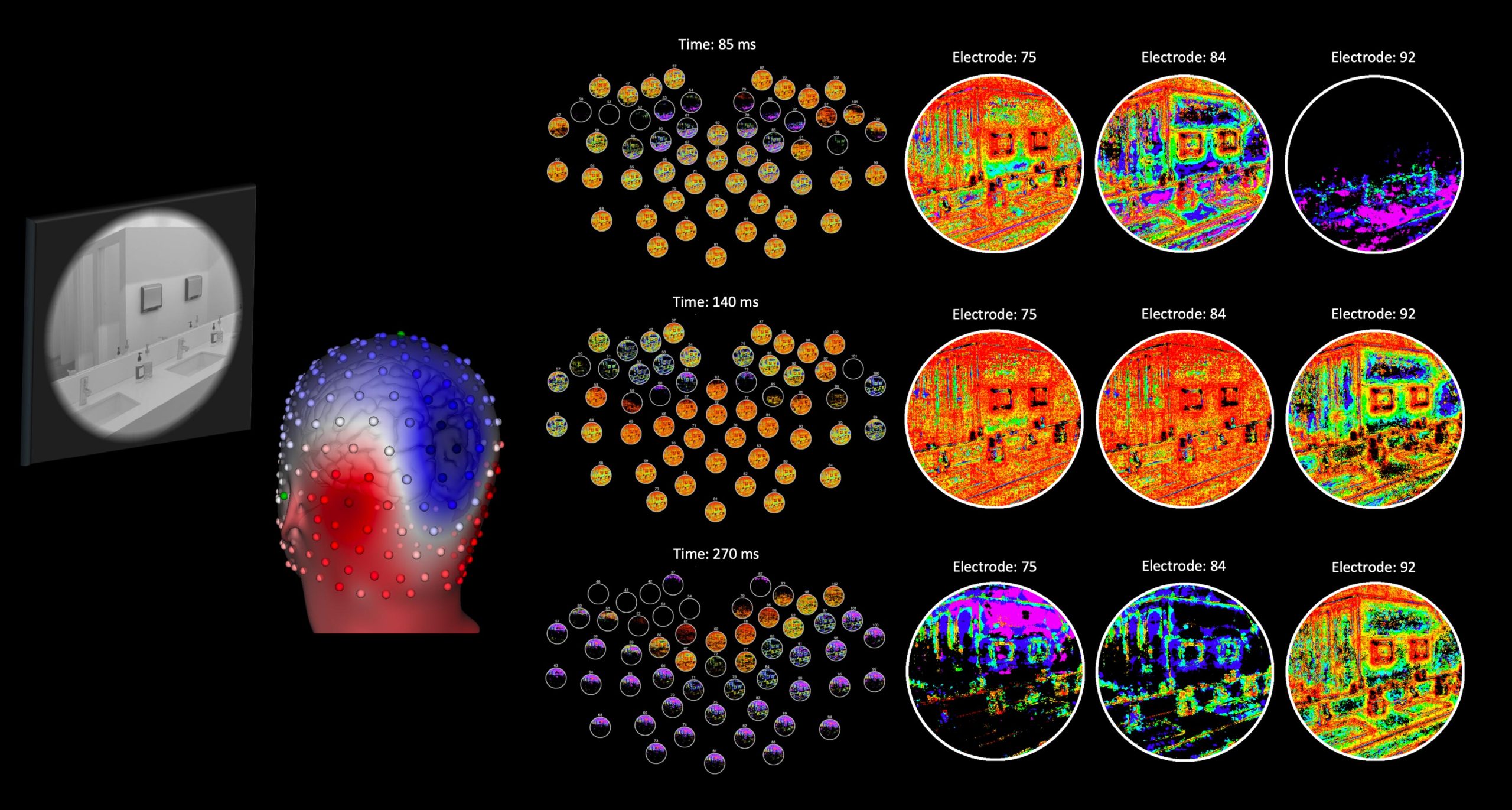
DETI mapping results from the brain of a person viewing one of the stimuli used in the experiment (far left). The central column shows a flattened topographical map of the electrodes over the back of the head, illustrating the variation of DETI maps at each electrode across that scalp region. On the right-hand side, each column shows a close up of the spatiotemporal evolution of the visual code for different electrodes (each row corresponds to a different point in time in milliseconds). Each color represents one of seven different neural population responses that were mapped to each image location, thereby revealing which neural population best-coded image regions at different points in time. Credit: Bruce Hansen

Humans are stepping ever closer to understanding how the brain codes visual information, as researchers have now developed a method that maps time-varying brain responses to images to reveal how the brain processes visual information.

Colgate University Neuroscience Professor Bruce C. Hansen collaborated with Michelle R. Greene (Bates College), and David J. Field (Cornell University) to introduce dynamic electrode-to-image (DETI) mapping — an analytical technique that capitalizes on the high temporal resolution of electroencephalography (EEG) to render maps of visual features that are associated with different neural signals over time. View a real-time example of neural responses mapped to an image in the video below.

https://www.youtube.com/embed/ep3o6cMeV-w?feature=oembed
This video shows the neural code (at different scalp locations) for an example image. The different colors represent responses from different types of neurons. Credit: Bruce Hansen

The study “Dynamic Electrode-to-Image (DETI) mapping reveals the human brain’s spatiotemporal code of visual information” has been published in the journal PLOS Computational Biology.

When viewing any environment, our brains code visual information across a large population of neurons in a way that enables a variety of intelligent behaviors. However, the visual code that is used to guide behavior is not steady like a picture but instead evolves over time with different populations of neurons contributing to the code at different points in time. Our DETI mapping technique offers a first glimpse into that time-varying code at every location in images,” said Hansen.

Recent advances in voxel-wise encoding analyses based on functional magnetic resonance imaging (fMRI) have enabled compelling reconstructions of images based on brain data, but are only able to render a single snapshot in time due to fMRI’s limited temporal resolution. The DETI mapping procedure introduced by Hansen and colleagues is based on EEG signals, which afford an opportunity to map the neural code of images with millisecond precision.

To successfully map the visual code to images with EEG data, Hansen and colleagues had to overcome a number of methodological challenges. “The brain signals that are recorded by EEG suffer from interference by the skull as well as different amounts of cancellation due to the folding patterns of the brain.” Using a biologically plausible encoding model of the brain, Hansen and his team were able to circumvent those problems by measuring the correspondence between encoded pixels across a large number of images and the resulting changes in the neural response. “One way to think about how the DETI mapping procedure works is by passing an image into the brain and projecting the resulting neural code back onto the image.” Because EEG can measure neural signals at different scalp locations, DETI mapping produces a multiplexed view of how different populations of neurons code image features at different locations in images over time — something that was once thought impossible to do with EEG data.

The mapping data produced by the DETI procedure offer new and important insights into how the neural code of images evolves over time. One of the most striking results reported by Hansen and colleagues is that the brain appears to scan images in a way that emphasizes different image regions with different neural populations at different points in time. “Such a scanning procedure likely aids in an early prioritization of the ground plane to support judgments for navigation, with a later emphasis focused on landmark organization.”

These findings lead to new and interesting questions related to how the evolving neural code informs higher level cognitive processes when people are engaged in different tasks. “We know that the code for visual information is distributed across a large population of neurons, but how that code is distributed depends on the goals of a given task. What this means is that the brain does not simply create a mental picture based exclusively on the environment, but instead creates a representation that best matches the behavioral goals of the person.” Fortunately, DETI mapping enables opportunities to explore the neural dynamics of task-based visual codes and how those codes ultimately support task-based decision-making.

Reference: “Dynamic Electrode-to-Image (DETI) mapping reveals the human brain’s spatiotemporal code of visual information” by Bruce C. Hansen, Michelle R. Greene and David J. Field, 27 September 2021, PLoS Computational Biology.
DOI: 10.1371/journal.pcbi.1009456

Funding: James S. McDonnell Foundation grant, National Science Foundation grant.

We recommend

  1. New Method Accurate Maps Brain Activity Despite Uncertainties in Patient Head StructureMike O’Neill, SciTechDaily, 2021
  2. How the Brain Links Smells to Places – Transporting Us Across Time and SpaceMike ONeill, SciTechDaily, 2021
  3. Cracking the Neural Code to the Brain: How Do We Provide Meaning to Our Environment?Boston University, SciTechDaily, 2022
  4. Our Brains Have a “Fingerprint” Too – But It Constantly Changes in TimeMike ONeill, SciTechDaily, 2021
  5. Our Brains Have a “Fingerprint” Too – But It Constantly Changes in TimeEPFL, SciTechDaily, 2021
  1. Ensemble Activity and Behavior—What’s the Code?Sam A. Deadwyler et al., Science, 1995
  2. Multimodal Therapy May Up Survival in Advanced Prostate CancerKristin Jenkins, Medscape
  3. The effect of fatigue on brain connectivity networks:Shangen Zhang et al., Brain Science Advances, 2020
  4. Demystifying signal processing techniques to extract resting-state EEG features for psychologists:Zhenjiang Li et al., Brain Science Advances, 2021
  5. Dynamic Brain Sources of Visual Evoked ResponsesS. Makeig et al., Science, 2002

https://www.inverse.com/innovation/mars-city-population-collapse

LOOK: JAW-DROPPING IMAGE SHOWS THE WEBB TELESCOPE 1 MILLION MILES FROM EARTH

The James Webb Space Telescope has reached L2, and its position has been captured in a new photo.ESAMIKE BROWN1.25.2022 11:00 AM

THE JAMES WEBB Space Telescope (JWST) has made it into position — and there are pictures to prove it.

On Tuesday, the Virtual Telescope project released an image of the new telescope among the stars. The 300-second exposure, captured with the “Elena” telescope, shows the project around 1.4 million kilometers (869,919 miles) from Earth.MORE LIKE THISSCIENCE1.24.2022 3:00 PMJAMES WEBB SPACE TELESCOPE REACHES ITS FINAL DESTINATION — 1 MILLION MILES FROM EARTHBy PASSANT RABIESCIENCE1.24.2022 11:48 AMNASA REVEALS NEW SCIENCE MISSION TIMELINE FOR THE JAMES WEBB SPACE TELESCOPEBy JOHN WENZSCIENCE1.18.2022 4:00 AMTHE WEBB TELESCOPE IS UNIQUELY ABLE TO FIND POTENTIALLY HABITABLE WORLDS — HERE’S WHYBy CLAIRE CAMERONEARN REWARDS & LEARN SOMETHING NEW EVERY DAY.SUBMIT

Want to find out more about what’s going on in the world of space? Subscribe to MUSK READS+ for exclusive interviews and analysis about spaceflight, electric cars, and more.

The James Webb Space Telescope in its final position.
The James Webb Space Telescope in its final position.VirtualTelescope

The image captures the latest stage in the ambitious project’s story, a joint venture between NASA, the European Space Agency, and the Canadian Space Agency.

JAMES WEBB SPACE TELESCOPE: WHAT TO KNOW

The telescope features a 21-foot, four-inch-thick set of 18 mirrors coated in gold. This bounces light into an infrared sensor. Its ultra-wide perspective enables it to observe around a third of the sky at a given time.

It’s nearly three times bigger than the Hubble Space Telescope, which launched in 1990 and has provided some of the most dramatic images of space.

NASA will use the new telescope to reveal more about the origins of the universe. It could also provide insights into far-flung exoplanets that could hold life. It’s also expected to help researchers understand Sagittarius A*. Scientists have yet to image what they believe is a supermassive black hole at the center of the galaxy.

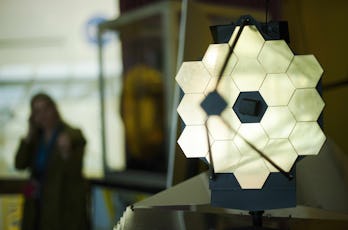
A woman stands near a model of the James Webb Space Telescope (JWST) at NASA Goddard Space Flight Ce...
The James Webb Space Telescope could reveal more about the universe.JIM WATSON/AFP/Getty Images

The telescope launched on December 25, 2021, using an Ariane 5 rocket taking off from Europe’s Spaceport in French Guiana. It took around a month to reach its final destination, the L2 Lagrange point around the Sun just beyond Earth.

This point is where gravitational forces between the two are stable. It enables the telescope to face away from the Sun throughout its operation, protecting its instruments. The positioning also means that the telescope will stay out of the shade of both the Earth and Moon. The Hubble Space Telescope, meanwhile, moves in and out around every 90 minutes.

Operations are expected to begin in around five months’ time.

It’s expected that JWST will operate for around five years. However, NASA revealed after the launch that the telescope saved more of its fuel than it expected. Where NASA expected JWST to use 146 kilograms of its 300 kilograms of fuel to move into position, it only used 32 percent of that allocation. Mike Menzel, NASA mission systems engineer for the James Webb Space Telescope, told Inverse that this could mean it has a lifespan of more than 20 years.

The final moment of repositioning was a key moment for the project’s success.

“We’re pretty excited that the spacecraft portion has been going as well as it has, and looking forward to the science instruments,” Amy Lo, JWST vehicle engineering lead at Northrop Grumman, said during a press conference on Monday.

Editor’s note: This article has been updated to reflect that L2 is not between the Sun and EArth, but rather just beyond Earth.

SUBSCRIBE TO MUSK READS+, A PREMIUM NEWSLETTER THAT COVERS THE WORLDS OF ELON MUSK, SPACEX, TESLA, AND EVERYTHING BETWEEN.RELATED TAGS

Share:

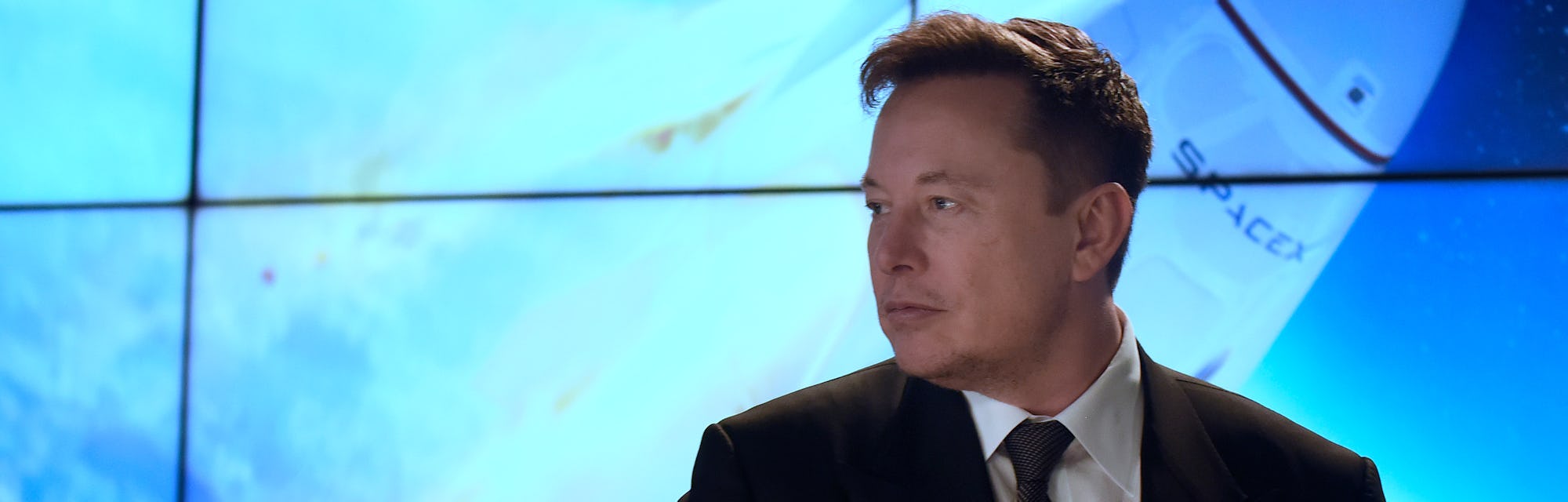
January 19, 2020 - Kennedy Space Center, Florida, United States - SpaceX CEO Elon Musk prepares to d...

INNOVATION

MARS CITY: ELON MUSK WARNS A MAJOR EARTH PROBLEM COULD STOP IT HAPPENING

Musk is sounding a familiar alarm. But the math might not add up.NurPhoto/NurPhoto/Getty ImagesMIKE BROWN1.19.2022 9:28 AM

POPULATION COLLAPSE COULD mean fewer humans for Mars, Elon Musk has declared. On Tuesday, the SpaceX CEO posted on Twitter that “we should be much more worried” about the emerging trend before writing that “if there aren’t enough people for Earth, then there definitely won’t be enough for Mars.”

The comments cut to Musk’s long-term goal of a self-sustaining city on Mars by 2050. The city would include one million people, establishing humanity as a multi-planet species.

They also echo comments made by Blue Origin founder Jeff Bezos. In 2019, he argued for giant orbital cities in space to support one trillion humans. That would include “a thousand Mozarts, or a thousand Einsteins.”

On Tuesday, Musk argued that official figures are wrong:

“UN projections are utter nonsense. Just multiply last year’s births by life expectancy. Given downward trend in birth rate, that is best case unless reversed.”

It’s not the first time Musk has warned about the issue. In 2019, he described population collapse as “the biggest problem the world will face in 20 years.” He also added that immigration does not solve the problem, as people have to come from somewhere.

Want to learn more about how SpaceX and others plan to get to Mars? Subscribe to MUSK READS+ for exclusive interviews and analysis about spaceflight, electric cars, and more.

POPULATION COLLAPSE: IS ELON MUSK RIGHT?

Musk shared two article links after his declaration. The first was for a May 2021 story from NPR, which reported that the number of babies born in the U.S. fell by four percent year-over-year in 2020, the sixth year of decline in a row. Births per 1,000 women were now at 55.8 for ages 15 to 44, a record low.

Another article from the BBC in July 2020 warned that the global fertility rate was dropping. In 1950, the average woman would have 4.7 children over a lifetime. That figure had fallen to 2.4 in 2017, and a study in the Lancet predicted it could reach 1.7 by 2100.

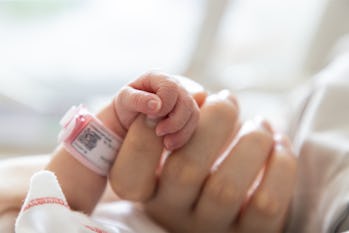
newborn baby hand holding mom's index finger
Elon Musk has warned that the population could be on the verge of collapse.Shutterstock

The article explains that a population declines when the birth rate reaches below 2.1. That means, according to the report, that the world is close to decline.

But is Musk right to describe United Nations projections as “utter nonsense”? The organization estimates that the population will reach 9.7 billion in 2050 and 11 billion in 2100.

Experts in the field heavily criticized Musk’s suggestion. Edward Morgan, head of the U.K. Office for National Statistics’ census analysis coordination, responded on Twitter:

“The issue is that the tweet implies that sensible population projections can be achieved by multiplying births by life expectancy, which any introductory demographic methods textbook would tell you is nonsense.”

significant issue with Musk’s approach is that it does not factor in how these figures will change in the future.

THE INVERSE ANALYSIS — Musk has regularly cited science fiction novels as part of his inspiration. Isaac Asimov had a big effect on him: in 2018, Musk described Asimov’s Foundation series as “fundamental to [the] creation of SpaceX.”

The first book describes a galactic empire of one quadrillion humans, spread across multiple planets. It also says that the capital planet, Trantor, had reached the “ultimate” in urbanization: all its 75 million square miles of the surface was a single city.

Indeed, in Asimov’s 1964 vision of life in 2014, he foresaw massive inequality spurred by a race for more resources for a select few.

“Although technology will still keep up with population through 2014, it will be only through a supreme effort and with but partial success,” he wrote at the time.

Harvard professor Jill Lepore argued in November 2021 that Musk and others read sci-fi books “for the gadgets” without fully engaging in how they criticized those fictional worlds. Population growth is a centuries-old and contentious debate, but either way, it seems unlikely Asimov would have agreed with Musk’s conclusions.

https://www.cnbc.com/2022/01/26/tesla-tsla-earnings-q4-2021.html

Tesla beats on earnings and revenue, says supply chain issues were ‘main limiting factor’

PUBLISHED WED, JAN 26 20223:34 PM ESTUPDATED WED, JAN 26 20227:04 PM ESTLora Kolodny@LORAKOLODNYJordan Novet@JORDANNOVETSHAREShare Article via FacebookShare Article via TwitterShare Article via LinkedInShare Article via EmailKEY POINTS

  • Tesla beat on the top and bottom lines.
  • CEO Elon Musk gave a “product road map” update saying the company would not release any new model vehicles in 2022.
  • Instead, Tesla is focusing on developing autonomous vehicle tech, and scaling up production at its new factories in Austin, Texas and outside of Berlin.

In this article

WATCH NOWVIDEO03:43Tesla Bull Tony Dwyer preps for Musk earnings call

Tesla reported fourth-quarter results that came in stronger than expected on Wednesday. Shares fell as much as 5% in extended trading on Wednesday after the automaker warned supply chain issues could persist throughout 2022, but later rebounded into slightly positive territory.

Here’s how the company performed:

  • Earnings (adjusted): $2.52 per share, vs. $2.36 per share expected by analysts, according to Refinitiv
  • Revenue: $17.72 billion, vs. $16.57 billion expected by analysts, according to Refinitiv

Revenue rose 65% year over year in the quarter, while automotive revenue totaled $15.97 billion, up 71%, according to a statement.

Energy generation and storage revenue was $688 million, which was down 8% and below the StreetAccount consensus of $815.1 million. It was the lowest revenue for that division since the first quarter of 2021.https://datawrapper.dwcdn.net/eokpO/1/

Net income, at $2.32 billion, was up some 760%, and Tesla said it had a 27.4% gross margin, compared with 26.6% in the previous quarter.

“Our own factories have been running below capacity for several quarters as supply chain became the main limiting factor, which is likely to continue through 2022,” the company said in a shareholder deck.

CEO Elon Musk said on the company’s earnings call that he expects Tesla to remain “chip-limited” in 2022, and that the company would introduce no new vehicle models this year as a result.

“We will not be introducing new vehicle models this year. We will still be parts constrained.” He said the company would instead work on engineering and tooling to create those future vehicles.

Shareholders had been waiting for progress updates on the company’s long-delayed heavy duty Semi truck and experimental Cybertruck pickup.

The CEO also said the company is not currently working on a $25,000 compact electric vehicle, contrary to the ambitions he announced at a Tesla Battery Day presentation in 2020.

Musk alluded to ongoing supply chain issues in a tweet Last November, writing, “Oh man, this year has been such a supply chain nightmare & it’s not over! I will provide an updated product roadmap on next earnings call.”https://platform.twitter.com/embed/Tweet.html?creatorScreenName=lorakolodny&dnt=false&embedId=twitter-widget-0&features=eyJ0ZndfZXhwZXJpbWVudHNfY29va2llX2V4cGlyYXRpb24iOnsiYnVja2V0IjoxMjA5NjAwLCJ2ZXJzaW9uIjpudWxsfSwidGZ3X2hvcml6b25fdHdlZXRfZW1iZWRfOTU1NSI6eyJidWNrZXQiOiJodGUiLCJ2ZXJzaW9uIjpudWxsfSwidGZ3X3NwYWNlX2NhcmQiOnsiYnVja2V0Ijoib2ZmIiwidmVyc2lvbiI6bnVsbH19&frame=false&hideCard=false&hideThread=false&id=1465423422238994436&lang=en&origin=https%3A%2F%2Fwww.cnbc.com%2F2022%2F01%2F26%2Ftesla-tsla-earnings-q4-2021.html&sessionId=e916cc97146e842e717606a2e8bc45e30b3d2012&siteScreenName=CNBC&theme=light&widgetsVersion=75b3351%3A1642573356397&width=550px

Despite those challenges, Musk said, Tesla had been making quite a few cars in Austin and Berlin starting in late 2021. He noted, “In Texas, we’re building Model Ys with the structural battery pack and the 4680 cells. We will start delivering after final certification of the vehicle which should be fairly soon.”

Tesla’s first U.S. factory in Fremont, California, achieved record production in 2021, the company noted. The company aims to expand capacity at that facility beyond 600,000 cars per year.

In its shareholder deck, Tesla revealed that it has expanded its experimental driver assistance systems testing program, dubbed FSD Beta, to around 60,000 users in the U.S.

“Full Self-Driving (FSD) software remains one of our primary areas of focus,” the company wrote. “Over time, our software-related profit should accelerate our overall profitability.”https://art19.com/shows/bcd08fc3-8958-4c47-bf8e-524432adcd77/episodes/c8fc9d4b-59a0-4665-945a-f7cb3ef8a0a2/embed

The California DMV and federal vehicle safety regulators at NHTSA are both investigating Tesla’s approach to testing new, and unfinished driver assistance features with customers on public roads in the US. The California DMV is also investigating Tesla’s use of the term “Full Self-Driving” to describe its premium, driver assistance package.

A spokesperson for the California DMV told CNBC in mid-January, “The DMV shares the concern held by many other safety stakeholders about the potential for driver inattention, misunderstanding, or misuse as these systems become more prevalent.  Industry, government, safety organizations, and other stakeholders must work together to ensure that automated driving technologies are developed, tested and ultimately rolled out in a manner that builds public trust and provides for the safety of all road users.”

Correction: An earlier version of this post misstated Tesla’s automotive revenue for the quarter. It was $15.97 billion.

https://www.businessinsider.com/elon-musk-tesla-robot-business-optimus-most-important-new-product-2022-1


Elon Musk says Tesla’s humanoid robot is the most important product it’s working on — and could eventually outgrow its car business

Tim Levin 7 hours ago

A rendering of the Tesla Bot with a faceless human form and a Tesla logo on its chest
A rendering of the Te lsa Bot. 
  • Elon Musk says Tesla’s humanoid robot is the most important product it’s developing in 2022.
  • Tesla is also working on the Cybertruck pickup, Roadster supercar, and Semi tractor-trailer. 
  • Musk said the robot project could be “more significant” than Tesla’s car business. 

Get the latest tech news & scoops — delivered daily to your inbox.Email addressBy clicking ‘Sign up’, you agree to receive marketing emails from Insider as well as other partner offers and accept our Terms of Service and Privacy Policy.

If you ask Elon Musk, the most significant new product Tesla is developing in 2022 isn’t the Cybertruck pickup or the Roadster supercar. It isn’t even a vehicle.

During Tesla’s earnings call on Wednesday, Musk said the company’s future humanoid robot — internally named “Optimus” — is the “most important product development we’re doing this year.” 

Musk first unveiled the robot during Tesla’s AI Day event in August. The automaker intends for the 5-foot-8-inch, 125-pound machine to take over dangerous, repetitive, physical tasks from humans in the future. Optimus, also known as the Tesla Bot, will run on the same artificial-intelligence system that powers Tesla’s driver-assistance technology such as Autopilot, Tesla said. 

On Wednesday’s call, Musk said the robot project “has the potential to be more significant than the vehicle business over time.” He said the first application for the robot would likely be at Tesla, “moving parts around the factory or something like that.”

At its reveal, Musk said Tesla plans to have a prototype by sometime in 2022. 

“The foundation of the economy is labor,” he said Wednesday. “So what happens if you don’t actually have a labor shortage? I’m not sure what an economy even means at that point. That’s what Optimus is about. So – very important.”

Musk’s comments may disappoint Tesla customers and investors who were eager to hear updates on the automaker’s long-promised future vehicles, like the Cybertruck, Roadster, and Semi heavy-duty truck. Musk said Tesla won’t be introducing any new vehicle models in 2022, because that would come at the expense of overall production volumes.

Tesla reported record quarterly profits for the final quarter of 2021, posting a net income of $2.88 billion for the quarter on $17.7 billion in revenue, figures which both topped analyst expectations. 

https://www.eatingwell.com/article/7943901/foods-for-better-sleep-according-to-dietitians/


  1. 9 Foods Dietitians Swear By for Better Sleep

9 Foods Dietitians Swear By for Better Sleep

Dietitians turn to these healthy, science-backed foods for a better night’s sleep.Jill WaldbieserReviewed by Dietitian Jessica Ball, M.S., RDJanuary 25, 2022Each product we feature has been independently selected and reviewed by our editorial team. If you make a purchase using the links included, we may earn commission.ADVERTISEMENTPinFBMore

Toasts from Wholewheat Bread with Peanut Butter and Banana and cinnamon

CREDIT: ADOBE STOCK / MANUTA

A balanced diet and a good night’s sleep are two of the mainstays of healthy living. But lately research has begun to uncover just how much the former impacts the latter. Last June, a systematic review that included 29 studies and was published in the journal Sleep Medicine Review concluded that eating a healthy diet was associated with better sleep quality. Few people know this better than registered dietitians, who are well-versed in how different nutrients in food can play a role in getting to sleep and staying asleep.

“Sleep and metabolism are both regulated in part by circadian rhythms,” says Christina Badaracco, M.P.H, RD, LDN, a Washington, D.C.-based dietitian, referring to the human body’s internal clock, which impacts the production of hormones and other metabolic processes. “We’ve also recently learned that our gut microbiota—which are modified through our diet, among other factors—regulate aspects of our sleep. The specific types of foods and beverages we consume, as well as their quantity and timing, affect our sleep quality and duration.”

In general, research has found that eating in line with the Mediterranean or DASH diet, both of which promote fruits and vegetables, whole foods and nutrients such as fiber and healthy mono- and polyunsaturated fats, tends to be associated with better quality sleep. Meanwhile, the typical Western diet—which is high in processed foods, red meat and added sugars, but low in fiber—has been linked to more restless nights.

“While there won’t be a single food that is going to be a magic bullet to getting people to sleep, focusing on certain nutrients may actually help the body experience an easier time falling asleep or getting better-quality rest at night,” says Lauren Manaker, M.S., RDN, LD, a Charleston-based registered dietitian. It’s best to eat a few hours prior to bedtime to avoid having digestive issues interfere with your sleep and to allow the nutrients to be digested before calling it a night. Here are some favorite pre-bedtime snacks that registered dietitians enjoy when they want to sleep right.

What to Eat for Better Sleep, According to Dietitians

1. Banana with Nut Butter and Cinnamon

One of the more well-known nutrients said to help promote quality sleep is tryptophan, an essential amino acid (amino acids are the building blocks of protein) that plays a role in the production of serotonin and melatonin, thereby promoting sleep, says Badaracco. While tryptophan has most famously been associated with turkey and post-Thanksgiving food comas, it’s also found in foods like bananas, oats and cheese. Adding a little no-added-sugar nut butter gives you a hit of magnesium, a mineral that promotes relaxation. A sprinkle of cinnamon can add flavor and anti-inflammatory benefit as well. Try our Peanut Butter-Banana Cinnamon Toast for a dessert-like treat before bed.

2. Salmon Salad on Cucumber Slices

“Salmon stands out for being one of the few foods that provide a meaningful amount of vitamin D,” says Samantha Cassetty, M.S., RD, a nutrition and wellness expert and co-author of Sugar ShockResearch shows that ​​this nutrient plays a role in sleep regulation, and in one study, after consuming salmon three times a week for five months, participants experienced better sleep and had measurably higher vitamin D levels than those that didn’t eat salmon.

Another review of 19 studies found that the omega-3 fatty acids in salmon may help ease symptoms of anxiety. It’s possible that this may also benefit sleep, Cassetty says. And because salmon is sold canned or in a shelf-stable pouch, you can keep some on hand so you always have a high-protein snack ready when you need one. Cassetty likes to mix it into a Mediterranean-style salad with olive oil, olives, red onions and a little lemon juice, and use slices of cucumber or red pepper to scoop up the mixture. Our Salmon Salad recipe would make a perfect light dinner with some crudités and whole-grain crackers.

3. Frozen Kefir with Chopped Nuts

Fermented foods like kefir, miso and Greek yogurt may be helpful for suppressing the release of cortisol, notes Laura M. Ali, RD, a culinary nutritionist based in Pittsburgh. While cortisol is known as the stress hormone, it also causes alertness, which is exactly what you don’t want before bed, so eating foods that help suppress or slow its release may be helpful, Ali says. Kefir, a fermented yogurt drink that’s similar to yogurt but has more gut-friendly probiotics, also comes frozen, like a tangier, more nutritious ice cream substitute. Sprinkle some antioxidant-rich nuts on top for a hit of magnesium and melatonin. You can also try combining kefir and nut butter in our Berry-Kefir Smoothie for a fruity treat.

4. Whole-Wheat Avocado Toast with Pumpkin Seeds

“Magnesium, a mineral that we obtain via our diet, helps regulate melatonin, a hormone that plays a key role in sleep,” says Manaker. “It also plays a role in activating the parasympathetic nervous system, ultimately helping people feel calm.” Avocado and pumpkin seeds are both good sources of magnesium, and happen to make a winning combination on whole-wheat toast. Plus, the healthy fats in the avocado are satiating enough to prevent any hunger pangs that may strike later in the evening. Try our West Coast Avocado Toast (it’s topped with sunflower seeds, which also provide a little magnesium boost).

5. Yogurt Parfait with Tart Cherries and Walnuts

Among more than 950 female health care workers, those who ate yogurt for 16 weeks showed considerable improvements in sleep quality compared to a control group that did not consume any fermented dairy during the same time, according to a 2021 study in BMC Gastroenterology.

Previous research has found that dairy, particularly fermented dairy like yogurt, may aid sleep quality, possibly due to the presence of the neurotransmitter gamma-aminobutyric acid, which may induce relaxation and improve sleep quality. “Walnuts are high in many sleep-promoting nutrients, such as tryptophan, isoflavones, naturally occurring melatonin, magnesium and zinc, all of which have been linked to improved sleep quality,” says Nicole Stefanow, M.S., RDN, a culinary dietitian nutritionist in the greater New York City area. And the literal cherry on top of this sleep sundae provides melatonin, which can help improve both duration and quality of sleep, research shows. Plus, our staff dietitians say that this tasty Tart Cherry Nice Cream is the best before-bed snack.

6. Cottage Cheese with Cucumber, Tomato, Everything Bagel Seasoning and a Drizzle of Olive Oil

“Calcium-rich foods can promote relaxation, so ingesting enough each day is important for more than your bones,” says Kelly Jones, M.S., RD, CSSD, a Newtown, Pennsylvania-based sports dietitian. Some research has found that calcium deficiencies are related to insomnia and other sleep disturbances, possibly because calcium is integral in the process of using tryptophan to make the sleep-inducing hormone melatonin. This savory spin on cottage cheese is low in sugar, although if you have a sweet tooth, you could try this Cottage Cheese with Raspberry Honey recipe instead.

7. Kale Chips and Roasted Chickpeas

Not getting enough dietary fiber has been linked with lighter, less restorative and more disrupted sleep in one small study. Results show that greater fiber intake predicted more time spent in the stage of deep, slow-wave sleep. Kale happens to be a good source of not only fiber, but also other nutrients linked to sleep, including calcium. Kale chips are a concentrated source of all these, says Nichole Dandrea-Russert, M.S., RDN, author of The Fiber Effect and the blog Purely Planted. Similarly, plant compounds known as isoflavones have been associated with better sleep quality and longer sleep duration. Chickpeas are rich in isoflavones and, when dried and seasoned, make a great snack. Try these Crunchy Roasted Chickpeas or Kale Chips the next time you’re craving something crunchy before bed.

8. Milk or Soymilk

That old yarn about warm milk making you sleepy isn’t wrong—researchers just discovered that the reason may not be tryptophan, as originally thought, but milk peptides that relieve stress and enhance sleep, according to research published in 2021 in the Journal of Agricultural and Food Chemistry. But there’s good news for anyone who doesn’t drink cow’s milk, too: Soymilk is rich in magnesium, a mineral that has been found to help reduce insomnia, and is an excellent source of vitamin A and calcium, two nutrients that play a large role in the hormonal pathways necessary to sleep, says Christa Brown, M.S., RDN, a New Jersey-based dietitian. In a large study published in 2019 in the journal Nutrients, individuals who had a low intake of calcium, magnesium, vitamin A and several other vitamins slept, on average, for less time compared to those who had adequate intakes of those nutrients. Our Banana-Cocoa Soy Smoothie tastes like dessert, but could help you sleep more soundly.

9. Oatmeal with Milk, Ginger and Honey

Whole grains such as oats increase the production of serotonin, a hormone that relaxes the nerves and tells the brain it’s time to sleep, says ​Karla Giboyeaux, M.A., RDN, a dietitian based in New York City. Meanwhile, quicker-digesting carbohydrates such as honey and the lactose in milk stimulate insulin release, which in turn allows tryptophan to enter the brain, where it can produce more serotonin. That means this combination doubles your sleepiness factor. Our Apricot-Ginger Energy Balls may sound like they’ll keep you up, but they can also help you sleep, thanks to the oats and honey (enjoy one with a small glass of milk for extra sleep-inducing benefits).

https://www.salon.com/2022/01/24/scientists-arent-sure-why-our-eyes-move-rapidly-during-sleep-a-new-study-offers-a-novel-theory/

Scientists aren’t sure why our eyes move rapidly during sleep. A new study offers a novel theory

By MATTHEW ROZSA

PUBLISHED JANUARY 24, 2022 7:00PM (EST)

Two lions asleep with their heads touching at the top and with ears touching in a cute and loving position (Getty Images/Gregory Sweeney)Two lions asleep with their heads touching at the top and with ears touching in a cute and loving position (Getty Images/Gregory Sweeney)FacebookTwitterRedditEmailsave

During the tranquil one-third of our lives that we spend asleep, the human body does something that might not seem restful at all: REM sleep, short for rapid eye movement, is a phase of sleep that consumes 90 to 120 minutes of an adult human’s day and as much as nine whole hours for a newborn baby. In this phase of sleep, your eyes twitch randomly and repeatedly, and sleepers have their most vivid dreams; people awakened from REM sleep often feel as though they really happened. Scientists note that parts of the neocortex, which is associated with higher forms of thinking, begin to activate seemingly at random.

Though REM is only a minority constituent of the time spent sleeping, it is perhaps the most enigmatic stage. What the purpose and function of REM sleep is, and why we do it, is still a mystery. Advertisement:https://3fdddcd6cfc9f3fd9340a14db0d01bff.safeframe.googlesyndication.com/safeframe/1-0-38/html/container.html

Now, a new study published in the scientific journal Neuron suggests that REM sleep may have evolved to help us protect ourselves from predators. In other words, it is a remnant of an earlier stage of human evolution, in which hominids had to be on the lookout for danger everywhere, even — perhaps especially — at night. 

RELATED: Why do electronic gadgets scramble our sleep?

Dr. Wang Liping from the Shenzhen Institute of Advanced Technology (SIAT) of the Chinese Academy of Sciences led a research team that placed animal subjects in a sealed chamber and monitored their brain activity as they slept. In order to simulate the feeling of believing a predator is nearby, they exposed the animals to the odor of trimethylthiazoline, which is similar to the odor of a predator. By doing this to different animals during various stages of their sleep cycles, they were able to compare how quickly the animals were aroused from their slumber based on which phase they were in. As it turned out, animals were more quick to be aroused if they were in a REM cycle than if they were in an NREM (not REM) cycle.Advertisement:

Background Image

https://imasdk.googleapis.com/js/core/bridge3.496.0_en.html#goog_1467586266The mystery behind Patricia Cornwell’s garlic breadProgress Bar00:55 / 02:18Volume Bar

The scientists also found something interest in the brain of those animals who were exposed to a “predator” during the REM cycle of their sleep. Neurons in a region of the brain called the medial subthalamic nucleus, and which produce a hormone associated with stress called corticotropin, gave their animal hosts a lower threshold for waking up than the animals who in NREM sleep. Those animals were also more likely to have highly defensive responses after being aroused.

“Together, our findings suggest adaptive REM-sleep responses could be protective against threats and uncover a critical component of the neural circuitry at their basis,” the authors conclude. Their findings have implications for treating mood disorders and other conditions that could be related to a neurological linkage between sleep and fear.Advertisement:https://3fdddcd6cfc9f3fd9340a14db0d01bff.safeframe.googlesyndication.com/safeframe/1-0-38/html/container.html


Want more health and science stories in your inbox? Subscribe to Salon’s weekly newsletter The Vulgar Scientist.


This is not the first study to link REM sleep to defense against predators. A 2013 paper in the journal Dreaming by by Ionnanis Tsoukalas of Stockholm University in Sweden hypothesized that many of the physical states associated with REM sleep are similar to tonic immobility, or the state in which animals pretend to be dead and therefore seem unappealing to predators they can neither fight nor outrun. Tsoukalas notes that people in REM sleep cannot move, which is similar to how some animals freeze when frightened, and people in REM sleep also share tonic immobility traits like altered breathing and heart rates, altered thermoregulation, suppression of reflexes and even extra “theta” waves in one’s EEG patterns (these are derived from the hippocampus and are linked to spatial awareness and memory). According to this hypothesis, even the vivid dreams we experience during REM sleep could simply be our brain sorting out potential threats.Advertisement:https://3fdddcd6cfc9f3fd9340a14db0d01bff.safeframe.googlesyndication.com/safeframe/1-0-38/html/container.html

There are many other purposes to REM sleep. Scientists have demonstrated that REM sleep is linked to consolidating spatial and contextual memories, and it is generally agreed that babies have more REM sleep in adults because their brains are in such a highly formative stage in their development. REM sleep is also linked to heightened creativity, with a 2018 article in the journal Trends in Cognitive Sciences advancing a novel theory: That NREM sleep is a period in which the brain begins a process of problem solving by separating important information from mere noise, and then REM sleep completes it by searching abstractly through that information to find possible connections.

https://www.scientificamerican.com/article/aha-moments-pop-up-from-below-the-level-of-conscious-awareness/

Aha! Moments Pop Up from below the Level of Conscious Awareness

People in a study handily solved puzzles while juggling an unrelated mental task by relying on spontaneous insight, not analytic thinking

Aha! Moments Pop Up from below the Level of Conscious Awareness
Credit: Iya Forbes/Getty Images

Most of us have had the experience of struggling mightily to solve a problem only to find, while taking a walk or doing the dishes, that the answer comes to us seemingly from nowhere. Psychologists call these sudden aha! moments “insight.” They occur not only when we are faced with a problem but also when we suddenly “get” a joke or crossword puzzle clue or are jolted by a personal realization. Scientists have identified distinctive brain activity patterns that signal moments of insight, but there is still some debate about whether insight is simply the final, most satisfying step in a deliberative thought process or a wholly separate form of thinking.

An ingenious new study by a team of Belgian psychologists provides additional evidence that insight engages unconscious mechanisms that differ from analytic, step-by-step reasoning. Even when people are managing multiple demands on their brainpower, the research suggests their intuitive thought processes may still be readily accessible.

“You can be overloaded by all this type of stuff, cell phones or whatever, and your insights remain shielded,” says Hans Stuyck, a doctoral student at Université Libre de Bruxelles and KU Leuven in Belgium, who led the study.

For that investigation, which was first published online in December 2021 in the journal Cognition, the psychologists created 70 word puzzles that undergraduate students could solve using either insight or analytic reasoning. Each puzzle consisted of three Dutch words displayed on a computer screen. The task was to find a fourth word that pairs with each. (For example, if the test were conducted in English, people might be given the words “artist,” “hatch” and “route,” with the answer being “escape” because “escape artist,” “escape hatch” and “escape route” are all recognizable phrases.)

The 105 undergraduates, most of whom were women, had up to 25 seconds to solve each problem. After typing an answer, they indicated whether they had reached it “with Aha!”—which they were told meant becoming “aware of the solution suddenly and clearly,” like a lightbulb illuminating a dark room—or calculated it step-by-step “without Aha!”—as if their brain was a room slowly being lit with a dimmer switch.

Participants were divided into three groups. The first received only the puzzles. In the second group, two random digits flashed sequentially on the screen before the words appeared, and people had to try to recall those numbers after finishing the puzzle. The third group was identical to the second except that people had to try to remember four digits instead of two.

The purpose of making people remember random numbers was to burden their mind with an unrelated task, which was expected to interfere with conscious problem-solving. “These cognitive resources, this pool that we can tap into to do anything consciously, is limited,” Stuyck says. The question was whether insightful thinking would be similarly affected.

Indeed, when participants used analytical thinking—by, for example, generating a phrase such as “con artist,” checking whether “con” was a match with “hatch” or “route” and then moving on—they experienced diminishing returns, solving, on average, 16 puzzles when they had no numbers to remember but only 12 puzzles when they had to remember two digits and eight puzzles when they had to remember four.

Yet when people relied on insight, not only was their success rate higher, it was unaffected by the number-recall task. These participants accurately completed between 17 and 19 puzzles, on average, in all three groups. “Whether they don’t have the memory task or they have a low-demand memory task or a high-demand memory task, the number of puzzles they solve with insight remains constant,” Stuyck says. “That’s the most interesting result.”

A significant amount of brain activity is unconscious—that is why we can seemingly drive to work automatically and why we are not always aware of the biases that affect our decisions. But cognitive psychologists disagree about whether actual reasoning can occur below the level of awareness. “There is so much debate within the literature,” Stuyck says.

Stuyck believes that during moments of insight, there is a give-and-take between conscious and unconscious processes. For example, when people attempt the puzzle “pine/crab/sauce,” multiple word associations get activated but only the strongest are accessible to the conscious mind. If the correct answer happens to be a weaker association, people may feel stuck, he says, yet beneath the surface, unbeknownst to them, their mind may be ushering it into awareness. (The answer, by the way, is “apple.”)

“Trying to find a creative solution to a problem is like trying to see a dim star at night,” says Mark Beeman, a cognitive neuroscientist at Northwestern University and a leading expert on insight, who did not contribute to the new study. “You have to kind of look at it out of the corner of your mind.”

Insights typically occur after someone ponders a problem for a while and then puts it aside, Beeman says. Once the foundation has been laid through conscious mental effort, a stroll, nap or distracting task seems to enable a creative breakthrough, one that is typically accompanied by feelings of satisfaction and certainty.

The reason that holding two or four numbers in one’s head slows reasoning but does not affect insight-based problem-solving is because turning the spotlight on a faint idea does not seem to require mental exertion, Stuyck says.

Beeman agrees but cautions against directly extrapolating from the new study to the real world. The number-recall task may have been simple enough to serve as a useful diversion, helping puzzlers reach their eureka moment. He doubts the results would hold if people’s brainpower was more severely taxed. “I certainly don’t want to recommend that people who want to be more creative at work get saddled with more work,” he says.

Stuyck’s team is about to embark on another puzzle-based insight experiment. This time the researchers will create “virtual lesions” by temporarily deactivating part of the prefrontal cortex, the brain area that we engage to consciously manipulate information. (They will use a harmless, noninvasive method called transcranial magnetic stimulation, which stimulates brain cells using magnetic fields.) This transient impairment is expected to diminish people’s success when they use an analytic approach to puzzling, but the question is whether it will affect their ability to solve problems through insight.

https://toronto.ctvnews.ca/definitely-overwhelming-pandemic-isolation-having-profound-impact-on-mental-health-of-young-people-1.5754939


‘Definitely overwhelming’: Pandemic isolation having profound impact on mental health of young people

Beth MacdonellCTV News Toronto Videojournalist

@BethCTV ContactPublished Wednesday, January 26, 2022 7:37AM ESTLast Updated Wednesday, January 26, 2022 7:37AM ESThttps://imasdk.googleapis.com/js/core/bridge3.496.0_en.html#goog_834664782Volume 90% etalk’s Bell Let’s Talk special will feature interviews with experts, artists and actors NOW PLAYINGTyrone Edwards tells us all about the special, airing tonight on CTV.Talking to your kids about mental health NOW PLAYINGWATCH: Child, Youth, and Family Therapist, Tania DaSilva, shares how to talk to your kids about mental health awareness.One Toronto woman’s mental health journey NOW PLAYINGA Toronto woman is sharing her personal journey dealing with mental illness and how she found healing and stability.Sens Nick Paul scores for mental health NOW PLAYINGOttawa Senators star Nick Paul to donate money to mental health programs with every goal. CTV’s Tyler Fleming reports.Nurse shares mental health struggles with COVID-19 NOW PLAYINGA local nurse shares her struggles with mental health while working on the front-lines during the pandemic.Connection between homelessness and mental health NOW PLAYINGThe COVID-19 pandemic forced many homeless shelters to limit the number of beds available at a time when they were most needed.CTV National News: Wave of domestic violence NOW PLAYINGThe pandemic has painfully exposed a wave of domestic abuse often hidden out of sight. Avis Favaro reports.Domestic violence ‘a public health crisis’ NOW PLAYINGHalina Haag, a social worker and PhD candidate at Wilfrid Laurier University, speaks about how COVID-19 increased intimate partner violence.Violence and the pandemic ‘a recipe for disaster’ NOW PLAYINGWomenatthecentrE Executive Director Nneka MacGregor says her organization saw member engagement rise by 9,000 per cent last December.

Next

SHARE:

https://platform.twitter.com/widgets/tweet_button.8f764d5bd2778f88121d31d7d8d8e1e3.en.html#dnt=false&id=twitter-widget-0&lang=en&original_referer=https%3A%2F%2Ftoronto.ctvnews.ca%2Fdefinitely-overwhelming-pandemic-isolation-having-profound-impact-on-mental-health-of-young-people-1.5754939&size=m&text=%27Definitely%20overwhelming%27%3A%20Pandemic%20isolation%20having%20profound%20impact%20on%20mental%20health%20of%20young%20people&time=1643229720816&type=share&url=https%3A%2F%2Ftoronto.ctvnews.ca%2Fdefinitely-overwhelming-pandemic-isolation-having-profound-impact-on-mental-health-of-young-people-1.5754939&via=CTVTorontoReddithttps://www.facebook.com/plugins/share_button.php?app_id=512600388751362&channel=https%3A%2F%2Fstaticxx.facebook.com%2Fx%2Fconnect%2Fxd_arbiter%2F%3Fversion%3D46%23cb%3Df14c6a6068c8b44%26domain%3Dtoronto.ctvnews.ca%26is_canvas%3Dfalse%26origin%3Dhttps%253A%252F%252Ftoronto.ctvnews.ca%252Ff3456918e5bcc24%26relation%3Dparent.parent&container_width=64&href=https%3A%2F%2Ftoronto.ctvnews.ca%2Fdefinitely-overwhelming-pandemic-isolation-having-profound-impact-on-mental-health-of-young-people-1.5754939&layout=button_count&locale=en_US&sdk=joey&size=small

As the COVID-19 pandemic approaches the two year mark, isolation continues to take a toll on the mental health of young people — although evidence also shows they are also finding ways to cope.

Mari de Jesus is a Grade 12 student at Senator O’Connor College School in North York. The 17-year-old experienced mental health challenges before the pandemic, but in March 2020, they worsened.

De Jesus attributes the change to the isolation and adjusting to the “new normal.”

“It was definitely overwhelming. I know for myself and so many other people, our kind of way of coping with mental issues was distracting yourself and going out and seeing people, but then suddenly I was at home all alone. Alone with all my thoughts,” they said.

De Jesus felt more anxiety and was spiralling, thinking one negative thought, which would turn into many more.

“It was hard to come out of this hole I dug myself into.”

One night de Jesus decided to go to the hospital.

“I didn’t feel safe at home by myself.”

De Jesus is doing better now, managing changes with the pandemic and has a goal to become a social worker.

Mari de Jesus

They said the biggest mental health help during the pandemic was getting online and talking through virtual settings with friends, along with regularly seeing a therapist and texting Kids Help Phone.

De Jesus also uses social media to connect with peers and help others, which helps them cope too.

“100 per cent. That is a big thing for me,” de Jesus said.

“I’m kind of known as the mental health guy, like though my peers. If anyone has a problem they just come to me, even if we are not the closest, just because I’m so open about it. I’m very much trying to stop that stigma around mental health and spark a conversation about it.”https://www.instagram.com/p/CWbOlrmpcf0/embed/captioned/?cr=1&v=14&wp=540&rd=https%3A%2F%2Ftoronto.ctvnews.ca&rp=%2Fdefinitely-overwhelming-pandemic-isolation-having-profound-impact-on-mental-health-of-young-people-1.5754939#%7B%22ci%22%3A0%2C%22os%22%3A4022.300000000745%2C%22ls%22%3A2575.89999999851%2C%22le%22%3A2690.5%7D

Over time, de Jesus has also been developing coping skills, including learning how to sit with emotions and proceeding mindfully.

“Knowing I don’t feel good right now, but it won’t last forever.”

ISOLATION HAVING PROFOUND IMPACT ON YOUNG PEOPLE

Joanna Henderson is a clinical psychologist, and senior clinical scientist at the Centre for Addiction and Mental Health. She’s also the Executive Director of Youth Wellness Hubs Ontario serving youth from 12 to 25 years of age.

Since the third week of the pandemic, Henderson has helped survey youth in Ontario about their experiences over the past two years, including looking at mental health.

“Isolation has a profound impact on young people,” Henderson said.

Henderson said during adolescences social connections typically mark important shifts, like an expanding social circle, the development of romantic relationships, and the emergence of work social relationships. All of these connections become key to many aspects of functioning.

“With the pandemic this key aspect of adolescent and young adult functioning has been compromised. The public health restrictions, concerns about health, and it created a lot of challenges for many young people.”

Henderson said it means some the developmental paths in terms of social relationships are happening more slowly — and used the example of transitioning from secondary school to post-secondary school or into work to meet new people and build relationships.

Even young people’s ability to get their drivers’ licence is having an impact.

“To be able to have the autonomy to be connecting in the community — all of these things have been delayed for many young people.”

She said the isolation has been “a significant negative” and said youth have experienced increased levels of anxiety and depression, along with concerns about body image and eating behaviours.

Henderson said there are young people who had pre-existing mental health concerns that are now experiencing significant difficultly, and there are those who hadn’t experienced it before, but are now newly experiencing it.

TDSB WELL-BEING PROGRAM TACKLING ISOLATION

A program at the Toronto District School Board (TDSB) is tackling pandemic isolation among students.

Yousra Lakhani, is a peer leader with Students for Well-Being, nicknamed as ‘S4W’ and is a Grade 12 student at Leaside High School.

‘Students are able to come together and discuss initiatives relating to mental health, well-being, coping mechanisms,” Lakhani said.

Yousra Lakhani

So far she said the events have mostly been virtual — Café Break, for example, is a drop-in about mental health and well-being, created fun games like Pictionary to help spur dialogue.

Lakhani said some of the topics discussed include body image and intersectionality.

“Even on Zoom it’s so nice to see they are so engaged, like talking in the chat and it’s really nice to see the interaction they have.”

Lakhani said one of the benefits of the group is that students are able to come up with the events, which helps keep students engaged.

“I think the pandemic has been really hard for students, especially the uncertainly of the pandemic, not knowing if school is going to open and refreshing Twitter to see what the latest updates are,” she said, adding the disconnect from friends and activities has also been challenging as these interactions are often used as a coping mechanism.

Lakhani said the goal of the meet-ups are to have real talks and so students can relate to one another, because what people are feeling is normal.

Imani Hennie, a social worker and the mental lead with the TSDB, focuses on mentoring and inspiring students in the group about positive mental and well-being, providing mental health literacy so the students can describe their feelings and reach out for help, and help one another.

“We know that students are tired of being home. The pandemic fatigue is there. We know they fear another total lockdown,” said Hennie.

Hennie said some students are also disproportionately impacted based on race – Black, Indigenous and people of colour.

“What we try to really encourage the students to look at what works for them. What is in their control in the moment, in the day. What can they do to make them feel good.”

MENTAL HEALTH DIFFICULTIES TIED TO CHANGES IN PUBLIC HEALTH RESTRICTIONS

Through research, Henderson and others found a majority of youth have experienced mental health difficulties to varying degrees — discovering it improved over the summer and declined as school resumed.

“Interestingly, though not surprising, we do see those difficulties at times for some young people correspond with changes in the public health restrictions,” Henderson said.

“We also interestingly found that there are some young people for whom some aspects of the public health restrictions have actually contributed to improved mental health for them. Some young people have talked about prior to the pandemic their lives were very full, very scheduled, very demanding.”

Henderson said these youth were able to step away from some activities and over time found that they may not return to the same level of busyness, while some found online learning to be a good fit.

Overall, she said, the research has shown there is one story for everyone.

“It’s quite individualized, depending on context and experience.”

ISOLATION AND FINDING WAYS TO BE OKAY

Henderson said the story of youth being isolated during the pandemic has also led to them finding ways to cope with mental health challenges.

“We seen a lot of creativity in terms of how youth are using digital technologies to stay connected,” said Henderson, citing the example of young people virtually watching movies together.

She said some youth are also spending more time outside and in nature.

Henderson said when it comes to “memory-making” experiences, such as graduation when family and friends come together, and the impact of missing these events have, it’s important to be cautious.

“Young people haven’t had those experiences yet. It can be the surrounding family and friends and media that keep sending the messages to young people that this is a terrible thing to have missed. Given they haven’t experienced it, I think we can do more in terms of supporting young people to recognize that there are exciting things ahead.”

She said while acknowledging some missed events are disappointing, it’s important to look forward.

Henderson said what she believes is most interesting is leading to significant changes against multiple domains of functioning of young people is in the school system, which ultimately may lead to more options for young people and may enhance their quality of life down the road.

STAY CONNECTED

Henderson advises youth experiencing mental health difficulties to stay connected to friends and reach out to people who can provide support.

Every day basics and routines are also important.

“Regular sleep routine, eating at regular points throughout the day, getting some exercise, reaching out and connecting with friends and family, these are critical for mental health,” she said.

Henderson said even though the pandemic is two years in, it’s important to keep at it and keep trying and to continue building on the positives.

https://nationalpost.com/shopping-essentials/recore-mattress-review-30-days-of-sleep-testing


Recore mattress review: 30 days of sleep testing

We tried it — a cooling four-layer latex mattress built for athletic recoveryAuthor of the article:Leigh TaveroffPublishing date:Jan 25, 2022  •  3 hours ago  •  5 minute read  •   Join the conversation

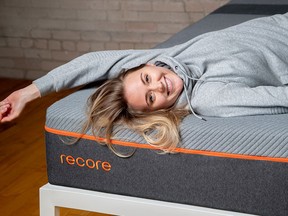
Recore gives you something to sleep on. And we are impressed.
Recore gives you something to sleep on. And we are impressed. PHOTO BY RECORE

Reviews and recommendations are unbiased and products are independently selected. Postmedia may earn an affiliate commission from purchases made through links on this page.

Article content

One of the pioneers of the mattress-in-a-box movement, GoodMorning.com is Canada’s largest independent online mattress retailer. The company manufactures a total of eight mattresses, all built for different types of sleepers; a key differentiator over other brands that only offer a one-size-fits-all mattress.

STORY CONTINUES BELOW

Article content

Determined to find my perfect fit, I filled out the company’s Mattress Matchmaker Quiz  and promptly tested my top two results: the Apollo and the Novosbed . I preferred the Apollo but thoroughly enjoyed both mattresses. My partner, on the other hand, was looking for something a little firmer. Matt Gurney:Fixing 24 Sussex is a fine for our incompetence https://s3-us-west-2.amazonaws.com/distroscale-public/vplayer-parallel/20211217_0009/ima_html5/index.html

dslogo

Enter the Recore.

Still considered a medium-soft mattress at a 4.7 rating out of 10 on the firmness scale (GoodMorning.com’s scale, not mine), this is the firmest mattress we have slept on from the company’s collection. Because of this, the Recore has been my partner’s top pick.

According to Goodmorning.com’s website, the Recore is “designed to support active Canadians”. The mattress combines “the pressure-relieving qualities of latex with the thermal-regulating properties of graphite” to provide deep, restorative sleep after all your daily movement and adventures. 

STORY CONTINUES BELOWhttps://95a1dbb0fe9a72f3eaf2e907715f76e9.safeframe.googlesyndication.com/safeframe/1-0-38/html/container.html

Article content

Summary: I really like the Recore for a couple of key reasons. First, it kept me nice and cool while I slept. The graphite-infused cover paired with the gel-infused foam helps to disperse heat and wick moisture away from the body.

Second, the latex and memory foam combo feels soft yet supportive. If your sleeping partner flops down next to you, you’re not going to bounce off (they call this minimal movement transfer in the sleeping biz) but the latex layer helps you move in and out of bed easily. Finally, it’s not too soft and not too firm, making it a great choice for a combo sleeper like me, who prefers to move around at night. So far, this is my partner’s top pick – he’s a stomach sleeper, so prefers a firmer mattress that’s not going to cave at the midline.

STORY CONTINUES BELOWhttps://95a1dbb0fe9a72f3eaf2e907715f76e9.safeframe.googlesyndication.com/safeframe/1-0-38/html/container.html

Article content

Quick facts

Weight recommendations: Up to 250 lbs per sleeper

Mattress firmness: Medium — they rate it a 4.7 on a scale of 10

Mattress trial period: 120 nights

Mattress warranty: 15 years

Mattress price: $999 for the queen (plus free shipping and a free adjustable memory foam pillow at the time of publication)

The Recore is very reasonably priced at $999 for the queen, a lot cheaper than other mattress brands we’ve researched . It’s made in Canada — Quebec to be exact — which is a big factor for me when it comes to choosing where I’ll spend my money.

The Recore is 10.5-inches in height and consists of three layers plus a silver-infused cover. Fun fact: silver has antimicrobial properties , helping to kill all kinds of creepy things from bacteria to fungi and even certain viruses (sorry, not COVID-19 as far as I know…). Recore’s cover is designed to stay bacteria-free, an exciting feature for those germaphobes amongst us. 

STORY CONTINUES BELOW

Article content

GoodMorning.com explains their three-layer foam technology and cover:

Cover – SilverCharged Top Cover

Recore’s soft and breathable top cover is specially infused with silver ions that naturally inhibit allergens and odour-causing microbes.

  1. Graphite-Infused Latex

Combining the pressure-relieving qualities of latex with the thermal-regulating properties of graphite, this cushioning top layer rapidly transports heat away from your body. It helps keep your sleep surface optimally cool and comfortable.

  1. Vortex Cooling Gel Foam

This breathable middle layer is infused with cooling gel. It works with the other layers to contour to your body and relieve pressure points while still allowing excess body heat to escape.

STORY CONTINUES BELOW

Article content

  1. Ultra-Durable Support Foam

Recore’s ultra-durable base layer provides the additional support your body craves at the end of the day. The support foam also helps isolate movement between sleepers so you can sleep soundly and without disruption.

Lining up the layers.
Lining up the layers. PHOTO BY RECORE

My experience

Great customer service, which I’ve come to expect from the GoodMorning.com team. 

The mattress arrived when and as expected and set up was straightforward. It arrived on my doorstep in a large box, which required two people to carry upstairs. The queen weighs in just under 100 pounds, so you’ll definitely want to enlist a helper on delivery day. Having tested a few mattresses, the unboxing process was straightforward: remove the cardboard box, place your mattress on your bed frame and carefully cut away the plastic. The mattress unfurls and requires 24 to 48 hours to reach its full firmness, but you can sleep on it right away if you don’t mind the odour.

STORY CONTINUES BELOW

Article content

How it feels: Initially it felt quite firm. I typically prefer a softer feel, but after 30 days of testing, I think I’ve “broken it in” and have come to appreciate the firmness of the Recore (my lower back agrees). The three-layer support system seems to help with spinal alignment even as a tosser-and-turner — I could sleep in multiple positions without sacrificing comfort. 

I’ve never tried a latex mattress and love the bounce it provides, not to mention how much easier it is to get in and out of bed when compared to one of the softer mattresses I’m more accustomed to.

My favourite features: I think a lot of people would say the silver-infused antimicrobial cover (it’s machine washable too), but my favourite feature is the latex layer and the low motion transfer. The bounce the latex provides makes moving around and getting out of bed that much easier, even on sluggish days. The latex and foam combination provides excellent pressure relief while contouring to my body without sinking in. When I hear “bounce”, I automatically think I’ll feel every movement from my partner, but the motion isolation is surprisingly low.

STORY CONTINUES BELOW

Article content

MORE ON THIS TOPIC

  1. Best gift for fathers in 2022
  2. Lisa Says Gah! brings the ‘ah’ factor to fashion
  3. Best gifts for people with pets 2022

My least favourite feature: The initial odour after unboxing. When a mattress is compressed, it often carries smells from the manufacturing process, and I found this one to be particularly smelly. While these odours are considered harmless, they do impact the experience. I put the Recore in our spare room to allow the off-gassing process to do its thing and was comfortable using the mattress after a couple of days.

Recommendation: I recommend the Recore for people who consider themselves active or athletic — it’s designed to increase performance by promoting optimal overnight recovery. While I can’t definitively say this is true, based on my research and my 30 nights of testing, it seems that the engineering of the mattress coupled with GoodMorning.com’s distinctive material choices could do just that. This is a great mattress for people who need a little extra pep getting out of bed or moving around at night and for those who have a sleep partner but would rather feel like they’re all alone in bed.

Explore GoodMorning.com’s other offerings for all sleeping needs and budgets: Juno , Douglas , Brunswick , Novosbed , Logan & Cove , Apollo and Cherry .

If you’re looking for something less expensive, softer, firmer or just curious to learn more about other mattresses on the market, check out our mattress round-up here .

https://medicalxpress.com/news/2022-01-minor-exposure-bedtime-disrupt-preschooler.html


JANUARY 25, 2022

Even minor exposure to light before bedtime may disrupt a preschooler’s sleep

by Lisa Marshall, University of Colorado at Boulder

child sleep
Credit: CC0 Public Domain

Even slight exposure to light can prompt the critical sleep-promoting hormone melatonin to plummet in preschoolers in the hour before bedtime, potentially disrupting slumber long after the light goes out, according to new CU Boulder research.https://8690ce6869d806d14fa0360fdffc6361.safeframe.googlesyndication.com/safeframe/1-0-38/html/container.html

The study, published this month, is the latest in a series, funded by the National Institutes of Health, examining how the central body clock of young children is unique. It suggests that preschoolers are highly susceptible to the physiological impacts of light at night, and some children may be even more sensitive than others.

“Our previous work showed that one fairly high intensity of bright light before bedtime dampens melatonin levels by about 90% in young children,” said first author Lauren Hartstein, a postdoctoral fellow in the Sleep and Development Lab at CU Boulder. “With this study, we were very surprised to find high melatonin suppression across all intensities of light, even dim ones.”

Light: The body’s strongest time cue

Light is the body’s primary time cue, influencing circadian rhythms that regulate everything from when we feel tired or hungry to what our body temperature is throughout the day.

When light hits the retina, a signal transmits to a part of the brain called the suprachiasmatic nucleus, which coordinates rhythms throughout the body, including nightly production of melatonin. If this exposure happens in the evening as melatonin is naturally increasing, it can slow or halt it, delaying the body’s ability to transition into biological nighttime.

Because children’s eyes have larger pupils and more transparent lenses than adults, light streams into them more freely. (One recent study showed that the transmission of blue light through a 9-year-old’s eye is 1.2-times higher than that of an adult.)

“Kids are not just little adults,” said senior author Monique LeBourgeois, an associate professor of Integrative Physiology and one of the few researchers in the world to study the circadian biology of young children. “This heightened sensitivity to light may make them even more susceptible to dysregulation of sleep and the circadian system.”

Research in a ‘cave’https://googleads.g.doubleclick.net/pagead/ads?client=ca-pub-0536483524803400&output=html&h=188&slotname=7099578867&adk=4039075515&adf=1873531024&pi=t.ma~as.7099578867&w=750&fwrn=4&lmt=1643177129&rafmt=11&psa=1&format=750×188&url=https%3A%2F%2Fmedicalxpress.com%2Fnews%2F2022-01-minor-exposure-bedtime-disrupt-preschooler.html&flash=0&wgl=1&uach=WyJtYWNPUyIsIjEwLjExLjYiLCJ4ODYiLCIiLCI5Ny4wLjQ2OTIuOTkiLFtdLG51bGwsbnVsbCwiNjQiXQ..&tt_state=W3siaXNzdWVyT3JpZ2luIjoiaHR0cHM6Ly9wYWdlYWQyLmdvb2dsZXN5bmRpY2F0aW9uLmNvbSIsInN0YXRlIjoyMCwiaGFzUmVkZW1wdGlvblJlY29yZCI6ZmFsc2V9XQ..&dt=1643177123294&bpp=129&bdt=6261&idt=5132&shv=r20220120&mjsv=m202201200301&ptt=9&saldr=aa&abxe=1&cookie=ID%3D159a91dc538ead62-22cf61eea6c20048%3AT%3D1625265569%3AR%3AS%3DALNI_MY08Mu3M9fMdpXjBWAEus1ZruCp7w&correlator=6819417459073&frm=20&pv=2&ga_vid=1534776174.1526672041&ga_sid=1643177128&ga_hid=1695569601&ga_fc=1&ga_wpids=UA-73855-15&rplot=4&u_tz=-480&u_his=1&u_h=1050&u_w=1680&u_ah=980&u_aw=1680&u_cd=24&u_sd=1&dmc=2&adx=333&ady=2243&biw=1676&bih=900&scr_x=0&scr_y=0&eid=31063751%2C44750773%2C44753738%2C31064036%2C31060032%2C31063247%2C21067496&oid=2&pvsid=1087592621305003&pem=424&tmod=1096939779&uas=0&nvt=1&ref=https%3A%2F%2Fnews.google.com%2F&eae=0&fc=896&brdim=3%2C23%2C3%2C23%2C1680%2C23%2C1676%2C980%2C1676%2C900&vis=1&rsz=%7C%7CpeEbr%7C&abl=CS&pfx=0&fu=128&bc=31&ifi=1&uci=a!1&btvi=1&fsb=1&xpc=QhCjMga1xf&p=https%3A//medicalxpress.com&dtd=6035

To quantify how susceptible they are, the researchers collaborated with Colorado School of Mines mathematician Cecilia Diniz Behn for a new study.https://www.youtube.com/embed/ZvQZYNa4sE8?color=white

They enlisted 36 healthy children, ages 3 to 5 years, for a nine-day protocol in which they wore a wrist monitor that tracked their sleep and light exposure. For seven days, parents kept the children on a stable sleep schedule to normalize their body clocks and settle them into a pattern in which their melatonin levels rose at about the same time each evening.

On the eighth day, researchers transformed the children’s home into what they playfully described as a “cave”—with black plastic on the windows and lights dimmed—and took saliva samples every half hour starting in the early afternoon until after bedtime. This enabled the scientists to get a baseline of when the children’s biological night naturally began and what their melatonin levels were.

On the last day of the study, the young study subjects were asked to play games on a light table in the hour before bedtime, a posture similar to a person looking at a glowing phone or tablet. Light intensity varied between individual children, ranging from 5 lux to 5,000 lux. (One lux is defined as the light from a candle 1 meter, or about 3 feet, away).

When compared to the previous night with minimal light, melatonin was suppressed anywhere from 70% to 99% after light exposure. Surprisingly, the researchers found little to no relationship between how bright the light was and how much the key sleep hormone fell. In adults, this intensity-dependent response has been well documented.

Even in response to light measured at 5 to 40 lux, which is much dimmer than typical room light, melatonin fell an average of 78%. And even 50 minutes after the light extinguished, melatonin did not rebound in most children tested.

“Together, our findings indicate that in preschool-aged children, exposure to light before bedtime, even at low intensities, results in robust and sustained melatonin suppression,” said Hartstein.

What parents can do

This does not necessarily mean that parents must throw away the nightlight and keep children in absolute darkness before bedtime. But at a time when half of children use screen media before bed, the research serves as a reminder to all parents to shut off the gadgets and keep light to a minimum to foster good sleep habits in their kids. Notably, a tablet at full brightness held 1 foot from the eyes in a dark room measures as much as 100 lux.

For those children who already have sleep problems?

“They may be more sensitive to light than other children,” said LeBourgeois, noting that genes—along with daytime light exposure—can influence light sensitivity. “In that case, it’s even more important for parents to pay attention to their child‘s evening light exposure.”


Explore furtherPreschoolers exposed to nighttime light lack melatonin


More information: Lauren E. Hartstein et al, High sensitivity of melatonin suppression response to evening light in preschool‐aged children, Journal of Pineal Research (2022). DOI: 10.1111/jpi.12780Provided by University of Colorado at Boulder